


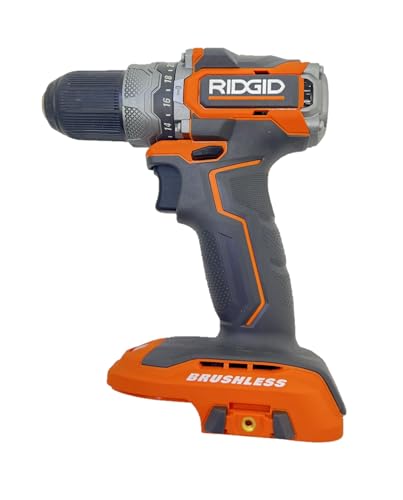
Squeezing a full-sized hammer drill between tight floor joists or inside shallow cabinet boxes quickly strains your wrists and slows progress. Bulky motor housings often cause awkward drilling angles, stripping fastener heads and ruining clean pilot holes. Subcompact power tools solve that headache by putting punchy motor performance into a significantly shorter chassis. For anyone seeking serious fastening muscle without dragging excess weight up a ladder, examining a ridgid 18v subcompact drill hammer drill review reveals how well these agile tools perform on daily jobs. Many tradespeople pair compact hammer drills with a versatile drill driver impact combo to handle driving and masonry drilling without constantly swapping tools.
Manufacturer specifications show that modern subcompact tools use efficient brushless motors to generate steady torque while reducing overall tool length. Their percussion mechanisms produce sufficient blows per minute to penetrate brick, cinder block, and framing timber reliably. When drilling consistent anchor holes, using a reliable drill bit depth stop helps maintain clean depth control. Based on product specs and aggregated user feedback, a capable 18V subcompact hammer drill offers dependable jobsite muscle in a fatigue-free package.


Frequently Asked Questions
What separates a standard drill driver from a subcompact hammer drill?
Hammer drills feature a dedicated percussion mechanism that pulses forward while spinning to pulverize masonry, whereas standard drill drivers deliver only rotary torque. Subcompact hammer units shrink the overall tool length while retaining this dual-mode capability. That design lets you drill into concrete block, brick, and mortar without carrying a bulky rotary hammer.
Can an 18V subcompact hammer drill bore through heavy steel?
Yes, an 18V subcompact drill provides plenty of rotational torque to cut through sheet metal, steel studs, and thick metal plates. You simply switch to rotary mode and use low gear to protect cutting edges. For heavy structural steel, pairing the tool with a high-grade drill bit for steel beam tasks maintains steady cutting speed without stalling.
How does battery amp-hour capacity affect subcompact drill balance?
Slim 2.0 Ah battery packs keep subcompact drills lightweight and agile for overhead work between tight joists. Higher capacity packs like 4.0 Ah or 5.0 Ah increase runtime and sustained power, but they add weight to the base of the handle. Choosing the right pack depends on whether you prioritize all-day comfort or longer hole-saw drilling sessions.
Why are brushless motors preferred in 2026 subcompact drills?
Brushless motors eliminate internal carbon brushes, significantly reducing heat buildup, friction, and wasted battery power. This electronic design allows manufacturers to shorten the tool head while maintaining robust torque. In practice, the tool runs cooler under sustained load and fits into tighter spaces between framing studs.
Can you drill galvanized steel with a subcompact hammer drill?
Yes, an 18V subcompact drill easily cuts galvanized steel when set to standard rotary mode with proper drill speed. Disengaging the hammer function prevents bit chatter and protects carbide or cobalt cutting edges. Using a dedicated drill bit for galvanized steel ensures clean chip removal and prevents walking across smooth metal surfaces.


Write Your Review
No reviews yet. Be the first to share your experience!