


Accurate Saddle Notches Without Chuck Wobble or Slop
Wrist-snapping hole saw catch and ruined tubing can turn an afternoon roll cage project into a total headache. Hand drilling won’t hold the cut line when a bimetal hole saw grabs thin-wall chromoly or mild steel at an angle. Clamping your workpiece securely under a rigid drill spindle makes all the difference. Investing in the best drill press tube notcher transforms standard drill chuck rotation into repeatable, gap-free cope joints for clean TIG and MIG welding. Based on manufacturer specifications and metal fabrication feedback, a dedicated jig eliminates dangerous bit chatter while keeping arbor runout to an absolute minimum.
Dialing in compound angles up to 60 degrees requires solid clamping force that locks round or rectangular stock in place without crushing the tube walls. Smooth arbor spindle rotation prevents hole saw teeth from stripping when feeding into tough structural tubing. After cutting accurate copes, smoothing cut edges or weld prep often pairs naturally with surface tools like the best da sander for bodywork to eliminate burrs before burning wire. Reliable notcher jigs save fabricators hours of tedious hand grinding, ensuring every coped joint fits flush right off the press table.
Pros
- Adjustable angle range covers common fabrication needs without extra jigs
- Sturdy steel construction holds up to regular use in a workshop environment
- Compatible with standard hole saws, reducing the need for specialty tooling
- Can handle both round and square tubing, increasing its versatility
Cons
- Requires a separate hole saw and a drill press or heavy-duty drill for best results
- Setting up the exact angle may take a few tries for new users unfamiliar with notch math
- The tool itself is fairly heavy, which may be a consideration for portable jobsite use
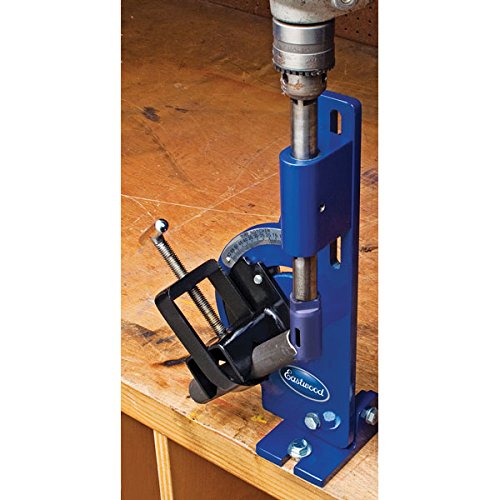
The Eastwood Tube and Pipe Notcher is a purpose-built tool designed to make accurate saddle notches in round and rectangular tubing. Unlike freehand grinding or using a chop saw, this notcher uses a rotating hole saw to cut a precise crescent shape, which then fits flush against another piece of tubing for a clean weld joint. It's a tool that can save hours of trial-and-error fitting, especially when you're building roll cages, bumpers, handrails, or custom frames.
This notcher is best suited for metal fabricators, welders, automotive enthusiasts, and any workshop user who works with tubing regularly. If you're a DIY homeowner tackling a simple railing project, you might find it overkill, but for anyone doing multiple notches or needing tight-fitting joints, it quickly pays for itself. Professional tradespeople like structural ironworkers or custom chassis builders will appreciate the repeatability and reduced prep time.
In real-world use, the key advantage is cutting efficiency. By clamping the tube securely and feeding a rotating hole saw through the wall, you get a clean, burr-free notch that requires minimal cleanup. The tool can handle mild steel, stainless steel, and aluminum, so it's adaptable to different materials. The adjustable angle range from 0 to 60 degrees covers most common fabrication angles. Many users find that once you dial in the angle, notches come out consistently, which is essential for producing multiple identical parts.
Build quality is solid: the notcher is made from heavy-gauge steel with a blue painted finish that resists rust in a shop environment. The clamping mechanism feels robust and holds tubing without slipping, even when using larger hole saws. However, it's worth noting that the notcher itself doesn't include a hole saw or a drill motor. You'll need your own drill press or a strong handheld drill with a steady feed. A drill press is highly recommended for best accuracy and control.
Setup is straightforward: mount the notcher to a workbench or a sturdy base, install the desired hole saw in your drill, adjust the angle, and clamp the tube. Measurement accuracy depends on how carefully you set the angle and the depth of cut. Some users find that using a digital angle finder or a protractor helps get perfect results the first time. Storage is easy because the notcher is compact enough to sit on a shelf or in a cabinet, though its weight (around 10-15 pounds) means it's more of a stationary tool than something you toss in a toolbox.
Limitations exist: the biggest is that this tool is designed primarily for through-wall notching, meaning the hole saw cuts through one side of the tubing only. If you need to notch both sides simultaneously, you'll need a different approach. Also, the notcher works best with a drill press that has a quill stop or depth control; otherwise, you risk cutting too deep. Given its price point, this notcher offers good value for a workshop that does moderate to heavy tubing work. If you're serious about clean, repeatable saddle notches, this tool is a smart investment.
The Eastwood Tube Notcher is constructed from heavy-gauge steel with a durable blue paint finish that helps resist corrosion in a typical shop environment. The clamping system uses a threaded knob and a V-block design to hold tubing firmly in place, minimizing movement during cutting. The pivot points are machined to allow smooth angle adjustment, and the overall feel is sturdy without excessive bulk. While it's not the most compact tool, the build quality suggests it will hold up to frequent use in a professional fabrication setting or a serious home workshop.
When paired with a quality drill press and a sharp hole saw, this notcher produces clean, accurate notches that require very little deburring. The ability to adjust angles from 0 to 60 degrees covers most common fabrication needs, from 90-degree T-joints to shallow branch connections. Users report that the tool maintains alignment well, even after repeated use, which is critical for producing multiple identical parts. For best results, use a cutting lubricant and take light passes, especially in stainless steel. The tool's performance is dependable, making it a staple in many metalworking shops.
Frequently Asked Questions About Tube Notchers
Can you use a standard hole saw with the Best Drill Press Tube Notcher?
Yes, standard bi-metal hole saws with common thread arbors thread directly onto the notcher spindle shaft. Standard carbon or bi-metal cups cut cleanly through mild steel, stainless, and aluminum tubing when turned at appropriate drill press speeds. Running the tool at lower RPM settings helps preserve hole saw teeth and prevents heat buildup during heavy-wall cuts. Fabricators commonly use cutting lubricant to extend tooth life and maintain smooth cut action.
What drill press speed is ideal for cutting tubing notches in 2026?
Speeds between 250 and 500 RPM yield the cleanest cuts and prolong saw blade sharpness. Slower spindle rotation keeps the hole saw teeth from overheating when biting into 2-inch structural steel or chromoly pipe. Higher rotational speeds often lead to severe tooth stripping, arbor chatter, and rough copes that require excessive hand filing. Setting your drill press pulley belt to its lowest speed range delivers the torque necessary for consistent cutting.
How do you prevent hole saw bind-up when notching pipe at steep angles?
Apply steady, light downward feed pressure and lubricate the cutting edge frequently with cutting fluid. Cutting at steep angles up to 60 degrees causes the hole saw teeth to strike the tube wall intermittently, creating shock loads that can grab the cutter. Clamping the vise securely and letting the hole saw teeth gently shave material prevents the arbor from deflecting. Rigid drill press tables also stop vibration from catching the leading edge of the tube.
Can the Best Drill Press Tube Notcher notch rectangular or square tubing?
Yes, the adjustable vise securely holds rectangular stock up to 2 inches by 2-1/2 inches as well as standard round tubing. The clamping jaws clamp flat tube walls squarely to keep your cut centerline aligned with the hole saw axis. Setting the angle scale allows clean mitered copes on box tubing for custom chassis brackets and bumper mounts. This versatility saves time when switching between round roll cage bars and structural square frame members.
How do you clean up burrs and sharp edges after notching tubing?
Use a half-round metal file, deburring tool, or specialized sander to strip sharp interior ridges before welding. Smoothing tight interior radii and exterior coping curves can also be simplified using tools like the best detailing sander to prep adjoining metal areas for sound weld penetration. Taking time to knock off slag and burrs guarantees the coped tube seats tightly against the mating joint. Clean joints produce stronger TIG and MIG welds without porosity or contamination.
Is a drill press required, or can you use a handheld drill with this notcher?
You can operate the unit with either a rigid drill press or a high-torque 1/2-inch handheld drill driver. Mounting the base to a sturdy drill press table provides superior alignment, reduced vibration, and hands-free vertical feed control. When using a handheld drill, choosing a tool with a secondary auxiliary handle helps control rotational torque if the hole saw catches. Securely bolting the notcher base to a solid workbench vise is essential for handheld operation.





Write Your Review
No reviews yet. Be the first to share your experience!