


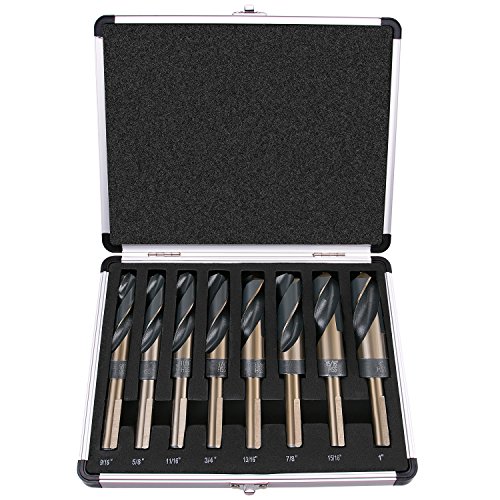
Drill bit slippage inside a three-jaw chuck turns an already frustrating lockout into a serious hassle. When applying firm forward pressure against a stubborn keyway, standard twist bits easily skate off the shear line, dull quickly, or twist your wrist upon binding. Selecting the best drill bit to drill out a lock requires examining shank geometry, thermal coating, and flute styling that ejects metal shavings smoothly. Based on product specifications and user feedback, stepped cutting edges enlarge the opening progressively through brass pins and zinc housings without snapping slender pilot tips. A tri-flatted shank locks securely in your drill chuck to deliver sustained torque without slipping.
Maintaining low rotational speeds with steady feed pressure prevents excessive heat buildup that dulls high-speed steel flutes. Many DIYers prefer stepped geometry because it self-centers, gradually boring through lock faceplates while automatic deburring edges leave clean margins. Forcing open a jammed lock can occasionally leave minor scuffs on vintage wooden doors, where using a detailing sander for detail work helps smooth the door face before installing new hardware. Careful research into drill accessories confirms that pairing balanced rotary speed with effective chip clearance makes lock removal straightforward and predictable.

Pros
- Covers a wide hole range from 1/4-inch up to 1-3/8-inch with clean step increments
- Tri-flatted shank stays secure in standard drill chucks without spinning loose
- Titanium coating helps minimize heat buildup during sheet metal drilling
- Dual-flute profile cleans out debris rapidly while deburring hole rims
Cons
- Not rated for drilling through hardened steel, stainless steel, or thick plate metal
- Requires steady drill speeds and cutting lubricant to prevent overheating during repeated use
- Lacks a standalone plastic case for separate drawer storage
The ZELCAN 10-step titanium drill bit is a multi-diameter power tool accessory engineered to simplify hole cutting across various common materials. Featuring a conical stepped layout ranging from 1/4-inch up to 1-3/8-inch, this single bit eliminates the need to constantly swap out twist drills during fabrication. It is well suited for DIY homeowners setting up workshop projects, electricians knocking out holes in electrical boxes, HVAC contractors fitting ductwork, and garage hobbyists working on light automotive sheet metal.
Drilling performance centers around a dual-flute cutting design that shears material smoothly while evacuating metal chips efficiently. As the cone advances through soft metals or plastics, each step expands the pilot hole with minimal chatter. The design also deburrs the hole opening simultaneously, saving you the extra step of filing sharp edges on junction boxes or thin aluminum panels. This quick, stepped progression delivers solid productivity gains when running conduit lines or creating custom mounting holes.
High-speed steel serves as the core material, providing the structural strength needed to bore through brass, aluminum, copper, thin iron, and plastics without deforming. A gold titanium coating covers the exterior surface to boost resistance against friction heat and workshop moisture. For dependable torque transfer, the base features a tri-flatted shank. This geometry locks into standard three-jaw power drill chucks far better than smooth round shanks, preventing frustrating slip-ups when working through denser sheet material.
Maintenance is straightforward, requiring only a light coating of machine oil after use to preserve the cutting edges. Storing this unibit in your compact toolbox pouch or mobile organizer takes up substantially less space than a full twist bit index. On the practical limitation side, this bit is strictly intended for light sheet metals, soft non-ferrous alloys, and plastics. User feedback and manufacturer specifications explicitly note that it should not be applied to hardened steel, stainless steel, or thick structural iron, as high-tensile alloys will quickly dull the cutting steps.
For home repairs, garage fabrication, electrical rough-ins, and craft workshop tasks, the ZELCAN step drill bit offers solid utility at an approachable entry point. Anyone needing clean, multi-sized holes in electrical enclosures, gutters, or custom panels will appreciate having ten diameters ready to go in one compact tool.
This step drill bit fits standard 3/8-inch and 1/2-inch keyed or keyless drill chucks found on corded and cordless drills. The three flat ground planes on the shank ensure a firm mechanical grip that keeps the bit centered during operation, preventing chuck wobble.
Recommended materials include thin sheet iron, aluminum panels, copper brackets, acrylic, PVC, and thin hardwoods. Electricians and maintenance personnel will find it particularly useful for enlarging knockouts in service panels or boring clean entries into plastic weather-proof boxes.
Frequently Asked Questions
Can a step drill bit effectively drill out a residential door lock?
Yes, a stepped cone bit works exceptionally well for drilling out standard residential pin tumbler cylinders. The stepped diameter enlarges the hole progressively from 1/4 inch up to 1-3/8 inches without catching aggressively in the keyway. Two-flute channels clear out brass shavings and zinc debris rapidly to prevent binding. Standard high-speed steel bits should not be used on hardened steel anti-drill security plates.
What drill speed setting works best for drilling out a lock cylinder?
A low rotational speed between 300 and 600 RPM provides the best control and heat management. Running a variable speed drill driver at maximum RPM quickly overheats high-speed steel cutting flutes and burns off protective titanium coatings. Setting your drill gearbox to low-speed gear delivers maximum sustained torque without skating across the lock face.
Why is a tri-flatted shank important for the best drill bit to drill out a lock?
A tri-flatted shank prevents the drill bit from slipping inside a three-jaw chuck under heavy rotary resistance. Standard round shanks frequently spin loose when the cutting edges encounter solid brass tumbler pins or iron lock parts. Machined flat sides provide solid clamping purchase for keyless chuck jaws, transferring full motor torque directly into the cut.
Should you use hammer drill mode when drilling out a deadbolt?
No, you should strictly use rotary drill driver mode instead of hammer action. Hammer mode delivers rapid percussive impacts intended for masonry, which can shatter high-speed steel flutes and damage door mountings. Rotary drilling combined with continuous feed pressure cuts cleanly through pins while protecting your drill chuck from excessive runout.
How do you restore door surfaces if drilling out a lock causes scuffs?
Light surface sanding quickly restores the surrounding wood or metal door face before installing fresh hardware. If slipping drill bit debris or chuck contact scuffs the door face, using a small area sander for tight spaces smooths rough spots around the mortise. Clean out metal filings with a shop vacuum before setting your replacement deadbolt in place.




Write Your Review
No reviews yet. Be the first to share your experience!