


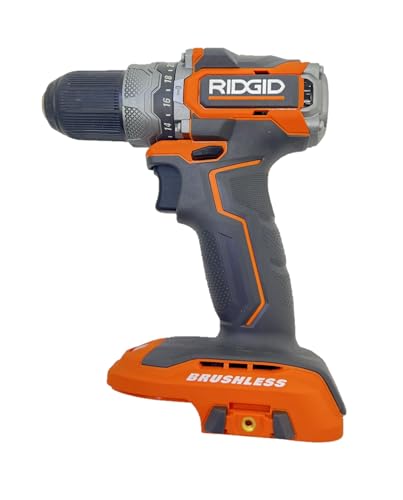
Boring large holes through dense framing lumber or drilling tapcon anchors into solid concrete quickly exposes a weak motor. Excessive bit slippage, sudden wrist wrenching bind-ups, and premature battery shutdowns bring any project to an irritating halt. Equipping your workspace with sustained torque delivery and an all-metal ratcheting chuck makes tough drilling chores run smoothly without damaging your bits. In this detailed Ridgid 18v Cordless Hammer Drill Review, we examine how these versatile hammer drills handle demanding masonry tasks while maintaining precise fastening control.
Matching the right tool to your workload saves substantial time, money, and arm fatigue. Modern brushless motor designs deliver improved battery efficiency and prevent thermal overload under continuous boring loads, while subcompact options squeeze easily between tight wall studs. Pairing a dedicated hammer drill alongside a versatile drill driver impact combo provides exceptional flexibility across woodworking, masonry, and heavy fastener driving tasks. Based on manufacturer specifications and shared trade feedback, we break down each model so you can pick the best tool for your toolbox.


Frequently Asked Questions
What is the main difference between a standard drill driver and a cordless hammer drill?
A hammer drill features an internal percussion mechanism that delivers rapid axial pulses while spinning. This pulsating action fractures brittle masonry, brick, and mortar blocks quickly as the carbide bit rotates. Standard drill drivers rely purely on rotational torque, which works well for wood and metal but struggles in masonry. Switching between drilling, driving, and hammer modes lets you tackle multiple tasks with a single tool.
Does a brushless motor provide significant advantages for cordless hammer drills?
Yes, brushless motors offer superior battery runtime, less internal heat buildup, and greater sustained torque under load. Because they eliminate physical carbon brushes, friction drops significantly, extending the motor life over years of regular use. The tool electronics automatically regulate power draw depending on material resistance. This makes brushless drills especially dependable when boring deep holes with large spade bits or masonry cutters.
Can you use an 18V cordless hammer drill for heavy concrete foundation walls?
An 18V cordless hammer drill can bore small to medium anchor holes up to 1/2 inch in concrete, but it is not built for massive foundation excavation. For repetitive large-diameter drilling into cured, poured concrete, a dedicated SDS-plus rotary hammer is more effective. When setting shallow anchors or masonry screws with your 18V drill, using a reliable drill bit depth stop helps prevent over-drilling and ensures solid anchor engagement.
How does battery amp-hour capacity affect the performance of an 18V hammer drill?
Higher amp-hour (Ah) battery packs provide longer continuous runtime and deliver more consistent power delivery during high-demand drilling. A compact 2.0 Ah pack keeps the bare tool lightweight for overhead work, but a 4.0 Ah or higher pack prevents voltage sag when running large hole saws. Larger packs also distribute thermal loads across more cells, keeping the tool running cooler under heavy stress.
Why do subcompact hammer drills appeal to many tradespeople in 2026?
Subcompact hammer drills reduce physical wrist strain while still delivering the percussion speeds needed for routine masonry anchors. Their shorter head length allows contractors to maneuver easily between 16-inch on-center wall studs and cramped cabinet interiors. While full-size models deliver higher peak torque, subcompact units handle most residential drilling tasks without excessive arm fatigue.
What steps prevent drill bits from slipping in a 1/2-inch keyless ratcheting chuck?
Hand-tightening the chuck until you feel the distinct mechanical clicks locks the carbide jaws firmly around the bit shank. Ensuring the bit sits perfectly centered before the final twist prevents uneven jaw clamping and wobble. Clean out any concrete dust or metal filings from the chuck regularly to maintain proper gripping pressure during heavy percussion drilling.




Write Your Review
No reviews yet. Be the first to share your experience!