


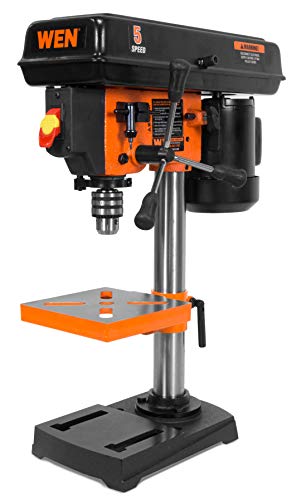
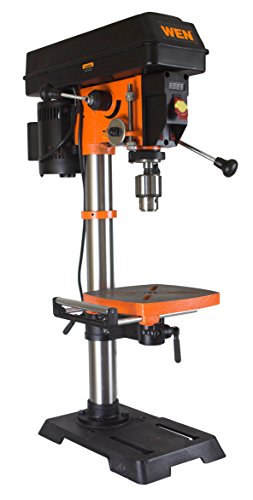
Chuck wobble and drifting pilot holes ruin expensive lumber faster than almost any other garage mistake. Handheld drills wobble under heavy downward pressure, forcing dowels out of alignment and leaving sloppy, angled bores in metal stock. Investing in the best drill press economical setup gives your workshop repeatable vertical travel, controlled spindle depth, and rigid cast iron stability without draining your budget. Reliable benchtop models deliver steady induction torque that will not bog down during repetitive boring tasks, saving you countless hours of measuring and correcting off-center holes.
Motor ratings between 2.3 amps and 6.2 amps handle tough metals and dense hardwoods when paired with proper pulley ratios. Adjustable mechanical belts or variable speed drives let you dial in correct surface feet per minute, which protects delicate cutting edges from burning. Once parts are drilled accurately, you can refine edges alongside the best oscillator sander to keep parts square and clean. Based on detailed analysis of spindle travel, chuck runout specifications, and user feedback, these benchtop machines provide dependable performance for weekend fabricators and DIY woodworkers alike.



Frequently Asked Questions
How much motor power is necessary for a benchtop drill press?
Induction motors rated between 2.3 amps and 6.2 amps provide ample torque for typical home workshop drilling tasks in 2026. A 3.2-amp motor easily handles standard twist bits in hardwood and mild steel, while a larger 6.2-amp motor powers through large hole saws and spade bits without stalling. Lower horsepower units require slower feed rates to prevent motor bogging on dense materials.
What does swing size mean when selecting the best drill press economical?
Swing distance represents twice the throat depth from the spindle center to the front of the vertical support column. A 10-inch swing drill press allows you to bore a hole directly in the center of a 10-inch wide workpiece, meaning you have 5 inches of clearance. Smaller 8-inch units fit compact workbenches, but 10-inch or 12-inch setups give significantly more working clearance for wider boards.
Why is mechanical pulley speed adjustment preferred on an economical drill press?
Stepped pulley systems deliver maximum mechanical advantage and sustained low-RPM torque without electronic heat buildup. Shifting the rubber drive belt across five distinct pulley ratios keeps the motor running cool while drilling dense steel at lower speeds like 580 to 650 RPM. Faster belt positions reaching over 3000 RPM work best for small twist drills in softwoods and plastics.
Do you need a dedicated drill press vise for safe drilling?
Yes, clamping workpieces in a heavy cast iron machinist vise prevents hazardous spinning if a bit binds during breakthrough. Unclamped metal parts can catch on drill flutes, spinning uncontrollably and risking severe hand injuries. A low-profile cross-slotted vise bolts securely to table channels, maintaining exact alignment during repetitive boring runs.
How does spindle stroke affect drilling depth on benchtop models?
Spindle stroke determines the total downward vertical travel achievable in a single lever pull. Standard benchtop machines typically range from 2 inches to 3-1/8 inches of spindle quill travel. Deeper mortises or thick stock require raising the table assembly or stepping the bit downward between passes if the travel capacity is limited.
How can you clean up drilled workpieces effectively after boring holes?
Smoothing torn grain and rough edges around bored holes works best by pairing your press with a small area sander before final assembly. Proper deburring prevents splintering around through-holes and ensures flush mechanical fits. Using sharp brad-point bits also minimizes tearout on exit holes before surface cleanup begins.



Write Your Review
No reviews yet. Be the first to share your experience!