


Spinning a wide drill bit against a hardened steel wheel flange can chew up cutting edges in seconds if your tool setup lacks rigidity. When boring out axle flanges or brake rotor hats for heavy-duty racing studs, excessive chuck runout and chatter ruin the critical knurl interference fit. Equipping your bench with the best drill bit for wheel stud requires looking closely at split-point angles, flute relief, and shank dimensions that fit standard 1/2-inch drill chucks without slipping under high rotational loads. A sloppy hole leads to spinning studs and stripped splines, while an undersized cut risks galling or snapping press-in hardware. Many garage fabricators prepping a chassis pair their heavy drilling work with tools like the best da sander for bodywork to clean hub surfaces before pressing in fresh hardware.
Standard twist drills often grab and cause wrist-wrenching bind-up as the bit breaks through the back of an iron hub. High-speed steel cutters ground to a true 43/64-inch or 1/2-inch diameter give you clean, round holes with zero flaring. We evaluated manufacturer specifications, flute designs, and builder feedback across brands like Allstar Performance, Bryke Racing, and Speedway Motors to spotlight cutters that hold an edge through tough alloy hubs. Running the best drill bit for wheel stud in a low-RPM drill press or a high-torque drill driver makes upgrading to oversized studs a smooth, accurate job.


Wheel Stud Drilling Questions and Technical Answers
What size drill bit is needed for 5/8-inch wheel studs?
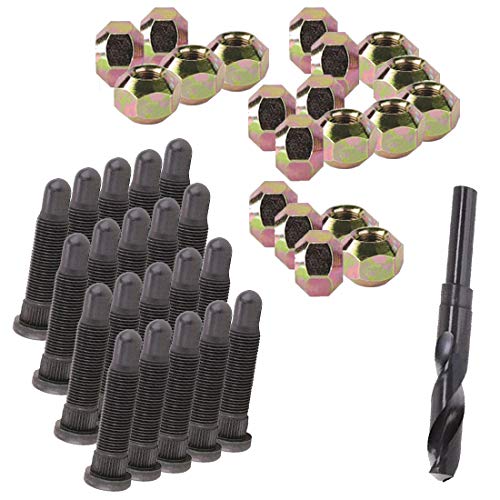
Most 5/8-inch wheel studs with a .685-inch knurl require a 43/64-inch drill bit. That size leaves the exact press fit needed so the splines bite firmly into the hub flange without spinning. Always verify your stud knurl diameter before chucking up your best drill bit for wheel stud.
Can a handheld cordless drill be used to enlarge wheel stud holes?
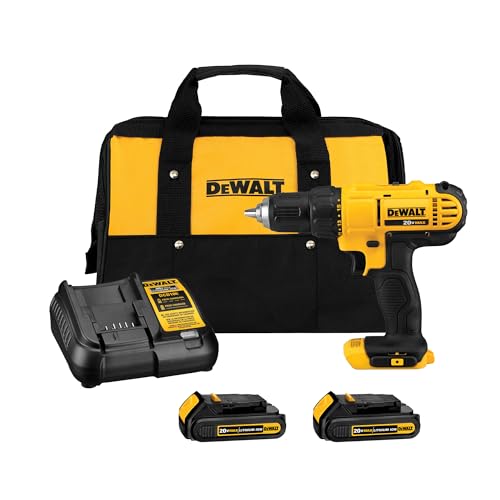
Yes, a heavy-duty 1/2-inch cordless drill driver can enlarge stud holes if operated at low speed. A brushless model with a rigid auxiliary handle helps absorb bind-up torque if the cutting edge catches in cast iron. A magnetic drill or drill press remains better for eliminating runout wobble.
Why do large drill bits bind when breaking through the hub flange?
Bit grabbing happens when the cutting lips punch through the back side of the steel before chips clear the flutes. Backing off your feed pressure right before breakthrough prevents wrist-snapping bind-up. Keeping your drill in low-gear mode and using plenty of cutting oil also keeps the bit spinning freely.
What makes Silver and Deming drill bits practical for wheel hubs?
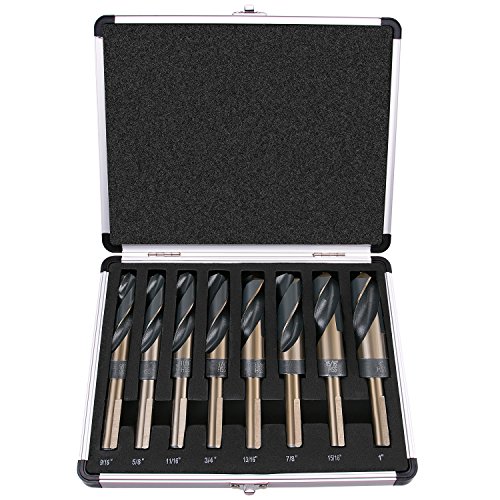
Silver and Deming bits combine large cutting heads with a reduced 1/2-inch shank to fit standard shop drills. Their shorter flute design delivers extra rigidity, which prevents chuck runout and chatter while boring through thick forged steel.
How do you keep drill bits from burning out in tough steel hubs?
Low drilling speed combined with steady fluid lubrication prevents bit edges from overheating. Keeping tool speeds between 250 and 400 RPM with generous cutting oil prolongs bit life. After boring, smooth burrs with a deburring blade or a compact tool like the best detailing sander for clean seating.




Write Your Review
No reviews yet. Be the first to share your experience!