


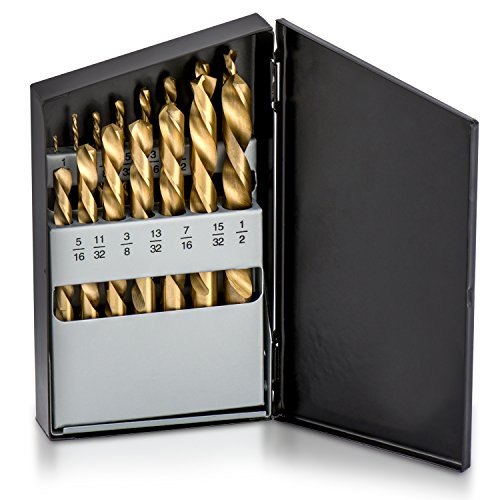
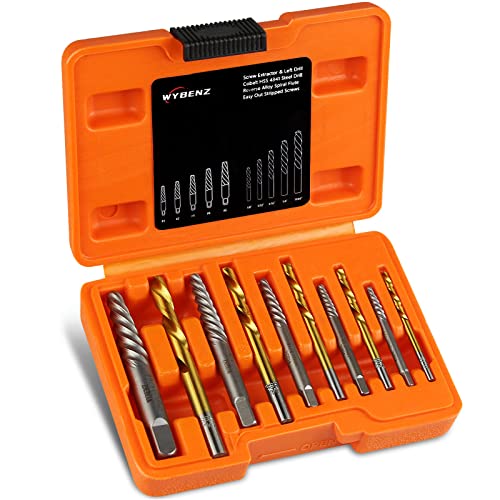
Sheared screw heads and snapped bolt shanks bring workshop progress to an immediate halt, leaving you wrestling with seized metal and ruined workpieces. Standard clockwise rotation often binds ruined threads even tighter, turning a quick repair into an afternoon headache. That is where deploying the best drill bits for hand drill becomes an absolute lifesaver for both high-stakes fastener extraction and delicate manual fabrication. Careful examination of flute geometries, split-point grinds, and cobalt steel alloys shows that selecting the proper cutting edge delivers sustained drilling torque without wandering across hardened surfaces. Whether you run a reversible handheld motor or turn a manual pin vise by hand, matching bit metallurgy to the workpiece prevents costly mistakes.
Fine hobby work and delicate artisan crafts present a completely different challenge where aggressive power tools easily crack brittle resin, wood, or acrylic. Using precision micro twist bits allows for exact runout accuracy and total tactile control, giving your hands the finesse required for precise holes. Workshop veterans often pair these precise boreholes with a compact detailing sander for smooth surfaces to ensure flawless finished joints and clean edges. Evaluating aggregated user feedback and manufacturer hardness ratings reveals that high-speed steel with titanium or M35 cobalt coatings holds an edge far longer under sustained heat. Investing in dependable tooling means fewer broken shafts, cleaner bores, and zero stripped-head headaches.



Frequently Asked Questions
Why should you use left-hand reverse twist drill bits in a reversible hand drill?
Left-hand drill bits cut counterclockwise, which uses cutting friction to loosen seized bolts rather than tightening them further into the hole. When paired with a reversible cordless drill running at low speeds, the reverse twist flutes bite into broken fasteners and back them out without damaging internal host threads. This reverse cutting action often frees stripped hardware before you even need a secondary spiral screw extractor.
What is the main advantage of a manual pin vise over a powered drill driver for delicate crafts?
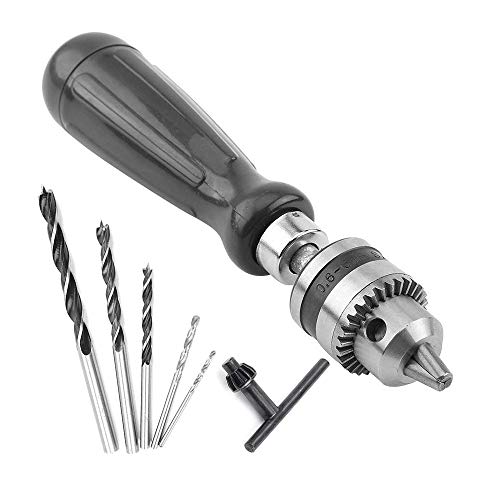
Manual pin vise hand drills offer direct tactile feedback and zero motor vibration, preventing delicate materials like jewelry wire, resin castings, and thin wood from snapping. While a high-speed brushless motor can easily over-torque or melt soft plastics, a manual hand drill gives you total control over penetration depth and spindle alignment. Many hobbyists refine their pre-drilled craft edges using a small area sander for tight spaces to keep miniatures pristine.
How does a 135-degree split point design improve drilling accuracy?
A 135-degree split point centers itself immediately on the workpiece surface, eliminating the frustrating bit walking that mars metal and wood. The flatter point geometry shortens the chisel edge and reduces axial thrust resistance, allowing your variable speed trigger to start holes cleanly without center-punching. This geometry cuts faster through hardened steel and provides superior pilot hole accuracy.
Can you use M35 cobalt drill bits on hardened stainless steel and cast iron?
Yes, M35 cobalt drill bits contain five percent cobalt alloyed into high-speed steel, maintaining extreme cutting hardness even under intense thermal friction. They excel at cutting stubborn stainless steel, titanium, and cast iron where standard titanium-coated bits quickly dull or overheat. Maintaining steady downward pressure and applying cutting fluid preserves the cutting edges across demanding automotive extractions.
What chuck size and clamping range do you need for micro drill bits?
Micro drill bits between 0.1mm and 3.0mm require a specialized pin vise collet or a micro keyed chuck capable of clamping down to 0.6mm or smaller. Standard 1/2-inch or 3/8-inch keyless chuck mechanisms on full-size power drills often cannot center bits smaller than 1.5mm, leading to severe chuck runout and snapped shafts. Dedicated manual pin vises solve this issue with interchangeable collets engineered for micro-diameter shanks.
How do you prevent breaking thin drill bits when using a hand drill?
Keep the drill spindle perfectly perpendicular to the workpiece surface and avoid applying sideways pressure during rotation. Thin twist drill bits have minimal shear strength, meaning any slight wobble or angle change under load will snap the flute instantly. Back the bit out periodically to clear packed chips and let the sharp cutting edges do the work without forcing heavy axial pressure.


Write Your Review
No reviews yet. Be the first to share your experience!