


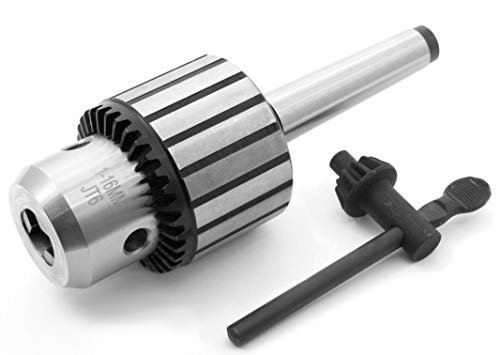
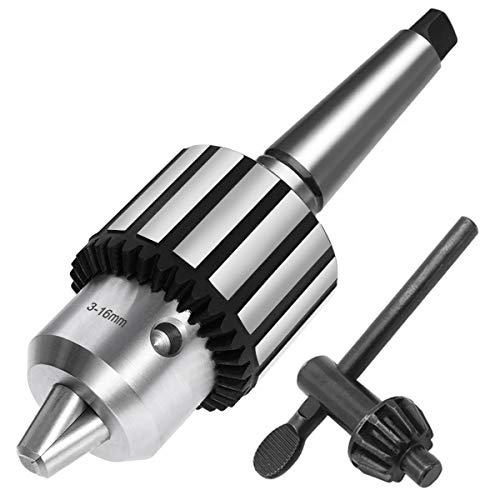
Drill bit slippage inside loose jaws ruins precision alignment fast, turning an accurate hole into an oblong mess. Metal turning demands rigid clamping force and minimal runout, especially when boring deep pilot holes into solid steel or brass stock from the tailstock quill. Selecting the best drill chuck for metal lathe setups solves this headache by seating a hardened Morse taper shank directly into your lathe tailstock. A true Morse Taper 2 arbor provides dependable concentricity, preventing unwanted chatter and premature tool wear during demanding drilling tasks.
Careful analysis of arbor tapers, gripping ranges, and machining tolerances highlights how crucial dependable jaw grip is for everyday metalworking. Upgrading to a heavy-duty chuck with an arbor like a JT33 or B18 taper keeps bits locked tight under sustained axial thrust. Whether you are running center drills, reamers, or large twist bits, a dependable tailstock chuck keeps your machining workflow accurate and repeatable. Once parts are turned and parted, smoothing delicate workpiece edges often pairs well with a capable detailing sander to prep adjoining shop projects.


Frequently Asked Questions
What Morse taper size is standard for a mini metal lathe tailstock?
Most mini metal lathes utilize a #2 Morse Taper (MT2) socket in their tailstock quill. Some micro lathes use an MT1 taper, so checking machine specifications before purchasing a chuck is essential. Installing an MT2 arbor ensures a self-holding, friction-fit grip that prevents slippage during axial drilling operations.
Can you use a keyed chuck on a metal lathe for tapping operations?
Yes, keyed drill chucks can hold straight-shank taps securely for hand-guided tailstock tapping. Tightening all three pinion holes with the chuck key ensures equal jaw pressure, minimizing tap slippage. Many machinists turn the lathe spindle by hand or run at very low RPM to prevent tap breakage under load.
How do you prevent a drill chuck arbor from slipping in the tailstock?
Keeping both the arbor shank and the internal tailstock socket completely clean and dry prevents taper slippage. Metal chips, oil, or grease inside the taper interface break the mechanical friction lock. Wiping the surfaces clean and firmly seating the MT2 arbor eliminates rotation issues under heavy cutting pressure.
Why is runout accuracy critical when selecting the Best Drill Chuck For Metal Lathe in 2026?
Low runout accuracy prevents drill bit wandering and keeps bored holes perfectly concentric with the lathe spindle centerline. A chuck with excessive runout produces oversized holes and can snap brittle carbide spot drills. Quality chucks maintain runout around 0.005 inches or tighter for reliable, repeatable drilling results.
Is a 1/2-inch or 5/8-inch chuck capacity better for lathe drilling?
A 5/8-inch capacity chuck offers broader versatility by clamping larger shank drill bits and heavy tooling. While 1/2-inch chucks handle standard center drills and common twist bits, a 5/8-inch unit prevents the need to turn down bit shanks. Just ensure lathe bed length allows enough clearance for longer drill chuck bodies.
Can these lathe drill chucks be operated in reverse?
No, taper-mounted drill chucks should not be run in reverse under cutting load because the arbor taper can loosen and spin out. Taper mounts rely on forward thrust and rotational friction to stay seated. For tasks requiring post-machining surface cleanup, wood or composite turners often transition to a small area sander rather than running the lathe backward.




Write Your Review
No reviews yet. Be the first to share your experience!