


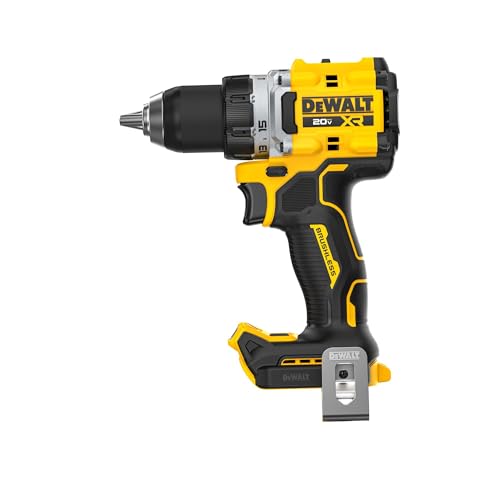
Wrist-wrenching bind-ups and sudden motor stalls turn routine framing projects into frustrating chores, especially when boring large holes through dense structural lumber. Heavy resistance demands smart electronic safeguards and sustained fastening torque so your bits glide through timber without twisting your arm. Exploring modern dewalt xr brushless drills drivers reveals how compact brushless motors deliver serious output while keeping tool weight balanced. Selecting the right setup, like a versatile drill driver impact combo, gives you seamless control across both precision carpentry and rapid heavy fastening.
Standard brushed tools generate excessive heat and drain battery packs rapidly during continuous hole-saw cutting and structural screw driving. Based on manufacturer specifications and motor design data, modern brushless engineering increases runtime and protects inner gears against thermal overload. Premium 1/2-inch metal ratcheting chucks prevent bit slippage during metal drilling, while anti-rotation sensors shut down aggressive rotation in milliseconds to protect your hands. Pairing high-torque drivers with a reliable drill bit depth stop ensures clean, uniform holes without over-drilling delicate materials. Investing in the right 20V Max platform keeps your toolkit versatile enough for both rough framing and detailed cabinet assembly.


Frequently Asked Questions
What makes dewalt xr brushless drills drivers more efficient than older brushed models?
Brushless motors eliminate physical carbon brushes to reduce friction, internal heat, and energy waste. This motor architecture directs battery power straight into rotational torque rather than thermal loss. As a result, you get extended runtime per battery charge and significantly longer tool lifespan during demanding tasks. The internal electronics continuously adjust power delivery based on the resistance of the material you are drilling.
Does the anti-rotation system on DEWALT hammer drills prevent wrist injury?
Yes, the integrated anti-rotation safety brake senses sudden rotational bind-up and immediately shuts down power to the motor. When a hole saw or large auger bit binds in dense framing lumber, the tool cuts off within fractions of a second. A red LED illuminates on the housing to signal that the safety brake has engaged. This protective mechanism drastically lowers the risk of violent wrist wrenching during heavy drilling.
Can a 20V MAX hammer drill replace a dedicated rotary hammer for concrete work?
No, a standard 20V MAX hammer drill is designed primarily for light masonry such as brick, mortar, and small tapcon anchors. While the percussion mechanism delivers rapid blows to break through cinder blocks, it lacks the electro-pneumatic piston power found in dedicated SDS-plus tools. Pouring large foundation anchors or boring wide holes in solid poured concrete requires a true rotary hammer to avoid overheating your drill.
What is the primary difference between a drill driver and an impact driver?
Drill drivers deliver constant rotational torque through an adjustable slip clutch for drilling clean holes, whereas impact drivers produce rapid rotational bursts and high downward concussive force for driving fasteners. The 1/4-inch hex chuck on the DCF845 impact driver is optimized for driving structural screws and lag bolts without stripping fastener heads. Conversely, the 1/2-inch metal ratcheting chuck on models like the DCD801 provides steady grip and precision centering when spinning a drill bit for steel beam fabrication.
How does battery amp-hour capacity affect drill driver performance?
Higher amp-hour ratings extend total runtime and provide sustained power output under heavy mechanical loads. Compact battery packs keep the bare tool lightweight for overhead drilling, but larger 4.0Ah or 5.0Ah packs maintain peak voltage longer when pushing wide-diameter spade bits through structural beams. Choosing the proper battery balance depends on whether your project prioritizes reduced arm fatigue or extended run cycles between charges in 2026.
How many clutch settings should you use when driving delicate cabinet screws?
Lower clutch settings between 1 and 5 provide the delicate torque control required to prevent stripping soft cabinet screws or sinking heads past the surface. Mechanical clutch collars disengage the motor drivetrain as soon as the fastener meets preset resistance. Matching the clutch position to the fastener size protects fine hardwoods, drywall panels, and pre-drilled trim pieces from splitting.




Write Your Review
No reviews yet. Be the first to share your experience!