


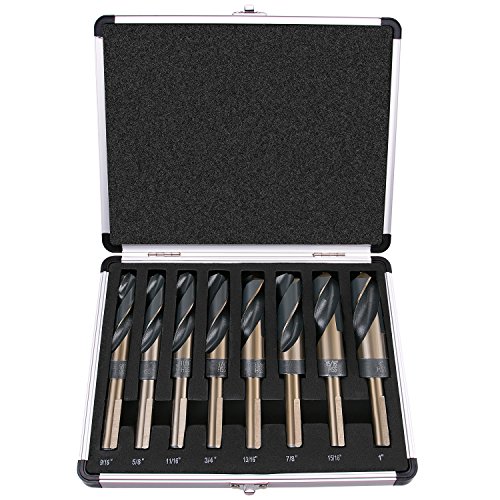
Drill bit binding inside ductile aluminum plate often ruins workpieces and strains drill chuck jaws before you even finish a single shift. When clearing sticky aluminum swarf, standard tooling overheats quickly, causing metal to weld directly onto cutting edges. Sourcing the best drill bit for production aluminum requires balancing flute geometry, sharp split points, and slick coatings that shed heat and chips efficiently. While high-grade tooling like a specialized drill bit to cut stainless steel relies on dense cobalt matrices to survive friction, aluminum fabrication demands rapid chip ejection and anti-friction treatments to keep production lines running without continuous seizing.
Careful evaluation of tool geometry shows that a 135-degree split point prevents walking across slick aluminum surfaces without requiring a center punch. Three-flat shanks also ensure reliable chuck gripping security under rapid cycles, preventing rotational slippage inside keyless or keyed chucks. Based on manufacturer specifications and aggregated shop feedback, matching the right flute helix and surface treatment to your drill press or handheld driver stops heat buildup before it ruins production output.


Frequently Asked Questions
Why do drill bits clog so easily when drilling production aluminum?
Aluminum is soft and ductile, which causes molten swarf to weld directly to drill flutes under excessive friction. Polished flutes or titanium coatings significantly reduce material adhesion. Operating at proper RPM with cutting lubricant ensures chips evacuate cleanly without packing the spirals.
Is cobalt or high-speed steel better for the best drill bit for production aluminum?
High-speed steel with a friction-reducing coating is generally superior to uncoated cobalt for pure aluminum production. While M35 and M42 cobalt handle extreme temperatures, their brittle nature is unnecessary for softer non-ferrous metals unless you are cutting hard aluminum alloys or abrasive cast aluminum. HSS bits provide sharper initial cutting lips and flex slightly under side-load without snapping.
How does a 135-degree split point improve drilling speed in aluminum?
A 135-degree split point starts cutting immediately on contact and prevents walking across smooth sheet metal. This flatter geometry reduces thrust force requirements compared to conventional 118-degree chisel points. It helps keep holes circular and accurate even when working without a pilot hole or guide fixture like a precision drill jig.
What drill shank design prevents slippage during repetitive production drilling?
Three-flat shanks provide the most reliable grip to prevent rotational spin-out inside three-jaw drill chucks. Round shanks can spin freely when cutting edges grab the exit burr on breakthrough, scoring the shank and damaging chuck jaws. Hex shanks offer quick-change convenience, but three-flat shanks deliver superior torque transfer on heavy drill presses.
What drilling speed is recommended for drilling aluminum in 2026?
Higher spindle speeds paired with moderate feed rates deliver the cleanest results in non-ferrous aluminum stock. Running a drill bit too slowly causes tearing and built-up edge, while excessive speed without lubricant melts the chips. Applying cutting fluid or WD-40 keeps the cutting zone cool and extends bit lifespan significantly.
Can you use standard twist drill bits for production aluminum work?
Yes, standard twist drill bits work, but bits with parabolic or deep-groove flute geometry clear stringy chips far better. Standard twist designs frequently pack full of swarf, forcing operators to peck-drill continuously to clear debris. Bits with specialized coatings like black nitride or titanium minimize surface drag during rapid cycling.




Write Your Review
No reviews yet. Be the first to share your experience!