


Punching Through Hard Concrete Without Burning Bits
Pushing a standard percussion drill against cured aggregate foundation walls often results in overheated bits, burning smells, and wrist strain. Mechanical ratcheting plates lack true forward striking energy, causing bits to spin helplessly in dense masonry. Evaluating rotary hammer vs hammer drill performance reveals why dedicated tools matter when installing heavy structural anchors or chipping away mortar. An SDS-plus electro-pneumatic piston creates direct forward impact, pulverizing aggregate without punishing the user. Setting precise stop collars with a drill bit depth stop ensures accurate anchor depths every time.
Manufacturer specifications confirm that rotary hammer designs deliver substantially higher impact energy measured in joules. Everyday tasks like driving structural fasteners or boring studs pair better with a versatile drill driver impact combo, but dense concrete demands dedicated striking power. Selecting between these two power tool categories comes down to your anchor diameters, hole volume, and whether you need dedicated chiseling functions.


Frequently Asked Questions
What is the main mechanical difference in a Rotary Hammer Vs Hammer Drill comparison?
A rotary hammer utilizes an electro-pneumatic piston mechanism to strike the bit directly, whereas a traditional hammer drill uses two spinning, ribbed friction discs. The pneumatic piston generates substantial striking energy measured in joules, allowing the tool to pulverize dense stone effortlessly. In contrast, standard hammer drills deliver rapid, shallow clicks that require heavy physical pressure from the operator. This mechanical distinction explains why rotary units handle heavy concrete drilling with much less user fatigue.
Can an SDS-plus rotary hammer accept standard smooth drill bits?
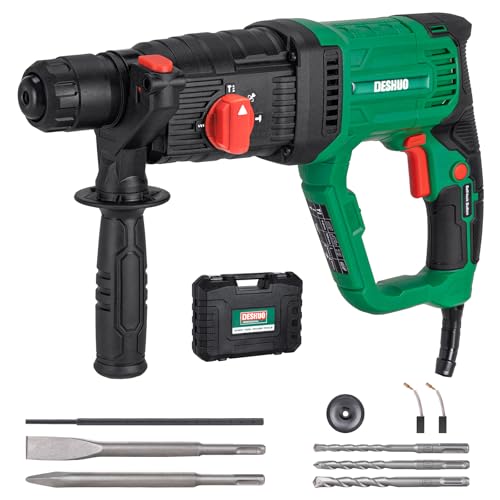
No, standard smooth shank bits cannot seat into an SDS-plus chuck without a dedicated chuck adapter. SDS-plus bits feature engineered grooves that lock into chuck bearings, allowing free piston-driven striking action. Deshuo addresses this flexibility by including a half-inch keyed adapter for smooth-shank accessories in drill-only mode. For drilling structural plate steel, pairing standard modes with the best drill bit for galvanized steel provides clean cutting performance.
Can a rotary hammer be used as a light demolition chisel?
Yes, most rotary hammers offer a dedicated chipping mode that completely disengages bit rotation. Locking out rotation lets you mount chisels to strip tile, take down masonry mortar, or groove concrete blocks. Standard hammer drills cannot perform rotation-free chipping because their percussion action relies entirely on chuck rotation. When drilling delicate stones without fracturing them, choosing specialized tools like a drill bit for travertine tile ensures clean edges.
Are cordless models effective in 2026 for masonry drilling?
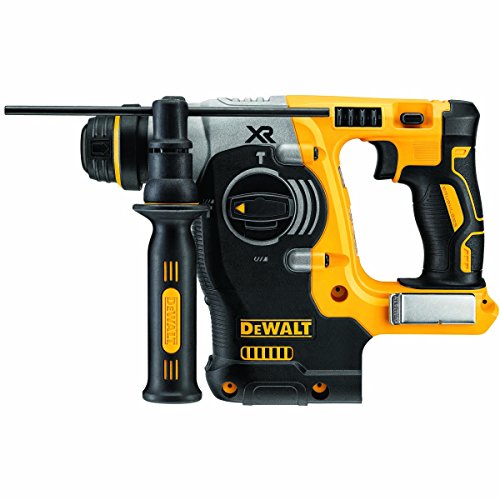
Yes, modern 20V brushless cordless platforms deliver ample power for anchors up to one inch in diameter. Tools like the DEWALT 20V MAX SDS rotary hammer produce 2.1 joules of impact energy while eliminating restrictive extension cords on jobsites. High-capacity lithium-ion packs maintain sustained output under load, though continuous heavy demolition chipping is still handled more economically by high-amperage corded motors.
Why is a mechanical safety clutch essential for masonry drilling?
A built-in mechanical safety clutch disengages the drivetrain instantly if a carbide bit binds against rebar or hardened aggregate. Without an active safety clutch, the rotational torque transfers violently into your hands, creating severe wrist sprains or sudden kickback. Active vibration dampening handles also help absorb repetitive impact shock, protecting your joints during prolonged downward or overhead drilling sessions.


Write Your Review
No reviews yet. Be the first to share your experience!