


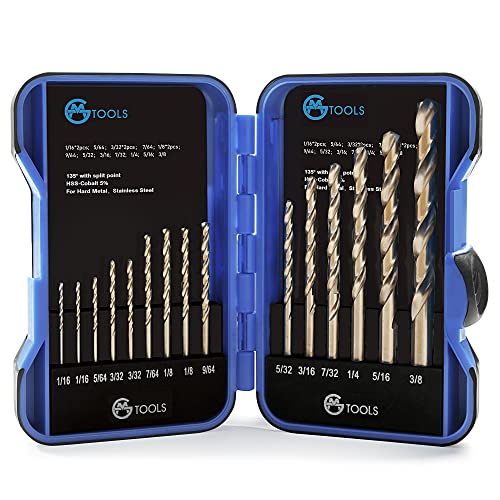
Drill bits spinning helplessly against dense metal surfaces can ruin an afternoon project in seconds. Cold rolled steel presents unique machining hurdles because the cold finishing process increases surface hardness and tensile strength compared to hot rolled stock. Pressing an ordinary high-speed steel twist bit into this material generates intense friction, heating the tip until the cutting edges burn out completely. Selecting the best drill bit for cold rolled steel requires looking at heat-resistant metallurgy like M35 cobalt alloys and titanium nitride coatings that retain sharpness under thermal stress. Whether you use a bench drill press or a high-torque cordless drill driver, having a self-centering 135-degree split point prevents walking across slick surfaces without center punching.
Aggressive cutting geometries and durable flute profiles help evacuate hardened chips before they bind up the chuck or overheat your motor. Metalworkers frequently prepare surfaces or grind away sharp exit burrs after boring, where pairing your drilling rig with an effective sander for auto body metal prep creates clean, paint-ready steel assemblies. Looking closely at shank engineering, like 1/4-inch hex bases or flat no-spin designs, also ensures maximum torque transfer without bit slippage in ratcheting chuck jaws. Evaluating verified manufacturer specifications and user feedback reveals that premium cobalt blends deliver the necessary durability to slice through tough steel stock reliably.




Frequently Asked Questions
Why do standard drill bits dull quickly on cold rolled steel?
Standard bits overheat because cold rolled steel has higher surface hardness and yield strength than hot rolled metal. As an ordinary high-speed steel bit rubs against the work-hardened exterior, excessive friction generates extreme heat that softens conventional cutting edges. Without sufficient alloy resistance, the cutting lips glaze over and dull within seconds.
What makes M35 cobalt the best drill bit for cold rolled steel material?
M35 steel contains 5 percent cobalt, which dramatically boosts red-hardness and thermal endurance during intense friction. Unlike standard surface treatments that can wear off, cobalt is blended evenly throughout the entire steel matrix of the bit. This structural resilience allows the cutting edges to penetrate tough steel without dulling under continuous drilling loads in 2026.
Should you use cutting fluid when drilling cold rolled steel?
Yes, applying dedicated cutting fluid or high-pressure lubricant is critical to extend cutting life and prevent thermal shock. Lubrication reduces friction at the contact zone while flushing microscopic steel shavings out of the flutes. Keeping the cutting tip cool prevents the steel from work-hardening under sustained drill point pressure.
What drill speed setting works best for drilling cold rolled steel?
Low rotational speeds combined with steady downward feed pressure produce the cleanest holes without overheating. Running your drill on low gear (typically 400 to 800 RPM depending on bit diameter) gives the cutting flutes time to bite into the metal and produce curled ribbons rather than fine powdered chips.
How do you clean up sharp burrs after drilling cold rolled steel?
Using a countersink bit or a compact detailing sander for tight spaces quickly cleans ragged hole exits. Exit burrs naturally form when the drill point pushes through the back of dense metal stock. Smoothing these edges prevents cut injuries and ensures bolts seat flat against the workpiece.
Can you use step drill bits on cold rolled steel sheet metal?
Yes, cobalt step drill bits like the OXMUL M35 work exceptionally well on sheet metal up to 1/8-inch thickness. The dual-flute stepped geometry enlarges holes incrementally without snatching the workpiece. For thicker steel plates, standard twist jobber bits remain the safer and more rigid choice.


Write Your Review
No reviews yet. Be the first to share your experience!