


Storm damage often leaves fallen limbs across driveways and fence lines, forcing property owners to consider clearing wet timber immediately. While the urge to clear storm debris is strong, wondering can you use chainsaw in rain requires balancing mechanical tolerance against severe physical hazards. Wet bark compromises boot grip and saw control, while water infiltration can choke small-engine air filters or short delicate battery electronics. Understanding how moisture interacts with cutting dynamics helps prevent catastrophic kickback and protects expensive cutting components from rapid rust formation.
Different powerheads respond uniquely to wet conditions, with corded electric units presenting lethal electrocution risks while gas-powered powerheads struggle with saturated paper air filters. Maintaining clear cutting perimeters and following strict personal protective equipment protocols becomes even more critical when raindrops reduce visibility. Storing damp equipment improperly after cutting also ruins guide bars, much like neglecting pole saw wall storage methods after trimming damp tree branches. Taking time to assess storm hazards before pulling the recoil starter ensures both tool longevity and personal safety.



Evaluating Wet-Weather Chainsaw Safety and Mechanical Limits
Operating a chainsaw in active rainfall is generally discouraged across the timber and tree care industries because moisture introduces unpredictable physical and mechanical variables. The short answer to whether you can run a saw in wet conditions depends largely on the tool power source and the intensity of the precipitation. While an internal combustion engine can technically fire during a light mist, water severely compromises footing, visibility, and operator grip. High-voltage electrical tools carry explicit manufacturer warnings against any exposure to moisture due to the immediate risk of electrical shock.
Emergency cleanup situations following severe storms often tempt homeowners and property managers to tackle downed branches before the rain stops. Clearing access routes or removing trees from structures may feel urgent, but working on wet ground multiplies cutting hazards exponentially. Wet bark alters chain friction, reduces bar oil adhesion, and makes predicting wood stress under tension far more difficult. Before taking a power tool into damp conditions, operators must weigh the immediate necessity of the cut against severe mechanical and physical risks.
The Critical Hazards of Operating Chainsaws in Wet Environments
Loss of stable footing represents the single greatest physical threat when cutting timber during or immediately after rain. Saturated soil, wet grass, and slick logs drastically reduce the traction provided by work boot outsoles. A sudden slip while managing a running saw can easily defeat physical control and trigger severe contact injuries before the inertia chain brake can intervene. Safe cutting posture relies entirely on a wide, balanced stance that becomes nearly impossible to maintain on muddy slopes or slick brush piles.
Rain also severely impairs operator vision, creating dangerous blind spots during complex cutting operations. Moisture droplets rapidly collect on safety glasses and mesh forestry helmet face shields, obscuring the operator sightline to the guide bar tip. Fogging inside eye protection compounds this visibility loss, making it difficult to spot overhead deadwood, shifting branches, or bystanders. Reduced visibility also prevents operators from accurately reading the kerf to detect guide bar pinching before the saw binds in the wood.
Physical control over the powerhead degrades as moisture coats the front wrap handle and rear throttle grip. Even high-traction rubberized coatings become slick when mixed with water, chain oil residue, and loose sawdust slurry. Maintaining a firm grip with the left thumb wrapped completely around the front handlebar is essential for counteracting rotational kickback forces. When rain compromises your grip, the powerhead can twist violently in your hands if the bar nose upper quadrant contacts wood.
Gas-Powered Chainsaws in the Rain: Mechanical Realities and Air Intake Risks
Gasoline two-stroke powerheads are mechanically capable of running in light rain, but sustained exposure introduces serious operating problems. The most immediate vulnerability lies in the engine air filtration system, which draws high volumes of ambient air into the carburetor. Modern chainsaws utilize various air filter media, including flocked felt, open-cell foam, and fine nylon mesh. If wind-driven rain saturates a paper or flocked filter, air flow becomes restricted, causing the fuel mixture to turn excessively rich, foul the spark plug, and stall the engine under load.
Water drawn past a saturated filter directly enters the carburetor throat and combustion chamber, leading to immediate mechanical misfires. Because water is completely non-compressible, excessive liquid ingestion can wash away the protective two-stroke oil film from the cylinder walls, leading to rapid piston scoring. Furthermore, cool rainwater hitting a cylinder head operating at several hundred degrees creates uneven thermal contraction. While modern magnesium crankcases and aluminum alloy cylinders resist light spray, heavy downpours increase the risk of localized thermal stress on hot engine castings.
Moisture also interferes with the external electrical ignition components of a gas powerhead. Water pooling around the spark plug boot, kill switch, or ignition coil lead can ground the electrical pulse before it reaches the spark gap. This external shorting results in intermittent spark delivery, backfiring, and sudden engine cutouts mid-cut. Stalling while burying the guide bar deep in a log leaves the saw trapped in compression wood, creating an awkward extraction challenge on slick ground.
Battery Cordless and Electric Chainsaws: Electrical Shock and Ingress Ratings
Corded electric chainsaws running on standard 120-volt household current must never be operated in the rain under any circumstances. Water is an exceptional conductor of electricity, and rain bridging the gap between extension cord connections, switches, or motor brush housings creates an extreme risk of lethal electrocution. Standard outdoor extension cords and residential outlets, even when protected by ground fault circuit interrupters, fail to provide complete safety in standing water or falling rain. Operating a corded electric cutting tool in wet weather violates fundamental electrical safety standards.
Cordless battery-powered chainsaws present a different set of challenges, depending on their ingress protection ratings and battery dock designs. While many modern commercial-grade cordless powerheads feature weather-resistant seals rated to withstand splashing water, consumer-grade battery platforms are rarely waterproof. Rain penetrating the battery dock can track directly across high-current terminals, triggering short circuits that destroy expensive lithium-ion battery packs. Saturated battery monitoring circuits can also trip thermal safety lockouts, shutting down powerhead power unexpectedly mid-cut.
Even when a cordless saw carries an official weather-resistance rating, moisture poses long-term hazards to sensitive brushless motor controllers and wiring harnesses. Water trapped inside the motor housing leads to rapid terminal oxidation, corroded contacts, and intermittent throttle response weeks after the wet cutting session. In addition, damp battery packs should never be placed directly onto charging stations after use, as residual moisture inside charging contacts can spark and cause permanent charger failure. Operators should always verify that both the tool and power packs are completely dry before docking.
Wood Dynamics: Cutting Wet, Muddy, and Frozen Timber
Precipitation fundamentally alters how wood fibers react under the cutting action of saw chain cutter teeth. Saturated timber swells, which increases internal fiber friction against the sides of the guide bar body. As a result, the saw kerf tends to drag more heavily on the cutting system, requiring higher engine torque to maintain chain speed. Operators used to the clean chip evacuation of dry timber will notice that wet wood produces heavy, soggy chips that cling tightly to the clutch cover and guide bar groove.
Rain also washes grit, sand, and mud into the deep bark crevices of downed logs, transforming harmless timber into an abrasive cutting environment. Standard full-chisel saw chains with razor-sharp square corners dull almost instantly when striking mud-caked bark on wet ground. Rounded semi-chisel chains handle gritty bark better, but even durable cutters lose their edge quickly when cutting storm-washed logs. If you regularly handle heavy timber processing where straight, smooth cuts are paramount, utilizing a dedicated saw for cant cuts under dry workshop conditions produces far cleaner results than battling gritty, rain-soaked logs outdoors.
Proper chain lubrication is compromised when continuous water spray washes over the bar and chain assembly. High-tack bar and chain oils rely on chemical tackifiers to cling to rapid-spinning drive links at speeds exceeding fifty miles per hour. Heavy rain dilutes this oil film and strips lubricant away from the guide bar rails and nose sprocket. This lubricant wash-off causes increased metal-to-metal friction, visible steam rising from the bar groove, accelerated chain stretch, and premature rail wear.
Wet-Weather Chainsaw Personal Protective Equipment Considerations
Chainsaw safety gear behaves very differently when exposed to soaking rain, altering both comfort and protective capabilities. Standard chainsaw safety chaps rely on internal layers of loose, woven fibers such as Kevlar, ballistic nylon, or polyarylate to jam the drive sprocket upon contact. When these protective layers become completely waterlogged, the dense water content can compress the fiber mesh, potentially altering the snagging speed and resistance of the material. Wet chaps also become exceptionally heavy and cumbersome, increasing physical fatigue during cutting.
Footwear selection is critical when navigating saturated brush piles and slippery, wet logs. Standard smooth-soled leather work boots provide virtually zero traction on stripped, wet bark, creating a massive slip hazard. Operators working in wet conditions require boots equipped with deep, aggressive vibram lugs or specialized caulked steel soles designed for timber ground. Ensuring that footwear provides adequate ankle support also helps prevent joint roll and catastrophic falls when stepping into hidden mud holes beneath wet leaf litter.
Head and face protection must also adapt to raining conditions to preserve essential situational awareness. Wire mesh face shields on forestry helmets handle rain better than clear polycarbonate shields because water droplets cling less easily, allowing better airflow and reducing fogging. However, raindrops driving directly into the operator eyes still demand impact-rated safety glasses worn underneath the mesh visor. Specialized anti-fog coatings or hydrophobic lens treatments are invaluable for maintaining clear visibility across the entire cutting zone during storm work.
Establishing Secure Work Zones and Hazard Warning Protocols
Wet weather drastically extends the danger radius around any tree felling or bucking operation, requiring strict perimeter controls. Falling rain reduces sound transmission, making it harder for bystanders to hear a running chainsaw, warning shouts, or the distinctive cracking sound of shifting wood. In addition, falling timber slides much farther across slick grass and mud than across dry ground, turning controlled drops into erratic slides. Operators must establish a clear exclusion zone measuring at least twice the height of any standing tree being cut.
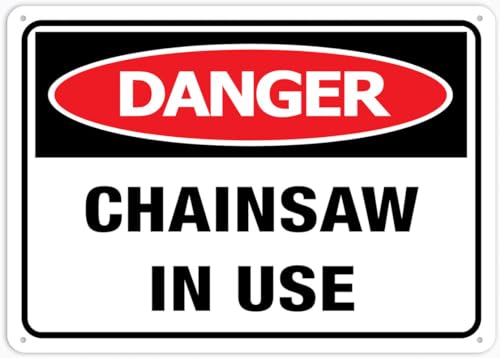
Posting visible, weatherproof signage around the cutting perimeter alerts neighbors, family members, or passing pedestrians to keep clear of falling limbs and equipment hazards. Using heavy-duty, rust-resistant aluminum danger signs ensures that warning markers remain upright and completely legible despite driving rain and heavy winds. Pre-drilled corner holes make it simple to fasten warning plaques securely to fence posts, timber lots, or workshop approach gates. Managing water runoff around the equipment staging area with dedicated rain chains and proper drainage also keeps walking paths firm and reduces mud accumulation near saw storage zones.
Communication protocols between cutting crew members must be reinforced when bad weather suppresses vocal warnings. Utilizing clear, standardized hand signals ensures that spotters and saw operators can coordinate safely without relying on shouts muffled by rain and hearing protection. Spotters must remain outside the primary drop zone, maintaining a clear line of sight to the sawyer while watching overhead for widow-makers and loose branches dislodged by wind or rain. If visibility drops to the point where team members cannot clearly see one another, cutting operations should cease immediately.
Post-Rain Tool Care, De-Watering, and Corrosion Prevention
Proper maintenance following wet-weather operation is vital for preventing destructive corrosion and mechanical seizing. Moisture trapped beneath the clutch cover mixes with fine wood dust to form a dense, damp paste that traps water against the steel guide bar, drive sprocket, and chain links. As soon as cutting is finished, operators must remove the clutch cover, scrape away all packed sawdust slurry, and blow dry the entire drive assembly with compressed air. Failing to clear this wet debris results in surface flash rust on the chain cutters and bar rails within twelve hours.
The guide bar requires thorough individual inspection after running in wet, abrasive timber. Remove the saw chain and inspect the guide bar groove, cleaning out packed wet wood fibers using a bar cleaning tool or putty knife. Check the nose sprocket carefully to verify that water has not washed away the internal bearing grease, and apply fresh nose grease through the bar grease port if equipped. Running a flat file along the bar rails removes burrs created by increased friction, ensuring that the chain continues to track true and straight in subsequent cuts.
Fuel systems and air intakes on gas powerheads must also be inspected and de-watered before storing the saw. Inspect the air filter element, washing and completely drying nylon mesh filters, or replacing saturated paper filters with fresh, dry components. If moisture is suspected in the fuel tank, drain the mixed fuel completely and refill with fresh 89-octane ethanol-free gasoline mixed with quality two-stroke oil. Finally, start the powerhead briefly in a dry, covered area to bring the engine up to operating temperature, evaporating any residual internal moisture from the crankcase and exhaust muffler.
Best Operational Practices for Emergency Storm Clearance
When storm damage necessitates emergency chainsaw use in wet conditions, adjusting operational technique helps mitigate inherent risks. Keep all cutting operations strictly at waist level or lower, avoiding any overhead branch trimming where falling water, bark, and sawdust blind the operator. Maintain a firm, two-handed grip on the saw at all times, keeping your left arm straight to absorb unexpected reactive forces. Always engage the manual front chain brake before taking even a single step between cuts across slick ground.
Bucking logs under tension requires exceptional caution after storms, as wet trunks often hold complex compression and tension loads. When a tree trunk is pinned under other fallen timber, wet bark can cause the guide bar to slip sideways off the log during the initial cut. Always analyze where compression and tension forces lie within the wood before placing the chain against the bark. Make small relief cuts on the compression side first to prevent the wood from snapping violently or pinching the guide bar, and never cut directly with the upper tip quadrant where rotational kickback occurs.
Establishing an unobstructed escape path is mandatory before making any felling or heavy bucking cuts in wet terrain. Saturated soil and tangled, wet brush can easily catch a boot heel, turning a routine retreat into a dangerous fall beneath falling timber. Clear brush away from your working stance and establish a clear 45-degree retreat route behind the anticipated fall line before starting the cut. Taking the time to prepare your working platform and retreat path ensures that you can move smoothly and decisively if the tree shifts unexpectedly.
Deciding whether to run a chainsaw in the rain ultimately comes down to balancing urgency against substantial safety risks. While a properly maintained gas-powered saw can physically function in light moisture, slippery footing and diminished visibility dramatically heighten injury hazards. Corded electric saws must never be used in wet weather, and battery tools should be restricted to light, controlled work only if weather-sealed. When emergency cutting cannot wait for dry skies, slowing down, wearing full protective gear, securing the cutting zone, and executing meticulous post-cut tool maintenance will keep both operator and equipment safe.





Write Your Review
No reviews yet. Be the first to share your experience!