


When storm debris scatters fallen limbs across a property or seasonal firewood needs cutting, homeowners need reliable cutting equipment that balances power with manageable handling. Property owners often evaluate whether are troy bilt chainsaws good offer the durability and cutting speed needed for routine yard maintenance without demanding professional forestry budgets. A balanced gas powerhead combined with a matched guide bar helps clear downed branches quickly, much like selecting a saw for cant cutting when squaring timber in a workshop. Choosing the right outdoor cutting tool depends heavily on engine displacement, starting ease, and how well the machine handles sustained bucking loads.
Modern residential gas models typically feature engines engineered for easy pull-starts, manageable vibration, and dependable bar lubrication. Understanding whether are troy bilt chainsaws good for your specific workload requires examining mechanical components like full-crank engines, chain pitch specifications, and low-kickback safety features. When paired with proper 2-stroke fuel blending and regular cutter maintenance, these saws deliver consistent cutting performance for yard cleanup, tree trimming, and light firewood processing. Evaluating the exact build specifications ensures you select an outdoor power tool that fits your property chores safely and effectively.


Evaluating Troy-Bilt Chainsaws: Performance, Engineering, and Practical Ownership
Determining whether a specific chainsaw brand suits your property requires looking closely at mechanical architecture, cutting ergonomics, and day-to-day dependability. Homeowners facing storm cleanup, limb trimming, or firewood cutting need tools that start predictably and hold cutting speed under load. Examining how Troy-Bilt engineers their gas powerheads reveals where these machines excel and where their practical boundaries lie.
Overall Assessment: Are Troy-Bilt Chainsaws Good for Homeowners?
Troy-Bilt chainsaws are dependable, capable cutting tools engineered specifically for suburban homeowners, rural property managers, and seasonal woodcutters who need solid cutting performance without commercial investment. These machines balance accessible engine displacements with practical convenience features, including assisted recoil starters and isolated handle systems. For bucking fallen branches, trimming storm damage, and processing firewood each autumn, they offer dependable cutting speed. They are not intended for professional logging crews or continuous daily felling, but they fulfill residential property cleanup tasks effectively.
The core appeal of these saws lies in their approachable engineering, which helps less experienced operators manage routine tree care safely and comfortably. Full-crank engines provide smoother rotation and reduced internal wear compared to half-crank designs often found in budget yard equipment. Additionally, pairing low-kickback guide bars and chains helps reduce rotational rebound risks while still delivering clean crosscuts through mixed softwoods and medium hardwoods. When operated within their rated capacity and maintained with fresh fuel, these saws provide dependable value for residential woodlots.
Two-Cycle Full-Crank Engine Design and Displacement Capabilities
Engine displacement serves as the foundation of chainsaw performance, dictating cutting torque and chain speed under sustained mechanical load. Troy-Bilt builds models like the TB4216 and TB4218 around a 42cc two-cycle engine platform, which provides an ideal middle ground for residential property chores. This 42cc displacement generates sufficient torque to drive 16-inch and 18-inch cutting attachments through dense oak, maple, and pine without immediately bogging down. The balanced engine sizing ensures operators have enough cutting authority for moderate firewood bucking while keeping the overall powerhead lightweight and manageable.
A standout mechanical detail within this displacement class is the full-crank engine configuration utilized across these powerheads. Unlike half-crank engines that support the crankshaft on only one side with a cantilevered pin, a full-crank design supports the crankshaft with bearings on both sides of the crankcase. This dual-bearing support provides superior mechanical balance, reduces internal rotational vibration, and significantly extends the service life of internal engine seals and bearings. The result is a more durable power unit that withstands the variable throttle loads typical of firewood cutting, limb pruning, and prolonged yard work.
SpringAssist Pull-Starting Mechanism and Cold Start Sequence
Starting a small gas-powered engine is frequently the most frustrating aspect of outdoor power equipment ownership for homeowners. Troy-Bilt addresses this common challenge by integrating SpringAssist technology into their pull-start recoil assemblies. This mechanism utilizes an internal coil spring between the pull rope spool and the engine crankshaft to absorb sudden jerks and smooth out the pulling effort. Instead of fighting direct cylinder compression during the pull stroke, the operator draws the cord smoothly while the internal spring stores and releases kinetic energy to spin the flywheel.
Achieving reliable cold starts requires strictly following the specified purge and choke procedure before pulling the starter handle. Operators must first press the flexible primer purge bulb several times until fuel visibly fills the bulb and excess air returns to the tank. Setting the choke control to full choke enriches the air-fuel mixture, and moving the choke to half choke once the engine sputters ensures smooth startup without flooding the combustion chamber. If excess fuel floods the cylinder from repeated pulling, clearing it requires pushing the choke off, depressing the throttle, and pulling firmly until the spark plug clears.
Guide Bar Lengths and Replacement Chain Specifications
The cutting reach of a chainsaw is dictated by its guide bar, which is measured strictly from the front face of the powerhead housing to the rounded tip of the bar nose. Troy-Bilt equips its 42cc models with either a 16-inch or 18-inch guide bar, providing sufficient clearance to cut through medium logs in a single clean pass. An 18-inch bar offers extended reach that reduces bending when bucking logs on the ground, while a 16-inch bar provides slightly higher chain speed and nimble handling when pruning dense tree canopies. Matching the bar length to your typical wood diameter ensures efficient cutting without placing unnecessary mechanical drag on the engine.
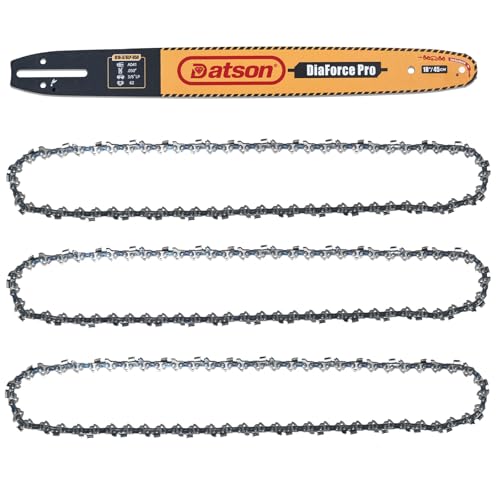
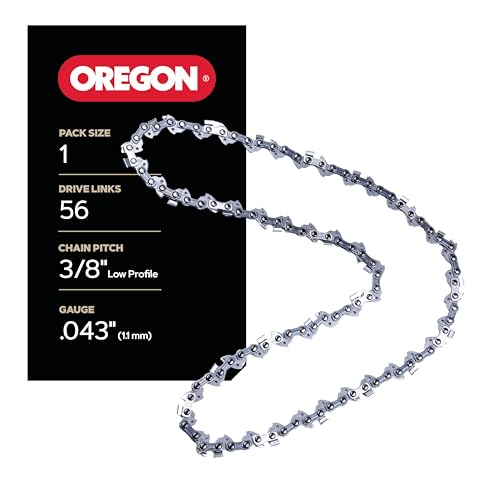
Selecting replacement saw chains requires exact matching across three critical drive specifications: chain pitch, drive link gauge, and drive link count. On Troy-Bilt 18-inch models such as the TB4218 and compatible gas platforms, cutting systems commonly use a 3/8-inch Low Profile pitch combined with a .050-inch drive link gauge and a 62 drive link count. Aftermarket options from brands like DatsenAAA and UPFOREST supply compatible bar and chain combos as well as chains suited for 16-inch electric models like the TB3516. Installing loops matching these exact dimensions ensures proper sprocket engagement and prevents costly rail binding.
Automatic Adjustable Bar Lubrication and Oil Control
Continuous lubrication between the high-speed saw chain and the static guide bar rails is essential to prevent destructive friction, heat buildup, and premature component wear. Troy-Bilt gas chainsaws incorporate an adjustable, automatic bar and chain oiler that delivers oil to the cutting system whenever the powerhead runs. The automatic mechanism pumps lubricant from the onboard reservoir through a dedicated discharge port directly into the oil inlet hole of the guide bar. This continuous oil film reduces friction as the drive links glide along the top and bottom guide rails at several thousand feet per minute.
The inclusion of an adjustable oil flow control provides a valuable advantage over fixed-rate oilers found on many entry-level chainsaws. Cutting dry, seasoned hardwoods like hickory or oak generates substantial friction that benefits from increasing the oil flow rate with a simple turn of the adjustment screw. Verifying oil delivery before cutting is straightforward by revving the engine with the bar tip pointing toward a clean log or scrap cardboard. A visible line of oil droplets confirming active discharge ensures that the oil passages and bar rails remain properly lubricated during demanding cuts.
Vibration Isolation and Operator Handling
Engine vibration and physical fatigue represent significant concerns during multi-hour firewood bucking sessions, directly affecting operator control and physical safety. Troy-Bilt incorporates a 3-point anti-vibration handle system that isolates the front and rear handles from the vibrating engine block and cutting assembly. Flexible damping mounts absorb mechanical shocks and high-frequency engine pulses before they reach the operator hands and wrists. This isolation helps reduce numbness, tingling, and hand fatigue, allowing homeowners to work comfortably and maintain steady cutting form throughout property cleanup tasks.
In addition to vibration damping, powerhead balance and overall ergonomics dictate how easily a chainsaw maneuvers through complex pruning cuts. The rear-handle layout positions the throttle trigger, lockout lever, and master switch within easy reach of the dominant hand, while the wraparound front handle supports diverse cutting angles. The lightweight construction of these 42cc models helps prevent upper-body strain when lifting the powerhead to trim overhanging branches. Maintaining a secure two-handed grip with the left thumb wrapped completely around the front handle ensures positive control if the bar encounters reactive forces.
Chain Sharpening, Raker Depth, and Tensioning Checks
A sharp, properly tensioned saw chain is essential for clean cutting performance, fuel efficiency, and overall chainsaw longevity. When a chain dulls from cutting dirty bark or contacting sandy soil, the engine must work harder, generating excessive heat and producing fine wood dust instead of thick, curly shavings. Restoring the razor edge on a 3/8-inch Low Profile semi-chisel chain requires using a round sharpening file with a 5/32-inch diameter. Maintaining a consistent 30-degree filing angle across every cutter tooth ensures balanced cutting action and prevents the guide bar from drifting crookedly through crosscuts.
Proper chain maintenance also requires inspecting the rakers, or depth gauges, and setting proper tension along the guide bar. Filing the depth gauges with a progressive gauge tool maintains the proper gap so the cutters sever uniform wood chips without grabbing aggressively. Before starting the engine, check that the chain does not sag beneath the bar rails and snaps back snugly when pulled downward during a snap test. Utilizing the side-access chain tensioner alongside the dual bar nuts allows operators to make quick tension adjustments in the field without taking off the clutch cover.
Fuel Quality, Two-Stroke Mixing, and Seasonal Storage
Small two-stroke engines are particularly vulnerable to fuel degradation, making fuel quality the single most critical factor in long-term powerhead reliability. Modern pump gasoline containing ethanol poses significant risks because ethanol absorbs ambient moisture and separates from fuel over time in a process called phase separation. This water-laden ethanol mixture corrodes delicate carburetor passages, hardens flexible primer bulbs, and degrades rubber fuel lines. For optimal engine protection, powerhead longevity, and clean exhaust emissions, running high-octane ethanol-free gasoline mixed with quality two-cycle synthetic oil is strongly recommended.
Achieving the correct fuel-to-oil mixture ratio is essential to lubricate internal crankshaft bearings, connecting rods, and piston cylinder walls during high-rpm operation. Troy-Bilt two-cycle engines rely on precise fuel blending, typically utilizing a 40:1 ratio consisting of 3.2 fluid ounces of 2-cycle engine oil per gallon of fresh gasoline, or a 50:1 ratio of 2.6 ounces per gallon depending on manufacturer specifications. Storing the saw empty after running the carburetor dry prevents fuel varnish, while parking it on an oil-absorbent mat manages normal bar oil weeping. Property owners organizing their work area can also review techniques for hanging a pole saw securely to keep related cutting tools elevated off damp shop floors.
Practical Workload Limits, Safety Gear, and Best Uses
Understanding the practical workload boundaries of a 42cc gas chainsaw ensures you select the right tool for your property maintenance routine. Troy-Bilt chainsaws excel in yard cleanup, storm debris reduction, branch limbing, and bucking logs up to 14 to 16 inches in diameter. When tasked with cutting firewood cords of seasoned birch, ash, or pine, these saws maintain steady throughput without overwhelming the operator with excess physical weight. However, tackling massive timber felling or operating small portable chainsaw slab mills demands commercial powerheads with 60cc displacements, heavy-duty crankcases, and wide-kerf bars designed for continuous heavy loads.
Operating any chainsaw safely requires strict adherence to personal protective equipment standards and built-in mechanical safety mechanisms. Troy-Bilt integrates an inertia-activated front chain brake, a sturdy chain catcher pin, and a rear throttle trigger lockout to protect against reactive kickback and drive link breaks. Operators should always wear UL-classified chainsaw chaps, heavy leather gloves, steel-toe boots, eye protection, and a forestry helmet with hearing protection and a mesh face shield. Avoiding cuts using the upper quadrant of the bar tip prevents violent kickback, keeping property cleanup productive and safe.
Ultimately, Troy-Bilt chainsaws provide a dependable balance of cutting capability, user-focused starting technology, and ergonomic comfort for suburban and rural property maintenance. While commercial timber operations require specialized heavy equipment, homeowners managing seasonal firewood, downed tree branches, and storm cleanup will find these 42cc powerheads fully capable. Maintaining fresh fuel, keeping the semi-chisel chain sharp, and performing regular lubrication checks ensures consistent cutting efficiency season after season.




Write Your Review
No reviews yet. Be the first to share your experience!