


Handheld drilling often leads to crooked holes, wandering bits, and ruined workpieces when working through dense timber or structural steel. A dedicated benchtop or magnetic unit eliminates chuck wobble by locking the bit onto a rigid vertical axis, giving you repeatable depth stops and clean entries. Selecting the best drill press machine gives makers the sustained motor torque and stable cast iron footing needed to bore accurate diameters without fighting bit deflection. Many fabricators and woodworkers look at motor wattage, spindle stroke, and speed control to prevent burning bits during repetitive runs. Workshop efficiency jumps significantly when you pair clean boring with a quality oscillator sander for woodworking to clean up mating edges before final joinery.
Modern models range from compact desktop units with high-speed DC motors to heavy magnetic bases packing thousands of pounds of holding force for jobsite steel beams. Evaluating manufacturer specifications helps match spindle travel depth and variable speed ranges to your typical stock thickness. Stable cast iron frames damp motor vibration, while keyless or keyed chuck mechanisms ensure firm shank gripping during high-torque hole saw cuts. Taking time to inspect motor amperage and base clamping setups keeps workpieces safe and delivers professional results across wood, plastic, and metal fabrication.



Frequently Asked Questions
What is the main difference between a magnetic drill and a benchtop drill press?
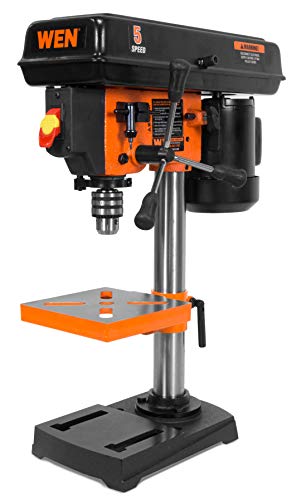
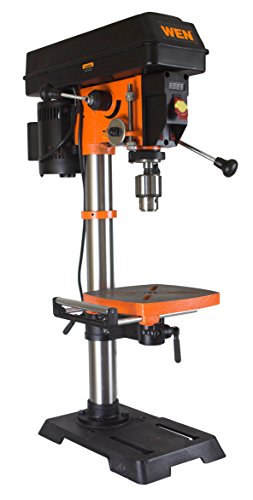
Magnetic drill presses use powerful electromagnets to clamp directly onto ferrous steel beams, whereas benchtop drill presses bolt to a workbench to process loose workpieces. Benchtop models like the WEN 12-inch feature wide cast iron tables and variable speed dials for general wood and metal tasks. Magnetic units provide extreme holding power, allowing fabricators to drill overhead or horizontally on jobsite structural I-beams without bit slippage.
Why is variable speed control important on the best drill press machine?
Variable speed control prevents bit overheating and matches the required cutting speed for specific materials and bit diameters. Large hole cutters and metal bits require lower RPM to maintain cutting torque without dulling edges, while small twist drills in softwoods need higher spindle speeds for tear-free holes. Having multi-speed pulleys or mechanical variable speed dials ensures clean, accurate holes in every workpiece.
How much spindle travel do you need for typical workshop projects?
A spindle travel range between 2 inches and 3-1/8 inches handles most standard woodworking, metal fabrication, and DIY drilling tasks. Compact bench models provide roughly 2 inches of stroke for thin sheet metal, brackets, or craft projects. If you frequently bore deep mortises or thick structural lumber, opting for a 3-inch or greater spindle travel prevents the need to adjust table height midway through a hole.
What causes chuck wobble, and how does a drill press prevent it?
Chuck wobble, or runout, is caused by off-center spindle bearings or loose chuck jaws in handheld drills. A solid drill press locks the quill and chuck into precision linear bearings and heavy cast iron housings. This rigid setup keeps the drill bit perfectly perpendicular to the table, protecting fine pilot holes and preventing bit drift in hard metals. If you smooth small craft components after drilling, pairing your setup with a detailing sander for tight spaces produces immaculate project finishes.
Can you use regular twist drill bits in magnetic core drilling machines?
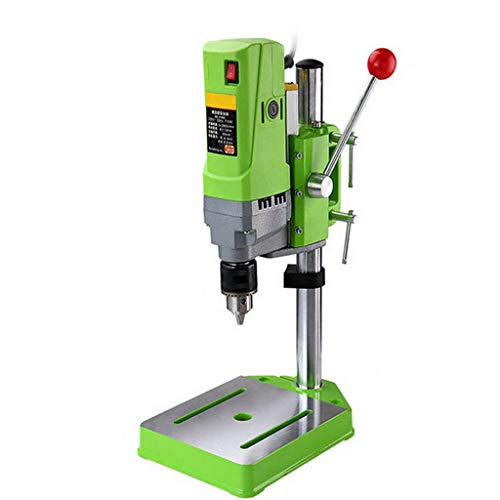
Yes, regular twist drill bits work in magnetic presses if you install a compatible standard chuck adapter alongside the annular cutter arbor. Most magnetic units are engineered primarily for annular cutters that slice clean holes up to 2 inches in diameter with minimal motor strain. Using standard twist bits above 1/2 inch requires careful feed pressure and proper cutting lubricant to avoid overloading the motor.
Is a keyed chuck better than a keyless chuck on a drill press?
Keyed chucks provide superior gripping torque for high-resistance drilling in thick metals and hardwoods. Tightening all three pinholes with a chuck key locks the jaws securely around cylindrical bit shanks to eliminate slippage under load. While keyless chucks allow faster bit changes, heavy-duty workshop drilling benefits from the mechanical security of a heavy keyed chuck.





Write Your Review
No reviews yet. Be the first to share your experience!