


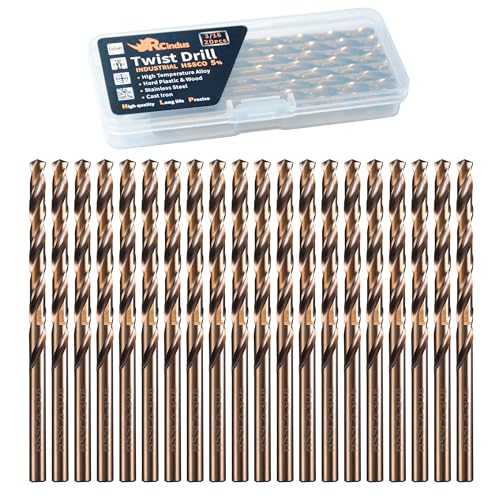
Burning through standard twist bits on dense, abrasive iron castings turns a straightforward fabrication job into an absolute headache. Dull cutting edges generate excessive friction, glazing over the surface until your drill press or handheld driver simply spins without biting. Securing the best drill bit for cast iron means stepping up to heat-resistant metallurgy like M35 or M42 cobalt blends that retain hardness under intense friction. We evaluated manufacturer metallurgy specs, split-point geometries, and user feedback to see how these heavy-duty bits hold up against abrasive castings. Selecting a bit with a 135-degree split point also prevents bit walking, allowing you to bore accurate holes without an aggressive center punch.
Chuck slippage is another common annoyance when putting heavy feed pressure behind a large diameter twist bit. High-torque drilling through cast metal demands shanks with three-flat gripping surfaces or precision-machined jobber lengths that lock tight inside all-metal ratcheting chucks. If you frequently handle automotive repairs or machinery fabrication, pairing durable drill bits with a smooth da sander for bodywork keeps your surrounding metal surfaces clean and deburred. Paying attention to cutting speeds and steady feed pressure will protect your tool investment and keep your workpieces accurate. Quality drill bits save motor strain on your drill driver while delivering chatter-free, accurate holes through the toughest shop projects.




Frequently Asked Questions About Drilling Heavy Metals
Why is cobalt steel recommended for drilling cast iron?
Cobalt steel resists extreme friction heat that quickly softens standard high-speed steel. Alloys containing 5% cobalt (M35) or 8% cobalt (M42) maintain their cutting edge even when drilling dense, abrasive metals without burning out. This high thermal tolerance prevents edge dulling and allows steady cutting without work-hardening the metal. Many metalworkers consider cobalt twist bits the best drill bit for cast iron for reliable longevity in machine shops.
Should you use cutting oil when drilling into cast iron?
No, cast iron is typically drilled completely dry. Graphite flakes within gray cast iron act as a natural dry lubricant during cutting. Adding fluid forms an abrasive slurry with the fine iron dust that can dull bit flutes and accelerate wear. However, running a shop vacuum nearby helps clear iron dust without creating mess.
What drill speed works best for boring holes in cast iron?
Low spindle speeds combined with firm, steady feed pressure yield the best drilling results. High RPM causes excessive friction and glazes the metal, which ruins the cutting lip on your twist bit. Running your drill on its lower mechanical gear setting keeps temperatures down and pulls consistent, small chips. Steady downforce prevents the bit from rubbing against the bottom of the pilot hole.
What does a 135-degree split point do on metal drill bits?
A 135-degree split point starts cutting on contact and stops the bit from skating across smooth surfaces. Unlike flatter 118-degree tips, the split point eliminates the need for aggressive center punching on heavy metal brackets. It bites instantly into the workpiece, requiring less feed pressure from your hands and drill press. This design produces clean pilot holes while minimizing bit runout and chuck strain.
How do three-flat shanks prevent chuck slippage in high-torque drills?
Three-flat shanks provide flat contact planes that interlock securely with three-jaw drill chucks. Round shanks frequently slip and spin under heavy torque loads, damaging both the shank and the chuck jaws. The flats create a positive mechanical grip, delivering maximum rotational power directly to the cutting edge. After completing metal drilling, smoothing down adjoining project pieces with a small area sander for detail work ensures neat final finishes.
Can standard titanium-coated bits drill through cast iron?
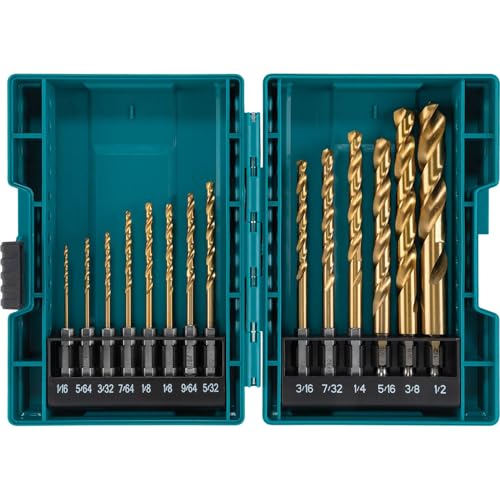
Titanium-coated bits can penetrate thin cast pieces, but they wear out much faster than solid cobalt alloys. Once the thin titanium nitride outer coating wears away from the cutting tip, soft underlying high-speed steel dulls rapidly against abrasive iron. Solid cobalt bits retain the same tough alloy throughout the entire core, meaning they can even be resharpened multiple times. For repetitive drilling or thick stock in 2026, investing in solid M35 or M42 bits provides far better durability.





Write Your Review
No reviews yet. Be the first to share your experience!