


Dull teeth, excessive burning, or rough tear-out indicate that your cutting tool needs a fresh edge to maintain precision. Learning how to remove dewalt miter saw blade hardware correctly ensures smooth workshop operations and prevents accidental spindle or thread damage. Whether you operate a 10-inch compound model or a 12-inch sliding saw, swapping blades is routine maintenance every woodworker encounters. The core principles resemble the steps needed when removing a circular saw blade, but miter saws feature specific guard linkages and reverse-threaded spindle bolts that demand extra care.
Stripping an arbor screw or bending a guard bracket turns a five-minute maintenance task into an annoying repair job. Taking time to inspect the outer clamp washer, spindle threads, and arbor adapter ring helps keep your cuts square and chatter-free. Having the right tools on hand, such as a dedicated factory wrench or a reliable aftermarket replacement, makes the entire process safe and predictable. This walkthrough breaks down each step clearly so you can change your cutting tool with complete confidence.
Pros
- Solves arbor mismatch between 1-inch blade holes and 5/8-inch saw shafts
- Direct fit for many common DeWalt 12-inch compound and sliding miter saws
- Helps keep blades properly centered to avoid out-of-balance rotation
- Inexpensive solution to keep older, reliable miter saws in active service
Cons
- Requires careful manual alignment inside the blade bore during installation
- Limited strictly to 1-inch to 5/8-inch conversions and will not fit other arbor step sizes
- Small loose part that can be easily misplaced during frequent blade swaps
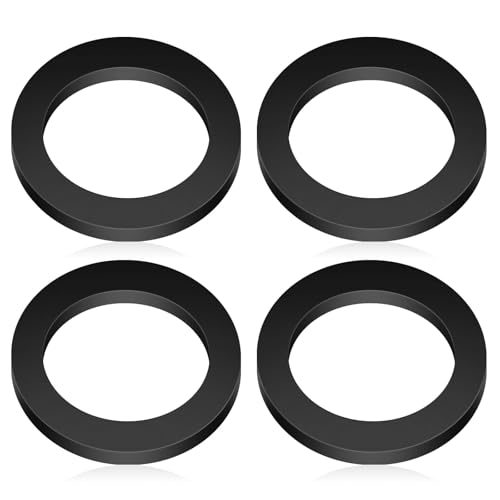
The Karbay 152636-00 Miter Saw Blade Adapter Ring is a dedicated arbor reducer bushing built for woodworkers, carpenters, and DIY remodelers who need to match blade arbor dimensions to their saw motor shaft. Many 12-inch miter saw blades come manufactured with a standard 1-inch center hole, whereas several popular miter saw models utilize a 5/8-inch motor arbor. This adapter bridges that gap cleanly, serving as a direct replacement for OEM part numbers 152636-00 and 45-88-0330.
In practical cutting setups, proper blade seating is critical for clean crosscuts, miters, and bevels. A loose or improperly sized arbor fit can introduce blade runout or an out-of-balance rotation, which degrades cut quality and increases wear on the tool spindle. With a 1-inch outside diameter and a 5/8-inch inside diameter, this ring is shaped to seat snugly inside the blade arbor recess, allowing your saw blade clamp washers to tighten flat and true against the blade body.
The bushing features a compact, low-profile black design sized to sit flush within the blade core without interfering with outer blade flanges or factory clamping hardware. It is compatible with a broad roster of DeWalt miter saws, spanning older workhorses like the DW704, DW705, DW706, and DW708, alongside newer platforms such as the DW715, DW716, DW718, and DWS780. Because it matches factory dimensions, it provides a straightforward, drop-in replacement when an original arbor spacer is lost or worn.
Installing the adapter is straightforward during a routine blade change. Always disconnect the saw from power or remove the battery pack before servicing cutting accessories. The ring drops directly into the blade's 1-inch center bore before the blade is seated over the 5/8-inch motor shaft and secured with the outer flange and arbor bolt. Keeping the ring cleanly seated while tightening hardware ensures the blade centers properly on the spindle.
While this adapter ring solves a specific fit issue, it is strictly intended for 1-inch bore blades on 5/8-inch shafts and cannot accommodate other arbor standards. Additionally, because it is an unattached small ring, it can be easy to misplace during blade swaps if you switch frequently between dedicated 5/8-inch blades and 1-inch bore blades.
For owners of compatible 12-inch DeWalt miter saws who want the freedom to purchase standard 1-inch arbor replacement blades, this Karbay adapter is an economical and sensible addition to any workshop toolbox or jobsite maintenance kit.
This adapter is engineered specifically to convert blades with a 1-inch arbor hole for use on miter saw spindles measuring 5/8 inch in diameter. This allows users to mount standard 12-inch miter saw blades onto compatible tools without requiring permanent spindle modifications.
According to the product specifications, this bushing replaces part numbers 152636-00 and 45-88-0330. Compatible DeWalt saw models include the 3660, 3680, DW704, DW704A, DW705, DW705A, DW705S, DW706, DW708, DW715, DW716, DW718, and DWS780, among other regional variants. Users should always verify their saw shaft size and blade bore diameter before purchase to confirm proper fit.

Pros
- Direct fit replacement for an extensive list of DeWalt 10-inch and 12-inch miter saws
- Rigid hardened steel construction helps resist warping and uneven pressure
- Helps restore flat blade seating to reduce vibration and cut chatter caused by damaged washers
- Quick and straightforward drop-on replacement during regular blade changes
Cons
- Does not include the arbor screw (the factory reverse-thread bolt must be reused or purchased separately)
- Replaces only the outer clamp washer and does not include the inner arbor flange
- Engineered strictly for listed DeWalt models rather than universal miter saw fitment
The RMSPO 151962-01 outer blade washer is a purpose-built replacement clamp engineered for woodworkers, trim carpenters, and DIYers using DeWalt 10-inch and 12-inch miter saws. When an original washer goes missing during a blade swap or becomes warped from repeated overtightening, finding a direct-fit replacement is necessary to get your saw back up and running. This aftermarket washer directly replaces OEM part number 151962-01, offering a reliable, affordable repair component for workshop and jobsite saws.
In practical cutting tasks such as trimming baseboards, cutting crown molding, or crosscutting dimensional framing lumber, blade stability is critical to accuracy. A bent or uneven clamp washer can cause the saw blade to deflect or wobble during operation, resulting in rough kerfs, wandering cut lines, and increased resistance in the cut. This replacement washer provides a flat, even clamping surface against the outer body of the blade, supporting smooth rotation and helping maintain clean, square cuts across compound angles.
Constructed from high-grade hardened steel, the washer is built to handle the high rotational torque and vibration typical of 15-amp compound miter saws. Its heavy-duty profile is designed to resist dishing or warping under bolt tension, which helps extend its service life even if you frequently switch between high-tooth finish blades and rough-cutting framing blades.
Installing the replacement washer requires minimal effort during routine blade maintenance. Because DeWalt miter saws use a reverse-thread blade screw, the bolt turns clockwise to loosen and counter-clockwise to tighten. Once your blade is seated on the spindle against the inner flange, slide the 151962-01 washer onto the arbor with the flat clamping side against the blade, then secure it firmly with your original arbor bolt. Keeping your power cord disconnected or removing the battery pack during installation is standard practice.
While this washer solves the problem of a damaged or missing outer clamp, remember that it does not include a replacement arbor screw or inner flange. Woodworkers looking to correct blade runout caused by a warped washer, or anyone seeking a backup part in their tool bag to avoid jobsite downtime, will find this a practical and economical solution for their DeWalt miter saw.
This outer blade washer is designed specifically to replace OEM part number 151962-01 on select DeWalt compound and sliding compound miter saws. Supported models include 10-inch and 12-inch saws such as the DW703, DW705, DW706, DW708, DW712, DW713, DW715, DW716, DW717, DW718, and the DWS780.
Before purchasing, check the model number on your saw's nameplate to ensure compatibility. This part functions exclusively as the outer clamping washer positioned directly beneath the arbor bolt head; it is not intended to replace the inner arbor flange or fit saws from other manufacturers without explicit model verification.

Pros
- Direct fit for listed DeWalt miter saws including DWS779, DWS780, DWS713, DWS715, and DCS361M1
- Single-piece design provides solid leverage for arbor screw removal and installation
- Compact and lightweight for easy storage in a tool bag or onboard saw holder
- Affordable solution for replacing a lost or misplaced original arbor wrench
Cons
- Restricted to listed DeWalt models and not intended as a universal miter saw tool
- Includes only a single wrench without mounting clips or extra hardware
The buccilly N600007 Miter Saw Wrench is a specialized replacement tool created for woodworkers, carpenters, remodelers, and DIY homeowners who need a direct replacement for a lost or worn arbor wrench. Blade wrenches are frequently misplaced on busy jobsites or around cluttered workshops, leaving users struggling to change out dull blades or swap between different tooth configurations. This tool restores proper maintenance access for specific miter saws without forcing owners to rely on ill-fitting adjustable wrenches or pliers.
According to the product specifications, this wrench is specifically engineered for several widely used DeWalt miter saws, including the corded DWS713, DWS715, DWS779, and DWS780, as well as the cordless DCS361M1. Having a purpose-built wrench for these models ensures that the wrench engagement matches the arbor screw design, helping prevent stripped fastener heads and rounded edges when loosening factory-torqued blade hardware.
The tool utilizes a straightforward single-piece construction intended to balance structural rigidity with practical handling. Its profile is designed to offer sufficient leverage to break loose tight arbor bolts while remaining compact enough to slip into a saw onboard storage bracket, a drawer organizer, or a portable tool belt pouch. Because blade changes are a regular requirement for fine woodworking, trim carpentry, and general construction, a dedicated single-piece tool provides dependable utility over time.
When performing blade changes, safe workshop procedures remain paramount. Users should always verify that the miter saw is fully disconnected from power or that the battery pack is removed before engaging the wrench. Aligning the wrench securely over the arbor fastener and following manufacturer instructions for blade locking and thread direction ensures swift, safe swaps between framing, fine finish, and specialty cutting blades.
While this tool offers clear convenience, its primary limitation is fit specificity. It is not advertised as a universal saw accessory and should only be purchased after confirming compatibility with the listed DeWalt model numbers. For tradespeople and hobbyists who own a compatible saw and need an affordable, accurate replacement for part N600007, this wrench delivers an effective and practical solution.
Swapping blades on a compound or sliding miter saw is a routine requirement when moving between fast framing crosscuts and delicate trim moldings. The buccilly N600007 wrench is designed to fit the exact arbor hardware used on supported DeWalt saws, enabling clean engagement with the blade bolt.
Using an improper tool such as standard pliers or an oversized adjustable wrench can damage the arbor screw head or slip into the blade guard assembly. This replacement wrench provides the correct geometry and leverage, allowing users to safely loosen and secure blade fasteners in accordance with the saw manufacturer maintenance guidelines.
Compatibility for the buccilly N600007 wrench is explicitly specified for select DeWalt miter saw models, including DWS713, DWS715, DWS779, DWS780, and the DCS361M1 cordless miter saw. It serves as a direct equivalent to part number N600007.
Buyers should confirm their exact saw model on the tool data plate prior to ordering, as arbor screw dimensions and guard clearance vary across different brands and saw generations. This wrench is not intended for unlisted saw brands or models outside the supported family.

Pros
- Directly matches multiple DeWalt factory part numbers and saw model types
- Angular offset head provides proper clearance around the blade housing
- Stainless steel construction resists rust, workshop grime, and jobsite wear
- Affordable alternative to purchasing expensive original manufacturer parts
Cons
- Non-OEM aftermarket replacement rather than an original branded DeWalt component
- Compatibility is strictly limited to specified DeWalt models and types, requiring verification before purchase
- Includes only the wrench, with no replacement arbor bolt or flange hardware provided
The Alocs 608563-01 blade wrench is a specialized replacement accessory tailored for woodworkers, carpenters, remodelers, and DIY homeowners who own compatible DeWalt miter saws. Over time, factory blade wrenches are easily misplaced on busy jobsites or left behind in workshop drawers. This tool restores the dedicated capability needed to change blades quickly without relying on ill-fitting standard hand tools that could slip or strip the hardware.
Functionality centers entirely on loosening and securing the blade clamp bolt on supported miter saws. The wrench corresponds directly to OEM part numbers 608563-01, 608563-00, and 397196-00. Supported models span a broad range of 10-inch and 12-inch DeWalt miter saws, including the DW706, DW708, DW712, DW713, DW715, DW716, DW717, DW718, and sliding compound saws like the DWS780 and DWS782 across multiple Type designations. Verifying the specific saw model and type stamping on the tool nameplate before ordering ensures proper engagement.
Build quality relies on stainless steel with good material hardness, providing durability and strong resistance to oxidation. In humid garage workshops or outdoor jobsite trailers, resisting surface corrosion is essential for maintaining a clean interface with the bolt. Weighing roughly 0.24 pounds, the wrench features an angled head geometry specifically crafted to clear the lower blade guard mechanism and motor housing, providing adequate leverage without pinching fingers.
Routine saw maintenance requires regular blade changes, whether switching to a fine-tooth blade for delicate interior trim work or moving to a heavy-duty blade for cutting framing lumber. Power should always be disconnected from the miter saw before servicing. Using a correctly sized wrench with the proper offset profile ensures the clamp bolt receives even torque, preventing the rounded corners and thread damage commonly caused by adjustable wrenches or pliers.
As an aftermarket replacement, this product is non-OEM, though manufactured to meet OEM dimensional requirements. It does not include spare clamp bolts or arbor washers, so users must rely on their existing saw hardware. For owners of compatible DeWalt miter saws who need a reliable, corrosion-resistant replacement wrench to keep blade swaps smooth and simple, this tool offers practical everyday value.
Changing miter saw blades safely requires proper tool engagement with the arbor clamp bolt. The Alocs 608563-01 wrench is designed specifically to match the bolt head geometry of compatible DeWalt saws, reducing the risk of slippage when breaking loose tight factory bolts. Its angular profile allows the user to position the handle comfortably outside the blade guard swing path for smooth loosening and retightening.
Always consult the miter saw instruction manual for specific blade replacement procedures, including engaging the arbor lock pin and verifying thread direction, as some miter saw bolts feature left-hand threads. Keeping this dedicated wrench stored with the saw helps ensure that regular blade maintenance remains straightforward and safe.

Pros
- Comes in a convenient two-pack so you always have a backup blade-change tool on hand
- Direct fit for multiple widely used DeWalt 10-inch and 12-inch miter saw models
- Galvanized steel construction offers solid resistance against rust and everyday wear
- Matches several factory DeWalt part numbers for straightforward cross-referencing
Cons
- Third-party aftermarket replacement rather than an original OEM DeWalt tool
- Designed specifically for listed DeWalt models and will not fit all miter saw arbor bolt sizes across other tool brands
The Tobaiwind 608563-01 Replacement Blade Wrench is a dedicated accessory crafted for owners of select DeWalt miter saws. On any active jobsite or busy woodworking shop, the factory blade wrench is one of the easiest tools to misplace, yet it is completely indispensable whenever you need to swap out a dull crosscut blade, switch to a fine-finish trim blade, or clean pitch off your cutting hardware. This product provides an aftermarket replacement designed to match the fit and function of the original equipment part.
Compatibility is the central focus of this replacement wrench. The manufacturer lists compatibility across a broad lineup of DeWalt saws, including the DW706, DW708, DW712, DW713, DW715, DW716, DW718, DWS779, DWS780, and DWS782. It replaces factory part numbers 608563-01, 608563-00, 397196-00, 60856301, 60856300, and 39719600. For trim carpenters running 12-inch sliding dual-bevel saws or DIY homeowners relying on classic 10-inch compound models, having a tool that properly seats on the arbor clamping bolt prevents rounded fasteners and stripped hardware.
Regarding build quality, the wrench is stamped from solid steel with an accurate opening designed to securely seat on the saw's arbor bolt. The silver galvanized finish provides a protective barrier against moisture, humidity, and shop condensation, helping prevent corrosion over time. While simple in design, the structural rigidity ensures you can apply sufficient leverage to break loose tight factory arbor bolts or safely torque down new blades without bending the tool.
Using the wrench follows standard miter saw maintenance workflows. Before initiating any blade swap, always disconnect the saw from its power source or remove the battery pack to ensure total safety. With the spindle lock engaged on the saw head, this wrench slots directly onto the blade bolt, allowing for controlled loosening and re-tightening according to your saw manual's specified rotation direction. The compact profile also allows it to be tucked into onboard storage clips or kept in a dedicated blade-carrying case.
As an aftermarket replacement, there are realistic limitations to keep in mind. This is not a universal miter saw tool; it is engineered for specific DeWalt hardware configurations and will not work across unrelated saw brands with different arbor bolt heads. Additionally, while the galvanized coating resists surface rust, storing it in clean, dry tool pouches extends its service life.
For any woodworker, contractor, or remodeler who has lost their original DeWalt miter saw wrench, this two-pack from Tobaiwind represents a sensible, budget-friendly solution. Having two wrenches ensures you can keep one mounted to the saw or stored in your blade case while tucking the other safely away as a backup, eliminating jobsite downtime when blades need to be changed.
The Tobaiwind 608563-01 wrench is specifically designed to engage the arbor clamping bolt that holds the miter saw blade onto the drive arbor. Proper fit on the bolt head is critical during blade changes to prevent slipping, which can damage the bolt corners or risk injury to the user's hands against sharp carbide teeth.
Always consult the miter saw owner's manual for proper reverse-thread or standard-thread direction and safety steps when swapping blades. Disconnecting the power source and locking the blade spindle before applying torque with this wrench ensures smooth, hassle-free blade maintenance.
This replacement wrench supports an extensive list of DeWalt miter saws, including models DW706, DW708, DW712, DW713, DW715, DW716, DW718, DWS779, DWS780, and DWS782. It directly substitutes for OEM part numbers 608563-01, 608563-00, and 397196-00.
Buyers should check their saw model number on the rating plate before purchasing to confirm that their specific tool uses the 608563-01 or 397196-00 specification for blade removal hardware.
Complete Step-by-Step Guide to Removing and Servicing a DeWalt Miter Saw Blade
Removing a saw blade from a compound or sliding miter saw requires understanding how the arbor assembly secures the disc under rotation. Miter saws rely on reverse-threaded arbor bolts and specialized outer clamping washers to prevent the blade from spinning loose during rapid motor starts and electric braking. When you understand how these mounting components interact, changing out a dull blade becomes a quick and routine workshop task.
Disconnecting Power and Preparing the Work Area
Disconnecting the tool from its power source is the absolute first requirement before touching any cutting assembly. If your DeWalt miter saw is a corded model, unplug the power cord directly from the wall outlet or extension lead. Cordless models require you to slide the battery pack out of the motor foot completely so no residual electrical current can activate the motor. Never rely solely on the trigger switch lock-off mechanism when servicing an exposed cutting edge.
Clear the saw table and surrounding bench space of scrap wood, sawdust buildup, and loose hand tools. Adequate room allows you to swing the saw arm freely and maintain stable footing while applying wrench pressure. Turn on supplemental overhead lighting or place a task light directly over the blade chamber to see the bolt head and guard screws clearly. A clean, well-lit surface also keeps small hardware like washers from dropping into the lower chassis or dust chute.
Understanding the Left-Hand Reverse Thread Direction
Standard household fasteners loosen when turned counterclockwise, but DeWalt miter saw blade bolts utilize left-hand threads. This reverse-thread engineering ensures that rotational torque and electric braking action continuously tighten the fastener against the arbor rather than backing it out. Attempting to loosen the bolt by turning it counterclockwise will only overtighten the fastener, potentially stripping the hex socket or galling the spindle threads. Remembering that clockwise rotation loosens the bolt is vital for preventing costly mechanical damage.
Many woodworkers use the simple rule that you turn the wrench in the direction of the blade rotation to loosen the bolt. Because the teeth at the front of the saw cut downward toward the fence, rotating clockwise moves in that downward cutting direction. Visualizing this rotational direction removes second-guessing before you apply significant mechanical force to the wrench handle. If a bolt feels seized, double-check your rotation direction before applying additional leverage.
Retracting the Lower Guard and Loosening the Bracket Plate
Modern DeWalt miter saws cover the arbor bolt with a protective metal bracket attached to the clear lower blade guard. You cannot fit a wrench squarely onto the bolt head until this bracket is pivoted out of your direct line of work. Use the appropriate wrench end or a separate cross-head screwdriver to loosen the small bracket screw located near the pivot hub. You do not need to remove this screw entirely; loosening it several turns provides enough clearance for the bracket to pivot freely.
Once the bracket screw is loosened, lift the clear lower guard upward and rotate the metal bracket upward along with it. This movement exposes the center arbor bolt head, the outer clamping washer, and the central spindle face. Hold the guard assembly in this raised position or let it rest against the upper casting depending on the specific model design. Take care not to bend the linkages, as bent guard arms can cause the clear cover to bind during downward chopping cuts.
Engaging the Spindle Lock Mechanism
Loosening the bolt requires locking the motor arbor in place so the blade cannot rotate while you turn the wrench. DeWalt positions a spring-loaded spindle lock button on the motor housing, typically located behind or above the blade arbor housing. Depress this button with your thumb or finger while slowly rotating the saw blade by hand using a thick leather work glove. You will feel the locking pin drop into the designated slot on the internal gear shaft, stopping all rotation.
Hold the spindle lock button firmly inward throughout the entire loosening process to keep the shaft immobilized. If the lock pin slips out of the notch while you apply torque, the blade will spin and the wrench may slip off the bolt head. Slipping can damage the hex socket on the bolt or scrape your knuckles against the sharp carbide cutting teeth. Consistent, firm inward thumb pressure ensures the motor shaft stays firmly locked until the bolt breaks free.
Loosening and Removing the Spindle Bolt
Fit the factory-provided wrench or a dedicated replacement like the 608563-01 Blade Wrench Replacement for Dewalt squarely over the bolt head. Ensure the wrench jaws seat fully onto the flats of the bolt to avoid rounding the edges under torque. While keeping the spindle lock button depressed, pull the wrench handle clockwise toward the front of the saw table. The initial resistance should break cleanly with steady, controlled arm pressure.
Avoid using impact tools or striking the wrench handle with a metal hammer, which can fracture internal gear teeth or bend the motor shaft. Once the initial tension releases, release the spindle lock button and spin the bolt out the rest of the way using your fingers. Store the bolt in a magnetic parts dish or a clean corner of your workbench so it remains free of sawdust and debris. Keep your fingers clear of the cutting teeth while spinning the fastener free from the threaded shaft.
Extracting the Outer Blade Washer and Inspecting Mounting Hardware
Directly behind the bolt head sits the outer blade washer, which distributes clamping pressure across the blade body. Slide this washer straight off the spindle shaft, noting its orientation with the recessed side facing toward the blade plate. If this washer is dropped, deformed, or excessively worn, replacement components like the 151962-01 Outer Blade Washer Replacement help restore even clamping pressure. A warped or dirty washer creates uneven clamping forces that cause blade runout and inaccurate cuts.
Wipe down both the outer washer and the inner arbor washer mounted on the motor side to remove pitch buildup and wood resin. Sticky deposits create uneven thickness across the clamping surface, which leads directly to blade wobble and vibration during high-speed cutting. Check the spindle threads visually for any cross-threading, metal burrs, or missing thread sections. Taking thirty seconds to clean the clamping surfaces guarantees that your replacement blade seats perfectly flat against the spindle shoulder.
Lifting the Blade Out of the Housing Safely
With the bolt and outer washer removed, hold the lower guard fully retracted with one hand while grabbing the blade disc. Wear heavy leather gloves to protect your hands from sharp carbide tips, especially if the old blade is gummed up with sharp slivers. Slide the blade off the motor spindle carefully, angling the disc downward and outward through the bottom slot of the upper guard housing. Avoid knocking the carbide tips against the metal casting or the aluminum fence to protect the teeth from chipping.
Set the old blade on a piece of cardboard or wood rather than directly onto concrete or a steel table. If you plan to send the blade out for professional sharpening, placing protective cardboard between discs prevents tooth damage during transport. Keeping the removed blade safe also ensures that you can reuse it later for rough framing cuts where precision trim finishes are not required. Clear away any packed sawdust resting inside the blade shroud before preparing your replacement blade.
Selecting the Correct Arbor Size and Using Adapter Rings
DeWalt miter saws use different arbor shaft diameters depending on the specific model and blade size. Many popular 10-inch models feature a 5/8-inch motor spindle, while commercial 12-inch saws commonly use a 1-inch arbor shaft. However, several older 12-inch saws such as the DW704 and DW705 use a 5/8-inch shaft combined with modern 1-inch bore blades. In those configurations, installing a precision reducer like the 152636-00 Miter Saw Blade Adapter Ring (1″ x 5/8″) is necessary to center the blade accurately on the motor spindle.
Never install a blade with an arbor hole that is larger than the spindle shaft without the proper machined bushing. A blade mounted off-center creates severe rotational imbalance, heavy tool vibration, and rough, dangerous cutting performance. Inspect the adapter ring for burrs or uneven thickness before pressing it into the center bore of the saw blade. The bushing must fit flush with both faces of the blade plate so the outer washer clamps evenly across the entire mounting area.
Mounting the New Blade and Matching Directional Arrows
Hold the new blade so the directional rotation arrow printed on the disc points downward at the front of the saw table. Miter saws cut on the downward and rearward stroke, meaning the teeth at the bottom must sweep backward toward the fence. If the arrow is faded or missing, verify that the carbide tips point downward when viewed from the operator position in front of the saw. Installing a blade backward produces intense friction, heavy smoke, and zero cutting action while ruining your workpiece.
Slide the disc over the spindle shaft until it sits completely flat against the inner arbor flange. Wiggle the blade gently with your fingers to ensure it seats squarely against the shoulder and does not ride up on any spindle shoulders. If you are preparing the tool for delicate trim work such as cutting quarter round with a miter saw, choosing a high tooth-count blade ensures clean, splinter-free miter joints. Verify that the blade turns freely without scraping against internal dust baffles or guard mounting pins.
Securing the Outer Washer, Spindle Bolt, and Guard Bracket
Slide the cleaned outer clamp washer onto the spindle shaft, ensuring the recessed surface faces flat against the blade body. Thread the reverse-thread arbor bolt into the shaft by hand, turning it counterclockwise to engage the threads smoothly. Hand-threading prevents accidental cross-threading, which can permanently ruin the motor shaft and require costly armature replacement. Spin the bolt counterclockwise until it snugs firmly against the outer clamp washer face.
Engage the spindle lock button once again, rotating the blade slightly until the locking pin clicks into its internal slot. Fit your wrench onto the bolt head and tighten the fastener by pulling the handle counterclockwise with firm, steady arm tension. Do not stand on the wrench or over-torque the bolt, as the saw rotation will naturally maintain proper operating tightness. Lower the metal guard bracket back into place, align the screw slot, and tighten the small bracket screw securely to lock the guard linkage.
Post-Installation Checks and Operational Safety Verification
Before reconnecting power, cycle the saw arm up and down several times through its full range of motion. Confirm that the clear blade guard rolls upward smoothly without catching on the blade teeth, clamping washer, or mounting bracket. Spin the blade by hand while wearing gloves to verify that the disc spins true with no visible side-to-side wobble. If you notice any lateral runout, remove the washer and blade immediately to check for trapped sawdust or an uneven adapter ring.
Take time to review whether your newly mounted blade matches your intended workshop tasks. For example, if you are wondering about cutting metal with a miter saw, you must understand the speed and blade limitations of standard woodworking tools before making cuts. Once mechanical clearances are confirmed, reconnect the power cord or slide the battery pack back into place. Stand to the side of the cut line, put on eye protection, and run the motor unloaded for twenty seconds to confirm smooth, vibration-free operation before making your first cut.
Regularly checking your mounting hardware and keeping an extra blade wrench stored with your saw prevents unexpected downtime in your shop. Proper maintenance of the arbor bolt, clamp washers, and guard linkages keeps your DeWalt miter saw cutting square, clean, and safely on every project.




Write Your Review
No reviews yet. Be the first to share your experience!