


Rough log sections tend to twist and roll against a standard bandsaw table, turning a simple squaring cut into a serious shop hazard. Flimsy shop jigs often flex under the weight of green timber, causing severe blade drift and rough surfaces on raw stock. Woodturners and small-shop builders searching for the Best Bandsaw Mill On The Market need rock-solid clamping to transform irregular tree limbs into clean bowl blanks. Based on manufacturer specifications and community feedback, a dedicated milling guide with hardened steel v-jaws solves this feed-pressure problem by locking round logs tight against the blade. Pairing a secure milling attachment with an oscillating sander for woodworking ensures your freshly squared timber transitions cleanly from rough cuts to final turning.
Accurate log milling on a workshop bandsaw relies heavily on a stiff miter guide bar that eliminates lateral slop inside standard 3/4-inch by 3/8-inch table slots. When your milling fixture holds green wood firmly, your bandsaw blade tracks true without binding, scalloping, or overheating the motor. Analysis of current shop setups highlights how specialized milling jigs allow standard stationary bandsaws to double as compact timber mills without requiring expensive dedicated track systems. Selecting the right guide setup makes squaring log ends and prepping turning blanks both predictable and repeatable.
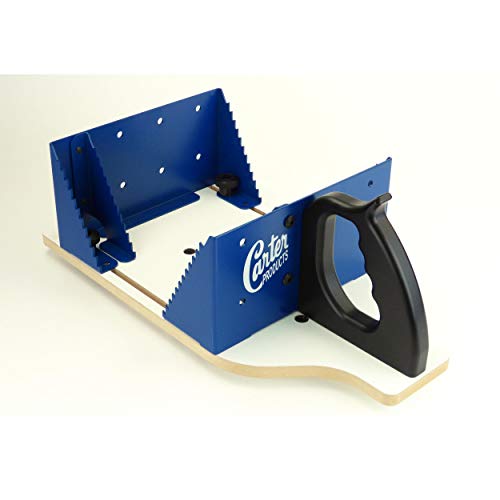
Pros
- Greatly improves user safety when slicing round, uneven logs on a band saw
- Steel V-jaws grip bark and rough wood firmly to prevent shifting during cuts
- Smooth-sliding miter bar adjusts to eliminate track play for straighter lines
- Comfortable ergonomic handle gives positive feed control through tough grain
Cons
- Requires a standard 3/4-inch by 3/8-inch miter slot, limiting use on small benchtop saws
- Capacity tops out around 9 to 10 inches depending on your saw throat clearance
- Takes up a fair amount of shelf storage space when not mounted on the saw
The Carter Bandsaw Accuright Miter Mill is a specialized band saw sled designed to conquer one of the most hazardous tasks in the workshop: cross-cutting round logs. Cutting unsquared branches or raw trunk sections freehand on a band saw invites dangerous blade grabbing and log rotation. This fixture eliminates that risk by gripping the stock inside heavy-duty steel jaws and guiding it straight through the blade via your table miter slot.
Woodturners, carvers, and DIY woodworkers who source local green wood or downed yard trees will appreciate what this fixture offers. Instead of rigging temporary wooden sleds or risking dangerous kickback, the Miter Mill gives you a dedicated platform to slice bowl blanks, trim end grain, and square up turning blocks. Its heavy-gauge steel tooth V-jaws bite aggressively into rough bark or wet timber, locking the workpiece firmly in place throughout the cut.
Feed control and operator safety remain the standout operational strengths. The unit features an ergonomically contoured handle that sits upright and away from the cutting line. This design allows you to exert steady downward and forward feeding pressure without placing your fingers near the running band saw blade. The steel guide bar underneath is fully adjustable to take up slop in standard 3/4-inch by 3/8-inch miter channels, which helps maintain a true 90-degree path without binding.
Setting up the sled takes just a few moments. Loosening the adjustment points allows the front jaw to slide out to accommodate logs up to roughly 9 inches in diameter, making it suitable for mid-sized turning stock. Maintaining the tool requires little beyond occasionally blowing off pitch-heavy sawdust, applying paste wax to the underside for smooth table travel, and checking jaw fastener tension before heavy cutting sessions.
There are a few practical limits to keep in mind. Compact benchtop band saws with non-standard miter slots or shallow throat depths will not accommodate this jig effectively. Log diameter is also constrained by your saw height capacity and the jaw opening width. For woodworkers running a 14-inch or larger band saw with standard tracks, the Carter Accuright Miter Mill is a rugged, time-saving addition that makes rough timber prep significantly safer and more accurate.
The Carter Accuright Miter Mill is built around the industry-standard 3/4-inch wide by 3/8-inch deep miter gauge slot found on most full-sized 14-inch and larger workshop band saws. The miter bar features set screws to dial out side-to-side play, ensuring straight travel across cast iron tables.
Before purchasing, check your band saw throat clearance and table dimensions. The sled body measures approximately 16.8 inches long by 8.7 inches wide, requiring adequate infeed and outfeed room to complete cuts safely. Saws with stamped steel tables or proprietary narrow miter slots will require modification or may not be compatible.
Frequently Asked Questions
Can the Best Bandsaw Mill On The Market handle logs larger than 9 inches in diameter?
Yes, with front jaw adjustments. The front bracket adjusts to clamp logs up to 9 inches across, and larger timber can be positioned by repositioning the workpiece along the heavy gauge steel tooth v-jaws. This design gives woodturners solid control when roughing out stock for bowls and spindles. Secure clamping prevents rolling and keeps the cut line parallel to the blade path.
Will this bandsaw milling attachment fit any standard miter slot?
Yes, it fits standard 3/4-inch by 3/8-inch miter gauge slots. The steel miter guide bar features built-in adjustments to eliminate play and ensure smooth gliding across cast iron or aluminum tables. Eliminating side-to-side slop stops blade drift and prevents binding against the bandsaw blade teeth. Always check your bandsaw table slot dimensions before mounting.
What bandsaw blade width works best for log milling on a vertical bandsaw in 2026?
A 1/2-inch to 3/4-inch wide blade with 3 to 4 TPI provides optimal beam strength and chip clearance. Wide carbon steel or bimetal bandsaw blades resist deflection when pushing dense log blanks through the cut. Low teeth-per-inch counts clear wet greenwood sawdust rapidly to stop pitch buildup and motor strain. After squaring your rough timber, using a detailing sander for tight spaces helps refine any contoured blank edges before mounting on a lathe.
Does using a bandsaw mill attachment eliminate the need for a dedicated sawmill?
No, it complements rather than replaces a full-size horizontal timber mill. While a dedicated sawmill handles long, heavy tree trunks, a bandsaw milling jig allows your shop machine to process short logs and bowl blanks up to machine throat capacity. It saves shop floor space and budget by using your existing vertical bandsaw motor and frame rigidity.
How does the v-jaw design prevent raw logs from spinning during a cut?
Heavy-gauge steel teeth bite directly into rough log bark to lock the round stock in place. Dual opposing v-jaws grip the log from both sides, while a contoured handle gives the operator firm forward feed pressure. This mechanical grip stops dangerous kick-back and blade jamming caused by unstable round logs.




Write Your Review
No reviews yet. Be the first to share your experience!