


Tackling Tough Alloys Without Stripped Blade Teeth
Running a metal workpiece through an aggressive blade at high speed generates intense friction, causing the stock to work-harden and strip teeth instantly. Stainless alloys like 304 and 316 demand slow feet per minute alongside rigid tooth geometry to slice cleanly without glazing. Matching your horizontal or vertical saw with the best bandsaw blade for stainless steel keeps feed pressure smooth and saves expensive tooling from premature wear. When smoothing rough cut ends, pairing these cuts with a quality DA sander for bodywork helps achieve a clean, finished surface in the shop.
Excessive chatter and tooth flutter often stem from mismatched tooth pitch on thin conduit or structural box channel. A variable pitch profile like 10/14 TPI absorbs harmonic vibration while maintaining chip clearance through varied cross sections. Based on manufacturer specifications for pitch density and bi-metal construction, choosing the right band dimensions and teeth per inch keeps your cuts straight and your saw motor running efficiently without unnecessary strain.
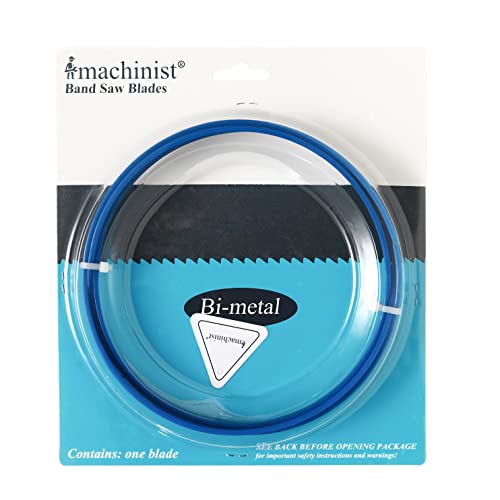
Pros
- M42 bi-metal teeth maintain sharpness on abrasive stainless alloys
- 14 TPI tooth spacing excels at cutting thin-walled tubing without tooth stripping
- Standard size fits a wide range of common 4x6 utility horizontal bandsaws
- Produces clean, square cuts that save time during edge preparation
Cons
- Not intended for non-ferrous metals like aluminum or soft brass
- Straight 14 TPI cuts slower through thick, solid bar stock than variable pitch blades
The Imachinist S64121214SS is a dedicated metal-cutting bi-metal bandsaw blade engineered for demanding fabrication tasks. Measuring 64-1/2 inches long, 1/2 inch wide, and 0.025 inches thick, this blade features a 14 TPI (teeth per inch) configuration. It is built using an M42 cobalt high-speed steel cutting edge electron-beam welded to an alloy spring-steel backing, producing a durable solution for small-shop metal cutting.
This blade is best suited for metal fabricators, automotive mechanics, exhaust builders, maintenance technicians, and serious DIY garage users. Anyone running a standard 4x6 inch horizontal or vertical metal-cutting bandsaw will find this size directly compatible with their tool. It provides the right balance of flexibility and tooth hardness needed for shop projects that involve routine cutting of tough ferrous metals.
In real-world workshop cutting, tooth stripping is one of the most common blade failures when tackling thin-walled material. The 14 TPI profile addresses this by ensuring that at least three teeth remain engaged in thin cross-sections like exhaust pipe, electrical conduit, and structural square tubing. The M42 tooth composition resists work-hardening effects often encountered with stainless steel, keeping the teeth sharp longer and reducing cutting friction.
Build quality centers around the bi-metal construction. The flexible spring-steel backer absorbs the continuous bending stress over small-diameter bandsaw wheels, which prevents fatigue cracking along the blade body. At the same time, the hardened M42 tooth tips withstand abrasive friction and moderate cutting temperatures. The consistent weld joint runs smoothly through blade guides and bearings without catching or causing erratic cuts.
Setup involves adjusting standard blade tension, setting tracking along the guide wheels, and aligning guide bearings close to the work piece. Because this blade features a fine 14 TPI straight pitch, it is specialized for thin-to-medium wall profiles and ferrous metals under 30 HRC. It is not recommended for soft non-ferrous materials such as aluminum, which can quickly load up fine teeth, nor is it optimized for rapid slicing through heavy solid billets.
For workshop owners and fabricators who frequently work with stainless steel tube, conduit, or light structural channel, this Imachinist blade offers a reliable, purpose-built upgrade over general-purpose carbon blades. Matching the material thickness to this fine tooth pitch yields clean, burr-free cuts that reduce prep time before fitting and welding.
Running an M42 bi-metal blade on a small horizontal bandsaw changes how cleanly a shop can process tough stock. The hardened teeth resist heat buildup during dry or lubricated cutting, maintaining their edge across repeated passes on stainless tubing and mild steel angles.
The 14 TPI tooth pitch provides smooth, controlled feed rates without grabbing or jumping into thin profiles. This stability protects both the blade teeth and the workpiece, leading to square cuts with minimal edge distortion that fit together cleanly during assembly and welding.
The 64-1/2 inch length and 1/2 inch width make this blade compatible with virtually all standard 4x6 inch utility horizontal-vertical metal-cutting bandsaws found in home workshops and fabrication garages.
It is specifically formulated for ferrous metals and stainless alloys rated under 30 HRC. For larger solid stock or soft non-ferrous alloys, users may prefer coarser variable-pitch blades, but for thin-wall metal profiles, this blade matches standard saw requirements seamlessly.

Pros
- Excellent cutting performance on hard stainless steels
- Variable tooth geometry reduces chatter and improves finish
- Durable M42 bi-metal construction withstands high heat
- Fits many common 93-inch bandsaw models
- Good value for professional and serious DIY use
Cons
- Not suitable for non-ferrous metals like aluminum or copper
- Requires proper tension and speed settings for optimal performance
- Some users may prefer a finer TPI for thinner materials
If you work with stainless steel regularly, finding a bandsaw blade that can handle the material's toughness without dulling quickly is key. The Imachinist 93-inch M42 bi-metal blade is built specifically for cutting stainless grades like 304, 316L, and 410. Its 10/14 variable TPI design helps reduce vibration and produces a cleaner cut compared to constant-pitch blades.
The variable tooth geometry starts with coarser teeth and gradually transitions to finer teeth, which helps clear chips efficiently and reduce heat buildup. This means you can push through thicker stainless stock without the blade glazing over. The M42 high-speed steel tooth tips help the blade stay sharp longer than standard carbon steel blades.
M42 bi-metal construction gives the blade a balance of flexibility and hardness. The back is tough spring steel, while the tooth tips are hardened to withstand the abrasive nature of stainless. This makes the blade resistant to breakage and premature wear. The 0.035-inch thickness provides stability without being too rigid, allowing it to track straight even on longer cuts.
Installing the blade on a standard 93-inch bandsaw is straightforward. It fits most horizontal and vertical saws that accept a 3/4-inch wide blade. Proper tension and speed settings are important to get the best performance. For storage, keeping the blade coiled or hung in a dry area helps prevent rust and maintains its edge. No special maintenance is required beyond cleaning off chips and applying light oil if needed.
One limitation is that this blade is not designed for cutting non-ferrous metals like aluminum or copper. The 10/14 TPI range works best for stainless and other hard steels. For softer materials, a different tooth pitch would probably be more efficient. Also, because it's a specialized blade, it may cost a bit more than general-purpose bi-metal blades, but the performance on stainless justifies the investment for those who cut it often.
Overall, the Imachinist M42 bi-metal bandsaw blade is a solid choice for metal fabrication shops, automotive shops, and serious DIYers who frequently work with stainless steel. It delivers consistent cuts, good blade life, and fits a wide range of saws. If you need a reliable blade for stainless projects, this one deserves a spot on your rack.
This blade fits any bandsaw that accepts a 93-inch length and 3/4-inch width blade. Common machines include popular horizontal and vertical bandsaws from brands like Jet, Milwaukee, and DeWalt. Always verify your saw's blade specifications before ordering to ensure proper fit.

Pros
- M42 cobalt-alloy tooth edges resist heat buildup during heavy friction cuts
- 14 TPI pattern prevents snagging and tooth stripping on thin-walled structural metal
- Standard 80-inch size matches common workshop metal-cutting bandsaw models
- Offers clean cuts that reduce subsequent grinding and deburring steps
Cons
- Not recommended for cutting aluminum, brass, or other soft non-ferrous metals
- 14 TPI fixed pitch is too fine for cutting thick solid steel billets efficiently
The Imachinist S801214SS is a specialized replacement bandsaw blade engineered specifically for processing stainless steel and tough ferrous metals. Measuring 80 inches in length, 1/2 inch in width, and 0.025 inches in thickness, this blade uses a fine 14 TPI (teeth per inch) profile. It serves as a critical workshop accessory for metal fabricators, maintenance mechanics, plumbers, pipefitters, and serious home garage craftsmen who frequently work with metal tubing, conduit, and light structural framing.
In practical metal cutting, blade life and cut quality depend directly on tooth metallurgy and pitch selection. The M42 grade bi-metal construction bonds high-speed steel cutting tips containing cobalt to a fatigue-resistant alloy backing strip. This configuration allows the teeth to withstand the high friction and heat generated when cutting work-hardening materials like 304 or 316 stainless steel. The fixed 14 TPI pitch ensures that multiple teeth engage thin stock simultaneously, minimizing chatter, reducing vibration, and preventing teeth from stripping out on thin pipe walls.
Build quality matches the demands of busy production and fabrication spaces. The electron-beam weld joining the tooth edge to the backer resists delamination under normal feed pressure, while the precision factory loop weld tracks smoothly through guide blocks and roller bearings. For fabricators accustomed to basic carbon blades dulling rapidly on alloy stock, this bi-metal design offers substantial wear resistance and sustained cutting accuracy over repetitive cuts.
Mounting and tensioning the blade follows standard workshop procedures for any bandsaw accepting 80-inch stock. It tracks reliably on standard wheels and stores easily coiled in three loops when kept as a workshop spare. Applying cutting fluid or wax stick lubricant during continuous cuts will further extend tooth life and clear chips efficiently from the gullets, keeping cuts square and clean.
A clear limitation is material suitability. The manufacturer explicitly advises against cutting aluminum and non-ferrous metals with this specific blade profile, as softer materials tend to clog the fine teeth and cause premature binding. Additionally, 14 TPI is best suited for wall thicknesses under 1/4 inch, meaning thick solid bar stock will cut much slower. For anyone fabricating exhaust systems, stainless handrails, or steel conduit, this blade provides reliable, trade-ready cutting performance.
When set up with appropriate band tension and moderate feed rates, the Imachinist 14 TPI blade produces clean, straight edges with minimal burr formation. It excels in automotive exhaust fabrication, small structural steel assembly, and electrical conduit cutting where ragged edges require tedious secondary deburring.
Proper machine setup is essential for maximizing blade life on stainless steel. Running the bandsaw at lower surface feet per minute (SFPM) settings paired with steady downfeed pressure allows the M42 teeth to shave consistent metal curls without glazing the work surface or work-hardening the cut zone.

Pros
- M42 cobalt tooth construction resists heat build-up far better than standard carbon steel blades.
- 24 TPI profile excels at cutting thin stock, pipe, and sheet metal without snagging or ripping teeth.
- Smooth weld seam tracks cleanly across blade guides with minimal flutter.
- Broad compatibility with standard 4x6 horizontal/vertical workshop band saws.
Cons
- High tooth count is prone to loading up when cutting thick solid stock or soft woods.
- Requires careful feed pressure management to prevent premature dulling on tough stainless steel.
The FOXBC 64-1/2-inch by 1/2-inch Bi-Metal Bandsaw Blade is a specialized cutting accessory tailored for benchtop and stand-mounted metal-cutting saws. Sized specifically for standard 4x6 horizontal and vertical bandsaws, this two-pack configuration serves DIY fabricators, auto mechanics, electricians, plumbers, and home workshop owners who regularly cut structural metal, pipe, and bar stock.
Equipped with a high-density 24 teeth per inch (TPI) layout, this blade is designed primarily for thin materials where tooth stripping is a constant concern. In workshop fabrication, maintaining at least three teeth in contact with the workpiece is essential to prevent snagging. This fine tooth profile makes easy work of thin-wall square tubing, electrical conduit, sheet metal, and small-diameter angle iron, resulting in clean, accurate cuts that require minimal deburring.
Build quality centers on an M42 high-speed steel cutting edge containing 8 percent cobalt welded to a flexible spring steel backing. This bi-metal architecture allows the blade to flex repeatedly around drive wheels without fatiguing, while the cobalt-hardened teeth resist the intense heat generated during dry metal cutting. The manufacturer incorporates a reinforced, ground weld point designed to pass smoothly through ball-bearing blade guides without the thumping or tracking drift often seen on entry-level replacement blades.
Installing these blades on popular horizontal-vertical band saws is straightforward. The 64.5-inch length and 1/2-inch width drop directly into standard tension assemblies on machines from brands like Harbor Freight, WEN, JET, Grizzly, and Shop Fox. Routine maintenance involves clearing metal chips from the gullets, monitoring blade tension, and matching cutting speed to the material hardness, especially when working with stainless steel or dense alloys.
While this fine 24 TPI blade excels on thin-walled metals and smaller stock, it is not built for fast hogging through thick, solid billets where a coarser pitch is necessary to clear heavy chips. For fabricators, exhaust builders, and maintenance shops focused on tubing, pipe, and light framing, this two-pack provides a durable, cost-effective cutting solution that keeps workshop productivity high.
These 64.5-inch blades are sized to fit a wide range of standard 4x6-inch horizontal and vertical metal-cutting band saws found in home garages and professional workshops. Confirmed fitments include the WEN 3970, Harbor Freight Central Machinery horizontal bandsaw, JET HBS-56S and HVBS-56M, Grizzly G0622, Shop Fox W1715, and Bilt Hard units.
Users should always verify their saw's required blade dimensions (64-1/2 inches long by 1/2 inch wide) before replacement. When changing blades, adjusting blade guide bearings and rechecking tracking tension will ensure the smoothest operation and extend overall blade life across all supported machines.

Pros
- Excellent for cutting thin tubes and profiles with minimal burr
- Long blade life thanks to M42 high-speed steel edge
- Compatible with most bandsaws using 93-1/2" x 1/2" blades
- Good value for the price point in bi-metal category
- Lightweight design simplifies changes and storage
Cons
- Not recommended for non-ferrous metals like aluminum or copper
- 14TPI may be too fine for heavy-duty structural cuts
- Limited user reviews available to gauge long-term durability
If you spend any time in a workshop or garage cutting metal, you know the right bandsaw blade makes all the difference. The Imachinist S93121214SS is a bi-metal, M42 grade blade specifically designed for stainless steel and other ferrous metals up to 30 HRC. At 93-1/2 inches long and half an inch wide, it fits a wide range of common bandsaw machines used by mechanics, contractors, and serious DIY enthusiasts.
This blade shines when you need clean, precise cuts on thin materials like pipes, tubes, and profiles. The 14 TPI (teeth per inch) configuration is finer than many general-purpose blades, which means less material loss and a smoother finish on light-gauge work. According to user feedback, it handles stainless steel tubing well and leaves minimal burrs, saving cleanup time on jobs where accuracy matters.
Build quality centers on M42 bi-metal construction - a high-speed steel edge welded to a flexible spring steel back. This combination gives you good wear resistance while allowing the blade to handle the vibration and tension of everyday use. It’s not the heaviest-duty blade on the market, but for typical maintenance, fabrication, or repair tasks, it offers a solid balance of durability and cutting efficiency.
Installation is straightforward if your bandsaw accepts the standard 93-1/2" x 1/2" x 0.025" size. No special adapters or modifications are needed. The blade is lightweight, so swapping it out is easy, and it stores compactly in a tool drawer or hanging rack. Just be mindful that this blade is not intended for non-ferrous metals like aluminum or copper - using it on those could cause premature wear or poor cut quality.
One realistic limitation is the 14 TPI. While it’s fantastic for thin materials, it may not be the best choice for heavy solids or thick structural beams - you might find yourself pushing the blade too hard. For most workshop, garage, or construction site metal cutting, though, it’s a practical, workhorse choice that won’t break the bank.
Overall, the Imachinist bandsaw blade is a reliable option for anyone who regularly cuts stainless steel or mild steel tubing. Mechanics, plumbers, woodworkers dabbling in metal, and home workshop users will all find it a capable, cost-effective upgrade over standard carbon blades. If your projects involve precise ferrous cuts, this blade should be on your list.

Pros
- M42 bi-metal steel resists tooth wear when cutting tough alloy stock
- 18 TPI pitch delivers clean cuts with minimal snagging on thin profiles
- Smooth weld joint runs evenly against blade guides and tension rollers
- Multi-material versatility handles both shop fabrication metals and dense plastics
Cons
- Fine tooth pitch can clog quickly when ripping thick timber or soft woods
- Requires lower blade speeds on harder metals to prevent excessive friction heating
The FOXBC 59-1/2 Inch Bi-Metal Bandsaw Blade is a specialized power tool accessory engineered for benchtop and small stationary metal-cutting band saws. Featuring an 18 teeth-per-inch profile and a 1/2-inch blade width, it provides a stable platform for controlled cutting. This setup is particularly well suited for DIY homeowners, automotive mechanics, electricians, plumbers, and hobbyist fabricators who need a reliable blade for workshop maintenance, bracket making, and routine metal shaping tasks.
Cutting performance relies on its M42 high-speed steel edge, which incorporates 8% cobalt for heat and abrasion resistance. When working with materials like angle iron, copper pipe, galvanized electrical conduit, and mild steel, the closely spaced teeth maintain continuous contact without catching. Users will appreciate that the blade also tackles softer non-ferrous metals like brass and aluminum, as well as rigid plastics, provided the feed rate is kept steady and saw speeds are properly adjusted.
Build quality is supported by a precision-welded seam designed to pass smoothly between upper and lower guide bearings. On smaller benchtop saws, uneven blade welds can produce annoying vibrations, blade hop, and inconsistent tracking across the wheels. The smooth joint on this FOXBC blade assists in maintaining clean tracking lines and uniform tooth height, which helps protect workpieces from premature gouging or excessive burr development.
Every tool accessory has operational boundaries, and this blade is no exception. Because of the fine 18 TPI configuration, the gullets between teeth are relatively shallow. Attempting to rip thick lumber or feed thick aluminum billets too aggressively will cause chips to pack into the gullets, leading to thermal buildup and reduced cutting speed. For deep cuts in heavy solid stock, a blade with fewer teeth per inch remains the better choice, leaving this model focused on thin-to-medium wall fabrications.
Installing the blade follows standard workshop practices, requiring clean guide blocks, proper tracking adjustments, and correct band tensioning. To preserve cutting life, storing spares coiled in a moisture-free toolbox drawer prevents surface corrosion. For metalworkers, mechanics, and home workshop owners seeking a capable replacement blade that cuts cleanly through structural shapes and general utility metals, this model represents a practical and cost-effective option.
In standard garage and light fabrication environments, this 18 TPI blade handles structural tubing, unistrut, and sheet stock with minimal material distortion. The fine tooth count ensures that at least three teeth remain engaged in thin-gauge walls, which significantly reduces the chance of tooth stripping during manual feed.
When cutting softer materials such as brass or acrylic sheets, the blade leaves a relatively neat kerf that requires minimal secondary deburring or filing. Keeping a steady, moderate feed rate prevents overheating, allowing garage users and tradespeople to move quickly from rough cuts to finished assemblies.
Pros
- M42 bi-metal steel handles tough stainless steel alloys without dulling quickly
- Variable tooth pitch reduces chatter and improves cut quality on different material thicknesses
- 93-inch length is a common size, ensuring compatibility with many bandsaw models
- Affordable price point for a specialty stainless steel cutting blade
- Blue coating helps with chip evacuation and reduces friction during cuts
Cons
- Not suitable for cutting aluminum or non-ferrous metals - limits versatility for mixed-material shops
- Requires proper blade tension and speed settings for optimal performance on stainless steel
- 0.035-inch thickness may be less durable for heavy production cutting compared to thicker blades
If you regularly cut stainless steel in your garage, workshop, or on the job site, you know how demanding it can be on blades. The Imachinist S9334812SS M42 bi-metal bandsaw blade is specifically designed to handle that challenge. At 93 inches long, 3/4 inch wide, and 0.035 inch thick, it fits most standard horizontal and vertical bandsaws commonly used by mechanics, fabricators, and contractors. The variable 8/12 TPI tooth pattern is tailored for cutting through tough stainless alloys like 304, 310, 410, 316L, and 420 without excessive wear or heat buildup.
This blade is best suited for DIY homeowners with metalworking projects, mechanics cutting exhaust tubing or brackets, electricians working on stainless conduit, and professional tradespeople who need reliable performance on stainless steel jobs. It is not a general-purpose blade; the manufacturer advises against using it on aluminum or other non-ferrous metals, as the tooth geometry is optimized for harder materials. For workshops that primarily handle stainless, this blade can be a real time-saver and cost-saver since it lasts longer than standard carbon steel blades.
Performance-wise, the bi-metal construction - high-speed steel teeth welded to a flexible alloy steel back - gives the blade a good balance of hardness and durability. Users can expect clean, straight cuts with reduced vibration thanks to the variable tooth pitch, which helps prevent snagging on thin sections. The 0.035-inch thickness provides enough rigidity for accurate cuts while allowing some flexibility for curved or contour work when used on appropriate bandsaws. The blue coating not only looks professional but also reduces friction and helps with chip removal, keeping the blade cooler during extended use.
Build quality appears solid based on the specifications and brand reputation. Imachinist is known for producing functional, budget-friendly cutting tools. The steel back provides adequate tension retention, and the tooth geometry is sharp out of the box. One thing to keep in mind is that optimal cutting results depend on proper machine setup - correct blade speed, feed rate, and blade tension are critical when cutting stainless steel. This blade rewards careful setup with smoother cuts and longer service life.
Storage and maintenance are straightforward. Like any bandsaw blade, store it in a dry environment, ideally in a coil or hanging to prevent kinking. Since it is a specialty blade, marking it for stainless use will prevent accidental use on aluminum or other materials. The 93-inch length fits most standard storage hooks or blade racks commonly found in workshops and garages.
A realistic limitation is that this blade is a bit narrower and thinner than some heavy-duty alternatives (e.g., 1-inch wide, 0.042-inch thick), so it may not be ideal for production-level cutting of thick stainless plate. For occasional to moderate use by DIYers, mechanics, and light industrial shops, however, it offers excellent value. If your work involves regular stainless steel cutting and you need a blade that can handle it without breaking the bank, the Imachinist M42 bi-metal blade is a practical choice worth considering.

Pros
- Made in USA with quality materials and construction
- Variable tooth pitch minimizes vibration and produces cleaner cuts
- Cobalt bi-metal edge stays sharp longer in abrasive metals
- Fits a wide variety of portable band saws
- Three blades per box reduce replacement frequency for moderate use
Cons
- Limited to portable band saws; not for stationary saws
- May not include enough blades for heavy daily production use
- No included storage case or organizer for the blades
The Morse Master Cobalt Bi-Metal Portable Band Saw Blade is a 44 7/8-inch by 1/2-inch blade with a .020 thickness and a 14/18 variable tooth pitch. This 3-pack is built for portable band saws commonly used by DIY homeowners, mechanics, contractors, electricians, plumbers, and woodworkers who need to cut metal on the go or in the shop. The blade is designed to handle any machinable metal, from thin sheet to pipe and tubing.
In terms of real-world performance, the variable tooth pitch is a standout feature. The 14/18 TPI alternates between coarser and finer teeth, allowing the blade to cut smoothly through different thicknesses without grabbing or chatter. The shock-resistant cutting edge helps absorb impacts when hitting corners or uneven surfaces, which is common in demolition or repair work. Users can expect cleaner cuts with less vibration, which not only improves the finish but also reduces hand fatigue during longer cutting tasks.
Build quality is solid. The blade is made in the USA using bi-metal construction with cobalt, which means the tooth tips are hardened for wear resistance while the back remains flexible to resist breaking. This balance gives the blade a durable edge that stays sharp longer than standard high-speed steel blades. The gray finish is basic but functional, and the packaging provides enough protection during shipping.
Setup is straightforward: just install the blade into your portable band saw following the manufacturer's instructions. The 44 7/8-inch length fits most common portable models, including compact saws. Storage is simple enough since the three blades come in a cardboard box, though you may want to add a dedicated blade case for organization. Maintenance involves keeping the blade clean and properly tensioned; there is no special care beyond that.
One realistic limitation is that this blade is specifically for portable band saws, so it won't work on larger stationary machines. Also, while the 3-pack is convenient for moderate use, heavy-duty professionals may burn through them quickly and need to buy multiple packs. There is no carrying case included, so blades may get bent if tossed loosely in a toolbox.
Overall, this Morse Master blade is a practical choice for anyone who needs a reliable, versatile metal-cutting blade for their portable band saw. DIY homeowners will appreciate the smooth cuts and reduced vibration, while mechanics and contractors can count on the durability for daily jobsite use. It offers a good balance of performance and value for the investment.
The cobalt bi-metal construction gives this blade a distinct edge in cutting abrasive metals like stainless steel and tool steel. The variable 14/18 tooth pitch reduces noise and vibration, which translates to better control and longer blade life. Users can expect consistent performance across a range of materials without the blade dulling prematurely.
The shock-resistant cutting edge is especially useful when cutting through irregular shapes or when the saw encounters sudden resistance. This feature helps prevent tooth stripping and extends usable blade life. For mechanics cutting exhaust pipes or contractors trimming rebar, this blade can handle the demands of real-world work.
Frequently Asked Questions
What tooth pitch is ideal for cutting stainless steel tubing?
A 10/14 or 14 TPI pitch works best for thin-walled stainless tubing. Having at least three teeth engaged in the work material prevents teeth from straddling the wall and shearing off. For thicker solid stainless rounds, a coarser 8/12 variable pitch clears chips more effectively and prevents heat buildup.
Can you use a standard carbon steel blade to cut stainless steel?
No, standard carbon steel blades will dull almost immediately against stainless steel. Stainless alloys work-harden under cutting pressure, generating friction that quickly rounds carbon teeth. Selecting the best bandsaw blade for stainless steel with an M42 bi-metal edge containing 8 percent cobalt provides the heat resistance required to maintain a sharp edge.
What blade speed should you use when cutting stainless steel on a bandsaw?
Blade speeds between 70 and 150 feet per minute (FPM) are recommended for cutting stainless steel. Running the band at typical woodworking speeds above 1,000 FPM will instantly burn the teeth and ruin the temper of the band. Using a metal-cutting saw with speed reduction pulleys protects your blade investment.
How do you clean metal burrs after cutting stainless steel on a bandsaw?
Deburring with a file or a dedicated detailing sander quickly cleans up jagged edges after slicing tough alloy stock. Stainless cuts often produce sharp edges that require light surface smoothing to prepare parts for fabrication. Dedicated shop abrasives keep your cut pieces clean and safe to handle.
What makes bi-metal M42 blades better for 2026 stainless cutting?
Bi-metal M42 construction combines high-speed steel teeth containing 8 percent cobalt with a flexible alloy steel backing. This metallurgy resists thermal shock and abrasive friction generated by 304 and 316 stainless grades. In 2026, workshops rely on M42 bands to reduce blade replacement frequency and achieve consistent, straight cuts.





Write Your Review
No reviews yet. Be the first to share your experience!