


Molten chips packing tightly into tiny blade gullets will instantly ruin your cut line and overheat a workpiece. Soft non-ferrous stock tends to grab, smear, and stall standard bands under regular feed pressure, creating rough edges that waste stock. Mounting the right best bandsaw blade for cutting aluminum prevents premature tooth stripping while maintaining steady tracking on both solid bars and structural extrusions. Bi-metal construction paired with balanced tooth spacing keeps frictional heat low so you get dependable results across every project pass.
Analyzing verified manufacturer ratings, steel metallurgy, and workshop owner feedback shows that proper gullet clearance matters just as much as motor torque. A blade with an optimized rake angle clears gummy debris smoothly without deflecting off layout lines. For shops tackling mixed fabrication tasks, smoothing out raw aluminum blanks with the best da sander for bodywork pairs nicely with clean band saw cuts. Getting your blade tension, speed settings, and tooth pitch dialed in ensures your saw runs cooler while extending blade lifespan significantly.

Pros
- Excellent cutting performance on aluminum and other non-ferrous metals
- Durable bi-metal construction resists heat and abrasive wear for longer blade life
- Variable tooth spacing reduces cutting noise and produces a smoother finish
- Compatible with many bandsaw models that accept 64-1/2 inch blades
- Great value for the price compared to OEM blades
Cons
- Not designed for cutting steel, stainless steel, or other hard metals
- Limited to bandsaws with a 64-1/2 inch blade length, so check compatibility before purchasing
- May require careful tension adjustment and proper blade tracking to avoid wander in thick materials
The Imachinist S641212610 is a 64-1/2 inch long, 1/2 inch wide bi-metal band saw blade designed specifically for cutting aluminum. Its variable tooth configuration (6-10 TPI) combines small and large teeth to handle different thicknesses and reduce vibration. This blade is built with M42 high-speed steel containing 8% cobalt and 2% tungsten, which boosts durability and resistance to abrasive wear. It's a practical choice for anyone who regularly works with aluminum in their garage, workshop, or on the job.
Who should consider this blade? It suits DIY homeowners who do metal fabrication or automotive repairs, mechanics cutting aluminum brackets or tubing, and contractors in HVAC or construction who need clean cuts in aluminum sheet or extrusion. Woodworkers who occasionally cut non-ferrous metals will also find it useful. The blade is not intended for steel, so it's best for those whose primary material is aluminum or other soft metals.
In terms of real-world performance, the variable tooth pattern helps prevent clogging and reduces the chance of the blade grabbing or chattering. This leads to smoother cuts and less effort on the saw's motor. The bi-metal construction means the teeth are hard and wear-resistant while the back is flexible, reducing the risk of breakage during tight curves or when feeding too aggressively. For aluminum, this blade delivers fast, clean cuts with minimal burrs, which is a big time-saver on repetitive jobs.
Build quality is solid for the price. The M42 material is a step above standard carbon steel blades, and the cobalt-tungsten alloy adds heat resistance that keeps the blade cutting longer before needing sharpening. The blade is black oxide coated, which provides a mild rust-resistant finish. For storage, a simple hanging hook or a dedicated blade storage rack works fine. Installation and tensioning are straightforward following your bandsaw's manual, though the 0.025 inch thickness means it's flexible enough for contour cutting but stiff enough for straight cuts.
One realistic limitation is that this blade is not for cutting steel, so if your work mixes aluminum and steel, you'll need a separate blade. Also, not every bandsaw uses a 64-1/2 inch length, so verifying compatibility is important. Some users might find the 6-10 TPI range less efficient for very thin (under 1/8 inch) or very thick (over 1 inch) aluminum, but for general-purpose aluminum cutting, it works well.
Overall, the Imachinist 64-1/2 inch bi-metal blade is a reliable, cost-effective addition to any workshop or garage. It balances cutting speed, blade life, and smoothness for aluminum work. For DIYers and professionals alike who need a dedicated aluminum-cutting blade without spending on premium brands, this is a smart buy. Just confirm your saw's blade length and you'll be ready for clean, efficient cuts.

Pros
- Durable M42 bi-metal material handles frequent use without dulling quickly
- Variable tooth pitch reduces vibration and produces cleaner cuts on thin materials
- Compatible with many 93-inch bandsaw models, including popular 7x12 units
- Affordable replacement option for worn blades without sacrificing quality
- Good choice for cutting thin-walled tubing and profiles with minimal burr
Cons
- Not designed for cutting wood or non-ferrous metals efficiently; use a dedicated blade for those materials
- May require proper tension and speed adjustments on your saw for optimal cutting performance
- Limited to saws that accept 93-inch blades; verify compatibility before purchase
The Imachinist S933414 is a bi-metal band saw blade built for cutting soft ferrous metals, making it a practical addition to any garage, workshop, or job site. With a 93-inch length, 3/4-inch width, and a variable 10/14 TPI tooth pattern, this blade is designed to handle thin pipes, tubes, and profiles commonly encountered by mechanics, contractors, electricians, plumbers, and DIY homeowners. Whether you're working on automotive repairs, metal fabrication, or plumbing modifications, this blade offers a reliable cutting solution.
When it comes to real-world performance, the M42 bi-metal construction provides excellent wear resistance, helping the blade maintain its edge over repeated use. The variable tooth pitch (10/14 TPI) reduces vibration and chatter, resulting in smoother cuts with less effort. This is especially beneficial when cutting thin-walled materials that might otherwise snag or distort. Users can expect efficient cutting of mild steel, angle iron, and other soft ferrous metals, making it a solid choice for shop tasks that demand precision and productivity.
Build quality is a highlight here. The blade is made from high-speed steel teeth bonded to a flexible alloy steel back, giving it both cutting hardness and the ability to withstand tension without cracking. The 0.035-inch thickness strikes a good balance between rigidity and flexibility, allowing it to navigate around curves while staying straight on straight cuts. The silver finish adds a layer of corrosion resistance, which is helpful in humid basements or garages where moisture might be present.
Setup is straightforward on any bandsaw that accepts 93-inch blades - simply open the saw, thread the blade around the wheels, and tension it according to your saw's specifications. Maintenance is minimal: keep the blade clean and dry when not in use, and avoid forcing it through cuts to extend its lifespan. Storage is simple too; just hang it or keep it in a dry drawer to prevent accidental damage.
One realistic limitation is that this blade is specifically designed for soft ferrous metals and thin sections. It won't perform well on wood or non-ferrous metals like aluminum or brass, so you'll want a dedicated blade for those materials. Also, because it's a fixed 93-inch length, it only fits bandsaws that accept that size - be sure to check your saw's blade length requirement before ordering.
Overall, the Imachinist S933414 M42 bi-metal band saw blade is a dependable option for anyone needing a sharp, durable blade for cutting mild steel, pipe, and tubing. Its variable tooth design and robust construction make it a practical investment for mechanics, contractors, and workshop users who want consistent results without breaking the bank.
Pros
- Excellent cutting performance on soft metals like aluminum, copper, and bronze with clean edges.
- Durable bi-metal construction resists heat buildup and extends blade life in demanding applications.
- Precision laser-cut teeth ensure consistent cut quality and reduce vibration during operation.
- Compatible with a wide range of stationary band saws, making it a versatile addition to any shop.
- Lightweight and easy to install, even for users with limited mechanical experience.
Cons
- Specifically designed for soft metals; not suitable for cutting steel, stainless steel, or other hard alloys.
- Limited to 18 TPI, which may not be ideal for very thin materials or intricate curves.
- No included storage case or blade guard, so users should store carefully to avoid damage between uses.
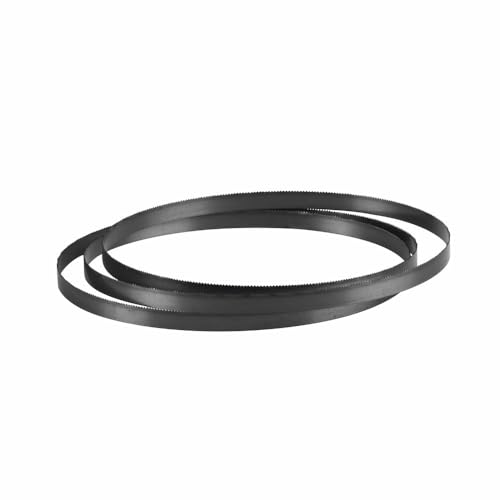
The Bosch BS5912-18MA is a 59.5-inch, 18 TPI metal-cutting band saw blade that targets users who frequently work with soft non-ferrous metals like aluminum, copper, and bronze. It's a purpose-built blade for stationary band saws, making it a solid choice for DIY homeowners tackling metal projects, mechanics fabricating brackets or repairs, and contractors or metalworkers who need clean, efficient cuts in softer materials.
In terms of real-world performance, this blade emphasizes cutting efficiency and durability. The bi-metal construction combines a high-speed steel tooth edge with a flexible alloy steel back, which helps resist heat buildup - a common cause of premature blade wear. Users can expect smooth, burr-free cuts with minimal vibration, thanks to the optimized tooth geometry and laser-cut precision. This translates to faster work and less time spent deburring or re-cutting.
Build quality is a highlight. Bosch uses advanced laser-cutting technology to manufacture each blade to exact specifications, ensuring consistent tooth shape and set. The materials are chosen for heat resistance and wear resistance, which means the blade stays sharp longer than standard carbon steel blades. While the blade itself is lightweight at 0.17 pounds, it feels sturdy and well-balanced during operation.
Setup and storage are straightforward. The blade installs on most standard stationary band saws without special tools, and its 59.5-inch length fits common models. Since it doesn't come with a case, you'll want to store it in a dry place, ideally in a blade rack or protective sleeve, to prevent damage to the teeth. Maintenance is minimal - just keep the blade clean and avoid forcing it through cuts.
One realistic limitation is that this blade is specifically engineered for soft metals. It won't perform well on steel, stainless steel, or hardened alloys, so you'll need a separate blade for those materials. Additionally, the 18 TPI pitch is a good middle ground for general soft-metal cutting but may not be ideal for very thin sheet metal or intricate contour work. For most workshop and garage applications, though, it hits the sweet spot between speed and finish.
Overall, the Bosch BS5912-18MA is a reliable, durable blade that delivers consistent results for soft-metal cutting. Whether you're a hobbyist building a custom aluminum frame, a mechanic repairing copper tubing, or a contractor fabricating bronze fixtures, this blade offers the precision and longevity you need. It's a practical investment for anyone with a stationary band saw who regularly works with non-ferrous metals.
The Bosch BS5912-18MA blade is built with bi-metal construction, combining a high-speed steel tooth edge with a flexible alloy steel back. This design balances hardness for cutting with toughness to resist breakage. The teeth are laser-cut for precise geometry and consistent set, which reduces vibration and improves cut accuracy. The materials are selected to resist heat buildup, extending blade life in continuous cutting operations. While the blade lacks a protective coating, the overall construction feels robust and well-engineered for its intended soft-metal applications.
This blade excels at cutting soft metals such as aluminum, copper, and bronze. The 18 TPI pitch provides a good balance between cutting speed and surface finish - fast enough for production work yet fine enough to leave a smooth edge. Users report clean cuts with minimal burrs, reducing post-cut cleanup. The optimized tooth geometry promotes efficient chip evacuation, preventing clogging and overheating. When used within its material range, the blade maintains sharpness over many cuts, offering consistent performance. It is not recommended for steel or other hard alloys, as the teeth will dull quickly.

Pros
- M42 cobalt tooth construction resists heat build-up far better than standard carbon steel blades.
- 24 TPI profile excels at cutting thin stock, pipe, and sheet metal without snagging or ripping teeth.
- Smooth weld seam tracks cleanly across blade guides with minimal flutter.
- Broad compatibility with standard 4x6 horizontal/vertical workshop band saws.
Cons
- High tooth count is prone to loading up when cutting thick solid stock or soft woods.
- Requires careful feed pressure management to prevent premature dulling on tough stainless steel.
The FOXBC 64-1/2-inch by 1/2-inch Bi-Metal Bandsaw Blade is a specialized cutting accessory tailored for benchtop and stand-mounted metal-cutting saws. Sized specifically for standard 4x6 horizontal and vertical bandsaws, this two-pack configuration serves DIY fabricators, auto mechanics, electricians, plumbers, and home workshop owners who regularly cut structural metal, pipe, and bar stock.
Equipped with a high-density 24 teeth per inch (TPI) layout, this blade is designed primarily for thin materials where tooth stripping is a constant concern. In workshop fabrication, maintaining at least three teeth in contact with the workpiece is essential to prevent snagging. This fine tooth profile makes easy work of thin-wall square tubing, electrical conduit, sheet metal, and small-diameter angle iron, resulting in clean, accurate cuts that require minimal deburring.
Build quality centers on an M42 high-speed steel cutting edge containing 8 percent cobalt welded to a flexible spring steel backing. This bi-metal architecture allows the blade to flex repeatedly around drive wheels without fatiguing, while the cobalt-hardened teeth resist the intense heat generated during dry metal cutting. The manufacturer incorporates a reinforced, ground weld point designed to pass smoothly through ball-bearing blade guides without the thumping or tracking drift often seen on entry-level replacement blades.
Installing these blades on popular horizontal-vertical band saws is straightforward. The 64.5-inch length and 1/2-inch width drop directly into standard tension assemblies on machines from brands like Harbor Freight, WEN, JET, Grizzly, and Shop Fox. Routine maintenance involves clearing metal chips from the gullets, monitoring blade tension, and matching cutting speed to the material hardness, especially when working with stainless steel or dense alloys.
While this fine 24 TPI blade excels on thin-walled metals and smaller stock, it is not built for fast hogging through thick, solid billets where a coarser pitch is necessary to clear heavy chips. For fabricators, exhaust builders, and maintenance shops focused on tubing, pipe, and light framing, this two-pack provides a durable, cost-effective cutting solution that keeps workshop productivity high.
These 64.5-inch blades are sized to fit a wide range of standard 4x6-inch horizontal and vertical metal-cutting band saws found in home garages and professional workshops. Confirmed fitments include the WEN 3970, Harbor Freight Central Machinery horizontal bandsaw, JET HBS-56S and HVBS-56M, Grizzly G0622, Shop Fox W1715, and Bilt Hard units.
Users should always verify their saw's required blade dimensions (64-1/2 inches long by 1/2 inch wide) before replacement. When changing blades, adjusting blade guide bearings and rechecking tracking tension will ensure the smoothest operation and extend overall blade life across all supported machines.

Pros
- Clean cuts in soft metals without excessive heat or vibration
- M42 cobalt steel teeth stay sharp longer than standard carbon steel blades
- Raker set tooth pattern works well for both thin and thicker stock
- Compatible with many 80-inch bandsaws, expanding its versatility
- Lightweight and easy to install with standard tensioning
Cons
- Designed specifically for non-ferrous metals; not ideal for steel or hard alloys
- Limited user reviews available, making long-term performance hard to gauge
- Only one blade per pack; may need to buy multiple for frequent cutting jobs
The POWERTEC 80-inch bi-metal bandsaw blade is a purpose-built cutting accessory for non-ferrous metals such as aluminum, copper, brass, and zinc. It is an excellent choice for DIY homeowners who work on home projects involving soft metals, woodworkers who need to cut metal accents, mechanics cutting aluminum parts, or garage workshop users handling occasional metal stock. This blade is specifically designed for use with 12-inch band saws that accept 80-inch long, 1/2-inch wide blades, including many Craftsman models.
Performance-wise, the 14 TPI raker set tooth arrangement provides a smooth, consistent cut with good chip evacuation. The M42 cobalt steel teeth are triple-tempered to resist wear and maintain sharpness longer than plain carbon steel blades. According to the product specifications, this blade cuts non-ferrous materials efficiently without generating excessive heat, which helps prevent work hardening in softer metals. Users can expect clean edges with minimal burrs, especially when using proper feed rates and blade tension.
The build quality benefits from its bi-metal construction - a flexible alloy steel back combined with high-speed steel teeth. This design reduces the risk of blade breakage during use and improves overall durability. The 0.025-inch thickness offers a good balance between beam strength and the ability to cut tight radii when needed. For typical workshop tasks like cutting aluminum angle, copper tubing, or brass sheet, this blade should handle the work without premature dulling.
Setup is straightforward for anyone familiar with bandsaw blade changes. The 80-inch length is standard for many 12-inch saws, and the 1/2-inch width fits common wheel widths. Proper tensioning and tracking adjustments are necessary, but the blade itself requires no special tools beyond basic wrenches. Storage is simple - it can hang on a peg or lie flat in a toolbox. No special maintenance is needed beyond cleaning the blade occasionally to remove built-up pitch or debris.
A realistic limitation is that this blade is intended for non-ferrous metals only. Attempting to cut steel, stainless steel, or other hard metals will quickly dull the teeth and may lead to blade failure. Also, because the product is relatively new on Amazon with no reviews yet, some buyers may want to wait for user feedback. The single-blade packaging means you'll need to purchase multiple if you do a lot of cutting.
For a DIYer or hobbyist who needs a reliable blade for occasional soft metal cutting on a 12-inch bandsaw, the POWERTEC 80-inch bi-metal blade offers good value at its price point. It should serve well for home repairs, garage projects, and light workshop tasks. Professionals who cut non-ferrous metals frequently may want to compare it with higher-end options, but for most users this blade provides a practical, cost-effective solution.
Pros
- High-quality M42 cobalt steel teeth stay sharp longer than standard carbon steel blades
- Smooth cutting performance on a variety of soft metals with minimal burr formation
- Raker tooth design reduces vibration for more controlled cuts
- Widely compatible with popular 14-inch band saw brands
Cons
- Designed primarily for soft metals; not ideal for hardened steel or thick ferrous materials
- 14 TPI may be too fine for fast resawing in thick wood stock
The POWERTEC 93-1/2 inch bi-metal bandsaw blade is a purpose-built cutting accessory for anyone who works with soft metals on a 14-inch band saw. This blade measures 93-1/2 inches long and 1/2 inch wide, with a 14 TPI raker tooth configuration. It's designed to handle materials like aluminum, copper, lead, zinc, and tin, making it a practical upgrade for DIY homeowners, woodworkers, and metalworking hobbyists who need clean cuts without frequent blade changes.
Who is this blade for? It's a strong match for the home workshop or garage where you might be cutting aluminum stock for a project, trimming copper pipe, or shaping brass for a custom piece. Woodworkers who occasionally cut non-ferrous metals will appreciate not having to swap blades as often. It's also suitable for light metal fabrication and repair work around the house or in a small shop.
Performance-wise, the bi-metal construction is the standout feature. The teeth are made from M42 cobalt steel, which is triple-tempered for hardness and wear resistance. This means the blade holds its edge longer than standard carbon steel blades, especially when cutting abrasive materials like aluminum. The raker set tooth pattern helps clear chips efficiently and reduces vibration, resulting in smoother, more controlled cuts. Users can expect less chatter and a cleaner finish on thin-walled materials.
Build quality is solid for the price point. The blade body is flexible enough to handle the tensioning and tracking of a 14-inch band saw, while the hardened teeth resist dulling. The 0.025-inch thickness provides decent rigidity for straight cuts without being too stiff to navigate curves. It's a well-balanced blade that doesn't require special handling during installation.
Setup and storage are straightforward. The blade fits any 14-inch band saw that accepts 93-1/2 by 1/2 inch blades, including popular models from Wen, Delta, Grizzly, Rikon, Craftsman, Jet, Shop Fox, and Ridgid. No special tools or adapters are needed. For storage, keeping the blade in its original packaging or a blade guard prevents accidental damage and extends its life. Regular cleaning after cutting resinous materials will also help maintain performance.
One realistic limitation is that this blade is optimized for soft metals. If you frequently cut hardened steel, stainless steel, or thick ferrous plate, you'd need a different blade with a different tooth geometry or material. Also, the 14 TPI may be too fine for fast resawing in thick wood, where a coarser tooth count would be more efficient. For the DIYer or small shop user who works primarily with soft metals and occasional wood, this blade offers good value and reliable performance.

Pros
- M42 bi-metal steel resists tooth wear when cutting tough alloy stock
- 18 TPI pitch delivers clean cuts with minimal snagging on thin profiles
- Smooth weld joint runs evenly against blade guides and tension rollers
- Multi-material versatility handles both shop fabrication metals and dense plastics
Cons
- Fine tooth pitch can clog quickly when ripping thick timber or soft woods
- Requires lower blade speeds on harder metals to prevent excessive friction heating
The FOXBC 59-1/2 Inch Bi-Metal Bandsaw Blade is a specialized power tool accessory engineered for benchtop and small stationary metal-cutting band saws. Featuring an 18 teeth-per-inch profile and a 1/2-inch blade width, it provides a stable platform for controlled cutting. This setup is particularly well suited for DIY homeowners, automotive mechanics, electricians, plumbers, and hobbyist fabricators who need a reliable blade for workshop maintenance, bracket making, and routine metal shaping tasks.
Cutting performance relies on its M42 high-speed steel edge, which incorporates 8% cobalt for heat and abrasion resistance. When working with materials like angle iron, copper pipe, galvanized electrical conduit, and mild steel, the closely spaced teeth maintain continuous contact without catching. Users will appreciate that the blade also tackles softer non-ferrous metals like brass and aluminum, as well as rigid plastics, provided the feed rate is kept steady and saw speeds are properly adjusted.
Build quality is supported by a precision-welded seam designed to pass smoothly between upper and lower guide bearings. On smaller benchtop saws, uneven blade welds can produce annoying vibrations, blade hop, and inconsistent tracking across the wheels. The smooth joint on this FOXBC blade assists in maintaining clean tracking lines and uniform tooth height, which helps protect workpieces from premature gouging or excessive burr development.
Every tool accessory has operational boundaries, and this blade is no exception. Because of the fine 18 TPI configuration, the gullets between teeth are relatively shallow. Attempting to rip thick lumber or feed thick aluminum billets too aggressively will cause chips to pack into the gullets, leading to thermal buildup and reduced cutting speed. For deep cuts in heavy solid stock, a blade with fewer teeth per inch remains the better choice, leaving this model focused on thin-to-medium wall fabrications.
Installing the blade follows standard workshop practices, requiring clean guide blocks, proper tracking adjustments, and correct band tensioning. To preserve cutting life, storing spares coiled in a moisture-free toolbox drawer prevents surface corrosion. For metalworkers, mechanics, and home workshop owners seeking a capable replacement blade that cuts cleanly through structural shapes and general utility metals, this model represents a practical and cost-effective option.
In standard garage and light fabrication environments, this 18 TPI blade handles structural tubing, unistrut, and sheet stock with minimal material distortion. The fine tooth count ensures that at least three teeth remain engaged in thin-gauge walls, which significantly reduces the chance of tooth stripping during manual feed.
When cutting softer materials such as brass or acrylic sheets, the blade leaves a relatively neat kerf that requires minimal secondary deburring or filing. Keeping a steady, moderate feed rate prevents overheating, allowing garage users and tradespeople to move quickly from rough cuts to finished assemblies.
Frequently Asked Questions
What tooth pitch works best on a bandsaw blade for aluminum?
A variable 6/10 TPI or 10/14 TPI pitch works best for general aluminum cutting. These variable tooth designs break up harmonic vibrations and provide large gullets to clear soft metal swarf without clogging. Finer 14 to 18 TPI configurations suit thin-walled tubing, while 6 to 10 TPI handles solid bar stock efficiently.
Can you use a regular woodworking bandsaw to cut aluminum?
Yes, provided you reduce blade speed and use a proper bi-metal blade. Standard wood bandsaws run around 2,000 to 3,000 FPM, which generates excessive heat and welds aluminum chips directly into the teeth. Running your bandsaw at 200 to 1,000 FPM with the proper best bandsaw blade for cutting aluminum prevents melted chip buildup and protects guide bearings.
Why do aluminum chips weld to bandsaw blade teeth?
Excessive blade speed and insufficient gullet capacity cause aluminum chips to weld to blade teeth. Aluminum melts at relatively low temperatures, and the extreme friction from improper feed pressure causes soft chips to gall in the gullets. Applying stick wax lubricant and dropping your feet per minute rate stops this accumulation before teeth strip.
What blade width should you choose for curved cuts in aluminum?
A 1/4-inch or 1/2-inch blade width provides the best balance between beam strength and turning radius. Narrower blades allow tight radius curves without binding, while wider 3/4-inch bands ensure straight, drift-free rip cuts on thick plate. If you need to clean up intricate curves after cutting, following up with the best detailing sander helps smooth out any remaining tooling marks.
Is an M42 bi-metal bandsaw blade necessary for cutting aluminum?
Yes, M42 bi-metal blades offer significantly greater durability than standard carbon steel bands. The 8 percent cobalt content on high-speed steel tooth tips resists abrasive friction and prevents premature dulling. They handle thermal shock much better during prolonged production cuts on thick aluminum billets.
How does blade tension affect aluminum cut accuracy?
Proper blade tension prevents beam deflection and keeps straight cuts from wandering off layout lines. Under-tensioned blades flex under feed force, resulting in beveled edges and uneven chip loads across tooth tips. Checking machine tension gauges and matching blade width to tension limits preserves clean cuts throughout 2026.



Write Your Review
No reviews yet. Be the first to share your experience!