


Blade drift can completely ruin an expensive board of figured maple or walnut during a deep rip cut. If you have ever felt the workpiece binding against the fence or watched the cut wander away from your layout line, your blade setup is likely the culprit. Stock blades often pack sawdust into shallow gullets, overheat, and wander off track. Upgrading your workshop machinery with the best ripping bandsaw blade delivers fast chip clearance, lower cutting resistance, and straight cuts that reduce cleanup time with an oscillating sander.
Matching tooth geometry and blade tension to your specific saw frame is crucial for reliable results. Saws with smaller wheels, such as 9-inch or 10-inch benchtop units, require thinner kerfs to prevent metal fatigue, while heavy 14-inch stationary machines handle wider bands with aggressive hook teeth. Based on manufacturer specifications and woodworker feedback across popular models, selecting low-TPI designs with induction-hardened teeth ensures smooth feed rates and minimal heat buildup across tough domestic hardwoods.
Pros
- Thin kerf minimizes material waste, a big plus for costly hardwoods
- Deep gullet design speeds up cutting in thick stock without clogging
- Hardened tooth tips provide good wear resistance for extended use
- Precision weld helps maintain smooth tracking and consistent cut quality
- Exact 62" length ensures compatibility with common 9-inch benchtop saw models
Cons
- Requires careful setup of tension, tracking, and guides to achieve optimal performance
- 4 TPI is coarse, not ideal for fine curve cutting or thin stock
- Only fits saws that accept a 62-inch blade, limiting compatibility to specific models
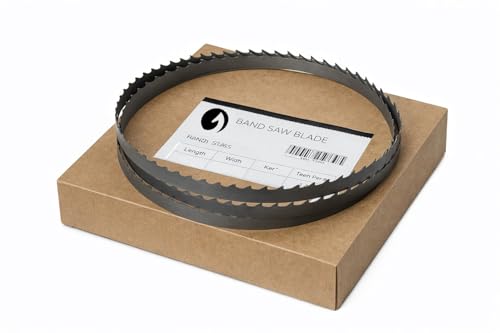
The Dark Stone 62-inch bandsaw blade is a replacement option designed for 9-inch benchtop band saws, offering a 1/2-inch width with a thin 0.020-inch kerf and 4 teeth per inch. This combination makes it especially suited for woodworkers, DIY homeowners, and contractors who frequently resaw or rip hardwood. The thin kerf reduces the amount of material removed during cutting, which can improve yield from expensive lumber like walnut, cherry, or maple.
In terms of real-world cutting performance, the deep gullet between each tooth creates space for chips to clear away quickly, which helps prevent binding and overheating when pushing through thick stock. The hardened tooth tips add a layer of wear resistance, meaning the blade maintains its edge longer than standard steel blades when used in demanding cuts. According to the product specs, these features work together to deliver fast, efficient cuts when the saw is properly set up.
Build quality is a focus here, with a precision weld that promotes consistent tooth geometry and stable tracking. The thin kerf design is a practical advantage in the workshop, as it leaves a narrower cut path and reduces the load on smaller benchtop motors. This blade is best used for straight cuts like ripping boards or resawing stock into thinner pieces. It isn't meant for intricate curves or scrolling work due to the relatively coarse 4 TPI tooth pattern.
Setup does require attention to detail. For reliable tracking and straight cuts, you need to adjust the blade tension, tracking alignment, and guide bearings according to your saw's manual. Once dialed in, many users find the blade runs smoothly and stays on track during longer cuts. Storage is straightforward since the blade can be coiled and stored in a drawer or on a peg hook. No case is included, but that's common at this price point.
A realistic limitation is that this blade only fits saws designed for a 62-inch length. Always verify your saw's blade length before ordering. Additionally, the 4 TPI will leave a somewhat rougher surface on your cuts compared to finer blades, so you may need to plane or sand the edges afterward for a smooth finish. For those focused on productivity and material conservation, this is a worthwhile blade. It delivers good value for woodworkers and shop users who prioritize fast resawing and minimal waste over fine finish cuts.

Pros
- Versatile selection covers resawing, curved contouring, and everyday shop cuts
- Hardened SK5 carbon steel teeth maintain a sharp edge across hardwoods and composites
- Smooth factory weld seams reduce chatter and produce cleaner surface finishes
- Cost-effective alternative to buying individual specialty band saw blades
Cons
- Designed exclusively for wood, plastics, and composites, not suitable for cutting metal
- The 1/8-inch blade requires careful saw guide alignment and tensioning to prevent twisting
The DARTOTEK 93-1/2 Inch Band Saw Blade 3-Pack is a specialized cutting accessory bundle designed for standard 14-inch stationary woodworking band saws. Built to streamline typical workshop cutting tasks, the assortment provides three distinct blade profiles: a 1/2-inch 6 TPI blade for straight-line resawing, a 1/4-inch 6 TPI blade for balanced curved and utility cuts, and a fine 1/8-inch 14 TPI blade for tight scrollwork and intricate decorative curves.
This bundle is particularly well-suited for DIY woodworkers, cabinetmakers, garage hobbyists, and furniture builders who need immediate versatility without purchasing individual specialty blades. From breaking down hardwood blanks and slicing veneer to shaping curved chair legs and cutting puzzle crafts, having these three sizes ready to mount on the saw keeps workshop projects running smoothly.
Manufactured with high-grade SK5 carbon steel, these blades feature precision heat-treated teeth engineered for long-lasting wear resistance and clean chip ejection. The ground, welded joints allow the loops to pass continuously through thrust bearings and guide blocks without the telltale thump common in lower-grade weld seams. This consistent tracking reduces cut chatter, helping woodworkers achieve smooth, predictable feed rates across oak, maple, pine, and composite sheet goods.
Setup on standard 14-inch band saws is straightforward, though attention to tracking and thrust bearing clearances remains essential, especially when mounting the delicate 1/8-inch scroll blade. For shop storage, the coiled blades pack away compactly on wall hooks or in standard blade organizers. Periodic cleaning with a pitch remover and slacking the saw tension during downtime will help maintain band elasticity and prolong service life.
While these blades excel in wood and plastic applications, they are carbon steel and are not intended for ferrous metals or abrasive masonry materials. Woodworkers seeking a practical, all-around blade set for their 14-inch machine will find this 3-pack a dependable, cost-conscious solution for both heavy stock preparation and detailed curve shaping.
Each blade in this assortment serves a clear practical role in the woodshop. The 1/2-inch 6 TPI blade provides the beam strength required for stable resawing, resisting lateral deflection and wandering when splitting thick hardwood boards into thinner project stock.
The 1/4-inch 6 TPI blade functions as a reliable everyday utility blade, offering ample balance between straight-line stability and smooth radius cutting for general furniture parts. For delicate scroll work and pattern making, the 1/8-inch 14 TPI blade turns tight corners effortlessly while leaving a clean edge that requires minimal finish sanding.
These blades are sized at 93-1/2 inches (7 feet 9-1/2 inches), which represents the factory standard loop length for most traditional 14-inch cast-iron woodworking band saws on the market.
They are compatible with popular 14-inch models from brands like Delta, Jet, Grizzly, Rikon, and similar workshop machines. Before mounting, users should confirm their specific machine requires 93-1/2 inch stock loops and does not require longer bands intended for saws equipped with riser block extensions.

Pros
- Versatile selection covers scroll cutting, general curve work, and basic resawing tasks
- Consistent factory welds promote smooth wheel tracking and steady feeds
- Direct fit for standard 9-inch benchtop workshop bandsaws
- Sharp tooth profiling yields clean cuts with minimal tear-out
Cons
- Not engineered for heavy structural steel or thick ferrous metals
- Narrow 1/8-inch blade requires careful tensioning to prevent twisting under load
- Specific 59-1/2-inch length will not fit 10-inch or larger standing bandsaws
The TASP 59-1/2-Inch Bandsaw Blade Set is a versatile cutting accessory kit designed specifically for 9-inch benchtop band saws. Offering three different blade profiles in a single package, this kit targets woodworkers, garage hobbyists, model builders, and home DIYers who need the flexibility to switch between fine scroll patterns and general-purpose rip cuts without buying blades individually.
Benchtop band saws often struggle when forced to use a single all-around blade for every task. This three-piece set solves that bottleneck by providing a 1/8-inch 14 TPI blade for intricate, tight-radius curves, a balanced 1/4-inch 6 TPI blade for general contour cutting, and a sturdier 3/8-inch 6 TPI blade for straighter cuts and light resawing. Based on product specifications and user feedback, each blade provides sharp, consistent teeth designed to eject sawdust efficiently and reduce heat buildup across extended cuts.
Material quality centers on high-carbon steel engineered with heat-hardened tooth tips and a flexible blade back. This metallurgical profile helps the blade flex smoothly over smaller 9-inch drive wheels without suffering premature stress cracks. Smooth weld joints are critical on smaller saws where bumpy seams disrupt guide bearings, and these blades feature clean factory welds to support reliable, wobble-free tracking across the wheels.
Setting up these blades requires standard band saw adjustment practices, including setting proper blade tension, tuning guide blocks, and adjusting thrust bearings. Because the blades come neatly coiled, they store easily in tool chests or wall-mounted shop pegboards. Routine maintenance simply involves keeping the tooth gullets free of pitch and resin buildup using a light shop solvent or wire brush.
While highly practical for everyday woodworking, these carbon steel blades are not intended for heavy structural iron or thick ferrous metals. They perform best in softwoods, hardwoods, acrylics, and thin non-ferrous stock like aluminum. For any home woodworker or craft maker wanting to expand their 9-inch saw capabilities without spending a fortune, this three-pack represents a sensible, high-utility shop investment.
These blades measure exactly 59-1/2 inches in total loop length, making them a standard replacement for many common 9-inch benchtop band saws. They are designed to fit popular machinery from brands such as Ryobi, WEN, Craftsman, Black & Decker, Skil, Tradesman, and Pro-Tech.
Before mounting, users should verify their specific machine requirements in the tool manual, as band saw wheel diameters and frame clearances dictate blade loop size. Using the proper length ensures correct tensioning range and prevents strain on internal tension springs or drive tires.
In real workshop applications, having three widths on hand improves project efficiency. The 1/8-inch blade allows craft makers and toy builders to cut intricate curves with tight turning radii, while the 14 TPI configuration minimizes splintering on delicate plywood and veneers.
For thicker stock, the 1/4-inch and 3/8-inch blades utilize 6 TPI skip-tooth arrangements that clear chips quickly to prevent burning. Whether cutting through oak boards, shaping PVC pipe, or trimming hobby stock, the tooth layout provides a dependable balance between cutting speed and edge smoothness.

Pros
- High-grade Swedish silicon steel maintains sharp cutting edges through heavy hardwood milling
- Low-tension setup causes less wear on bandsaw guide blocks, thrust bearings, and tires
- Variable tooth pitch yields minimal vibration and chatter during deep resaw passes
- Direct compatibility with popular commercial 16-inch and 17-inch woodworking bandsaws
Cons
- The 132-inch length is specifically sized for select machines and will not fit standard 14-inch saws
- A 1/2-inch width is too broad for tight radius scroll cutting or delicate curve work
- Requires proper low-tension setup technique rather than standard high-tension blade tuning
The Timber Wolf 132-inch band saw blade, crafted by PS Wood, is an aftermarket cutting accessory engineered for demanding woodworking applications. Sized at a versatile 1/2-inch width with a variable 3/4 tooth-per-inch (TPI) profile, this blade is built for woodworkers, furniture makers, and serious home shop enthusiasts who require clean, reliable cuts across softwoods and dense hardwoods alike. It is directly sized to match larger workshop machinery, including the Laguna LT16, Shopfox 17-inch, and Harvey HW615P saws.
Where this blade stands out is its metallurgical construction. Built from Swedish silicon steel, the alloy features enhanced ductility and heat dissipation compared to traditional high-carbon blades. The defining benefit of the Timber Wolf design is its low-tension capability. Instead of over-cranking the saw tension knob to avoid blade drift, this blade tracks straight with significantly less beam tension. This reduction in load translates to prolonged life for your bandsaw bearings, thrust assemblies, and wheel tires.
In practical cutting performance, the variable 3/4 TPI tooth geometry plays a critical role in managing chip clearing and surface finish. The alternating tooth spacing interrupts harmonic frequencies that often cause blade chatter, resulting in a noticeably smoother off-the-blade surface. Whether slicing thin veneer laminates, ripping rough 8/4 lumber, or executing sweeping curved components, the blade tracks true with minimal barrel or deflection when properly tuned to the workpiece feed rate.
Maintenance and setup demand slight adjustments if you are accustomed to conventional carbon steel blades. To get the best results, users should follow low-tension setup procedures (often utilizing the flutter method) rather than relying strictly on the saw's built-in tension gauge markings. Keeping the gullets clean from pitch buildup with a simple citrus cleaner will help maintain smooth tracking and preserve the integrity of the heat-treated teeth over many board feet of cutting.
A realistic limitation is its specialized geometry. At 1/2-inch wide, it is well suited for straight milling and gentle sweeps, but it cannot make tight radius turns like a 1/4-inch or 1/8-inch scroll blade. Additionally, the 132-inch length is strictly tailored to specific intermediate-to-large capacity bandsaws. For woodworkers who own compatible machinery and want a clean-tracking, cool-running blade that simplifies resawing and lumber prep without punishing their equipment, this blade represents a reliable and cost-effective upgrade.
In a production workshop or serious home garage, machine downtime and inaccurate cuts cost valuable time and materials. The Timber Wolf low-tension profile delivers consistent tracking stability that helps eliminate blade drift, making fence alignment and precision rip cuts straightforward and repeatable.
The variable tooth spacing handles deep cuts without bogging down the saw motor or causing scorching on sensitive hardwoods such as cherry and hard maple. This efficient material removal minimizes wasted lumber and decreases the time needed at the jointer or planer during project dimensioning.

Pros
- Versatile 3-blade selection spans tight curves to resawing
- Direct fit for standard 10-inch and 11-inch benchtop band saws
- Smooth weld joints minimize wheel hop and guide chatter
- Thin gauge reduces motor strain on lower-horsepower shop tools
Cons
- Unsuitable for ferrous metals like steel and iron
- Requires careful tensioning adjustments between width changes
The TASP 72-Inch Bandsaw Blade Set is a versatile three-piece replacement package designed for 10-inch and 11-inch workshop band saws. Tailored for woodworking hobbyists, garage craftsmen, and DIY makers, this pack equips machines like the Delta 28-140, Wen 3962, and compatible Shopsmith units with dedicated options for varied operations. Rather than relying on a single all-purpose blade, this kit supplies specialized profiles ranging from intricate scrolling to bulk resawing.
The set features three distinct sizes that address common benchtop cutting demands. The 1/8-inch wide blade with 14 teeth per inch handles tight radius turns, delicate curves, and detailed scroll cuts with clean edges. For general-purpose curved cutting and template tracing, the 1/4-inch blade with 6 TPI provides balanced chip clearance and tracking stability. The wider 1/2-inch 6 TPI blade increases beam strength, helping maintain straight tracking when slicing veneers or ripping dimensional lumber.
Each blade is manufactured from flexible high-carbon steel paired with hardened cutting edges to resist premature wear. The heat-treated teeth maintain sharpness when slicing through dense hardwoods, softwoods, composite panels, and soft plastics. Factory weld seams are ground flat to minimize jump and vibration against thrust bearings, supporting smooth feed rates and predictable workholding across typical garage workloads.
Installing these blades requires matching proper machine tension and guide block alignment to the respective blade width. The thinner 1/8-inch and 1/4-inch blades demand precise guide adjustment to prevent twisting, while the 1/2-inch blade requires adequate spring tension for accurate straight rips. The thin 0.014-inch kerf on the smaller blades reduces motor strain on benchtop units, which is especially helpful for lower-horsepower motors during prolonged cutting sessions.
While versatile across timber, plastics, and non-ferrous metals like aluminum or brass, these blades are not suited for ferrous materials such as steel or iron pipe. Users working primarily with dense exotic hardwoods should feed stock steadily to avoid overheating the carbon steel teeth. For home workshop woodworkers and craftspeople seeking an affordable, multi-blade bundle to maximize their benchtop band saw utility, this TASP three-pack represents a dependable and economical choice.
This 72-inch blade assortment is engineered for benchtop and standalone band saws requiring a 6-foot continuous loop. Common compatible models include the Delta 28-140, Wen 3962, and select Shopsmith configurations designed around 10-inch and 11-inch wheel sizes.
Before mounting, users should verify their machine wheel diameter, tracking adjustments, and recommended blade width limits. While the 1/8-inch and 1/4-inch blades fit nearly all standard guides, the 1/2-inch blade requires adequate wheel coplanarity and guide block spacing to ensure smooth clearance without pinching.
In daily workshop routines, having three distinct blade widths eliminates the compromise of using an intermediate blade for both tight curves and resaw cuts. The 1/8-inch blade executes small-radius patterns without binding in the kerf, making it suitable for toy making, intarsia, and craft cuts.
The 1/4-inch blade serves as a dependable utility option for rapid rough-outs, curved furniture legs, and template pattern cutting. For squaring stock or slicing thin boards, the 1/2-inch blade provides the necessary lateral stiffness to resist blade wander under moderate feed pressure.

Pros
- Versatile assortment covers common cutting needs from coarse resawing to fine scrollwork.
- High-quality SK5 steel resists wear and heat, maintaining edge longer than standard carbon steel blades.
- Precision sharpened and induction-hardened teeth produce clean cuts with minimal tear-out.
- Compatible with major band saw brands, making them a reliable replacement option.
- Good value for a three-pack, offering blades for multiple projects right out of the box.
Cons
- Blades are designed for wood and plastic only; not suitable for metal cutting.
- Some users may prefer a wider range of TPI options for specialized tasks.
- Pack includes only one of each size; for heavy use, additional singles may be needed.
The FOXBC 93-1/2 Inch Bandsaw Blade 3-Pack is a practical solution for woodworkers and DIY enthusiasts who own a standard 14-inch band saw. This assortment includes three blades: a 1/2-inch 6 TPI for resawing and straight cuts, a 1/4-inch 6 TPI for general curves, and a 1/8-inch 14 TPI for fine detail work. Whether you're a hobbyist building furniture, a contractor making rip cuts, or a home user tackling craft projects, this set covers a wide range of cutting tasks without the need to buy individual blades.
Performance-wise, these blades are made from premium Japan SK5 high carbon steel, known for its superior hardness and wear resistance. The teeth are induction hardened and precision milled, which helps maintain sharpness over time and reduces the need for frequent changes. Users report clean cuts with minimal vibration, thanks to the consistent tooth geometry. The 6 TPI options cut efficiently through thick hardwood and softwood, while the 14 TPI blade is ideal for tight curves and smooth finishes in plywood or MDF. This combination makes the set a versatile addition to any workshop.
Build quality is a strong point. The SK5 steel holds its edge well, and the welded seams are durable, minimizing the risk of breakage during operation. The blades track true on standard band saw wheels, and the tensioning process is straightforward. For those using Delta, Grizzly, Rikon, Jet, Craftsman, Shop Fox, or Rockwell 14-inch saws, compatibility is assured. The blades come with a black protective finish that resists rust, though a light oil after use is recommended for long-term storage.
In terms of storage and maintenance, the three blades are packaged in a simple cardboard sleeve that keeps them organized, but you'll likely want to store them in a blade storage rack or tube to prevent damage. Each blade is 93-1/2 inches long, so they fit typical 14-inch band saws without needing to cut or modify. Changing blades is quick, and the pack provides a good starting point for common woodworking projects.
One limitation is that these blades are designed only for wood and plastic. They should not be used on metals, as the tooth geometry and steel composition are not suited for metal cutting. Additionally, if you specialize in one type of cut, you may need to buy additional blades in the same size. The pack offers one of each, which is fine for general use but may not satisfy heavy-demand applications.
Overall, the FOXBC 93-1/2 Inch Bandsaw Blade 3-Pack is a solid choice for woodworkers and DIYers who want reliable, long-lasting blades for their 14-inch band saw. The blend of sizes and TPI options covers most residential and light professional needs. Given the quality of materials and competitive pricing for a three-pack, it's a practical addition to any workshop.
The FOXBC bandsaw blades are constructed from Japan SK5 high carbon steel, a material recognized for its excellent edge retention and resistance to heat buildup during cutting. This steel grade is commonly used in premium saw blades, and FOXBC's induction hardening process further enhances the durability of each tooth. The blades are precision milled to ensure consistent tooth sharpness and proper set, which reduces binding and improves cutting accuracy.
The welded joints are robust and undergo heat treatment to maintain strength under tension. The backing material remains flexible enough to tolerate the bending around band saw wheels without cracking. Each blade features a black oxide coating that offers basic corrosion protection, though a wipe-down with a light oil after use is advisable for long-term storage in humid workshops.
Overall, the build quality reflects a thoughtful balance between hardness for cutting performance and flexibility for reliable tracking. These blades are designed to withstand regular use in demanding woodworking environments, making them a dependable choice for both weekend projectors and serious woodworkers.

Pros
- Milled tooth geometry produces clean, fast cuts with reduced sawdust drag
- Requires lower blade tension, preserving machine guide bearings and tires
- Ductile alloy core provides excellent resistance to flex cracking
- Versatile balance between contouring capability and straight-line tracking
Cons
- 4 TPI tooth pitch is too coarse for stock thinner than 1/4 inch
- Not engineered for cutting ferrous metals or abrasive composites
- Requires careful tension adjustment rather than standard high-tension blade settings
The Timber Wolf 3/8-inch by 93-1/2-inch 4 TPI bandsaw blade is a specialized replacement accessory tailored for stationary vertical band saws. Built primarily for woodworkers, furniture makers, contractors, and DIY garage hobbyists, this blade targets common fabrication needs including dimensioning lumber, pattern cutting, and light resawing. Its standard 93-1/2 inch length aligns with the vast majority of 14-inch woodworking band saws found in home shops and commercial facilities.
Cutting performance stands out due to the brand milling process. Unlike standard carbon steel blades that utilize stamped or crush-ground teeth, this model uses precision-milled teeth that generate clean, sharp edges right out of the packaging. The 4 TPI spacing paired with a positive claw pattern clears sawdust efficiently, which helps prevent heat buildup when plowing through dense hardwoods such as walnut, maple, or cherry. The induction-hardened tooth tips maintain their keen edge longer than standard carbon steel, keeping feed resistance low and cuts predictable.
A critical advantage of this blade lies in its metallurgy. The blade body is fabricated from a ductile silicon-alloy steel that flexes smoothly around bandsaw wheels without work-hardening prematurely. This structural ductility allows the blade to run cooler and significantly extends flex life, reducing the risk of sudden blade breakage behind the gullets. Because it is engineered to track accurately under lower overall tension, it also reduces mechanical stress on your saw motor bearings, wheel shafts, and rubber tires.
Handling and dimensional versatility make this 3/8-inch profile a reliable daily driver in the shop. It is broad enough to track cleanly through straight rip cuts without wandering, yet narrow enough to maneuver around moderate radius curved workpieces. Users setting up this blade will appreciate the smooth tracking, though it does require setting the saw tension according to low-tension flutter methods rather than relying strictly on the built-in spring gauge on standard saws.
There are practical limitations to keep in mind before mounting it for every task. With a coarse 4 TPI layout, this blade is not suitable for ultra-thin veneers or delicate scroll cuts where fine tooth engagement is necessary to prevent chip-out. It is strictly optimized for timber, plastics, and non-ferrous materials rather than structural steel. For home hobbyists and professional woodworkers seeking a durable, low-stress utility blade that handles both curved and straight woodworking stock, this Timber Wolf blade offers dependable performance and long-term cutting value.
In standard woodworking applications, blade friction and heat buildup are the primary causes of premature tooth dulling and wandering cuts. The combination of milled tooth geometry and induction hardening on this Timber Wolf blade helps keep friction to a minimum, allowing the blade to maintain a straight kerf even during extended ripping sessions in hard maple and oak.
Because the blade is formulated to track properly at lower tension ratings, your bandsaw requires less frame-deflection compensation. This translates directly to smoother operation, reduced vibration across the work table, and less mechanical strain on guide bearings and wheel tires over hours of continuous workshop use.
Frequently Asked Questions About Bandsaw Ripping
What tooth count works best for ripping thick hardwood?
A low tooth count between 3 and 4 TPI works best for ripping thick hardwood. Deep gullets on a 3 TPI or 4 TPI bandsaw blade provide ample space to carry large wood shavings out of the cut without packing the teeth. When gullets clog with sawdust, friction spikes and causes blade wandering. Selecting a low pitch keeps the cut line cool and preserves the motor power on dense lumber.
Why does a bandsaw blade wander or drift off the fence during a rip cut?
Inadequate blade tension, dull teeth, or improper guide alignment typically causes blade drift. If the feed force exceeds the blade tension, the band bows inside the kerf and follows the path of least resistance. Misaligned ceramic or ball-bearing guides allow the blade body to twist away from the rip fence. Setting correct tension and squaring the fence to the natural tracking angle of the blade helps eliminate this cut deviation.
Can benchtop bandsaws run wide resaw blades effectively?
No, most compact 9-inch and 10-inch benchtop bandsaws cannot properly tension blades wider than 3/8 or 1/2 inch. Smaller saw frames lack the structural rigidity to apply high tension, which leads to blade flutter and rough surfaces. Also, tight wheel diameters subject thick steel bands to severe bending fatigue, causing premature metal failure. Compact saws perform best with thin-kerf bands around 0.014 to 0.020 inches thick.
How does kerf thickness affect rip cut quality and wood yield?
Thin-kerf blades reduce motor strain and waste significantly less expensive lumber as sawdust. A thin band measuring 0.020 inches thick removes far less material than heavier industrial blades, allowing smaller motors to rip through dense stock without bogging down. While narrow kerfs leave cleaner surfaces that need minimal smoothing from a detail sander, they require steady feed pressure to prevent deflection.
Is a hook tooth or skip tooth pattern better for ripping operations?
A hook tooth pattern with a positive rake angle is generally better for aggressive ripping along wood grain. The forward-angled teeth actively bite into timber fibers, while rounded gullets sweep away long grain chips efficiently. Skip tooth profiles also work well for softwoods and non-ferrous metals because wide tooth spacing prevents pitch buildup. For dense hardwoods, hook teeth deliver faster feed rates with less pushing effort.
How often should you adjust bandsaw tracking and guide bearings?
You should check tracking and guide clearances every time you change blade widths or install a new band. Guide blocks or ball bearings must sit just behind the tooth gullets so teeth do not contact metal guides during operation. Inspecting wheel tires for sawdust buildup before tracking keeps the band centered on the wheel crown. Regular adjustments prevent uneven tooth wear and extend blade life across demanding woodworking projects.




Write Your Review
No reviews yet. Be the first to share your experience!