


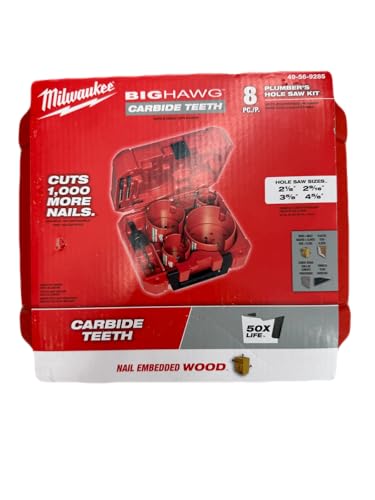
Rough rough-in holes through nail-embedded wood, plaster, and cement board quickly burn out standard bi-metal cups. Plumbers and electricians facing stubborn framing studs need aggressive tooth geometry that cuts fast and resists high-heat tooth stripping. Investing in a heavy-duty milwaukee big hawg carbide hole saw provides thick carbide teeth brazed onto an open back cup designed to handle tough jobsite obstacles. Whether running heavy drain lines or coordinating clean rough-ins alongside a dedicated saw blade for cutting PVC pipe, having the right cup diameter saves serious labor time.
Careful analysis of tool specifications and user feedback reveals that tooth count, pilot bit stability, and plug removal slots dictate real jobsite efficiency. A specialized milwaukee big hawg carbide hole saw utilizes deep gullets and aggressive cutting angles to clear dense wood chips before friction slows the drill motor down. Paired with high-torque drills, these rugged hole cutters power through framing lumber, shingles, and lightweight masonry without chattering or wandering off your marked center point.




Frequently Asked Questions
Can a milwaukee big hawg carbide hole saw cut through nails embedded in framing lumber?
Yes, carbide teeth on these hole cutters are engineered specifically to slice through framing nails and screws without fracturing. Standard bi-metal teeth often strip instantly upon striking hardened fasteners, but brazed carbide tips maintain sharp edges across abrasive materials. For complete demolition setups, crews often pair these rugged cutters with heavy-duty saw blades for Milwaukee Sawzall tools.
What drill type works best with large diameter carbide hole cutters?
A high-torque, low-RPM right-angle drill or heavy-duty cordless drill handles large hole saws most effectively. Running a large cup above recommended speeds generates unnecessary heat and increases bind-up risks. Using a steady feed rate ensures clean chip ejection through the deep body flutes.
How do you control plunge depth when drilling near finished walls?
Plunge depth is managed by monitoring the pilot bit entry and keeping the drill perpendicular to the workpiece. When working near sensitive wiring or plumbing lines, some installers pair standard drill accessories or a drill bit depth stop with their setup to prevent over-penetration into blind wall cavities.
What materials should not be cut with this style of hole cutter?
Thick structural steel, cast iron, and solid concrete should not be cut with a wood and multi-material carbide hole saw. While these cups handle thin sheet metal, nail-embedded studs, and cement siding easily, dense masonry requires diamond core tooling instead.
How do you remove dense wood plugs stuck inside the cup?
Plugs eject through the large side slots using a standard flathead screwdriver for quick leverage. The open body architecture prevents compacted wood shavings from wedging tightly against the interior walls between consecutive cuts.




Write Your Review
No reviews yet. Be the first to share your experience!