


Demolition projects, plumbing repairs, and rough framing modifications often require an aggressive cutting tool that can fit into tight stud bays and slice through varied construction materials. Learning how use reciprocating saw setups effectively begins with understanding how the tool balances rapid linear stroke motion with proper operator stance. Whether you are cutting stubborn pipe behind a wall or trimming framing members during a home remodel, matching the saw stroke length, speed control, and blade teeth to the workpiece prevents harsh vibration and dangerous tool kickback.
Modern options range from ultra-compact one-handed cordless designs to heavy-duty multi-position models capable of aggressive tear-out tasks. Selecting appropriate accessories like reciprocating saw blades for demolition ensures that the motor cuts efficiently without overheating or binding in dense lumber. Taking a moment to inspect your tool features, battery attachment, and cutting line before pulling the trigger will deliver cleaner results while reducing physical fatigue across demanding residential work.

Pros
- Variable speed trigger (0-3500 SPM) gives control for different materials
- Tool-free blade change is fast and secure with all-metal collet
- Two batteries included double your work time without waiting to recharge
- Comfortable rubber grip and low vibration help reduce hand fatigue
- Safety lock switch prevents accidental activation during transport or storage
Cons
- 2000mAh batteries may not provide enough runtime for heavy-duty continuous use
- Maximum cutting depth in wood (50mm) is less than some full-size corded models
- No built-in LED work light, which can be handy in dimly lit workspaces
The FULLYEA cordless reciprocating saw is a compact yet capable power tool designed for DIY homeowners, mechanics, contractors, electricians, plumbers, woodworkers, and workshop users who need a portable cutting solution. This saw runs on a high-power pure copper motor that spins up to 3500 strokes per minute, giving you the speed to cut through wood, metal, plastic, and even small pipes with relative ease. Its 28mm stroke length provides efficient cutting action, and the tool-free blade change system lets you swap blades in seconds without reaching for a wrench.
In real-world use, the variable speed trigger offers good control for different materials. You can slow it down for metal or plastic to avoid melting or binding, and speed up for rough cuts in lumber. The included 4 blades cover common cutting needs right out of the box, which is convenient for someone just getting started. The saw's lightweight design and ergonomic rubber grip make it comfortable to hold with one hand, and the safety lock switch adds peace of mind when you're carrying it around the garage or job site.
Build quality is solid for the price point. The all-metal collet feels sturdy and holds blades securely, while the housing is made of durable plastic that can handle occasional drops. The two 2000mAh Li-Ion batteries provide decent runtime for light to moderate tasks, like trimming PVC pipe, cutting branches, or demolition work on drywall. However, if you plan to cut thick hardwood or metal for extended periods, you may find yourself swapping batteries more often than you'd like.
Storage and maintenance are straightforward. The saw does not come with a carrying case, but it's compact enough to fit in a standard toolbox or on a shelf. Blades are easy to store in a small pouch or organizer. Keeping the collet clean and lubricated will help ensure smooth blade changes over time. The battery charger is basic but gets the job done, and the batteries have a power indicator so you can check remaining charge at a glance.
One realistic limitation is the cutting depth. The saw can handle up to 50mm in wood and 20mm in metal, which is fine for most DIY projects and light renovation work, but it won't replace a full-size corded reciprocating saw for heavy framing or thick steel cutting. Also, the lack of a built-in LED light means you'll need a separate work light in darker areas like crawl spaces or under sinks.
Overall, the FULLYEA cordless reciprocating saw is a practical choice for anyone who needs a lightweight, affordable saw for occasional cuts around the home, workshop, or job site. DIYers, mechanics, and tradespeople will appreciate the tool-free blade change, variable speed, and dual-battery setup. While it's not built for heavy daily demolition, it offers good value and reliable performance for light to medium-duty cutting tasks.
The FULLYEA reciprocating saw features a durable plastic housing with a reinforced all-metal collet for secure blade retention. The motor is a pure copper wound unit, which tends to offer better heat dissipation and efficiency compared to cheaper aluminum motors. The trigger and safety switch feel solid, and the rubber overmold on the handle provides a non-slip grip even when your hands are sweaty or oily. Overall, the build quality is appropriate for the price and should hold up well under normal DIY and light professional use.
This cordless saw comes with two 2000mAh Li-Ion batteries and a charger. The batteries are removable and have a built-in power indicator, so you can see how much charge remains. For light tasks like cutting PVC pipe, drywall, or small branches, you can expect around 20-30 minutes of continuous runtime per battery. Heavier cuts in hardwood or metal will drain them faster. Having two batteries means you can keep one charging while using the other, which effectively doubles your work time. Keep in mind that 2000mAh is on the smaller side, so if you have heavy cutting needs, you may want to look for a saw with higher-capacity batteries.
The FULLYEA reciprocating saw delivers up to 3500 SPM with a 28mm stroke, which is sufficient for cutting wood up to 50mm thick, metal up to 20mm, and plastic pipe up to 80mm. The variable speed trigger gives you control to adjust the speed based on the material. For example, slower speeds work better for metal to prevent blade overheating, while faster speeds are ideal for wood. The tool-free blade change makes it easy to switch between the included wood, metal, and plastic blades. While it won't match the brute force of a corded saw, it handles most DIY and light renovation tasks with ease.
This saw is designed with user comfort in mind. The handle is wrapped in a non-slip rubber that reduces vibration and helps you maintain a secure grip during use. At just over 5.5 pounds, it's light enough to operate with one hand, which is handy when you need to hold material steady with the other hand. The safety lock switch prevents the saw from turning on accidentally when you're carrying it or storing it in a toolbox. The trigger is responsive and allows for easy speed modulation. Overall, the ergonomics are good for short to medium-length cutting sessions.

Pros
- Lightweight at 2.0 lbs reduces arm fatigue during overhead or prolonged cuts.
- Dual 4.0Ah batteries offer solid runtime and fast charging for all-day use.
- Brushless motor provides efficient power and longer motor life compared to brushed models.
- Tool-free blade change system saves time and frustration on the job.
- Built-in LED light improves visibility in low-light work environments.
Cons
- Limited user reviews available; real-world durability not yet widely confirmed.
- Brand may be less known among professionals, potentially affecting resale or warranty confidence.
- Storage case is included but may not be as rugged as premium tool bags for heavy job site use.
The SEESII cordless reciprocating saw is a versatile cutting tool designed to handle everything from pruning branches to slicing through metal pipes and PVC. It is best suited for DIY homeowners who tackle weekend projects, mechanics needing a compact saw for exhaust or brake work, contractors on remodeling jobs, and workshop users who require a portable saw for quick cuts.
In terms of performance, the 200W brushless motor delivers variable speeds from 0 to 3500 RPM, giving you control for different materials. The 15mm stroke length allows for efficient cutting, and the included 6 saw blades cover wood, metal, and demolition work. Users can expect solid cutting efficiency for general purpose tasks, though heavy-duty demolition may benefit from a more powerful corded model. The brushless design improves battery efficiency and motor longevity, which is a key advantage over brushed competitors.
Build quality appears decent for the price point. The saw body is lightweight (2.0 lbs) and features an ergonomic grip that allows comfortable one-handed operation – useful when cutting overhead or in tight spots. The tool-free blade change mechanism is quick and secure. The safety lock button adds peace of mind during transport. The included 4.0Ah batteries and fast charger provide ample power for most tasks, and the LED light is genuinely helpful in dimly lit areas like under sinks or in crawl spaces.
Storage and organization are handled by a hard plastic storage case that holds the saw, batteries, charger, blades, and included gloves/safety glasses. It fits well on a shelf or in a truck toolbox. Maintenance is minimal – keep the blade clamp clean and charge batteries as needed. The batteries use standard 20V MAX format (compatible with other SEESII tools, if any), but may not work with other brands.
One realistic limitation is the lack of long-term user feedback, as there are no reviews yet. The brand is not as established as DeWalt or Milwaukee, so professionals might hesitate. The saw is not designed for heavy continuous demolition; it's best for intermittent cutting tasks. Also, the plastic case, while functional, may not survive a drop on a concrete job site.
Overall, this SEESII saw offers strong value for DIYers, hobbyists, and light professional use. If you need an affordable cordless reciprocating saw for occasional projects, home repairs, or vehicle maintenance, this kit delivers reliable performance without breaking the bank. For heavy daily use, you may prefer a more rugged, higher-priced option.

Pros
- Direct compatibility with widely owned Dewalt 20V slide-style batteries
- Tool-free blade clamp allows rapid accessory changes during busy projects
- Compact and lightweight footprint reduces arm strain during overhead pruning or pipe cutting
- Variable speed trigger provides solid control when starting delicate cuts
Cons
- Sold as a bare tool without a battery or charger included
- Brushed 150W motor is better suited for light to medium tasks rather than heavy-duty commercial demolition
- Vibration levels can increase noticeably when cutting through thick hardwoods or steel stock
The Samvinor Cordless Reciprocating Saw is an aftermarket bare-tool option designed to run directly on standard Dewalt 20V lithium-ion battery packs. Featuring an inline motor design and a variable speed trigger reaching up to 3,500 strokes per minute, this handheld saw is engineered for rough cutting, demolition, and pruning. By utilizing an existing battery platform, it offers an economical way to expand cutting capabilities without purchasing into a separate charger ecosystem.
This cutting tool is best suited for DIY homeowners, plumbers, HVAC technicians, and garage handymen who already maintain a collection of Dewalt 20V batteries. Its relatively small profile makes it practical for cutting through stubborn PVC drain pipes, trimming tree limbs in the yard, notching studs during basement framing, or slicing through sheet metal in automotive and repair projects. While commercial demolition crews might require heavy industrial saws, this model targets everyday punch-list tasks.
In terms of practical cutting performance, the variable speed trigger allows users to ease into cuts smoothly before revving up to full speed. The 3,500 SPM stroke rate provides ample speed to slice through 2x4 framing lumber, drywall, and plastic conduit with minimal effort. While the 150-watt brushed motor produces reliable speed for general home repairs, feed pressure should remain moderate to avoid bogging the motor down on thick hardwoods or solid metal stock.
Build quality centers on functional garage practicality. The housing features a durable yellow and black composite shell fitted with textured rubber overmolding on the grip. This non-slip coating aids tool control and helps cushion vibration. Blade swaps are straightforward thanks to the quick-release chuck collar, which requires no hex keys or hand tools. A built-in LED front light casts illumination directly onto the cutting mark, which proves useful when working inside dark cabinetry or crawl spaces.
Storage and maintenance are straightforward due to the tool's compact 12-inch footprint, which fits easily into standard toolboxes, deep drawer organizers, or soft tool bags. Keeping the blade clamp clean of drywall dust and applying a drop of light machine oil periodically helps maintain smooth locking action. Users should keep in mind that continuous heavy-duty cutting will draw battery reserves quickly, making higher capacity packs like 4.0Ah or 5.0Ah batteries ideal for extended sessions.
For homeowners and trade workers already invested in the Dewalt 20V cordless system, this reciprocating saw serves as an accessible, cost-effective addition to the workshop. It delivers reliable cutting performance for yard maintenance, light remodeling, and plumbing repairs without the expense of branded bare tools.
This reciprocating saw is engineered to accept standard Dewalt 20V MAX slide-style batteries, including DCB200, DCB201, DCB203, DCB204, DCB205, and DCB206 packs. The slide-in terminal provides a snug, secure fit that prevents battery disconnects during heavy vibration. Because it functions as a bare tool, users can simply snap on an existing pack and start working immediately without the expense of proprietary chargers.
The included four-blade set allows users to tackle diverse jobs right out of the box, including pruning green branches, flush-cutting plumbing pipes, and rough-cutting drywall. Standard reciprocating saw shanks fit directly into the quick-change collar, ensuring broad compatibility with aftermarket wood, metal, carbide, and bi-metal blades from major tool retailers.
Pros
- Lightweight and nimble body is easy to operate with one or both hands in cramped spaces
- Fast blade swaps without needing hex keys or screwdrivers
- Built-in electric brake enhances overall cutting control and safety
- Shares batteries across the widely available 20V MAX POWERCONNECT product lineup
Cons
- Bare tool configuration requires purchasing a battery and charger separately if not already owned
- Shorter 7/8-inch stroke length makes heavy demolition slower than high-end contractor-grade saws
- Shoe pivots but does not offer tool-free depth adjustment
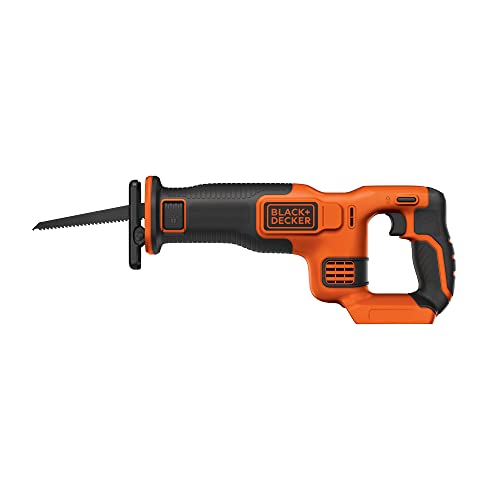
The BLACK+DECKER 20V MAX BDCR20B is a compact, cordless reciprocating saw engineered for rough cutting, pruning, and light demolition. Striking a clean balance between portability and cutting output, this battery-powered tool serves as a reliable workhorse for homeowners tackling garage projects, branch trimming, and general repairs around the property. Powered by the widely adopted POWERCONNECT battery system, it allows users to operate without wrestling extension cords or searching for nearby wall outlets.
DIY enthusiasts, hobbyists, and suburban homeowners will find the most value in this tool. The saw generates up to 3,000 strokes per minute through its 7/8-inch stroke length, offering solid cutting efficiency across lumber, drywall, PVC piping, and thin metals. While industrial framing crews may demand heavier demolition saws, this lightweight model easily manages quick plumbing pipe cutoffs, electrical box framing modifications, and backyard tree maintenance without overwhelming the user.
Handling and physical ergonomics stand out as major operational benefits. Weighing approximately four pounds without the battery pack, the tool is remarkably easy to maneuver overhead or inside narrow joist bays. The rubberized handle contour cushions vibration, while the pivoting front shoe rests flat against working surfaces to reduce bucking. An integrated electric brake adds reliable safety, stopping the reciprocating blade immediately as soon as you release the trigger.
Everyday usability is reinforced by practical mechanical design. The clamp mechanism allows tool-free blade changes, saving valuable time when alternating between a coarse wood blade and a fine metal-cutting blade. Storage footprint remains modest, fitting into standard tool chests, portable totes, or shelf organizers without hogging valuable workshop floor space. Routine upkeep is minimal, requiring little more than a quick wipe-down to remove sawdust and periodic checks on the blade chuck mechanism.
The main trade-offs stem from its intended light-duty focus. The 7/8-inch stroke speed cuts somewhat slower through thick dimensional timber than beefy commercial reciprocating saws, and demanding cuts will deplete smaller battery packs quickly. Users planning heavy house demolition will likely want larger capacity packs or dedicated heavy-duty platforms. For basic home repairs, fence patching, yard trimming, and garage fabrication, the BDCR20B offers an affordable and dependable cordless cutting tool.
In light workshop and garage settings, the BDCR20B provides quick rough-sizing capabilities for stock materials. The variable-speed trigger lets you start cuts gently on rounded surfaces like conduit and PVC before ramping up to full speed. This fine trigger modulation prevents blade skating and protects material edges from splintering unnecessarily.
The pivoting shoe provides a firm fulcrum point against workpieces, transferring blade movement directly into cutting action rather than rattling the operator hands. For hobbyists processing scrap wood or tearing down shipping pallets, the saw offers plenty of cutting authority without taking up the storage footprint of a full-sized corded reciprocating saw.
The saw accepts standard universal 1/2-inch shank reciprocating saw blades, giving you unrestricted access to wood, metal, masonry, and pruning blades from any major brand. This open blade standard ensures you can pick up replacement blades at any local hardware store or home center.
As part of the BLACK+DECKER 20V MAX POWERCONNECT ecosystem, the bare tool accepts any 20V MAX lithium-ion battery from the lineup. Users who already own cordless string trimmers, leaf blowers, or drills under this system can immediately swap packs and get to work without buying redundant chargers.

Pros
- Brushless motor provides extended runtime and greater efficiency.
- Compact and lightweight design enhances maneuverability in tight spots.
- Pivoting head allows for flush cutting against surfaces.
- Keyless blade clamp makes blade changes fast and tool-free.
- Variable speed trigger gives user control over cutting speed.
Cons
- Tool only - requires purchase of DEWALT 20V MAX battery and charger separately.
- Premium price point compared to brushed models or other brands.
- No included carrying case for storage and transport.
The DEWALT DCS367B is a cordless reciprocating saw designed for professionals and serious DIY enthusiasts. As part of the 20V MAX XR line, it features a brushless motor that delivers up to 2.5 times more runtime than brushed models, making it a reliable choice for extended cutting tasks on construction sites or in home repair projects.
Weighing just 5 pounds and measuring only 14.5 inches in length, this saw is exceptionally compact and lightweight. This makes it ideal for maneuvering in tight spaces like between studs, under sinks, or inside wall cavities. The pivoting head adds versatility, allowing flush cuts against surfaces without obstruction.
The variable speed trigger offers precise control from 0 to 2,900 strokes per minute, while the 1-1/8-inch stroke length provides aggressive cutting action through wood, metal, and plastic. The keyless 4-position blade clamp enables quick, tool-free blade changes, enhancing productivity on the job. An integrated LED light illuminates dark workspaces, improving visibility in crawl spaces and attics.
One consideration is that this is a tool-only purchase. Users will need a DEWALT 20V MAX battery and charger, which are sold separately. Additionally, it does not come with a carrying case, though many users may already have other DEWALT tools and batteries. The saw is backed by a 3-year limited warranty, reflecting the brand's confidence in its durability.
For contractors, electricians, plumbers, and woodworkers who need a portable, powerful saw for tight spots, the DCS367B is a strong performer. Its combination of runtime, lightness, and compactness makes it a practical addition to any tool kit or workshop. While the initial investment may be higher than some alternatives, the long-term value and performance justify the cost for those who use it regularly.
The DEWALT DCS367B is constructed with a rugged housing designed to withstand job site conditions. The brushless motor is built for longevity and efficiency, with no brushes to replace. The keyless blade clamp is made of durable steel, ensuring secure blade retention. The pivoting head mechanism is robust and allows for easy adjustment without tools.
The compact design also includes a rubber overmold on the handle for a comfortable, non-slip hold even with gloves. The LED light is well-protected and positioned to cast minimal shadow on the work area. While not waterproof, the saw is built to resist dust and debris typical of construction and workshop environments.

Pros
- Powerful brushless motor provides strong cutting performance and battery efficiency
- Two included high-capacity batteries offer extended runtime for larger projects
- Lightweight and compact for easy one-handed operation and portability
- Complete kit with blades, bag, and accessories ready out of the box
Cons
- Limited cutting capacity of 50mm in wood may not suit heavy-duty framing tasks
- No variable speed trigger; fixed two-speed control may require adjustment for precision cuts
- Some users may prefer a longer stroke length for faster material removal
The TaskStar 21V Cordless Reciprocating Saw is a compact, one-handed cutting tool designed for DIY homeowners, woodworkers, plumbers, electricians, and contractors who need a portable solution for cutting wood, PVC, and metal. This saw combines a 200W brushless motor with two speed options (0-3500 RPM) to handle a range of materials, from wooden boards to metal pipes and plastic sheets.
In terms of performance, the brushless motor delivers strong, consistent power while maximizing battery life. The two-speed control lets you choose lower RPM for precise cuts in plastics or softer woods, and higher speed for faster cutting through metal. The 15cm stroke length, though moderate, removes material efficiently for standard DIY tasks and light professional work. According to product specs, it cuts wood up to 50mm, metal up to 20mm, and plastic up to 130mm, which covers common household repairs and hobby projects.
Build quality is practical for the price point. The saw weighs only 2 pounds, making it easy to handle overhead or in tight spots like under sinks or inside cabinets. The tool-free blade release is a real time-saver when switching between wood and metal cutting. The included LED light is a thoughtful addition for dimly lit basements or garages, though it is not adjustable. The safety lock prevents accidental startups, which is especially useful in busy workshops.
The kit comes well-equipped: two 4.0Ah batteries, a fast charger, eight assorted reciprocating saw blades, a storage bag, and even a pair of gloves and safety glasses. That means you can start cutting right away without hunting for additional accessories. The storage bag keeps everything organized and portable, though it is soft-sided and may not protect tools as well as a hard case.
One realistic limitation is that the saw's cutting capacity is modest compared to full-size reciprocating saws. For heavy demolition or large timber, a larger model may be more appropriate. Also, the fixed two-speed switch (not a variable trigger) means you cannot adjust speed gradually during a cut, which may affect control on delicate materials. Some professionals might prefer a longer stroke for faster material removal on bigger jobs.
Overall, the TaskStar 21V reciprocating saw is a solid choice for DIYers and light-duty contractors who need a versatile, portable cutting tool. It is particularly well-suited for homeowners tackling weekend repairs, plumbers cutting PVC pipe, electricians working in tight spaces, or woodworkers making quick cuts. With its complete kit and competitive price, it offers good value for those who want a ready-to-use saw without a significant investment.

Pros
- High stroke rate powers rapidly through framing lumber, PVC pipe, and tree branches
- Balanced, lightweight design keeps arm fatigue low during horizontal or overhead work
- Variable-speed trigger improves accuracy when initiating cuts on round pipe or slick surfaces
- Seamless integration with any standard RYOBI 18V ONE+ battery pack
Cons
- Sold as a bare tool, requiring separate battery and charger purchase
- Demanding demolition cuts drain smaller 1.5Ah or 2.0Ah compact batteries quickly
- Noticeable vibration during sustained cuts in dense hardwood or heavy metal stock
The RYOBI ONE+ 18V Cordless Reciprocating Saw (model PCL515B) is a handheld cutting and demolition tool engineered for slicing through dimensional lumber, drywall, plastic conduit, and tree branches. Cordless recip saws serve as essential problem solvers on both active jobsites and home repair projects. This tool-only offering allows budget-minded DIY homeowners, residential plumbers, electricians, and remodelers to add versatile demolition power to their kits without the burden of cords or generators.
Powered by RYOBI 18V lithium-ion batteries, this reciprocating saw delivers a rapid cutting pace of up to 3,400 strokes per minute paired with a 1-inch stroke length. That aggressive action translates directly into quicker rough cuts through wall studs, copper lines, galvanized piping, and overgrown yard growth. The variable-speed trigger gives the operator direct control over the stroke speed, allowing smooth, chatter-free starts on slick conduit before applying full throttle for rapid breakdown.
Weighing in at approximately 4.24 pounds without a battery pack, the tool balances well in the hands. The slim front barrel and contoured rear handle feature textured grip zones, giving users firm leverage whether operating two-handed or making awkward reaching cuts between ceiling joists. Its overall footprint of just over 17 inches allows it to tuck into tight framing bays and under-sink plumbing cabinets where bulky corded saws cannot easily fit.
Blade changes remain simple and quick, accommodating standard universal shank reciprocating saw blades for wood, metal, or pruning tasks. Because this unit is sold as a bare tool, users must supply an 18V ONE+ battery and compatible charger. While it will run on compact battery packs, pairing it with a 4.0Ah or higher battery ensures better runtime, improved balance, and consistent power delivery during extended demolition projects.
For homeowners handling yard maintenance, garage hobbyists fabricating brackets, and trade professionals needing a compact backup saw for tight access rough-ins, the RYOBI PCL515B delivers dependable everyday utility. It represents a practical, high-value cutting solution for anyone wanting solid cordless performance within an established battery ecosystem.
This saw handles a broad range of residential and workshop tasks, from slicing through buried roots and trimming landscape branches to roughing-in plumbing vent pipes and opening up drywall during bathroom remodels. The compact body shape makes it convenient for tight spots under floor joists or inside crawlspaces.
Metalworkers and garage mechanics can easily fit metal-cutting blades to shorten exhaust tubing, trim rusted suspension bolts, or downsize angle iron stock. The cordless design allows fast cutoffs around farm outbuildings, fence lines, and driveways without searching for an outlet.
Mastering Reciprocating Saw Operation: Technique, Blade Selection, and Safety
Operating a reciprocating saw safely and cleanly requires a balance of firm physical control, proper blade engagement, and active speed modulation. Unlike precision shop tools that track along straight fences, a reciprocating saw relies entirely on the operator to maintain tool alignment, workholding stability, and shoe contact against the target workpiece. Understanding the relationship between motor stroke mechanics, material density, and leverage allows you to execute demanding rough cuts without losing control or destroying consumables prematurely.
Understanding the Mechanical Action and Core Anatomy
A reciprocating saw translates rotational motor energy into a rapid back-and-forth linear stroke through an internal wobble plate or eccentric crank mechanism. The saw blade moves outward and inward at speeds typically measured up to 3,500 strokes per minute, depending on the tool design and variable trigger pressure. Stroke length directly dictates how much material each individual tooth contacts during a single movement cycle. While compact saws often feature shorter stroke lengths around 15 millimeters for tighter clearances, larger models provide stroke lengths reaching 1-1/8 inches to expel debris rapidly during rough lumber cuts.
The shoe assembly situated at the front nose of the saw serves as the primary pivot and stabilizing point during cutting operations. Resting the metal shoe firmly against the surface of your material prevents the saw body from violently shaking back and forth in your hands. Pivoting shoes allow the tool angle to shift naturally as you cut through round conduit or structural timber without losing solid surface contact. Maintaining continuous shoe pressure redirects kinetic recoil directly into the stock, preserving battery life and minimizing user joint strain.
Most modern tools incorporate tool-free blade clamps that utilize spring-loaded collar mechanisms or lever releases to capture standardized 1/2-inch universal tangs. High-performance models, including select brushless designs, feature multi-position clamps that allow the blade to mount facing upward, downward, or sideways. This orientation flexibility allows flush cuts against wall plates or subflooring without forcing the user to hold the motor housing at awkward, tiring angles. Familiarizing yourself with the clamp locking action ensures the blade remains solidly seated under heavy lateral resistance.
Selecting the Right Blade for Your Specific Material
Choosing the correct blade geometry is the single most critical factor in achieving clean, controlled results with any reciprocating saw. Wood-cutting blades feature low tooth counts, usually between 5 and 8 teeth per inch, paired with deep gullets that quickly eject wood chips and sawdust. Plunge-cutting nail-embedded framing lumber demands thick bi-metal or carbide-tipped blades that resist tooth breakage when contacting hidden fasteners. Using a fine-tooth metal blade on soft framing lumber will quickly clog the teeth, causing severe friction heat and stalled cutting progress.
Plumbing jobs and conduit installation require specialized blades designed to produce smooth, square pipe ends without shattering brittle plastic. If you are modifying residential drain lines, pairing the saw with the best blade for PVC pipe cutting prevents jagged edges and uneven seams that interfere with solvent welding. Thin-walled pipes benefit from 14 to 18 teeth per inch, which maintains at least two to three teeth engaged in the thin wall thickness simultaneously. This tooth spacing prevents the saw teeth from snagging the rim and cracking plastic assemblies.
Cutting structural steel, black pipe, or thick metal brackets requires fine tooth counts ranging from 14 up to 24 teeth per inch. Bi-metal teeth withstand high friction temperatures, while thicker blade profiles reduce wandering and blade flexing under heavy feed pressure. Specialized diamond or carbide grit blades exist for cutting cast iron waste stacks, ceramic tile, and fiber cement without teeth snagging. Always check the blade rating stamped on the shank before installing it into your saw chuck to confirm it matches the target material.
Pre-Operation Safety and Workpiece Preparation
Preparation begins with personal protective equipment, including impact-resistant safety glasses, heavy work gloves, and suitable hearing protection. Reciprocating saws generate high sound pressure levels and propel sharp chips, metal filings, and splinters across the work area. Wearing a particulate dust mask or respirator is essential when cutting treated lumber, drywall, plaster, or fiberglass composite materials. Sturdy work boots with slip-resistant soles help maintain a planted, balanced stance when leaning into heavy demolition cuts.
Always inspect the rear boundary of your intended cut before placing the blade against any wall cavity or ceiling surface. Hidden electrical wiring, pressurized water supply lines, and gas conduits frequently run through wall cavities directly behind interior drywall. Use a stud finder or inspection scope, and shut down relevant branch circuit breakers and plumbing valves whenever cutting blind into finished walls. Knowing what lies directly behind the cutting surface prevents hazardous electrical shocks, flooding emergencies, and costly structural damage.
Secure workpieces firmly before introducing the saw blade to avoid dangerous stock movement and severe chatter. Loose pipes, unfastened branches, and free-standing timber vibrate violently if not immobilized with sturdy clamps or a secure vise. When trimming outdoor branches or cutting structural framing, ensure the off-cut section will fall away naturally without pinching the moving blade. Supporting both sides of the cut prevents binding that could kick the saw back toward your body.
Step-by-Step Operating Technique and Body Mechanics
Disconnect the battery pack or unplug the power cord before installing or adjusting the saw blade in the chuck. Twist or open the tool-free collar, slide the blade tang straight into the clamp slot until it seats fully, and release the mechanism. Tug firmly on the blade body with a gloved hand to verify that the retaining pin or locking cam has engaged securely. Reinstall the battery pack only after confirming the trigger safety lock switch is active and the blade is clear of obstructions.
Assume an athletic, balanced stance with your feet positioned shoulder-width apart to absorb the linear recoil of the tool stroke. Grip the rear handle firmly with your dominant hand to control the variable speed trigger, keeping your index finger off the switch until ready. Place your secondary hand securely around the rubberized front barrel grip, keeping your fingers well behind the metal front shoe assembly. Never hold the saw by the front blade clamp or extend your guide hand along the exposed blade body during operation.
Press the metal pivot shoe tightly against the workpiece before squeezing the variable-speed trigger mechanism. Start the cut at a moderate stroke speed to establish a clear tracking kerf in the material without skating across the surface. Once the blade teeth bite cleanly into the stock, increase trigger depression to reach the optimal cutting speed for your specific material. Keep continuous forward pressure on the shoe so the saw body rides flat against the surface throughout the entire cutting stroke.
Allow the moving teeth to do the work rather than forcing the tool forward with excessive physical muscle power. Heavy downward pressure can deflect the blade, overload the electric motor, and cause severe binding inside the kerf. Rock the saw body gently upward and downward in an arc motion when cutting thick timber to help clear accumulated chips from the kerf. Release the trigger immediately if the blade binds, and wait for the motor to stop completely before attempting to extract the blade.
Plunge Cutting and Flush Cutting Applications
Plunge cutting requires specialized technique because the tip of the blade must penetrate a flat surface without a pre-drilled pilot hole. Select a short, stiff blade with a tapered tip to resist excessive flexing during initial entry into plywood subflooring or wall sheathing. Rest the front rounded lip of the shoe firmly on the material with the saw body tilted upward at an angle so the blade tip stays clear of the surface. Grip the tool tightly with both hands, activate the motor at maximum stroke speed, and slowly pivot the saw down into the stock.
Maintain firm downward pressure on the shoe pivot point as the oscillating teeth gradually penetrate the wood fibers. Any loss of shoe contact during a plunge cut can cause the blade tip to kick backward violently off the surface. Once the blade fully breaks through the underside of the panel, bring the saw body perpendicular to the work surface to continue your cut line. Plunge cutting should only be attempted on wood panels, drywall, or soft composites, and never on sheet metal or structural steel.
Flush cutting allows you to slice structural posts, protruding pipes, or exposed fastener shanks flush with an adjacent floor, wall, or ceiling surface. Use a flexible bi-metal blade that can bend slightly against the guiding plane without snapping under moderate tension. Invert the blade in the clamp so the teeth face upward if necessary, which provides improved handle clearance when cutting along floor levels. Keep the blade resting flat against the surface and operate at moderate speed to avoid marring the finished surrounding framework.
Managing Speed, Vibration, and Tool Control Across Different Materials
Speed regulation directly influences cutting efficiency, tool balance, and the overall lifespan of your cutting blades. High motor speeds between 2,800 and 3,500 strokes per minute work best for cutting dimensional framing lumber, outdoor branches, and composite plastic decking. The high cyclic rate clears wood fibers quickly and allows aggressive blades to chew through fiber grain without stalling. Operating at full speed also reduces hand vibration by maintaining steady cutting momentum through the workpiece.
Hard materials like stainless steel pipe, structural angle iron, and thick bolts require slower stroke speeds to prevent tooth friction overheating. Operating a metal blade at maximum stroke speed without lubrication will quickly strip the tooth rake and ruin the blade edge. Feather the variable-speed trigger to run the motor at low to medium velocity, applying light cutting fluid or machine oil along the cut line when possible. The slower cutting rate allows the metal teeth to shave clean filings without work-hardening the metal base.
Vibration fatigue can be reduced by matching the saw model and grip ergonomics to the physical demands of your project. Compact one-handed reciprocating saws weighing around two to three pounds are ideal for overhead plumbing rough-ins and conduit pruning where maneuverability matters. Larger two-handed demolition saws offer greater stroke lengths and heavier counterweights that absorb intense vibration during structural framing tear-outs. Taking short rests during extensive cutting sessions helps maintain firm hand control and prevents dangerous slips.
Routine Maintenance, Battery Care, and Tool Storage
Regular maintenance ensures your reciprocating saw remains reliable, smooth-running, and safe across years of demanding residential projects. Blow dry compressed air around the front chuck and motor ventilation slots after finishing dusty demolition or drywall tasks. Accumulated plaster dust and fine wood grit can bind internal spring mechanisms inside tool-free blade clamps over time. Wipe the reciprocating shaft clean and apply a few drops of lightweight machine lubricant to the sliding mechanism to maintain smooth cycling action.
Proper battery care is essential for maintaining optimal power output and runtime during lengthy cordless cutting jobs. Never leave lithium-ion battery packs attached to tools in unheated garages during freezing winter months or inside hot utility trailers. Swap batteries when you notice a significant drop in motor stroke speed rather than draining cells completely flat under heavy load. If you use a tool with high power demands, having secondary batteries charging ensures continuous productivity on extensive demolition jobs.
Discard bent, twisted, or dull blades promptly rather than attempting to straighten or force them through difficult framing cuts. A compromised blade shivers erratically inside the kerf, placing unnecessary mechanical stress on the motor gear assembly and front rubber housing. Store spare blades in dedicated storage cases or sleeves to protect tooth edges from moisture corrosion and accidental dulling. Keeping your tool, batteries, and blade collection organized guarantees that your reciprocating saw is always ready for the next cutting challenge.



Write Your Review
No reviews yet. Be the first to share your experience!