


Eliminating Stripped Screws and Fastening Fatigue
Stripped screw heads and cracked cabinet faces turn simple home projects into massive headaches within seconds. Slipping clutch collars and jerky variable-speed triggers often cause fasteners to snap or bury themselves too deep into soft materials. Getting the best drill for screwdriving means matching motor torque to delicate mechanical clutch collars that disengage before you chew up a screw head. Whether you assemble flat-pack furniture or build custom shelving alongside an oscillator sander for woodworking, having dependable driving control saves both your materials and your wrists. Modern tools deliver refined low-RPM throttle sensitivity so you can sink screws flush without breaking a sweat.
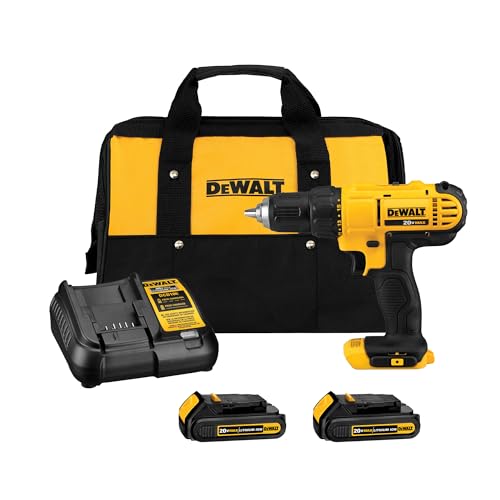
Careful analysis of manufacturer specifications and broad user feedback highlights the huge difference between heavy-duty demolition tools and dedicated fastening setups. Lightweight tools like the DEWALT 20V Max XR Drill Driver offer high-performance dual-speed transmissions with ratcheting chucks, while compact kits from BLACK+DECKER and PULITUO supply multi-position clutches engineered specifically to prevent overdriving. You don’t always need massive brute-force torque when sinking screws into delicate framing or drywall anchors. Instead, dependable cordless drill drivers balance ergonomic weight, extended battery runtimes, and precise chuck concentricity to keep every driver bit firmly seated.


Frequently Asked Questions
What clutch setting works best for screwdriving in soft materials?
Lower mechanical clutch settings between 1 and 6 work best for drywall, soft pine, and furniture assembly. These lower thresholds allow the internal clutch collar to slip before the fastener sinks too deep or strips out the pilot hole. As you move into denser hardwoods or longer structural fasteners, stepping up to a mid-range clutch setting ensures the screw seats flush without binding the motor.
Why should you choose a drill driver instead of an impact driver for delicate fastening?
Adjustable clutch collars make a standard drill driver far superior for delicate screwdriving tasks. Impact drivers deliver continuous rotational concussions without a slipping clutch mechanism, which easily snaps small brass screws or punches through thin plywood. Picking the best drill for screwdriving in 2026 gives you mechanical torque limiters that stop bit rotation instantly once the screw head reaches your desired depth.
How does battery voltage influence screwdriving control and comfort?
Higher voltage tools provide greater sustained torque but add substantial weight to your hand. Compact 8V to 12V tools excel at light cabinetry, loose hinge tightening, and close-quarters work where hand fatigue is a major factor. For general household projects and workshop builds, 20V Max platforms deliver an ideal blend of reserve driving power, variable speed control, and multi-tool battery compatibility.
What causes screwdriver bits to cam out and damage screw heads?
Worn bit tips, excessive drill speed, and misalignment cause driver bits to slip and cam out during fastening. Utilizing quality torsion bits like the BOSCH SDSKTD34 set absorbs peak torque surges while precision-machined tips grip fastener recesses tightly. Maintaining direct axial pressure in line with the screw and throttling down on the variable speed trigger prevents unwanted slipping.
Can compact drill drivers fit inside tight cabinet drawers and corners?
Yes, compact cordless drills feature short front-to-back head lengths designed specifically to clear narrow framework. Many DIYers pair a compact driver with a flexible shaft extension or a detailing sander for tight spaces to complete detailed indoor builds smoothly. Keeping a lightweight 2.5-pound tool in your kit allows effortless one-handed fastening even inside cramped pantry shelving or corner cabinets.



Write Your Review
No reviews yet. Be the first to share your experience!