


Conquering Dense Wood with Heavy-Duty Boring Power
Drilling into an aged hardwood stump often results in binding drill flutes, overheating motors, and sudden wrist kickback when chips pack tightly inside deep holes. Standard twist bits simply lack the flute depth and screw-point pull required to penetrate green wood or sap-heavy root collars without stalling a drill driver. Equipping your cordless tool with the best drill bit for tree stump solves this problem by pulling the cutting edge steadily forward while continuous wide flutes clear dense shavings out of the bore hole. While surface projects might rely on the best oscillator sander to prep lumber, boring vertical shafts for chemical stump removers requires relentless, deep-reaching chip clearance.
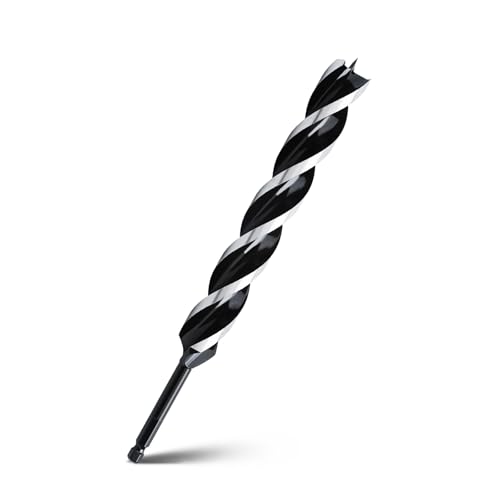
A heavy-duty ship auger with a solid carbon steel core and a clean hex shank ensures that chuck jaws maintain positive traction under heavy rotary resistance. Our analysis of manufacturer specifications, self-feeding screw tips, and aggregated user feedback indicates that sustained drilling torque and efficient flute geometry dictate whether your drill glides through wet grain or binds up repeatedly. Pairing a high-torque brushless drill with an extended twelve-inch or seventeen-inch bit allows you to reach deep into root cores for rapid decomposition. Selecting the right flute design protects your tool motor from thermal overload while turning a grueling weekend chore into a quick, controlled drilling task.




Frequently Asked Questions
What type of drill bit works best for boring deep holes into a tree stump?
Ship auger bits are the most effective choice because their self-feeding screw tips and wide flutes clear wet shavings quickly. Unlike spade bits that chatter or twist bits that stall, long augers maintain a straight trajectory through dense grain. Selecting the best drill bit for tree stump in 2026 ensures that your drill maintains forward momentum without binding up in sapwood.
Can you use a standard cordless drill driver to bore into tree stumps?
Yes, but the drill should feature a brushless motor and deliver adequate torque in low-speed gear. High rotary resistance from dense grain can quickly overheat light-duty drill drivers with small brushed motors. A tool with an auxiliary side handle and an anti-kickback brake helps you maintain safe control when deep auger flutes bite into damp roots.
Why do standard twist drill bits get stuck in wet tree stumps?
Standard twist bits bind because their shallow flutes pack with damp fibers, creating excessive friction against the hole walls. This compaction causes the drill chuck to slip and can trigger thermal overload in your motor. A dedicated best drill bit for tree stump prevents this pack-up by providing hollow center flutes that lift chips straight out of deep cavities.
What length and diameter should you choose for stump removal bits?
A length between twelve and seventeen inches paired with a one-inch diameter delivers the best results for stump rotting treatments. Drilling holes of this size allows chemical accelerants or potassium nitrate to saturate deep into the root core. Using a half-inch or smaller bit often restricts chemical absorption, slowing down natural breakdown considerably.
How does a self-feed screw tip assist during deep wood boring?
A self-feed screw tip grips the center of the cut and pulls the drill bit into the wood with minimal user effort. This mechanical pull eliminates the need to lean your entire body weight over the drill, reducing wrist fatigue and arm strain. If you plan to reclaim dry stump sections for rustic furniture after clearing, surfacing the timber with the best sander for floorboard creates a smooth, level finish.
Should you use high speed or low speed when drilling into tough wood?
Low gear speed is required because it supplies maximum torque and minimizes heat buildup on the cutting edge. High-speed settings cause aggressive bit tips to catch abruptly, increasing the likelihood of wrist twist or motor stall. Keeping your drill in speed setting one allows the cutting spurs to shave timber cleanly while ejecting debris continuously.




Write Your Review
No reviews yet. Be the first to share your experience!