


Nothing ruins a glue down wood floor installation faster than using the wrong trowel size. Too small a notch, and the adhesive won’t spread evenly, leading to weak spots and potential floor lifting. Too large, and you’ll waste glue while dealing with messy seepage between planks. That’s why understanding What size trowel for glue down wood floor? is a must before you start any project.
After carefully analyzing the product specs and user feedback on popular trowels from Homax, Capitol, Roberts and more, we narrowed down the options. The right notch size depends on your adhesive thickness, subfloor type, and wood planks. For standard applications, a 1/4-inch square-notch trowel works well, but if you’re working with engineered wood or a concrete subfloor, you might need a flat-top V-notch or a U-notch instead. If you’re also tackling tile work, check our guide on What Size Trowel is Best for Wall Tile? for similar principles.

Pros
- Lightweight and easy to handle, reducing user fatigue during large projects.
- Durable high-impact polystyrene construction withstands repeated use without cracking or warping.
- Affordable price point makes it accessible for DIY homeowners and professionals alike.
- Easy to clean and reuse, saving money over disposable spreaders.
Cons
- Plastic construction may not be as rigid as metal alternatives for heavy-duty commercial use.
- Limited to adhesives with a 3/16-inch notch requirement; not adjustable for different thicknesses.
- Handle could be longer for improved leverage when spreading thick adhesives.
The Homax Adhesive Spreader is a straightforward tool designed to simplify the process of applying adhesive for hardwood flooring. With an 8-inch width and 3/16-inch notches, it ensures even distribution of glue, helping you achieve a strong, lasting bond between the subfloor and your planks. This tool is ideal for DIY homeowners tackling a weekend flooring project, as well as contractors and woodworkers who need reliable, consistent results on the job site.
Performance-wise, this spreader delivers exactly what it promises: smooth, uniform adhesive coverage. The notches are precisely cut to control the amount of glue applied, reducing waste and preventing messy excess. Users can expect a clean application that minimizes cleanup time and maximizes adhesion strength. For those installing hardwood, laminate, or vinyl plank flooring, this tool makes the process faster and more professional-looking.
Build quality is solid for the price point. The high-impact polystyrene construction is lightweight yet durable enough to withstand regular use on job sites. While it won't match the rigidity of a metal spreader, it holds up well under normal pressure and is resistant to cracking or warping. The plastic handle is comfortable to grip, even during extended sessions, though some users might prefer a longer handle for better leverage when working with thicker adhesives.
Storage and maintenance are hassle-free. The spreader is easy to clean with soap and water or a solvent recommended for the adhesive used. Its compact size means it fits easily into a toolbox or bucket, and it won't take up much space in a workshop or garage. Since it's reusable, you can rely on it for multiple projects without needing to buy disposable alternatives.
One realistic limitation is that this spreader is specifically designed for 3/16-inch notch applications. If your flooring project requires a different notch size, you'll need a separate tool. Additionally, while the plastic construction is durable, it may not hold up as well under heavy commercial use compared to metal spreaders. However, for most DIY and professional applications, it offers excellent value and reliable performance.
Overall, the Homax Adhesive Spreader is a practical investment for anyone installing hardwood flooring. It combines ease of use, consistent results, and affordability, making it a smart choice for both beginners and experienced tradespeople. Whether you're a homeowner refreshing a room or a contractor working on multiple projects, this tool helps you get the job done right the first time.

Pros
- Durable, solvent-proof material holds up to harsh adhesives without softening or warping.
- Beveled edges provide excellent corner access for a clean, professional finish.
- 8-inch width covers larger areas quickly, boosting productivity on flooring projects.
- Lightweight and easy to handle, reducing user fatigue over long sessions.
- Reusable and easy to clean, offering great value for both DIY and contractor use.
Cons
- Notched design is specific to 3/16-inch adhesive application, limiting versatility for other notch sizes.
- Polystyrene handle may feel less ergonomic than rubber-gripped alternatives for extended use.
- May require some practice to achieve consistent spread thickness on uneven surfaces.
The Homax 83 Heavy-Duty Adhesive Spreader Knife is a practical, no-nonsense tool designed for applying adhesive to flooring and wall surfaces. This 8-inch notched trowel features 3/16-inch notches specifically suited for carpet, vinyl tile, and ceramic tile installations. Whether you are a DIY homeowner tackling a weekend flooring project or a contractor working on multiple job sites, this spreader offers reliable performance and easy cleanup.
In real-world use, the spreader delivers consistent adhesive coverage thanks to its precisely cut notches. The reinforced handle and trowel design, combined with beveled edges, allow you to reach corners and edges without leaving gaps. This is especially helpful when laying carpet or vinyl in rooms with tight alcoves. According to user feedback, the tool holds up well against solvent-based adhesives without softening or losing shape, which is a common issue with cheaper plastic spreaders.
Build quality is solid for a light-duty tool. The high-impact polystyrene handle is solvent-proof and resists wear from repeated use. The yellow color makes it easy to spot on a cluttered workbench or toolbox. While the handle lacks a rubber grip, its shape provides adequate leverage for most spreading tasks. Maintenance is straightforward: rinse with water or wipe with a solvent to remove dried adhesive, and it is ready for the next job.
One limitation is the fixed notch size. The 3/16-inch notches work well for standard carpet and vinyl adhesives, but if you need a different spread rate for other materials, you will need a separate trowel. Additionally, the handle is not ergonomically contoured, so prolonged use may cause some hand fatigue. However, for the price and intended purpose, this is a minor drawback.
Recommended uses include laying carpet, vinyl floor tile, wall tile, and ceramic floor tile. It also works for applying adhesive to tile board. DIY homeowners will appreciate the ease of use and cleanup, while contractors will value the durability and solvent resistance. If you are looking for a budget-friendly adhesive spreader that gets the job done without fuss, the Homax 83 is a solid choice.
The Homax 83 Adhesive Spreader is constructed from high-impact polystyrene, which is solvent-proof and resistant to softening from common adhesives. The one-piece design integrates the handle and trowel for added strength. The notches are molded sharply to ensure consistent adhesive thickness. While not as heavy-duty as metal trowels, the plastic build makes it lightweight and easy to handle for extended periods.
In a workshop or garage setting, this spreader excels at applying adhesive to small to medium flooring projects. The 8-inch width covers a good area per pass, and the beveled edges help you work into corners without over-spreading. Cleanup is quick with water or mineral spirits, allowing you to reuse the tool repeatedly. For occasional use or light professional work, it offers reliable performance.

Pros
- Durable hardened steel blade stays sharp and resists bending
- Comfortable wood handle offers good control and reduces slippage
- Flat-top V-notch design improves adhesive spread consistency
- Reinforced rivets enhance longevity at critical connection points
- Affordable price point for a professional-quality trowel
Cons
- Wooden handle may require occasional conditioning to prevent drying or cracking
- Notched design is specialized for carpet adhesives; less versatile for other flooring types
- Blade width might be narrow for large-area coverage compared to wider trowels
The Capitol 115111 Professional Flooring Adhesive Trowel is a specialized tool designed for applying adhesives to textured or rough-back carpets. Its 1/8-inch by 1/8-inch by 1/16-inch flat-top V-notch pattern creates increased space between adhesive rows, promoting even coverage and efficient bonding. This trowel is best suited for DIY homeowners tackling carpet replacement, as well as flooring contractors and installers who need a reliable tool for daily use.
In real-world performance, the hardened, tempered steel blade delivers excellent durability and wear resistance. Users can expect consistent adhesive application without the blade dulling quickly, even when working with aggressive adhesives. The large wooden handle provides a firm, comfortable grip that reduces hand fatigue during extended jobs. The reinforced and welded first and last rivets add extra strength where the blade meets the handle, ensuring the tool holds up under repeated pressure.
Build quality is a standout feature. The steel blade is resistant to corrosion and maintains its shape over time. The wood handle is smooth and contoured, offering solid control without slipping. While the handle may require occasional maintenance to prevent drying or cracking, it remains comfortable for prolonged use. The trowel is lightweight at just over 11 ounces, making it easy to maneuver and store in a toolbox or on a shelf.
Setup and use are straightforward: simply attach the trowel to a handle (if not already assembled) and apply adhesive at the recommended angle. No special maintenance is needed beyond cleaning the blade after each use to prevent adhesive buildup. Storage is simple due to its compact size (3 x 4.5 x 11 inches).
One realistic limitation is that the flat-top V-notch design is optimized for textured or rough-back carpet adhesives, so it may not be the best choice for other flooring materials like vinyl or tile. Additionally, the wooden handle, while comfortable, may not be as impact-resistant as some rubberized alternatives. However, for its intended purpose, this trowel performs admirably.
Overall, the Capitol 115111 offers a practical, durable solution for flooring adhesive application. Whether you are a DIY homeowner upgrading a room or a professional installer working on multiple projects, this trowel provides reliable performance at a reasonable price. It is a solid addition to any workshop or garage tool collection focused on flooring work.
Pros
- Durable hardened steel blade resists bending and wear
- Comfortable wood handle with ergonomic contour improves control
- Precise notch geometry ensures consistent adhesive spread
- Versatile compatibility with multiple adhesive brands
- Easy to clean after use with standard solvents
Cons
- Wood handle may require occasional sealing to prevent moisture damage
- Not suitable for thicker adhesive applications or different notch sizes
- Limited to flooring installation; not a multi-purpose trowel
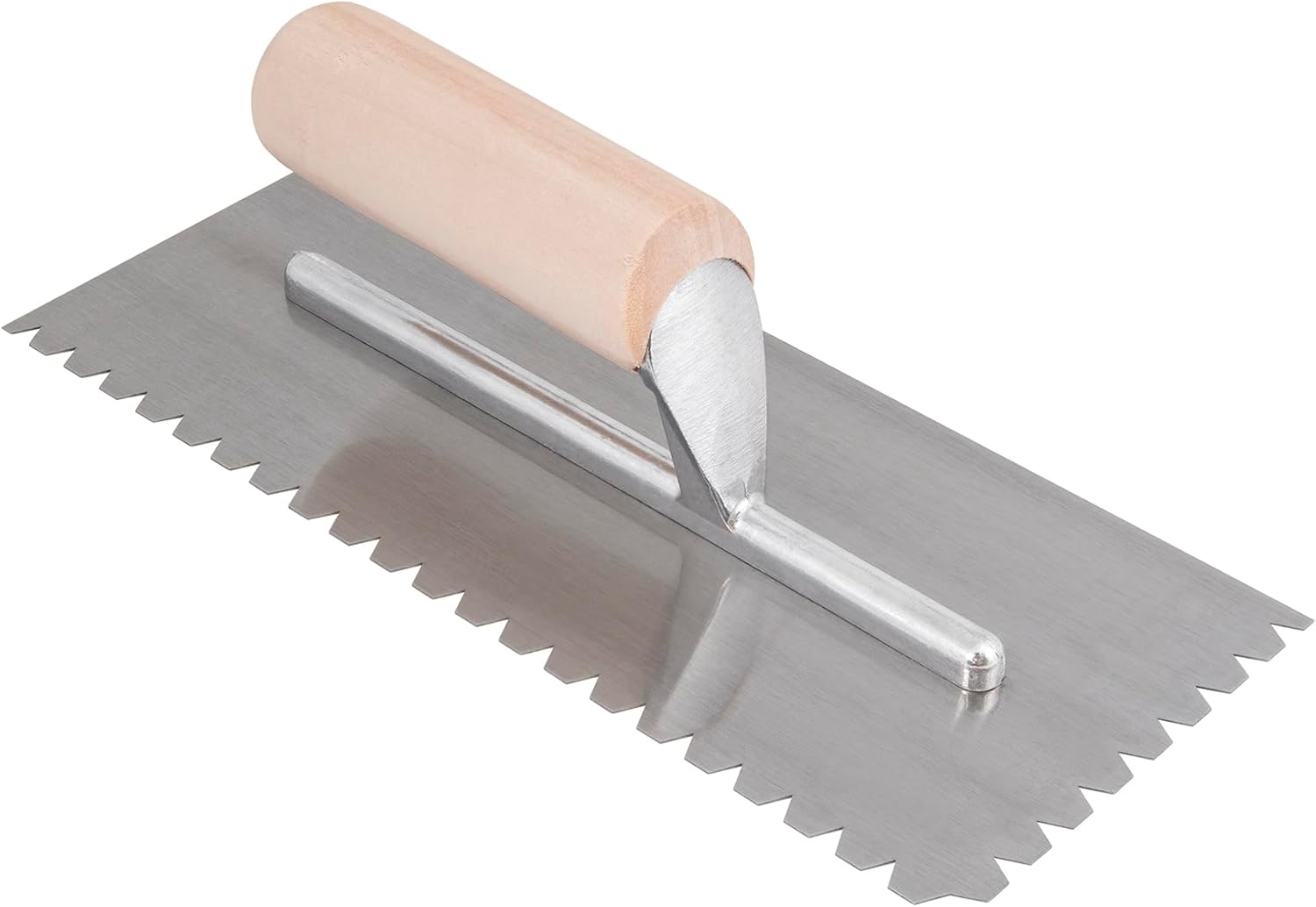
The Roberts 1/4" x 1/4" x 1/4" V-Notch Flat Top Wood Flooring Trowel is a purpose-built hand tool designed specifically for applying adhesive when installing engineered wood and solid wood flooring. Part of the trusted ROBERTS brand known for flooring installation tools, this trowel uses a hardened tempered steel blade with precision V-notches to spread a thin, even layer of adhesive. It works best with adhesives that call for a 1/4" flat-top V-notch trowel, such as ROBERTS 1487 ENGINEERED+ and 1550 MAXCOMPLETE, but is compatible with other manufacturers' products as well.
This trowel is ideal for DIY homeowners tackling a weekend floor upgrade, contractors looking for reliable tool performance on job sites, and woodworkers who need precise glue-up control. The flat-top V-notch design minimizes adhesive buildup while still providing strong bonding across the entire flooring surface. This prevents waste and reduces cleanup time, which is a real advantage for anyone laying several hundred square feet of flooring.
Build quality is straightforward and practical. The blade is made from hardened, tempered steel, giving it excellent resistance to bending or dulling over repeated use. The large wood handle offers a firm, comfortable grip, and its contoured shape reduces hand fatigue during long installation sessions. At 11 inches long and weighing just 0.3 pounds, the trowel is easy to handle and maneuver into tight spaces along walls or corners.
Storage and maintenance are simple. After each use, you can clean the blade with a solvent appropriate for the adhesive used. The compact size lets it slip into a toolbox drawer or hang on a pegboard without taking up much room. Because the handle is raw wood, you may want to apply a light coat of linseed or mineral oil occasionally to keep it from drying out or cracking, especially if you work in a humid environment.
One realistic limitation is that this trowel is built for a specific notch configuration. If your project requires a different notch size (e.g., 3/16" or 1/2"), you'll need a separate tool. Also, while the wood handle is comfortable, it lacks a rubberized or padded grip that some professionals might prefer for all-day use. But for the price and intended purpose, these are minor trade-offs.
Overall, the Roberts 1/4" V-Notch Flooring Trowel is a solid buy for anyone installing engineered or solid wood flooring with a thin-set adhesive. It delivers consistent results, holds up well on the job, and is backed by a reputable brand. If your adhesive calls for a 1/4" flat-top V-notch, this trowel will serve you reliably from the first plank to the last.
The Roberts flooring trowel features a hardened tempered steel blade that resists bending and maintains its shape through repeated use. The blade is securely attached to a solid wood handle, which is contoured for a comfortable grip. While the handle is not sealed, its natural wood construction provides good durability if kept dry and cleaned regularly. The overall construction feels solid and professional-grade, suitable for both occasional DIY and daily contractor use.
The 1/4" flat-top V-notches are precisely cut to control adhesive volume and ensure a consistent thin bed. This helps achieve strong bonding without excessive squeeze-out, which is especially important for engineered wood that requires a thin adhesive layer. The trowel works well with both solvent-based and polyurethane adhesives, spreading evenly across the subfloor. Users report that the tool maintains good contact and does not skip, even when pulling along long rows.

Pros
- Affordable price and good value for a six-piece kit
- Three different tooth sizes provide flexibility for various adhesive types and projects
- Easy to clean and reuse, reducing waste compared to disposable spreaders
- Flexible plastic won't damage surfaces and is comfortable to hold
Cons
- Plastic construction may not withstand heavy-duty professional use over time
- Spreaders are relatively small (about 5.3 inches wide), limiting coverage area for large jobs
- Only one Amazon review so far, so long-term durability feedback is limited
If you're tackling a project that involves spreading glue, epoxy, or putty, having the right tool can make all the difference in getting a smooth, even finish. The Ajcotahm 6 Pcs Glue Spreader set brings you three types of notched trowels in a convenient, reusable plastic design. This kit is built for DIY homeowners, woodworkers, and contractors who need reliable adhesive applicators for flooring, countertops, tile work, or craft projects without breaking the bank.
Each spreader is made from flexible ABS plastic that balances durability with a bit of give, so you can work spreader into corners or over uneven surfaces. The notched edges (large and small teeth) are great for controlling adhesive thickness, while the flat spreaders handle smoothing and scraping tasks. Users report that the notches help reduce air bubbles when working with epoxy, giving a cleaner finish. The kit includes two of each type, so you have backups or can dedicate different spreaders to different materials.
In terms of build quality, these are lightweight and feel solid enough for repeated use on household and workshop projects. The plastic resists cracking from normal bending, and the smooth surface cleans up easily. After the glue or epoxy dries, you can simply flex the spreader to pop off the residue, then rinse it clean. While they won't replace a heavy-duty metal trowel for professional masonry work, they are perfectly suited for the DIYer or occasional tradesperson who needs a quick, effective applicator.
Storage and organization are simple thanks to the round hole at the end of each spreader - just hang them on a pegboard hook in your garage or workshop. Their compact size (roughly 5.3 by 3.7 inches) means they tuck into a toolbox drawer or apron pocket without taking up much space. This convenience makes them a practical addition to any home repair kit or contractor's daily carry.
One realistic limitation: these are plastic tools, so they won't withstand the constant abuse of a heavy-use professional job site for years on end. Also, the spreader width is on the smaller side, which could slow you down if you're covering a large floor area. However, for most home projects like laying tile in a bathroom, applying epoxy to a countertop, or spreading wood glue on a small table, they perform admirably.
If you're looking for an affordable, reusable glue spreader set that offers versatility and easy cleanup, the Ajcotahm 6-piece kit is a solid choice. It's especially recommended for DIY homeowners and workshop users who want professional results on smaller-scale adhesive jobs without investing in expensive stainless steel tools. Based on product specs and user feedback, these spreaders deliver good value for light to medium use.

Pros
- Durable hardened steel blade that resists bending and maintains shape over time
- Comfortable wood handle with secure grip for long installation sessions
- Designed for use with multiple ROBERTS adhesives and other brands with same notch requirements
- Lightweight at 11.7 oz, making it easy to maneuver and control
- U-notch pattern provides consistent adhesive spread, reducing waste and ensuring strong bond
Cons
- Limited to adhesive applications requiring a 1/16" x 1/32" notch size, not a general-purpose trowel
- Wood handle may require occasional maintenance to prevent splitting or cracking in dry conditions
- Not suitable for porous substrates without proper adhesive selection; best for non-porous surfaces
The ROBERTS 1/16" x 1/32" x 1/32" U-Notch Pro Flooring Trowel is a specialized hand tool designed for applying adhesive during vinyl flooring installations. It features a hardened, tempered high-carbon steel blade with U-shaped notches that deliver a precise, even spread of adhesive, especially on non-porous substrates. This trowel is a go-to choice for anyone working with large-format vinyl tiles, sheet vinyl, or vinyl-backed carpet tiles where consistent coverage is critical.
This tool suits a wide range of users. DIY homeowners tackling a weekend basement or kitchen floor will appreciate the professional-grade results. Contractors and professional flooring installers rely on its durability for daily use on commercial and residential job sites. The trowel works with ROBERTS 2057 VCT-EZ, 7350 UNIVERSAL, 2310 FIBERGLASS-BACKED, and 7399 UNIVERSAL99 adhesives, as well as any manufacturer's adhesive that calls for a 1/16" x 1/32" U-notch trowel.
In real-world use, the U-notch design allows for a lighter spread compared to V-notches, which helps prevent adhesive from seeping up between tile seams. The hardened steel blade stays true and resists bending under pressure, ensuring long-term reliability. Users report consistent adhesive coverage that reduces waste and speeds up installation, especially for large areas. The trowel's performance shines in both speed and precision, making it a productivity booster on any jobsite.
Build quality is solid. The high-carbon steel blade is heat-treated for strength and features a rust-resistant finish. The large wood handle offers a firm, comfortable grip that reduces hand fatigue during extended use. At just 11.7 ounces, the trowel is lightweight yet sturdy, giving you good control without extra bulk. The wood handle is ergonomically shaped to fit naturally in the palm, which helps maintain accuracy during long adhesive application sessions.
Storage and maintenance are straightforward. After each use, you should clean the blade with a damp cloth to prevent adhesive buildup, especially if using water-based products. The wood handle can be wiped clean, but avoid soaking it in water to prevent swelling or splintering. Store the trowel in a dry area or tool pouch to keep the blade protected. Its compact size (11 x 4.5 x 3.25 inches) makes it easy to fit in a tool bag or drawer.
One realistic limitation is that this trowel is purpose-built for a specific notch size. If your adhesive calls for a different notch pattern, you will need a different tool. Additionally, the wood handle may require occasional oiling to prevent drying and cracking over years of use. Despite these points, for anyone installing vinyl flooring that requires a 1/16" x 1/32" U-notch trowel, this Roberts tool offers a great balance of quality, comfort, and performance. It is a smart investment for both occasional DIYers and full-time flooring pros.

Pros
- Affordable 4-spreader set covers multiple notch sizes for various adhesives and coatings
- Flexible plastic is tough yet gentle on surfaces, reducing the risk of scratching
- Cleans up quickly with simple bending or a quick rinse, saving time between tasks
- Lightweight and compact, ideal for small workshops, garages, or DIY project bins
Cons
- Plastic construction may wear faster than metal alternatives under heavy professional use with abrasive materials
- Notched trowels lack measurement markings, requiring users to judge thickness by eye
- Smaller tooth sizes limit application to thinner adhesives; thicker mortars may need wider notches
The FdcLixuvol Adhesive Spreader Kit brings four handy plastic notched trowels to your workshop or job site. Designed for spreading glue, epoxy, resin, putty, and hardwood flooring adhesives, this set covers the basics for a wide range of DIY and professional tasks. Each spreader features a clean white plastic body with a round hole for easy hanging, helping you keep your workspace organized.
This kit is best suited for DIY homeowners tackling laminate or hardwood flooring, woodworkers spreading glue on veneers, and contractors applying epoxy coatings or tile adhesive in tight spots. The set includes one flat applicator, one trapezoidal large-tooth spreader, and two trapezoidal small-tooth spreaders. The different tooth sizes let you adjust adhesive thickness for various materials, making it a versatile addition to any toolbox.
Performance-wise, the angled edges give you good control during scraping and spreading, allowing for even coverage without wasting material. The plastic construction is thick enough to flex slightly without snapping, which reduces hand fatigue during long jobs. While not as rigid as metal trowels, the flexibility helps prevent damage to delicate surfaces like pre-finished flooring or laminate.
Build quality is decent for the price. The plastic feels smooth and durable, with no sharp edges that could cut your fingers. Cleaning is straightforward: dried adhesive often peels off with a gentle bend, or you can wash the spreaders in warm water or the dishwasher. This makes them reusable for many projects, adding to their value.
One limitation to consider is that these spreaders aren't heavy-duty enough for professional masons working with thick thinset or cement-based adhesives. The plastic may wear faster than stainless steel trowels under constant abrasive use. Also, there are no depth markings, so you'll need to eyeball your coverage thickness, which might take a little practice.
For light to medium adhesive work around the home or workshop, this FdcLixuvol kit offers solid performance and convenience at a low cost. It's a practical choice for anyone who needs reliable, easy-to-clean spreaders for flooring, epoxy resin, or craft projects. If you're a DIYer or a contractor looking for a disposable yet reusable option for quick jobs, this set will serve you well.
Frequently Asked Questions
What size trowel for glue down wood floor with 1/4-inch square notch?
A 1/4-inch square-notch trowel is the standard choice for most glue down wood floor installations. It provides enough adhesive coverage for solid and engineered wood over plywood subfloors. Always check your adhesive manufacturer’s recommendation first.
Can I use a V-notch trowel for glue down wood floors?
Yes, a V-notch trowel works well, especially for thinner adhesives or when you need controlled spread. The flat-top V-notch design (like the Capitol 1/8-inch model) increases space between adhesive rows, reducing squeeze-out. It’s a good option for rough-back carpets or textured subfloors.
What happens if I use a trowel with too few notches?
Using a trowel with notches that are too small means you’ll apply too little adhesive. That leads to weak bonding, floor lifting, and eventual gaps between planks. The adhesive needs to cover at least 80% of the subfloor for a stable install. Stick to the recommended notch size for your glue type.
Do I need a different trowel for engineered hardwood vs solid hardwood?
Often yes. Engineered hardwood has a more uniform surface and typically requires a thinner adhesive layer. A 1/4-inch square-notch trowel may still work, but some pros prefer a 1/8-inch flat-top V-notch for better control. Solid hardwood, being thicker, might need the standard 1/4-inch notch. Always follow the floor manufacturer’s specs.
What size trowel for glue down wood floor over concrete subfloor?
Concrete subfloors are porous and uneven, so you often need a larger notch to ensure full coverage. A 1/4-inch square-notch trowel is still common, but for rough concrete, consider a 3/8-inch notch. Check your adhesive instructions; some moisture-cure adhesives require a different notch size. For more details on subfloor preparation, see our Axes category for related surface prep tools.
How to clean adhesive from a notched trowel?
Most plastic trowels (like the Homax 8-inch spreader) can be cleaned by gently bending the blade so dried glue flakes off. Then rinse with warm water. For steel trowels, wipe immediately after use with a solvent recommended by the adhesive manufacturer. Never let glue cure on the notches.
Are steel trowels better than plastic for glue down wood floors?
Steel trowels (like the Roberts models) are more durable and offer consistent notch shape over time. Plastic trowels are cheaper, lightweight, and easy to replace, but they can wear down with heavy use. For one-time DIY projects, a quality plastic spreader works fine. For repeated professional use, invest in a steel trowel. If you’re working with tile as well, check our What Size Trowel for 4×4 Tile guide.





Write Your Review
No reviews yet. Be the first to share your experience!