


Getting the What Size Trowel for Adhesive: Find the Perfect Fit wrong can turn a straightforward tiling job into a mess of weak bonds and wasted adhesive. You might end up with tiles that don’t sit flat or adhesive oozing out where it shouldn’t. Whether you’re laying vinyl flooring, carpet, or ceramic tile, matching the notch size to your material and adhesive type saves time and frustration. Based on careful analysis of product specs and user feedback, we’ve lined up seven trowels that cover the most common notch sizes and applications. From the precision of the Capitol 1/8″ V-notch to the heavy-duty Homax spreaders, each tool serves a specific purpose. If you’re working on larger format tiles, check out our guide on What Size Trowel for 12×24 Tile for more tailored advice. Let’s dig into what makes each trowel stand out.
Choosing the right notch depth isn’t just about following a chart—it’s about understanding your project’s demands. A smaller notch works well for thin-set on smooth walls, while deeper notches handle thick mortar on floors. The tools we cover range from fine 1/16″ square notches for LVT to 1/4″ V-notches for ceramic tile. All fall within a budget-friendly price range of $4.20 – $11.58, making it easy to pick up a specialized trowel without breaking the bank. Brands like Homax, M-DBuildingProducts, Marshalltown and more represent the range of quality you’ll find.

Pros
- Precise 1/16-inch square notches deliver consistent adhesive spread for professional results
- Hardened, tempered steel blade stands up to heavy use without losing its shape
- Reinforced rivets at stress points enhance overall tool durability
- Comfortable wood handle provides a secure grip and reduces strain
- Affordable price point makes it accessible for DIYers and pros
Cons
- Wood handle may require occasional maintenance to prevent drying or cracking
- Limited to 1/16-inch notch size, which may not suit all flooring adhesive applications
- Some users may prefer a trowel with a cushioned grip for extra comfort
The Capitol 115110 Professional Flooring Adhesive Trowel is a specialized hand tool designed for applying adhesives to subfloors before installing carpet, luxury vinyl tile (LVT), and similar flooring materials. Its defining feature is the 1/16-inch square-notch pattern, which creates uniform ridges of adhesive that allow for proper air release and bonding. This trowel is ideal for DIY homeowners tackling a weekend flooring project, as well as contractors and professional tradespeople who need a reliable tool for daily use.
In terms of real-world performance, the hardened and tempered steel blade is a standout. It resists bending and maintains its shape even when spreading thick adhesives, ensuring consistent notch depth across the entire floor. The reinforced first and last rivets are welded for added durability, addressing a common failure point on lesser trowels. Users can expect smooth, even adhesive application that promotes strong, long-lasting floor installations.
Build quality is solid for the price. The large wood handle provides a firm, comfortable grip that fits well in most hand sizes, though it lacks a rubberized coating for extra cushioning. The blade is rust-resistant enough for normal job site conditions, but like any steel tool, it should be cleaned after use to prevent corrosion. The trowel is lightweight and easy to store in a toolbox or on a pegboard, making it a convenient addition to any workshop or garage.
Setup and use are straightforward: simply load the trowel with adhesive and pull it across the subfloor at a consistent angle. Maintenance involves wiping the blade clean with a solvent or water, depending on the adhesive type. The wood handle may benefit from occasional oiling to prevent drying, but this is minimal upkeep. One realistic limitation is the fixed 1/16-inch notch size, which may not be ideal for thicker adhesives or certain flooring types that require larger notches.
Overall, the Capitol 115110 is a practical, durable trowel that delivers professional-grade results without breaking the bank. It is well-suited for DIYers who want a reliable tool for occasional projects, as well as contractors who need a workhorse for daily flooring installations. If you are looking for a precise, affordable adhesive trowel for carpet or LVT work, this model is a strong choice.
The Capitol 115110 features a hardened and tempered steel blade that offers excellent resistance to bending and wear. The blade is securely attached to the handle with reinforced rivets, with the first and last rivets welded for extra strength. The large wood handle is smooth and comfortable, though it lacks a rubberized grip. Overall, the construction is robust for a tool in this price range, and it should hold up well under regular use in both DIY and professional settings.
In a workshop or garage setting, this trowel performs admirably for applying adhesives to small to medium-sized flooring projects. The 1/16-inch square notches create a consistent adhesive pattern that helps ensure proper bonding and reduces the risk of air pockets. The blade glides smoothly over subfloors, and the comfortable handle allows for extended use without excessive hand fatigue. It is a reliable tool for anyone who does occasional flooring work.

Pros
- Durable hardened steel blade stays sharp and resists bending
- Comfortable wood handle offers good control and reduces slippage
- Flat-top V-notch design improves adhesive spread consistency
- Reinforced rivets enhance longevity at critical connection points
- Affordable price point for a professional-quality trowel
Cons
- Wooden handle may require occasional conditioning to prevent drying or cracking
- Notched design is specialized for carpet adhesives; less versatile for other flooring types
- Blade width might be narrow for large-area coverage compared to wider trowels
The Capitol 115111 Professional Flooring Adhesive Trowel is a specialized tool designed for applying adhesives to textured or rough-back carpets. Its 1/8-inch by 1/8-inch by 1/16-inch flat-top V-notch pattern creates increased space between adhesive rows, promoting even coverage and efficient bonding. This trowel is best suited for DIY homeowners tackling carpet replacement, as well as flooring contractors and installers who need a reliable tool for daily use.
In real-world performance, the hardened, tempered steel blade delivers excellent durability and wear resistance. Users can expect consistent adhesive application without the blade dulling quickly, even when working with aggressive adhesives. The large wooden handle provides a firm, comfortable grip that reduces hand fatigue during extended jobs. The reinforced and welded first and last rivets add extra strength where the blade meets the handle, ensuring the tool holds up under repeated pressure.
Build quality is a standout feature. The steel blade is resistant to corrosion and maintains its shape over time. The wood handle is smooth and contoured, offering solid control without slipping. While the handle may require occasional maintenance to prevent drying or cracking, it remains comfortable for prolonged use. The trowel is lightweight at just over 11 ounces, making it easy to maneuver and store in a toolbox or on a shelf.
Setup and use are straightforward: simply attach the trowel to a handle (if not already assembled) and apply adhesive at the recommended angle. No special maintenance is needed beyond cleaning the blade after each use to prevent adhesive buildup. Storage is simple due to its compact size (3 x 4.5 x 11 inches).
One realistic limitation is that the flat-top V-notch design is optimized for textured or rough-back carpet adhesives, so it may not be the best choice for other flooring materials like vinyl or tile. Additionally, the wooden handle, while comfortable, may not be as impact-resistant as some rubberized alternatives. However, for its intended purpose, this trowel performs admirably.
Overall, the Capitol 115111 offers a practical, durable solution for flooring adhesive application. Whether you are a DIY homeowner upgrading a room or a professional installer working on multiple projects, this trowel provides reliable performance at a reasonable price. It is a solid addition to any workshop or garage tool collection focused on flooring work.

Pros
- Durable, solvent-proof material holds up to harsh adhesives without softening or warping.
- Beveled edges provide excellent corner access for a clean, professional finish.
- 8-inch width covers larger areas quickly, boosting productivity on flooring projects.
- Lightweight and easy to handle, reducing user fatigue over long sessions.
- Reusable and easy to clean, offering great value for both DIY and contractor use.
Cons
- Notched design is specific to 3/16-inch adhesive application, limiting versatility for other notch sizes.
- Polystyrene handle may feel less ergonomic than rubber-gripped alternatives for extended use.
- May require some practice to achieve consistent spread thickness on uneven surfaces.
The Homax 83 Heavy-Duty Adhesive Spreader Knife is a practical, no-nonsense tool designed for applying adhesive to flooring and wall surfaces. This 8-inch notched trowel features 3/16-inch notches specifically suited for carpet, vinyl tile, and ceramic tile installations. Whether you are a DIY homeowner tackling a weekend flooring project or a contractor working on multiple job sites, this spreader offers reliable performance and easy cleanup.
In real-world use, the spreader delivers consistent adhesive coverage thanks to its precisely cut notches. The reinforced handle and trowel design, combined with beveled edges, allow you to reach corners and edges without leaving gaps. This is especially helpful when laying carpet or vinyl in rooms with tight alcoves. According to user feedback, the tool holds up well against solvent-based adhesives without softening or losing shape, which is a common issue with cheaper plastic spreaders.
Build quality is solid for a light-duty tool. The high-impact polystyrene handle is solvent-proof and resists wear from repeated use. The yellow color makes it easy to spot on a cluttered workbench or toolbox. While the handle lacks a rubber grip, its shape provides adequate leverage for most spreading tasks. Maintenance is straightforward: rinse with water or wipe with a solvent to remove dried adhesive, and it is ready for the next job.
One limitation is the fixed notch size. The 3/16-inch notches work well for standard carpet and vinyl adhesives, but if you need a different spread rate for other materials, you will need a separate trowel. Additionally, the handle is not ergonomically contoured, so prolonged use may cause some hand fatigue. However, for the price and intended purpose, this is a minor drawback.
Recommended uses include laying carpet, vinyl floor tile, wall tile, and ceramic floor tile. It also works for applying adhesive to tile board. DIY homeowners will appreciate the ease of use and cleanup, while contractors will value the durability and solvent resistance. If you are looking for a budget-friendly adhesive spreader that gets the job done without fuss, the Homax 83 is a solid choice.
The Homax 83 Adhesive Spreader is constructed from high-impact polystyrene, which is solvent-proof and resistant to softening from common adhesives. The one-piece design integrates the handle and trowel for added strength. The notches are molded sharply to ensure consistent adhesive thickness. While not as heavy-duty as metal trowels, the plastic build makes it lightweight and easy to handle for extended periods.
In a workshop or garage setting, this spreader excels at applying adhesive to small to medium flooring projects. The 8-inch width covers a good area per pass, and the beveled edges help you work into corners without over-spreading. Cleanup is quick with water or mineral spirits, allowing you to reuse the tool repeatedly. For occasional use or light professional work, it offers reliable performance.

Pros
- Affordable price makes it a great entry-level trowel for DIYers and pros on a budget
- Stainless steel blade holds up well against moisture and cleaning without rusting
- Ergonomic handle provides a secure, comfortable grip even with wet hands
- Notch pattern is precise enough for small to medium tile projects
Cons
- Plastic ABS handle may not be as durable as a full-cushion grip for heavy daily use
- Limited to U-notch pattern only; no versatility for V-notch or square-notch applications
- Some users may prefer a larger blade size for spreading large areas of mortar
The M-D Building Products 20063 Economy U Notch Trowel is a straightforward hand tool designed for applying mortar, thin-set, and adhesive to floors, walls, and countertops. With a 1/16 x 1/32 x 1/32 inch U-notch profile, it's tailored for smaller tile and stone installations where consistent coverage matters. The blade measures 11 x 4.5 inches, striking a balance between control and efficiency for residential or light commercial work.
This trowel is best suited for DIY homeowners tackling bathroom backsplashes or floor tile projects, as well as professional tilers and masons who need an affordable backup tool. The stainless steel blade offers decent resistance to corrosion, making it suitable for wet mortar work without rapid deterioration. The ABS handle features a slip-resistant grip, which helps maintain control when your hands are wet or sweaty.
In terms of real-world performance, the U-notch design allows you to spread mortar evenly, reducing the risk of air pockets or uneven adhesive beds. The lightweight 7.5-ounce construction reduces fatigue during repetitive spreading motions. However, because it's an economy model, the blade may not be as rigid as higher-end trowels, so it may require more care during heavy use. The handle, while comfortable, is not a cushioned grip, which some professionals might miss during long hours.
Build quality is acceptable for the price point. The stainless steel blade is attached securely to the plastic handle, and the overall assembly feels solid enough for occasional use. Storage is simple—it fits easily into a standard tool bag or toolbox drawer. Maintenance involves rinsing off mortar after use and drying the blade to prevent rust, which is standard for any trowel.
One realistic limitation is the single notch pattern. If you need a V-notch or square-notch for different tile types or adhesive consistencies, this trowel won't serve those purposes. Additionally, the ABS handle may become brittle over time if exposed to extreme temperatures or solvents. For heavy daily use on professional sites, a trowel with a rubberized or cushioned handle and a thicker blade might be a better investment.
Overall, the M-D Building Products 20063 is a solid choice for budget-conscious DIYers and pros who need a functional U-notch trowel for smaller jobs. It gets the job done without breaking the bank, but those with more demanding applications should consider upgrading to a premium model. If you're looking for an economical tool that delivers basic tile-setting performance, this trowel is worth considering.

Pros
- Affordable and reusable for budget-conscious DIYers and pros
- Lightweight yet sturdy enough for adhesive spreading tasks
- Cleans easily with water or solvent depending on adhesive type
- Notch size (1/8 inch) works well for carpet glue and many epoxy coatings
Cons
- Plastic construction may not withstand heavy-duty scraping or aggressive use
- Some users report the notch depth is slightly shallower than 1/8 inch
- Not suitable for thick-set mortar or heavy trowel work
The Homax Adhesive Spreader is a straightforward, purpose-built tool for anyone who needs to apply adhesive evenly onto surfaces. Whether you're installing indoor carpet, pouring epoxy on a bar top, or spreading tile glue on a backsplash, this 8-inch notched trowel gets the job done with minimal fuss. It's made from high-impact polystyrene, which keeps it lightweight while still being tough enough for repeated use on residential and light commercial projects.
This spreader is best suited for DIY homeowners, woodworkers, contractors, and even hobbyists who work with adhesives. The 1/8-inch notches create a consistent adhesive bed, which is critical for preventing lumps or gaps in flooring or epoxy coatings. Many users appreciate that it cleans up easily - just rinse or wipe it down depending on the adhesive - so you can reuse it on multiple jobs without buying a new tool each time.
In terms of performance, the Homax spreader excels at its intended tasks. It spreads glue or epoxy smoothly, and the comfortable handle gives you good control even when working in tight spaces or over large areas. While it's not designed for heavy-duty scraping or aggressive troweling, it holds up well for normal use. According to user feedback, it works great for carpet adhesive, table-top epoxy, and even thin-set applications on small areas.
Build quality is decent for the price. The plastic is stiff but not brittle, and it resists cracking when used properly. That said, it's not meant to replace a professional metal trowel for thick mortars or constant job site abuse. The lightweight design also makes it easy to store in a toolbox or hang on a pegboard, though it's large enough that you won't misplace it easily.
One realistic limitation is that some users found the notch depth to be closer to 1/16 inch instead of the advertised 1/8 inch. This could be an issue if you need exactly 1/8-inch depth for certain adhesives. For most DIY and contractor applications, though, the spreader still delivers sufficient coverage. Also, because it's plastic, you should avoid using it to scrape old adhesive off surfaces - it's not meant for that.
Overall, the Homax Adhesive Spreader is a practical, low-cost addition to any workshop or job site tool collection. It's a reliable choice for anyone who needs a simple, effective way to spread adhesive without investing in expensive equipment. Whether you're a homeowner tackling a weekend carpet job or a contractor prepping a floor, this tool offers good value and consistent results.
The Homax spreader is constructed from high-impact polystyrene, a plastic known for being durable and lightweight. It's molded into a one-piece design with integral handle and notched edge. The material is stiff enough to hold its shape during use without warping, but it's not as rigid as metal. The finish is smooth and free of sharp edges, making it comfortable to grip. For its price point, the build quality meets expectations for a tool that's meant for occasional to moderate use. It won't last forever under heavy daily abuse, but it should serve well for multiple projects around the home or shop.
In a workshop setting, this spreader shines for epoxy table tops, glue-ups, and small-scale floor repairs. The 8-inch width covers a decent area per stroke, and the notches create a uniform adhesive layer. Users report that it spreads epoxy smoothly without leaving streaks, and it cleans up with acetone or mineral spirits depending on the epoxy. For woodworkers who need to apply laminating glue or epoxy coatings, this tool is a handy addition. It's also useful for spreading contact cement on surfaces like countertops. Overall, it performs well for light to medium adhesive tasks, making it a versatile workshop companion.
DIY homeowners will find this spreader incredibly useful for projects like installing carpet tiles, laying vinyl flooring, or applying adhesive to backsplashes. It's also great for small epoxy pours on tabletops or coasters. The lightweight design reduces hand fatigue during long sessions, and the easy-clean nature means you can reuse it for different adhesives. Just make sure to clean it promptly after each use to prevent adhesive from hardening. Overall, it's a simple tool that takes the guesswork out of adhesive application, helping DIYers achieve professional-looking results.

Pros
- Compact size ideal for tight corners and detail work.
- Soft handle provides comfortable, non-slip grip.
- Marshalltown brand known for quality masonry tools.
- Affordable price for a contractor-grade trowel.
- V-notch design gives consistent adhesive depth.
Cons
- Only one notch size (1/4 inch) limits versatility for different tile sizes.
- Small blade may not be efficient for large flooring areas.
- No included case or storage accessory.
The Marshalltown MT79 QLT V Notched Margin Trowel is a specialized hand tool designed for spreading adhesive and thinset in flooring and tiling work. With a 5x2 inch blade and a 1/4-inch V-notch, this margin trowel excels at getting into tight corners and along edges where larger trowels cannot reach. It is an excellent addition to the toolkit of DIY homeowners, contractors, tilers, and anyone involved in tile installation or floor repair.
In real-world performance, this trowel delivers consistent adhesive coverage thanks to its precise V-notch pattern. The compact blade allows for controlled application in small areas, making it ideal for bathroom remodels, backsplashes, or patch work. The soft grip handle provides a comfortable, secure hold even during prolonged use, reducing hand fatigue. Users report that the metal blade holds up well to the abrasion of thinset and mortar, maintaining its shape over time.
Build quality is a strong point here. Marshalltown has a long-standing reputation in the masonry and tiling industry. The blade is made from a durable metal with a brushed finish that resists rust and wear. The handle is constructed from a synthetic rubber blend, offering a non-slip grip even when wet. At just 6.24 ounces, the tool is light enough to maneuver easily but feels robust in hand. It does not fold, but its compact size makes it easy to store in a toolbox or tool belt pouch.
Maintenance is straightforward: simply clean off any dried adhesive after use and wipe it down. No special storage is required, though keeping it in a dry place will prolong the blade's life. A limitation to note is that this trowel only offers a single notch size (1/4 inch V). For projects requiring different notch depths, you would need additional trowels. Also, the small blade size is not suited for large floor installations where a wider notched trowel would be more efficient.
Overall, this trowel offers solid value for its price. It is a practical purchase for DIY enthusiasts tackling small tiling jobs or for professionals who need a dedicated tool for tight spaces and detail work. If you often find yourself working around obstacles or in confined areas, the Marshalltown MT79 is a reliable and affordable solution.
The Marshalltown MT79 is built with a metal blade that features a brushed finish for corrosion resistance. The handle is made from a synthetic and rubber blend, providing a comfortable and durable grip. The blade is securely attached to the handle, and the overall construction feels solid for the price point. Marshalltown offers a warranty against defects in materials and workmanship, which reflects confidence in their manufacturing.
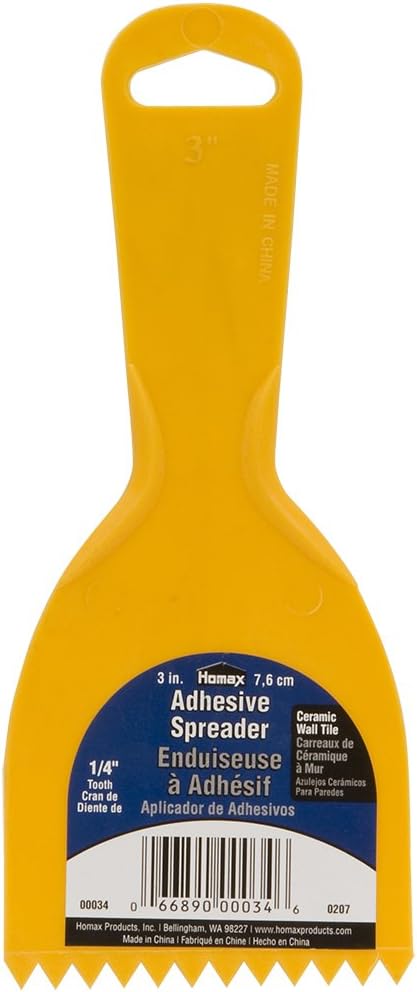
Pros
- Lightweight and easy to handle for vertical or overhead tile work
- Durable high-impact polystyrene resists cracking and warping under normal use
- Comfortable ergonomic handle reduces strain during repetitive spreading
- Affordable and reusable, offering great value for occasional or frequent users
Cons
- Not intended for heavy-duty commercial or large-format tile projects due to 3-inch width
- Plastic construction may wear faster than metal trowels under abrasive thinset use
- Handle grip could be more textured for users wearing wet or slippery gloves
The Homax 1/4" Tooth Adhesive Spreader is a simple yet effective tool designed for spreading tile adhesives, mastics, and thinset evenly. With a 3-inch wide blade and 1/4-inch notches, this spreader is tailored for small to medium tile installations, such as backsplashes, bathroom floors, and craft projects. Its lightweight polystyrene body makes it easy to maneuver, even during extended use.
This spreader is best suited for DIY homeowners, hobbyist tilers, and workshop users who need a reliable tool for occasional tile work. Contractors may find it handy for small repair jobs or detailing, but for large-scale commercial projects, a wider metal trowel would be more efficient. The ergonomic handle provides a comfortable grip, reducing fatigue when spreading adhesive over multiple tiles.
In terms of performance, the 1/4-inch notches create consistent ridges that help ensure proper adhesive coverage and strong tile bonds. The spreader glides smoothly over substrates, and the high-impact polystyrene holds up well under normal use. Cleaning is straightforward with warm water before the adhesive sets, making it reusable for many projects.
Build quality is solid for a plastic trowel. The material is tough enough to resist bending or breaking during typical application, though it may wear quicker than steel if used aggressively with coarse thinset. The compact size (under 3 inches wide) allows for easy storage in a toolbox or on a workshop shelf.
A realistic limitation is the 3-inch width, which slows down coverage on large floors. Additionally, some users may prefer a steel or stainless steel trowel for durability and sharper notch definition. However, for the price and intended use, the Homax spreader offers excellent value and convenience.
Overall, this adhesive spreader is a practical choice for anyone tackling ceramic tile, mosaic, or vinyl floor projects at home or in a small workshop. It is economical, easy to use, and gets the job done without unnecessary complexity. For weekend warriors, DIYers, and pros needing a backup trowel, it is a worthy addition to the toolbox.
Frequently Asked Questions About Trowel Sizes for Adhesive
What size trowel should I use for 12×24 inch tile?
For large-format tiles like 12×24, a 1/2″ square-notch trowel is typically recommended. This depth provides enough adhesive to support the weight and prevent lippage. Always check the tile manufacturer’s guidelines, but a 1/2″ notch is a common starting point for floor installations.
Can I use the same trowel for ceramic tile and vinyl flooring?
Not usually. Ceramic tile needs a deeper notch (like 1/4″ or 1/2″) to create a strong bond, while vinyl flooring typically requires a much shallower notch—often 1/16″ or 1/8″. Using the wrong size can lead to adhesive starvation or squeeze-out. For vinyl, a trowel like the Capitol 1/16″ square-notch is ideal.
How do I know if my trowel notch size is too big or too small?
After spreading adhesive, press a tile into place and lift it. If the back is almost fully covered (80-90% coverage for interior tiles), the notch size is about right. If you see bare spots, the notch is too small. If adhesive squeezes out excessively, the notch is too large. This quick test prevents future problems.
What’s the difference between a U-notch and a V-notch trowel?
U-notch trowels have rounded notches that hold more adhesive and are often used for floor tile installations where maximum bond strength is needed. V-notch trowels, like the “flat-top” V-notch, provide more controlled adhesive ridges and are common for wall tiles and sheet goods. The shape influences how the adhesive flattens under the tile.
Are plastic adhesive spreaders as good as steel trowels?
Plastic spreaders (like Homax) are lightweight, inexpensive, and great for one-off DIY jobs, especially with solvent-based adhesives that can rust steel. However, they wear faster and may flex under heavy pressure. Steel trowels (like Capitol) offer durability and precise notch depth for repeated professional use. Choose based on your project volume.
What size trowel is best for carpet adhesive?
For carpet adhesive, a trowel with a 1/8″ V-notch or 3/16″ notch is common. The Capitol 1/8″ flat-top V-notch and Homax 3/16″ spreader are both designed for carpet and vinyl tile applications. The goal is to leave enough adhesive to hold the carpet without soaking through the backing.
Should I match the trowel size to the adhesive manufacturer’s recommendation?
Absolutely. Adhesive manufacturers test their products and specify the ideal notch size for each substrate and tile type. Ignoring those recommendations voids warranties and risks poor adhesion. Always check the data sheet before choosing a trowel. For more on notch selection, see our Best heavy duty garden trowel guide for different materials.





Write Your Review
No reviews yet. Be the first to share your experience!