


Chipped glaze, wandering cut lines, and cracked porcelain slabs quickly ruin expensive bathroom and kitchen installations. Getting factory-clean edges requires constant water lubrication and a rigid sliding table to support fragile materials under the spinning diamond rim. Selecting the right wet saw for tile makes all the difference between seamless grout lines and wasted boxes of fractured material. Much like setting up a dedicated miter saw for trim work to guarantee tight joints, a high-grade tile cutter gives you repeatable accuracy across hundreds of linear feet.
Based on our careful analysis of manufacturer specifications, water containment designs, and verified trade feedback, motor power and rip capacity dictate overall jobsite success. Compact tabletop models handle basic backsplash ceramics with ease, while rail-mounted overhead motors cut dense natural stone and large-format floor tiles up to 36 inches. Premium setups feature integrated water pans, high-flow submersible pumps, and stable roll-cage stands to tame overspray and vibration. Whether you need a compact rig for residential bath remodels or a heavy-duty rig for commercial flooring, matching the motor amperage and tray travel to your tile size keeps every installation running smooth.
Pros
- Exceptional cutting accuracy with cutline indicator and roller system for smooth, straight cuts
- Powerful 1.5 HP motor handles dense porcelain and stone tiles efficiently
- Includes a full set of accessories including stand, pump, blade, and water trays for immediate use
- Compact footprint for transport and storage, despite its heavy-duty build
Cons
- Weighs 69 pounds, making it less portable for some users without assistance
- Premium price point may be high for occasional DIYers or hobbyists
- Requires access to water supply and electrical outlet, limiting placement flexibility
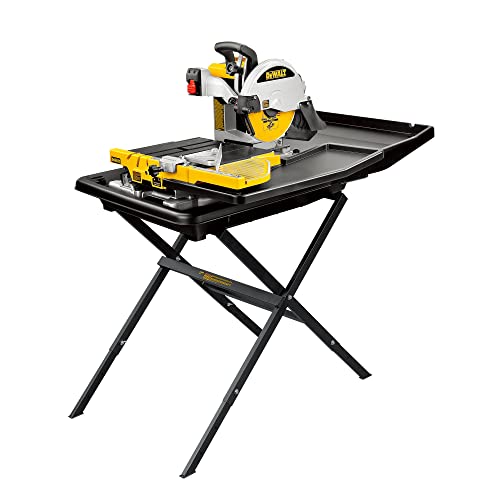
The DEWALT D24000S is a 10-inch wet tile saw with a built-in stand, designed for contractors, tile setters, and serious DIY homeowners who demand precision and durability. This corded saw delivers 1.5 peak horsepower and runs on standard 120V power, making it suitable for most job sites and workshops. Its primary advantage lies in its cutline indicator system and stainless steel rollers, which work together to maintain accuracy within 1/32 inch across 18-inch cuts - a level of precision that professional tilers rely on for large-format tiles.
This saw is best suited for contractors and experienced DIYers who frequently cut porcelain, ceramic, or stone tiles. Electricians and plumbers may also find it useful for tiling around fixtures, though its primary audience is tile specialists. The 1.5 HP motor provides consistent torque to cut through dense materials without bogging down, and the included XP4 porcelain blade is optimized for clean edges with minimal chipping. For woodworkers or construction professionals who occasionally cut tile, this saw offers the performance to get the job done efficiently, but it is purpose-built for masonry.
Build quality is a strong point for the D24000S. The frame is constructed from heavy-gauge steel, and the stainless steel rollers resist corrosion from constant water exposure. The cutting cart glides smoothly, and the bevel capacity of 45 degrees allows for miter cuts without losing accuracy. The water system includes a submersible pump and a large water pan with side trays, which help contain slurry and keep the work area clean. The included stand folds up with the saw for compact storage, and the overall footprint is manageable for a machine of this capability.
In terms of storage and maintenance, the saw requires minimal upkeep. The pump should be cleaned periodically to prevent clogs, and the blade should be checked for wear. The unit is not designed for quick disassembly, but it rolls on wheels when the stand is folded for transport. For garage or workshop users, the D24000S may occupy significant floor space when set up, but its wheels make it easy to move to a corner when not in use. The included side extension on the cutting cart helps support larger tiles, improving stability during cuts.
A realistic limitation is the saw's weight of 69 pounds, which can make it cumbersome for one person to load into a truck or carry up stairs. Additionally, the premium price reflects its professional-grade features, so casual DIYers may find more affordable options adequate for occasional use. The saw also requires a water source and a 120V outlet, so it is not cordless battery compatible.
Overall, the DEWALT D24000S is a strong investment for anyone who regularly installs tile or does heavy-duty masonry cutting. Its accuracy, power, and included accessories provide a complete solution right out of the box. For contractors and serious home renovators, this saw can deliver the productivity and precision needed to finish projects efficiently.
The DEWALT D24000S is built with a heavy-gauge steel frame and stainless steel rollers that resist rust from constant water exposure. The cutting cart slides smoothly on sealed bearings, and the motor housing is reinforced to handle jobsite abuse. The included stand is welded with sturdy cross braces and folds flat for storage. Overall, the materials and construction are consistent with DEWALT's reputation for durability in professional tools.
This saw comes with a 10-inch XP4 porcelain tile blade that is designed for clean cuts in hard tile. The package also includes a submersible pump, a large water pan, side and rear water trays, a cutting cart side extension, an angle/rip guide, a blade wrench, and a hex wrench. All these items make the D24000S a ready-to-use system without needing additional purchases for basic operation.
Pros
- Generous 36-inch tile capacity easily handles modern oversized floor and wall tiles
- Infrared guide line makes setting up repetitive cuts faster and more predictable
- Sturdy stand with integrated wheels simplifies moving the saw between rooms or across jobsites
- Substantial 3.75-inch cut depth allows handling of thicker pavers and masonry pieces
Cons
- Large footprint requires dedicated floor space in smaller garages or tight remodeling zones
- The slurry tray requires regular flushing and cleaning during extensive cutting projects
- The included stock blade works well for standard tiles but delicate glass mosaic may require a dedicated continuous rim blade
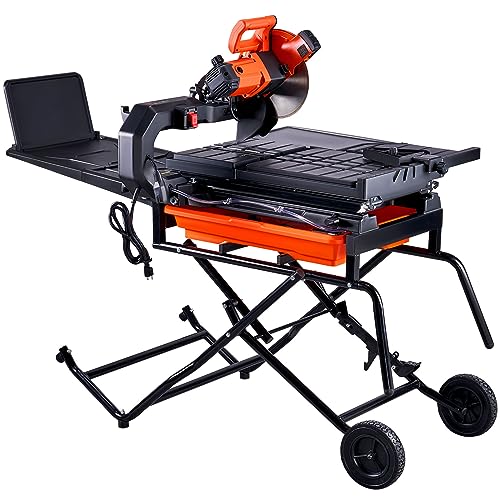
The VEVOR 10-inch wet tile saw with stand is a heavy-duty cutting workstation engineered for serious masonry, tile, and stone fabrication. Featuring a robust overhead motor carriage on a rolling tubular frame, this machine targets professional flooring contractors, bathroom remodelers, and ambitious DIY homeowners tackling full-scale tiling projects. The combination of an induction motor, dedicated water management, and a wheeled mobile base makes it suitable for both outdoor staging areas and garage workshop environments.
Cutting performance centers on a 4500 RPM motor paired with a 10-inch blade, producing enough rotational speed to pass through thick ceramic, dense porcelain, and stone materials without bogging down. With a maximum cutting depth of 3.75 inches, it handles standard floor tiles as well as thicker concrete pavers and landscape stones. The large support platform accommodates tiles up to 36 inches across, addressing the requirements of modern large-format flooring layouts that smaller countertop tile saws cannot support.
Accuracy is bolstered by an integrated infrared guide system that projects a clear line onto the work surface. Combined with the built-in measuring ruler and angle guides, positioning tiles for precise rip cuts or diagonal cuts requires minimal guesswork. The cutting head also tilts from 0 to 45 degrees, with common preset stops for 0, 22.5, and 45 degrees, allowing users to cut bullnose edges, transitions, and mitered outside corners quickly without extra jigs.
Dust control and cooling are handled through a removable polypropylene water reservoir. The recirculating setup provides a continuous spray to the blade, dampening dangerous silica dust at the source and preventing hot spots on the cutting edge. In addition to creating a cleaner and safer workspace, the wet cutting action helps minimize surface chipping on glazed finishes. A wraparound splash shield surrounds the blade to limit overspray around the work perimeter.
Mobility is a major practical advantage for this saw. The folding base rests on durable rubber caster wheels, making it easy for a single person to roll the workstation across a jobsite or push it against a garage wall when the day is done. The base provides a firm stance during operation, with non-slip foot pads minimizing vibration to preserve cut alignment. Routine maintenance involves draining the sediment reservoir and wiping down the guide rails to prevent abrasive slurry buildup.
While the machine does require adequate staging space due to its extended rail system, the capacity and cutting depth provide genuine jobsite versatility. For general contractors, property flippers, and homeowners undertaking extensive kitchen or bathroom renovations, this VEVOR wet saw provides a practical balance of power, alignment assistance, and mobility at a competitive investment point.
Accurate cuts are critical when installing large-format floor and wall tiles where uneven gaps are immediately noticeable. This wet saw uses an infrared alignment beam that casts a visible line directly along the blade cut path. This feature makes aligning layout marks straightforward, especially when working on textured surfaces or dark slate where pencil marks can be difficult to see during wet operations.
The sliding table glides along machined tracks, maintaining a smooth and straight feed stroke from start to finish. Adjustable angle stops at 0, 22.5, and 45 degrees simplify cutting repetitive angles for herringbone or diagonal patterns. These built-in stops help eliminate measurement errors, saving valuable material and reducing scrap on expensive porcelain and marble jobs.
Transporting a full-size wet tile saw can be cumbersome, but the integrated stand design on this model significantly improves convenience. Two large rubber wheels on the rear legs allow the user to tilt the unit and roll it across uneven subfloors, concrete slabs, or driveways just like a hand truck.
Once positioned, the wide stance and stabilizing feet create a rigid cutting platform that resists shifting under the weight of heavy pavers. When the job is completed, the water basin easily detaches for quick slurry disposal, allowing the saw assembly to be cleaned and stowed away neatly without requiring multiple people to load or relocate it.

Pros
- Exceptional cutting accuracy within 1/32 inch over 30-inch cuts for precision tile installation.
- Powerful 15-amp motor handles tough materials like porcelain and stone with ease.
- Large rip and crosscut capacities accommodate a wide range of tile sizes, including large-format planks.
- Integrated water tray contains oversize tile fully, minimizing mess and keeping the work area clean.
- Portable design with integrated accessory storage and stand compatibility for efficient jobsite transport.
Cons
- Heavy at 91 pounds, which may be challenging for some users to lift and transport alone.
- Premium price point may be a barrier for occasional DIY users or hobbyists.
- Water tray system requires regular cleaning to prevent debris buildup and ensure proper drainage.
The DEWALT D36000S is a professional-grade wet tile saw designed for serious contractors and dedicated DIYers who need to cut large-format tile, stone, and masonry with high precision. This 10-inch, 15-amp saw is built around a rigid steel frame and stainless-steel rollers that ensure straight, accurate cuts. According to the product specs, it can hold cuts to within 1/32 of an inch over a 30-inch length, which is crucial for wall and floor installations where gaps matter.
This saw is best suited for tile contractors, masons, construction pros, and experienced homeowners tackling major tiling projects like kitchens, bathrooms, or outdoor patios. With a 37-inch rip capacity (41 inches with plunge), you can easily split 36-inch square tiles in half, and the 18-inch clearance left of the blade lets you cut along one edge without flipping the tile. It also handles 8-1/2-inch crosscuts, making it ideal for trimming sills and cutting 8x48 planks at an offset.
Performance-wise, the 15-amp motor delivers 1,220 maximum wattage output, giving you the torque needed to power through hard porcelain, ceramic, and natural stone without stalling. The water tray system is sized to fully contain 18x36 and 24x24 tiles, keeping the cutting area wet and minimizing dust. This helps your blade stay cool and reduces airborne particles, which is a big plus for indoor work.
Build quality is what you'd expect from DEWALT: a heavy-duty steel frame, sealed bearings, and a rust-resistant finish. The cart is designed to roll through standard 30-inch doorways, and the saw weighs 91 pounds, which is manageable for one person with a dolly but might be a lift for some. Integrated storage for the cart extension, miter guide, and wrenches keeps accessories organized during transport, and the saw is compatible with the D240001 stand for added stability.
In terms of usability, setting up the saw and stand is straightforward, and the cutline indicator helps you line up marks quickly. The water tray does require periodic cleaning to prevent sediment buildup, but that's standard for wet saws. One realistic limitation is the weight: at 91 pounds, it's not a lightweight saw, so if you're moving it daily between job sites, investing in a dolly or having a helper is wise. Also, the premium price reflects its pro-level capability, which might be overkill for someone who only cuts a few tiles a year.
Overall, the DEWALT D36000S is a top-tier choice for professionals who demand accuracy, power, and durability on the jobsite. For serious DIYers with large tiling projects, it's an investment that can pay off in cleaner cuts and less waste. If your work regularly involves large-format tile or dense stone, this saw should be on your short list.

Pros
- Lightweight design with built-in handle makes it easy to move between jobsites and storage
- Table extension adds practical stability for wider tile formats
- Water recirculation system keeps the cutting wheel cool without requiring constant refills
- Straightforward design requires minimal assembly and simple cleanup
Cons
- Tabletop style requires steady hands compared to sliding overhead bridge saws
- Dense porcelain and thicker stones demand a slower feed rate to prevent motor stall
The QEP 22700Q 700XT is a portable tabletop wet tile saw built to handle residential tile installations and renovation jobs without the bulk of commercial machinery. Powered by a 3/4 peak horsepower direct-drive motor, this compact cutting tool drives a standard 7-inch continuous rim diamond blade to slice through materials like ceramic, porcelain, travertine, and marble.
This tool is ideal for DIY homeowners taking on kitchen backsplashes, bathroom remodels, or entryway floor projects. It also serves general contractors, punch-list handymen, and maintenance technicians who need a lightweight, secondary wet saw on the truck for quick custom cuts and trim adjustments without hauling heavy industrial stands.
In terms of cutting performance, the saw handles workpieces up to 1-1/4 inches thick, accommodating standard floor tiles, pavers, and bullnose edges. The included side table extension expands the overall support area, preventing larger tiles from tipping during rip cuts or diagonal passes. An integrated water recirculation channel routes fluid back into the reservoir beneath the deck, ensuring continuous blade cooling while keeping overspray manageable on your work bench.
Portability and workshop convenience are where this unit shines. Weighing roughly 18.6 pounds and measuring 20.5 by 15.5 inches, it sits comfortably on saw horses, folding work tables, or garage benches. The molded handle makes transport effortless, and its compact frame fits neatly on standard garage shelving or in vehicle trunks between remodeling jobs.
Because this is a push-through tabletop model rather than an overhead rail saw, cutting accuracy relies heavily on proper alignment against the rip guide and a steady feed technique. Dense, thick porcelain may require users to slow their cutting pace to avoid bogging down the motor, and outdoor setups are recommended to manage natural water misting.
For property owners, rental managers, and budget-conscious tradespeople seeking an accessible, dependable wet cutting tool for small to mid-sized tiling projects, the QEP 700XT offers an excellent blend of capability, low storage requirements, and solid value.
Setting up the saw requires minimal prep, making it convenient for quick turnaround repairs in garages or outdoor workspaces. Filling the integrated reservoir keeps the blade lubricated, which prolongs cutting wheel life and suppresses hazardous airborne dust common with dry tile grinding.
Cleanup after a job is straightforward thanks to the smooth composite deck and removable components. Rinsing out the internal sediment basin prevents slurry buildup, keeping the tool ready for the next project with minimal maintenance downtime.
Frequently Asked Questions
Can a wet saw cut dry materials safely?
No, running a dedicated wet tile saw without water will overheat the continuous diamond rim and destroy the blade within seconds. Continuous water flow cools the steel core, flushes fine slurry from the cut groove, and controls hazardous airborne silica dust. If you need portable dry cutting on jobsite framing or pipe, consider using a dedicated tool like a small chop saw designed for abrasive metal cutting instead.
What blade size is standard for a wet saw for tile?
Most professional sliding-table saws use 10-inch diamond blades with a 5/8-inch arbor, while compact portable units rely on 7-inch blades. A 10-inch blade delivers deeper cutting clearance up to 3-1/8 inches, which is ideal for thick stone pavers and bullnose step profiles. Compact 7-inch units handle standard 1/4-inch to 1/2-inch ceramic wall tiles without taking up excessive bed space in your truck.
How do you stop tile edges from chipping during rip cuts?
Slowing your feed rate during the final two inches of the cut prevents the exit corner from snapping off under pressure. Supporting the entire tile on a rubber-padded sliding cart also eliminates downward vibration that cracks delicate porcelain edges. Keeping the water reservoir clean ensures fresh flow to the blade kerf, reducing thermal friction and micro-fractures.
What rip capacity is needed for large-format porcelain tile?
A rip capacity of at least 24 to 36 inches is necessary to cut modern oversized planks and square floor tiles. Commercial-grade saws provide extended plunge and cart travel up to 37 or 41 inches, letting you rip 36-inch tiles in half cleanly. For smaller subway tiles and mosaics, an entry-level bed with an open table design provides plenty of workspace.
Why does a continuous rim diamond blade cut cleaner than a segmented blade?
Continuous rim blades lack expansion gullets, allowing uninterrupted contact that grinds through brittle glass and porcelain without hammering the edges. Segmented rims are built for aggressive masonry and concrete cuts where fast stock removal matters more than chip-free finishes. For interior tiling, continuous diamond rims paired with a steady water supply yield smooth, polished cut lines.





Write Your Review
No reviews yet. Be the first to share your experience!