


Straight, controlled cuts depend heavily on setting up your power tool correctly before the blade touches the workpiece. When learning how use ryobi circular saw models effectively, understanding basic mechanical adjustments can instantly eliminate tear-out, motor strain, and blade binding. Whether you handle cordless 18V ONE+ platforms or traditional corded units, matching the tool setup to your specific stock thickness ensures safer cutting and predictable results. Proper workpiece positioning also prevents dangerous pinch points that could otherwise lead to severe kickback during demanding carpentry tasks or home renovations. Users tackling structural repairs often benefit from reviewing subfloor cutting techniques to understand how depth management and proper blade clearance protect hidden joists.
Modern circular saws combine lightweight framing with substantial rotational torque, requiring a deliberate approach to personal safety and tool maintenance. Getting comfortable with blade alignment notches, baseplate bevel levers, and auxiliary pommel handles makes repetitive crosscuts or long rip cuts far less intimidating. Taking time to inspect your carbide-tipped blade for pitch buildup or chipped teeth keeps the electric motor running efficiently without unexpected resistance. A solid grasp of the basics enables both weekend DIY enthusiasts and seasoned remodelers to achieve clean, splinter-free edges across dimensional lumber, plywood sheets, and composite boards.

Pros
- Lightweight and compact profile makes one-handed guidance and overhead cutting significantly easier
- Supplied 4.0 Ah battery delivers solid runtime for general DIY repairs and trim work
- Tool-free or quick-lever adjustments make depth and bevel changes fast and straightforward
- Much easier to transport and store than bulky 7-1/4-inch circular saws
Cons
- The 5-1/2-inch blade diameter cannot cut through standard 2x dimensional lumber at a 45-degree bevel in one pass
- Not intended for continuous heavy-duty framing or cutting dense hardwood timbers all day
The RYOBI 18V Cordless 5-1/2-Inch Circular Saw Kit is an accessible, portable cutting solution designed for DIY homeowners, hobby woodworkers, and tradespeople handling light framing or punch-list carpentry. Combining a compact motor housing with an 18V power system, this tool bridges the gap between bulky full-sized framing saws and handheld utility cutters. It gives users the flexibility to trim 2x lumber, break down plywood sheets, or tackle outdoor building tasks without tethering themselves to an extension cord.
Cutting efficiency on a 5-1/2-inch blade saw centers on agility and rapid setups. While it lacks the raw mass of a standard 7-1/4-inch circular saw, its nimble profile allows for faster, less fatiguing crosscuts and rip cuts. The included 4.0 Ah battery pack delivers dependable torque transfer through spruce, pine, and sheet goods. It maintains steady blade rotation under moderate feed pressure, helping to prevent binding when trimming standard dimensional lumber. For quick cuts on deck boards, subflooring repairs, or shelving projects, it produces clean cutlines with minimal kickback risk.
Build quality reflects practical utility, featuring high-impact composite housings that resist jobsite bumps and garage drops. The tool incorporates an ergonomic handle with a textured rubber overmold, providing a firm, non-slip grip that promotes excellent tool control even with work gloves on. Depth adjustment levers and bevel gauges are clearly laid out, allowing rapid angle shifts up to standard bevel capacities. The metal shoe plate glides smoothly over workpieces, keeping the cut steady and predictable through straight tracks.
Day-to-day operation is simple, thanks to straightforward spindle-lock blade changes and an included charger that keeps the 4.0 Ah battery ready between tasks. Routine maintenance involves blowing clear sawdust from the motor vents and blade guard assembly to ensure smooth safety retraction. Its compact dimensions make storage hassle-free, fitting neatly onto garage shelving, inside truck bed toolboxes, or into standard canvas tool bags without consuming excessive workspace footprint.
The principal limitation stems from the 5-1/2-inch blade diameter, which restricts maximum cut depth compared to full-sized contractor saws. Users cannot complete a full 45-degree bevel cut through standard 2x lumber in a single pass, making it less suitable for heavy roof framing or massive timber construction. However, for DIYers, home remodelers, and maintenance technicians prioritizing cordless portability and effortless handling for sheet goods and 2x4s, this kit represents a dependable, versatile addition to any tool collection.
In home workshops and garage settings, this compact saw excels at rapid stock breakdown where dragging out a corded saw would waste valuable setup time. The 4.0 Ah battery provides sufficient endurance for building workbenches, cutting plywood panels to rough dimension, and sizing 2x4 framing studs. Its smaller footprint allows woodworkers to work comfortably across sawhorses in cramped garage spaces.
Tool control remains steady thanks to the balanced motor placement, which minimizes hand fatigue during repetitive crosscuts. The clear blade sightline lets users track pencil marks accurately, ensuring reliable cuts on custom carpentry projects and routine home repairs.

Pros
- Consistent corded power without the downtime or expense of swapping batteries
- Generous cutting depth handles 2x dimensional lumber cleanly at both 90 and 45 degrees
- Front pommel handle significantly improves tracking accuracy and user control
- Cost-effective renewed option that delivers strong value for home workshops
Cons
- Requires a heavy-duty extension cord for work outside the garage or away from power outlets
- Included 20-tooth blade is suited for rough cuts and will splinter fine plywood without a higher tooth count upgrade
- Bare-tool renewed package does not include a storage case or dust collection adapter
The RYOBI CSB125 is a 7-1/4-inch corded circular saw engineered for general-purpose cutting, framing, and home renovation tasks. Powered by a 13-amp motor, this renewed model offers an approachable entry point for anyone needing the continuous power of a plug-in saw without the ongoing expense of proprietary battery platforms. It provides a standard full-size blade capacity suitable for crosscutting framing studs, ripping plywood sheets, and sizing deck boards.
This tool is best suited for DIY homeowners, backyard builders, garage hobbyists, and light-duty remodelers. While full-time framing contractors often lean toward heavy commercial worm-drive saws, the CSB125 fills the everyday needs of residential workshops. Whether building garage shelving, replacing rotted deck boards, or trimming interior subflooring, this saw supplies ample muscle to manage common building materials with confidence.
In terms of cutting efficiency and power transfer, the 13-amp motor spins the included 20-tooth carbide-tipped blade at high rotational speeds to prevent bogging down in dense pine or treated wood. With a cutting depth of 2-7/16 inches at 90 degrees and 1-7/8 inches at 45 degrees, making clean single-pass cuts through nominal two-by stock is straightforward. The bevel gauge tilts up to 51.5 degrees, expanding its utility for rafter cuts and compound angle joints.
The build quality reflects functional workshop ergonomics. RYOBI incorporated a front pommel handle alongside the primary trigger grip, allowing users to apply balanced forward pressure and maintain clean cut lines. The contoured handle materials offer adequate tactile grip, aiding tool control during extended ripping sessions. While the base plate and bevel brackets are built for utility rather than heavy commercial jobsite abuse, they provide stable tracking against straightedges and speed squares.
Storage, maintenance, and setup remain uncomplicated. Because it is a corded model, routine maintenance is limited to keeping the air vents free of sawdust, checking the power cord for wear, and replacing the blade when teeth dull. Being a bare-tool renewed offering, buyers should keep in mind that a storage bag is not included, and those working on finish carpentry or fine cabinetry will want to swap the stock 20-tooth framing blade for an ultra-fine 40- or 60-tooth finishing blade to minimize tear-out.
For homeowners and hobbyists who want a reliable, no-frills circular saw for periodic home maintenance and weekend building projects, the renewed RYOBI CSB125 provides solid value. It delivers predictable power, comfortable handling, and standard 7-1/4-inch blade compatibility, making it a dependable addition to any home workshop tool collection.
In a typical home garage or basement workshop, corded reliability remains a significant advantage. The RYOBI CSB125 provides constant electrical torque that avoids the power drop-off common in aging batteries, making it especially effective for repetitive lumber cuts on saw horses.
The bevel system adjusts smoothly between 0 and 51.5 degrees, allowing quick transitions when cutting angled bracing or custom outdoor furniture pieces. Pairing this tool with a standard clamping guide rail allows woodworkers to break down bulky 4x8 plywood sheets with respectable accuracy.

Pros
- Complete starter kit includes saw, 4Ah battery, and charger ready for work
- Compact and lightweight design enables effortless one-handed control on thin sheet goods
- Ample runtime delivered by the included high-capacity 4.0Ah battery pack
- Ergonomic handle geometry provides dependable tool control and reduced fatigue
Cons
- The 5-1/2-inch blade size has depth limitations compared to standard 7-1/4-inch circular saws
- Ships in plain bulk packaging without a retail display box or dedicated tool bag
The RYOBI 18V Cordless 5-1/2-Inch Circular Saw Kit is an entry-level, highly portable power cutting tool tailored for DIY homeowners, weekend woodworkers, garage tinkerers, and property managers. Designed for convenience and grab-and-go portability, this cordless setup eliminates the hassle of dragging extension cords across the lawn or garage floor. It serves as a dependable companion for minor home modifications, deck repair, framing adjustments, and breakdown of sheet goods.
In terms of performance, the pairing of an 18-volt motor with an included 4.0Ah battery pack delivers solid rotational speed and adequate cutting efficiency for standard board stock. It smoothly cuts through 1x material, plywood sheets, oriented strand board (OSB), and can tackle 2x4 lumber at basic 90-degree angles. While it lacks the sheer torque of high-draw professional framing saws, it holds its own on residential building tasks, crosscutting shelving, and trimming deck boards without bogging down under steady feed pressure.
Build quality balances lightweight composite polymers with practical metal components around the blade guard and base shoe. The tool body incorporates an ergonomic grip with textured rubber overmolding, providing comfortable hand placement and steady tracking along marked cut lines. Depth adjustments and basic bevel capabilities allow users to execute angled cuts for molding or trim with acceptable accuracy. The compact 5-1/2-inch form factor ensures the tool fits comfortably in smaller hands and reduces operational strain during overhead cuts.
Maintenance and organization are straightforward. Because this kit ships in non-retail packaging, users will want to provide their own storage tote or hang the saw on a workshop French cleat or pegboard hook. The included charger handles overnight or midday battery replenishment efficiently. As part of the extensive 18V battery platform, the included 4Ah battery can easily be swapped into other compatible yard tools, impact drivers, or shop lights.
The primary limitation stems from the blade diameter. A 5-1/2-inch blade limits the maximum cutting depth, meaning compound bevel cuts on thick dimensional lumber may require multiple passes or finishing with a hand saw. For heavy-duty framing contractors, a full-size 7-1/4-inch unit remains preferable. However, for everyday DIY home maintenance, craft woodworking, and quick garage projects, this ready-to-run cordless kit offers a practical balance of affordability, runtime, and maneuverability.
In a small garage or backyard workshop, space and agility are vital. This circular saw excels at rapid sheet goods breakdown, allowing woodworkers to cut large 4x8 plywood sheets down to size directly on sawhorses. The lightweight chassis provides clean maneuverability without tipping off delicate edges.
The generous 4Ah battery provides plenty of reserve capacity, allowing users to complete several dozen crosscuts on softwoods before needing a recharge. Blade changes are straightforward using the integrated arbor lock, making it easy to swap in fine-tooth finish blades for cleaner veneer and trim results.

Pros
- Lightweight and easy to handle
- Compatible with RYOBI ONE+ battery platform
- Compact size for tight spaces
- Adequate for light to medium cutting tasks
Cons
- Limited cutting depth compared to larger saws
- Tool only - requires separate battery and charger
- Not ideal for heavy-duty framing or thick materials
The RYOBI ONE+ 18V Cordless 5-1/2 in. Circular Saw (model B0B1F877F3) is a compact, battery-powered saw designed for portability and convenience. As a tool-only offering, it's meant for users already invested in RYOBI's ONE+ battery system, making it a cost-effective addition to an existing tool collection.
This saw is best suited for DIY homeowners, woodworkers, and contractors who need a lightweight saw for quick cuts on job sites or in the workshop. It excels at cutting plywood, trim, and small dimensional lumber, making it a handy companion for framing, shelving, and home repair projects. Mechanics and garage users might find it useful for cutting wood or plastic materials in a workshop setting.
In real-world use, the saw's 5-1/2-inch blade provides adequate cutting depth for most light-duty tasks, though it won't match the capacity of larger 7-1/4-inch models. The cordless design allows for easy maneuverability and reduces clutter on the workbench. Users can expect decent battery life when paired with a high-capacity RYOBI battery, though runtime will vary based on load and material density.
Build quality is typical for RYOBI's ONE+ line - durable enough for regular use but not overbuilt for heavy professional demands. The saw features a comfortable grip and a well-placed trigger switch for easy operation. The base plate is sturdy and provides stable cuts, though it may not offer the same precision as more expensive saws with advanced guide systems.
Storage is straightforward: the saw can be stored in a toolbox or on a shelf, and its compact size means it won't take up much space. Maintenance is minimal - keep the blade clean and sharp, and store the tool in a dry area to prevent rust. One realistic limitation is that the tool-only format requires users to supply their own battery and charger, which could be an added expense for new buyers.
Overall, this RYOBI circular saw is a practical choice for those who need a lightweight, cordless saw for occasional or light-duty cutting. It's a solid value for DIYers and contractors who already own RYOBI batteries and want a portable saw for trim, plywood, and small projects. For heavy framing or thick materials, a larger saw would be more appropriate.

Pros
- Brushless motor delivers strong performance and longer run time per charge
- Multiple bevel detents make angle adjustments fast and repeatable
- Built-in LED and dust port enhance visibility and cleanliness during cuts
- Pommel handle and rafter hook improve control and storage convenience
- Lightweight at 6.5 pounds reduces fatigue during extended use
Cons
- Tool only – battery and charger sold separately, adding to initial cost
- Some users may prefer a larger blade for deeper cuts in thick materials
- Plastic components may not withstand heavy abuse on demanding job sites
The RYOBI ONE+ HP 18V Brushless Cordless 7-1/4 in. Circular Saw (model B0G3RTJXNJ) is a powerful, cordless cutting solution designed for a wide range of users, including DIY homeowners, woodworkers, contractors, electricians, and plumbers. This saw is part of RYOBI's ONE+ HP system, which means it runs on the same 18V batteries as many other RYOBI tools, making it a versatile addition to any workshop, garage, or job site.
Performance-wise, the brushless motor delivers 5,000 RPM, which translates to smooth and efficient cutting through dimensional lumber, plywood, and even some hardwood. With up to 370 cuts per charge (using a high-capacity battery), this saw minimizes downtime and keeps you productive whether you're framing a deck, building a shed, or doing trim work. The cutting capacity of 2-9/16 inches at 0 degrees and 1-13/16 inches at 45 degrees handles most common tasks, though it may struggle with very thick beams or dense hardwoods.
Build quality is solid for a brushless cordless saw in this price range. The die-cast upper guard adds durability, and the overall weight of 6.5 pounds helps reduce fatigue during extended use. The pommel handle offers added control, especially when cutting overhead or at awkward angles, and the rafter hook is a handy feature for temporary storage on the job site. The integrated LED worklight improves visibility in dimly lit areas, while the vacuum dust port adapter helps keep your workspace cleaner by connecting to a shop vac or dust extractor.
Precision and control are strong points thanks to multiple bevel detents at 0, 15, 22-1/2, 30, 45, and 56 degrees. These allow you to make quick, accurate angle adjustments without needing a separate tool. The depth gauge also helps you set cut depth precisely, which is useful for scoring or cutting through materials without damaging what's underneath.
One realistic limitation is that this saw is sold as a tool only, so you'll need to purchase a battery and charger separately if you don't already own RYOBI ONE+ batteries. Additionally, while the saw is well-built, some heavy-duty contractors may prefer a corded model for continuous, high-demand cutting. However, for most DIY projects, home repairs, and light to medium construction work, this saw offers excellent portability and convenience.
Overall, the RYOBI ONE+ HP 18V Brushless Circular Saw is a reliable, feature-packed tool that balances performance, ergonomics, and value. It's a great choice for anyone invested in the RYOBI ONE+ system, and even for newcomers, it provides cordless freedom without sacrificing cutting power. For woodworking, garage projects, or job site use, this saw is a practical investment.
Pros
- Affordable price point for a specific replacement part
- Quick and simple installation with no modifications needed
- Delivers improved accuracy for straight rip cuts in woodworking projects
- Lightweight and compact design stores easily in toolboxes
Cons
- Only compatible with Ryobi P508 circular saw, not universal
- Basic design may not offer advanced features like adjustable offset or multiple guide positions
- Limited number of user reviews available for long-term performance assessment
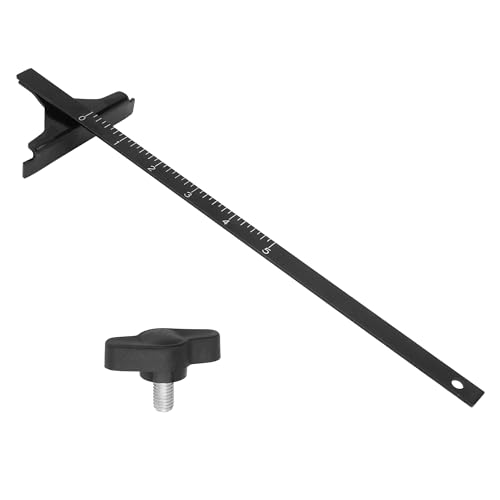
The Aoheke Edge Rip Guide is a specialized accessory designed as a replacement part for the Ryobi P508 circular saw (part number 204585001). This simple yet functional guide helps users achieve straight rip cuts without the need for clamps or repeated measurements, making it a practical addition for anyone who already owns this specific saw model.
This edge guide is best suited for DIY homeowners, woodworkers, and hobbyists who frequently use the Ryobi P508 for projects like cutting plywood, shelving, or framing lumber. While it may not be necessary for professionals with advanced track systems, it offers a cost-effective way to improve cut accuracy for occasional or semi-regular use. Garage users and workshop enthusiasts will appreciate its ability to speed up setup and reduce material waste.
In terms of real-world performance, the guide provides a stable reference surface that follows the edge of the workpiece, allowing for consistent cuts along the entire length. According to product specifications, it eliminates the need for marking and measuring, which saves time on repetitive cuts. The guide is made from durable materials that should withstand normal workshop wear, though it's not designed for heavy-duty construction or impact use. Its black finish is practical but not rust-proof in humid environments.
Build quality appears adequate for the price point, with plastic and metal components that mate securely to the saw's base. Installation is straightforward: users simply attach the guide to the saw's pre-drilled holes using the provided hardware, ensuring a snug fit. No special tools or modifications are needed, and once mounted, the guide can be quickly removed if not needed. Storage is easy due to its small size (1 x 1 x 1 inches), fitting into most toolboxes or hanging on a pegboard hook.
A realistic limitation is that this guide is exclusively compatible with the Ryobi P508 circular saw. It will not fit other saw models without modification, so users with multiple saw brands may need separate guides. Additionally, the guide's design is basic; it offers a fixed edge reference without depth stops or adjustable offset capabilities. For users requiring more versatility, a universal track system might be a better investment.
Overall, the Aoheke Edge Rip Guide is a practical, low-cost solution for anyone who owns a Ryobi P508 and wants to improve cut accuracy on rip cuts. It's particularly useful for DIY projects around the home or in the workshop, where speed and precision matter. While it won't replace professional-grade guiding systems, it delivers solid value for its intended use. If you're looking to streamline your cutting setup and avoid buying a new saw, this replacement part is worth considering.

Pros
- Lightweight and compact design makes it easy to control in cramped work areas
- Brushless motor delivers dependable power for everyday woodworking and DIY projects
- Comfortable grip ergonomics help maintain steady cutting lines
- Seamless integration with existing RYOBI ONE+ 18V batteries
Cons
- Sold as a bare tool, requiring separate purchase of battery and charger
- 6-1/2-inch blade capacity provides slightly less cutting depth than full-sized 7-1/4-inch saws
- Not intended for heavy-duty commercial timber framing applications
The RYOBI ONE+ HP 18V Brushless Compact 6-1/2-inch Circular Saw (model PSBCS01) is engineered to bridge the gap between bulky full-sized framing saws and underpowered mini cutters. Operating as a bare tool on the widespread ONE+ battery system, this saw targets DIY homeowners, residential remodelers, woodworkers, and garage builders who need dependable cutting action without dragging out heavy extension cords.
Equipped with a brushless motor, this circular saw is configured to make quick work of plywood, sheet goods, and dimensional two-by lumber. The brushless design delivers smooth power delivery and reduced friction, which helps conserve battery life during extended sessions. For sheet goods and standard 2x4 framing, the tool maintains steady blade speed, reducing bogging and splintering when paired with an appropriate finish or framing blade.
Weighing around 5.5 pounds without the battery pack, the tool emphasizes user comfort and control. The compact footprint makes it significantly easier to maneuver on sawhorses, ladders, or in tight crawl spaces where a standard 7-1/4-inch saw can feel awkward. An ergonomic handle with a textured non-slip grip gives the operator steady guidance, while the integrated shoe provides solid stability on the workpiece surface for straight crosscuts and rip cuts.
Adjustments for cutting depth and bevel angles are straightforward, requiring minimal downtime between tasks. Maintenance remains minimal thanks to the sealed brushless motor housing and straightforward blade-change access. Because the tool measures just over 13 inches long, it easily slides into standard jobsite toolboxes, contractor bags, or workshop shelving units, making storage simple in crowded work areas.
As a compact 6-1/2-inch circular saw, it does have realistic limits. It will not replace a high-draw 7-1/4-inch worm-drive saw for repetitive, heavy-duty framing through dense wet-treated timber or deep compound cuts. However, for everyday garage carpentry, deck maintenance, basement remodeling, and home repair projects, this circular saw delivers an exceptional balance of portability, balance, and reliable performance.
On active residential jobsites or backyard builds, portability often matters just as much as raw power. The lightweight build of this compact circular saw allows users to carry it up ladders or hold it comfortably at waist height without straining shoulders and forearms.
Because it operates within the ONE+ 18V platform, tradespeople and DIY enthusiasts can quickly swap packs between drills, sanders, and this saw. For jobs requiring quick punch-list trims, subfloor patches, or fence repairs, having a lightweight cordless saw ready to cut saves valuable setup time compared to running extension cords across the property.

Pros
- Brushless motor maintains cutting speed under load better than standard brushed models
- Noticeably lighter and more maneuverable than conventional 7-1/4 inch circular saws
- Includes a high-capacity 4.0 Ah battery, charger, and dust extraction adapter
- Convenient onboard tool storage for rapid blade adjustments and replacements
Cons
- The 6-1/2 inch blade capacity is not intended for heavy multi-layer timber framing
- A hard carrying case is not included for transport and storage
- Demanding continuous rip cuts in thick hardwood will drain batteries faster
The RYOBI 18V ONE+ HP Brushless 6-1/2 inch circular saw kit provides a versatile, cordless cutting solution engineered for crosscuts, rip cuts, and sheet breakdown. Designed around a high-efficiency brushless motor, this saw gives users the freedom to tackle carpentry and repair jobs without dragging power cords across the workspace. It serves as a practical asset for DIY homeowners, residential remodelers, hobbyist woodworkers, and maintenance professionals who need dependable cutting performance in an easy-to-handle package.
Equipped with ONE+ HP technology, the motor turns up to 4,900 RPM to deliver clean, fast passes through framing lumber, subflooring, and composite sheet materials. The included 24-tooth carbide-tipped thin-kerf blade creates minimal resistance, enabling clean cuts while conserving battery energy. Bevel adjustments and depth settings are easy to manipulate with clear markings, allowing smooth transitions between standard square crosscuts and angled joinery cuts up to 50 degrees.
Ergonomics and tool balance are clear strengths of this compact design. The saw weighs noticeably less than full-sized contractor models, which helps reduce strain during repetitive cuts or when trimming materials overhead. The textured overmold grip provides dependable hand traction for safe, confident guidance along cut lines. Additionally, the included vacuum port attachment lets woodworkers easily connect a shop vacuum hose, helping manage sawdust accumulation in confined garage workshops.
Day-to-day operation is streamlined by thoughtful onboard features, including integrated hex key storage for quick blade changes without searching through a toolbox. The package provides a solid foundation for both new tool buyers and existing platform users by bundling an 18V 4.0 Ah battery and charger. This battery configuration offers ample runtime for routine weekend deck builds, shelving projects, or framing repairs before needing a recharge.
While this 6-1/2 inch saw readily cuts through standard 2x lumber in a single pass, commercial framing crews working with wet, heavy structural timbers all day may still prefer a heavier worm-drive or dual-battery saw platform. For general home improvement, garage workshops, punch list contractor repairs, and DIY carpentry, this cordless brushless kit represents an efficient, reliable, and user-friendly cutting setup.
In garage workshops and mobile jobsite environments, this brushless saw handles sheet goods such as plywood, OSB, and MDF with clean edges and minimal tear-out. The high blade speed helps prevent motor bogging during long rip cuts when paired with a straight edge guide.
The dust extraction port provides a substantial upgrade for indoor workshop use. Connecting it to a dust collector keeps the cut path clear of debris, leading to better line visibility, tighter cutting accuracy, and less time spent sweeping up after finishing a build.
The included 4.0 Ah ONE+ lithium-ion battery provides a solid balance between runtime and overall tool weight. It delivers sustained power output without noticeable fade as the charge diminishes, allowing steady cutting throughout the battery cycle.
Because this kit is part of the RYOBI 18V ONE+ system, the battery and charger interchange seamlessly with over 280 other cordless tools, making it easy to share power sources across drills, sanders, and outdoor equipment.
Complete Guide on Operating and Adjusting a Ryobi Circular Saw
Operating a circular saw efficiently requires mastering machine setup, body mechanics, and workpiece preparation before pulling the trigger. Ryobi manufactures several variations, spanning compact 5-1/2 inch cordless models, versatile 6-1/2 inch units, and heavy-duty 7-1/4 inch brushless or corded options. While each tool shares fundamental cutting principles, specific features like onboard rafter hooks, bevel detents, and dust collection ports dictate how you handle individual cutting operations. Following an organized sequence from initial tool inspection to final cut verification helps maintain consistent accuracy across every home woodworking or framing project.
Understanding Ryobi Circular Saw Anatomy and Controls
Familiarizing yourself with the primary components of your saw prevents awkward handling during active cutting passes. The tool body features a primary rear handle housing the trigger switch and lock-off button, accompanied by a front pommel handle for balanced two-handed control. Beneath the motor assembly sits the stamped steel or cast metal shoe, also called the baseplate, which glides directly across your stock. Surrounding the blade is a fixed upper blade guard for operator protection and a spring-loaded lower guard that retracts automatically as the saw advances into material.
Adjustment points are positioned around the perimeter of the housing for rapid tool configuration. A depth adjustment lever located behind the blade guard loosens the shoe, allowing the motor housing to pivot up or down along a calibrated scale. Near the front of the baseplate, a bevel adjustment knob and degree scale allow the shoe to tilt for compound or angled bevel cuts. Understanding where these levers sit ensures you never struggle to adjust settings while working in cramped garage workshops or dynamic jobsite settings.
Pre-Cut Preparation and Power Disconnection Protocols
Safety protocols begin before making any adjustments or handling the cutting edge directly. Always disconnect the power source by releasing the 18V ONE+ battery pack from the handle base or unplugging the power cord from the wall outlet. An isolated saw cannot turn on accidentally while you verify blade tightness or measure cutting depths. Removing the power source also allows you to manually cycle the spring-loaded lower blade guard to ensure it moves smoothly and snaps back over the teeth without catching.
Personal protective equipment forms an indispensable layer of defense against high-speed sawdust and loud acoustic resonance. Put on ANSI-certified safety glasses with side shields to shield your eyes from flying chips and stray debris. Hearing protection prevents cumulative ear fatigue, especially when running powerful 13-amp corded motors or brushless cordless motors at high speeds up to 5,000 RPM. A properly fitted dust mask or respirator prevents inhalation of fine wood particulates, particularly when cutting pressure-treated boards or medium-density fiberboard.
Setting the Proper Cutting Depth for Clean and Safe Cuts
Setting the correct cutting depth represents one of the most critical adjustments for both cut quality and personal safety. Setting the blade too deep exposes an excessive amount of rotating carbide beneath the board, increasing kickback severity if the blade binds. Conversely, setting the blade too shallow prevents the teeth from clearing waste material efficiently, causing scorched edges and rapid motor bogging. The ideal depth exposes approximately one-eighth to one-quarter of an inch of blade tooth below the bottom surface of the workpiece.
To configure this setting accurately, support your workpiece safely on sawhorses or sacrificial foam board with the power disconnected. Loosen the rear depth adjustment lever and raise the saw shoe until the lowest tooth extends slightly past the material bottom edge. Tighten the lever firmly so the motor housing cannot slip under vibration while you cut through dense grain. Taking ten seconds to establish proper depth prolongs blade life, minimizes tear-out on the face veneer, and significantly reduces operational drag.
Adjusting Bevel Angles and Detents for Accurate Angled Cuts
Angled cuts are necessary when framing rafters, assembling planter boxes, or fashioning mitered edge joints. Ryobi circular saws accommodate bevel angles typically ranging from 0 degrees up to 51.5 or 56 degrees depending on the specific model. Advanced models, such as brushless 7-1/4 inch saws, feature dedicated positive stops or detents at common angles like 0, 15, 22.5, 30, 45, and 56 degrees. These detents allow quick registration of standard angles without requiring constant recalibration with an external speed square.
To set a bevel, loosen the bevel adjustment knob at the front of the shoe assembly. Pivot the shoe until the pointer indicator aligns precisely with your target angle marking on the stamped bevel scale. If your saw features mechanical stops, ensure the shoe seats firmly into the detent pocket before tightening the locking knob down securely. Keep in mind that bevel cutting reduces your total vertical cutting depth capacity, so verify that the exposed blade remains deep enough to pass completely through the stock at the selected tilt.
Installing, Changing, and Aligning Blades Securely
Installing a sharp blade matched to your material ensures clean cuts and keeps motor temperatures low. Always verify the power tool is disconnected from its power source before touching the arbor hardware. Depress the spindle lock button on the gear housing and use the included hex wrench to loosen the arbor bolt. Note that standard circular saw arbor bolts generally follow a specific thread direction, turning counterclockwise to loosen on standard setups or matching the rotation arrows stamped into the metal blade guard.
Remove the outer blade washer and slide the old blade out past the retracted lower guard. Inspect the inner arbor flange for sawdust, resin accumulation, or metal burrs that might cause blade wobble during operation. Slip the new blade onto the 5/8 inch arbor spindle, making sure the printed directional arrow on the blade face matches the directional rotation arrow on the tool housing. Replace the outer washer with its recessed side facing inward, depress the spindle lock, and tighten the arbor bolt securely without over-torquing the threads.
Aligning Cuts with Sightlines and Using Edge Rip Guides
Achieving straight, consistent cuts requires understanding how the front shoe sightline notches correspond to blade kerf. The front edge of the shoe features two alignment notches: one marked for 0-degree square cuts and another marked for 45-degree bevel passes. When performing a standard 90-degree cut, line up the zero mark with your penciled cut line to ensure the blade paths directly through the waste side. Always track the sightline notch rather than staring directly at the spinning blade to maintain balanced body posture throughout the stroke.
Long rip cuts through plywood sheets or dimensional boards become substantially easier and more reliable when using an edge rip guide. Compatible accessories, like the Aoheke replacement rip guide designed for Ryobi baseplates, slide through mounting channels at the front of the shoe. Tighten the retaining thumbscrew once the guide fence is adjusted to your exact measured dimension from the blade tooth. Sliding the metal fence smoothly along the straight factory edge of the board guarantees uniform rip widths without wandering off course.
When cutting non-wood materials or composite piping on a jobsite, matching your tool accessories to the medium is crucial. For tasks involving plastic plumbing, exploring guides on cutting pvc pipe with dedicated blades provides valuable context on tooth geometry and kerf selection. Similarly, specialized fabricators handling soft metals can consult resources on metal-cutting saw blade options to prevent blade binding and material melting.
Proper Stance, Hand Placement, and Trigger Operation
Solid physical posture gives you control over the saw while keeping your body clear of the cut path. Stand with your feet shoulder-width apart, positioned slightly to the left side of the cutting line for right-handed tools. Never stand directly in line behind the blade path, as unexpected kickback drives the tool straight backward toward the operator. Maintain a firm grip with your dominant hand on the main trigger handle and your secondary hand positioned firmly on the front pommel grip.
To initiate a cut, rest the front lip of the baseplate flat on the workpiece without allowing the blade teeth to touch the wood edge. Depress the safety lock-off button with your thumb, then squeeze the main trigger switch to bring the motor up to full operating speed. Allow the blade to reach its maximum RPM before slowly moving the tool forward into the stock. Maintain steady forward pressure, letting the sharp teeth do the cutting work rather than aggressively forcing the motor beyond its natural feed rate.
Managing Workpiece Support to Prevent Blade Pinch and Kickback
Improper board support represents the leading cause of blade binding, severe motor stalling, and dangerous kickback incidents. Never support a board across two sawhorses while cutting through the middle between them. As the cut progresses, the material will sag under its own weight, pinching the kerf tightly against the spinning blade body. When a high-torque motor encounters a pinched kerf, the rotating blade climbs violently out of the cut toward the user.
Proper support requires allowing the offcut piece to fall away freely under gravity without pinching the blade. When trimming boards, support the main section firmly on your work surface while letting the waste end hang unsupported past the edge. For large sheet goods like four-by-eight plywood panels, lay a sacrificial sheet of rigid foam insulation across your sawhorses or shop floor. Cutting directly through the plywood with the blade penetrating slightly into the foam supports both halves completely, eliminating sagging and pinch risks entirely.
Dust Collection, Rafter Hooks, and Jobsite Organization
Managing sawdust and tool placement improves both cutting visibility and general jobsite safety. Many modern Ryobi models feature integrated dust ports compatible with vacuum adapters sized from 1-1/4 inches to 1-7/8 inches. Connecting a standard wet/dry vacuum directly to the ejection port pulls fine particulates away from your cut line, keeping penciled layout marks clearly visible. Clean sightlines prevent unnecessary pauses during long passes and keep your working environment significantly tidier.
Jobsite organization is further enhanced by built-in convenience hardware found on select brushless circular saws. Integrated folding rafter hooks allow you to hang the tool securely from dimensional framing lumber or ladder rungs between cuts. Storing the saw suspended prevents damage to the lower blade guard and protects delicate carbide teeth from striking concrete shop floors. When placing the tool down on a bench, always confirm the spring-loaded lower guard has closed completely over the blade.
Diagnosing Common Cutting Problems and Preventing Binding
Recognizing the early warning signs of cutting trouble prevents damage to your saw motor and workpieces. If you notice the saw slowing down, producing pungent burning smells, or leaving dark scorch marks, the blade is likely dull or gummed with sticky wood resin. Pitch buildup increases friction along the blade plate, creating excessive heat that bogs down cordless battery output. Cleaning the blade with an appropriate pitch remover or swapping in a fresh carbide blade restores effortless cutting performance.
Wandering cuts generally stem from applying uneven sideways force to the handle or attempting to correct a crooked cut mid-pass. If your cut begins straying from the layout line, do not twist or force the saw back onto track while the blade is turning. Twisting torques the blade plate inside the narrow kerf, causing immediate binding and motor cutoff. Instead, release the trigger, wait for the blade to come to a complete stop, back the tool out slightly, and realign the baseplate before resuming.
Battery Management and Cord Care for Consistent Output
Consistent cutting power relies heavily on how you manage your power delivery system during long work sessions. Cordless ONE+ models benefit significantly from higher-capacity 4.0 Ah or HP lithium-ion battery packs that supply sustained current under heavy loads. Compact batteries may experience thermal overload when driving large 7-1/4 inch blades through thick framing stock, causing automatic shutoff. Keeping spare batteries on a charger ensures you rotate packs smoothly without halting your workflow during extensive framing or decking builds.
For corded circular saws like the CSB125 13-amp unit, selecting an appropriate extension cord gauge prevents damaging voltage drop. Long, thin extension cords starve the electric motor of amperage, resulting in reduced RPM, overheating, and premature switch failure. Use heavy-duty 12-gauge or 14-gauge outdoor-rated cords when working far from main electrical receptacles. Inspect power cords periodically for cracked insulation, frayed jackets, or loose plug prongs before plugging into jobsite power.
Post-Cut Inspection and Routine Maintenance Procedures
Routine post-cut maintenance ensures your circular saw remains dependable for future projects. After disconnecting the power supply, use a dry shop brush or compressed air nozzle to clear sawdust from the motor intake vents, depth slide channels, and lower guard spring mechanism. Packed sawdust can impede guard rotation, leaving the blade exposed when you set the tool down. Wipe down the metal shoe with a dry microfiber rag to remove pitch, keeping the gliding surface slick and free of drag.
Inspect the carbide teeth periodically for chipped edges, missing tips, or excessive resin accumulation. A well-maintained saw with a sharp, balanced blade produces cleaner cuts, uses less battery energy, and provides greater operational safety. Storing your tool in a clean, moisture-free toolbox or shelving cabinet preserves mechanical linkages and ensures accurate alignment for years to come.
Mastering circular saw operation comes down to establishing consistent setup habits every time you step up to the workbench. Disconnecting power before making adjustments, matching cutting depth to stock thickness, and supporting workpieces to prevent binding ensures safe and accurate cutting. With deliberate body positioning and proper feed speed, your Ryobi saw will deliver clean, splinter-free cuts across all your framing, carpentry, and home improvement tasks.





Write Your Review
No reviews yet. Be the first to share your experience!