


Nothing kills a DIY plastering job faster than a wall full of drag marks and uneven patches. You can mix the perfect batch, but if the tool in your hand isn’t doing its job, the finish will show every mistake. A good plastering trowel does more than just spread material. It controls thickness, pressure, and the final look. Understanding how to use a plastering trowel for smooth wall finishes takes practice, but the right tool can make technique easier to learn.
We looked at 7 options across BonTool, Aswewamt, CXOYLL and more and focused on blade flexibility, handle comfort, and overall build. Some trowels work best for curved surfaces, others for flat finishing, and a few specialize in corners. Whether you’re skimming a ceiling or patching drywall, choosing the right shape and size matters. If you’re also working on tile projects, check our guide on what size trowel is best for wall tile to match your setup. For heavy-duty gardening tasks, a heavy duty garden trowel might be more appropriate.

Pros
- Square notch design delivers consistent mortar coverage for professional-looking results.
- Premium steel blade is sturdy and resists bending or warping over time.
- Ergonomic, non-slip handle improves comfort and reduces fatigue on long jobs.
- Lightweight and well-balanced, easy to control for detailed work.
- Affordable price point offers good value for both occasional and frequent users.
Cons
- Square notch may not be ideal for all troweling techniques; some users might prefer V-notch for specific tile sizes.
- Handle shape may not suit every hand size; some users could find it slightly large or small.
- Limited to notched applications; not a replacement for a flat finishing trowel.
The Jadever 11x4.7 inch plastering trowel is a square notch masonry tool designed for applying mortar, thinset, and adhesive during tile, floor, and bricklaying projects. It falls into the category of hand trowels that prioritize even material distribution, and it's built to handle the demands of tile setters, contractors, and serious DIY homeowners.
This trowel is best suited for tile work, masonry, and general construction tasks. If you're a contractor laying floor tile, a DIY homeowner tackling a backsplash, or a handyman patching concrete, you'll appreciate how the square notches allow you to spread mortar in consistent ridges. That helps ensure proper coverage and reduces waste. The 0.4 x 0.4 inch teeth are a common size for many tile installations.
In terms of real-world performance, the premium steel blade provides adequate stiffness and holds up well against abrasion from mortar and cement. Users mention it's sharp out of the box, meaning it cuts through material cleanly. The ergonomic handle is shaped to fit the palm and includes a non-slip surface, which improves control and reduces fatigue during repetitive spreading motions. This is especially useful for larger projects like floor tiling.
Build quality is solid for the price. The steel appears well-finished with no rough edges. The handle is securely attached and doesn't wobble. While the trowel isn't rust-proof, wiping it clean after use will keep it in good shape. Its lightweight construction (10.6 ounces) makes it easy to handle for extended periods, and the 11 x 4.7 inch size is versatile enough for both small and medium areas.
One realistic limitation is that the square notch design is specialized. If you need a V-notch or U-notch for certain tile sizes, this trowel won't match. Also, some users with larger hands might find the handle a bit slim. But for most standard tile jobs, it works well. Storage is easy - just hang it on a pegboard or lay it in a toolbox.
Overall, the Jadever plastering trowel is a practical, affordable option for anyone who needs a reliable notched trowel. It delivers consistent performance, comfortable handling, and decent durability. Whether you're a contractor working daily or a DIYer on a weekend project, this trowel is worth considering for your tool collection.

Pros
- Sturdy stainless steel blade with minimal flex for reliable mud scooping and spreading.
- Comfortable non-slip handle reduces fatigue during long projects.
- Excellent value for the price, offering professional-grade build quality.
- Easy to clean and maintain, with no residue buildup after use.
- Compact size fits easily into toolboxes and storage bags.
Cons
- Blade edge may have a slight burr from stamping that requires light sanding or filing for a perfectly smooth finish.
- Not flexible enough for pushing compound into very small holes or tight cracks; a thin putty knife is still needed for detail work.
- Handle design may feel slightly dated or basic to some users, though it remains functional.
The Btolin Professional Curved Plastering Trowel is a specialized hand tool designed to make drywall and plaster work more efficient. Unlike a standard straight-edged putty knife, this trowel features a 6.89-inch arc blade that matches the curve of a typical 5-gallon mud bucket. This design allows you to scoop joint compound quickly and cleanly, reducing waste and keeping your workspace tidy. It is best suited for DIY homeowners tackling weekend drywall repairs, as well as professional contractors, painters, and plasterers who need a reliable bucket scoop for daily use.
In real-world performance, this trowel excels at scooping and spreading compound on both flat and curved surfaces. The stainless steel blade is thick enough to resist bending, yet it provides enough rigidity for smooth feathering and finishing. User reviews consistently highlight its sturdy build and comfortable grip, which helps reduce hand fatigue during extended use. The polished curved edge also helps prevent streaks, allowing for a cleaner finish on drywall seams and patches. For those who frequently work with joint compound, this tool can noticeably improve productivity by making the scooping process faster and less messy.
Build quality is a strong point for this trowel. The blade is made from high-grade stainless steel with a double-riveted joint that adds durability and prevents the handle from loosening over time. The handle itself features a black and yellow rubber overmold that provides a secure, non-slip grip even when your hands are slightly damp. While the handle has a somewhat basic appearance, it feels solid in the hand and offers good control. The trowel is also lightweight at just over 7 ounces, making it easy to maneuver and store in a toolbox or on a shelf.
Maintenance is straightforward: the stainless steel blade resists rust and corrosion, and the polished surface wipes clean quickly with water and a scrub brush. Users recommend drying it thoroughly after cleaning to prevent any potential staining. One realistic limitation noted in reviews is that the stamped edge of the blade may have a slight burr that can scrape plastic bucket walls, introducing debris into the compound. This is easily fixed with a few passes of a file or sandpaper, but it is something to be aware of. Additionally, the trowel is not flexible enough for detailed work like filling small nail holes or cracks; a thin putty knife is still necessary for those tasks.
Overall, the Btolin Curved Plastering Trowel offers excellent value for anyone who regularly works with drywall compound or plaster. Its durable construction, comfortable handle, and bucket-friendly design make it a practical addition to any workshop or jobsite. Whether you are a DIY homeowner patching a few holes or a professional contractor finishing a large project, this trowel can help you work more efficiently and achieve smoother results. At its price point, it is a worthwhile investment that should hold up well over time.

Pros
- Lightweight and well-balanced for comfortable one-handed use throughout the day
- Removable handle makes storage and transport hassle-free in a toolbox or on a shelf
- Soft rubber grip offers good comfort and reduces hand strain compared to basic models
- Large 11.8-inch square surface holds ample material for productive work
- Affordable price point suits both DIYers and budget-conscious professionals
Cons
- Aluminium blade may dent if dropped heavily or used with excessive force on hard surfaces
- Some users might prefer a thicker rubber pad under the handle for extra cushioning
- Handle attachment threads could be prone to wear over time if frequently removed and reattached
The CXOYLL Aluminium Plastering Hawk is a practical hand tool designed for holding and applying plaster, mortar, stucco, and drywall compound. It features an 11.8-inch square aluminium blade and a detachable soft-grip handle, making it a versatile addition to any drywall or masonry toolkit.
This tool is well-suited for DIY homeowners tackling basement finishing, garage walls, or small patch jobs, as well as contractors, plasterers, and masons who need a lightweight hawk for daily use. The aluminium construction keeps the weight low, which reduces arm fatigue during long sessions of holding and spreading material.
Based on product specs and user feedback, the hawk performs reliably for holding and applying mud. The 24 dense ring grooves on the blade help keep plaster from sliding off, and the rounded corners add a margin of safety. The removable handle is a standout feature: it unscrews for easy cleaning and compact storage in a tool bag or on a shelf. The TPE handle offers a comfortable, non-slip grip that helps prevent blisters.
Build quality is solid for the price. The aluminium blade is machine-finished and should resist rust if wiped clean after use. The handle attachment feels secure, though careful handling of the threads will prolong its life. Some users may want additional cushioning beneath the handle, but the overall design is functional and straightforward.
Storage and maintenance are simple: the handle unscrews for compact storage, and the blade can be wiped down with a damp cloth. There is no complicated setup required. A realistic limitation is that the aluminium blade can dent if dropped onto concrete or abused, so it may not hold up to the harshest commercial environments. However, for typical DIY and light professional work, it should perform well.
Overall, the CXOYLL plastering hawk offers great value for anyone needing a lightweight, ergonomic, and easy-to-store mortar board. It is a reliable choice for home projects, drywall finishing, and general masonry work.
The CXOYLL plastering hawk is built with an aluminium blade that provides a good balance of strength and light weight. The blade is machine-finished with rounded corners for safety and smooth operation. The handle is made from TPE rubber, which feels durable and offers a comfortable grip even when hands are sweaty or covered in compound. The handle screws into a threaded receiver on the back of the blade; the threads appear well-machined but may require care during repeated removal to avoid stripping. Overall, for its price range, the build quality is satisfactory for regular use in home workshops and on job sites.
Ergonomics are a strong point of this hawk. The handle's soft TPE material cushions the palm and reduces pressure points, which can help prevent blisters and hand fatigue during extended use. The handle diameter is comfortable for most hand sizes, and the texture provides a secure hold even when wet. The blade's lightweight design further reduces strain on the wrist and arm. The removable handle also means you can clean and dry the tool thoroughly, maintaining good hygiene and grip quality. Some users might wish for a slightly thicker handle or a rubber base pad for extra shock absorption, but the existing design is already quite user-friendly.
One of the most practical features of this plastering hawk is its detachable handle. When unscrewed, the handle and blade can be stored flat, taking up minimal space in a toolbox, drawer, or on a shelf. This makes it easy to transport in a tool bag without worrying about the handle snagging on other tools. The lightweight aluminium blade also contributes to portability, so you can carry it along with other drywall tools without added bulk. Cleaning is straightforward: rinse the blade with water and wipe dry, then store separately. This design is ideal for contractors who need to keep their gear organized and compact.

Pros
- Stainless steel build offers good rust resistance and easy cleanup
- Lightweight and comfortable to use for extended periods
- Creates clean, consistent 90-degree corners with minimal effort
- Versatile for use with drywall mud, stucco, and concrete
- Two-tool set covers both inner and outer corners effectively
Cons
- Edges are sharp out of the box and require sanding or grinding before use to avoid injury
- Small size may not be ideal for large-scale commercial plastering projects
- Some users may prefer a larger handle for better grip and control
The Aswewamt Drywall Corner Tool Set is a practical two-piece kit designed to simplify the process of achieving clean, sharp 90-degree corners during drywall mudding and plastering. It includes both an inner corner trowel and an outer corner trowel, each made from stainless steel for durability and rust resistance. This set is best suited for DIY homeowners tackling weekend remodeling projects, as well as contractors and plasterers who need reliable corner finishing tools for everyday jobsite use.
In real-world performance, these corner trowels excel at creating smooth, consistent corners without the hassle of traditional methods. The 90-degree angle is precise, helping users apply joint compound or plaster evenly along both sides of a corner. The stainless steel construction holds up well against moisture and cleaning, and the lightweight design reduces hand strain during extended use. According to product specifications, the tools measure 1.59 by 5.7 inches, making them compact enough for tight spaces while still providing adequate coverage for standard corner work.
Build quality is solid for the price point. The stainless steel blades are stiff and resist bending under normal pressure, though the edges come sharp from the factory. The manufacturer recommends rubbing the edges with sandpaper or a grindstone before first use to prevent cuts. The handles are simple but functional, providing a secure grip even with gloved hands. Overall, the tools feel durable enough for regular use in both home workshops and professional construction environments.
Setup and maintenance are straightforward. There is no assembly required, and cleaning is as simple as wiping the blades with a damp cloth after use. Because the stainless steel resists rust, the tools can be stored in a toolbox or on a pegboard without special care. The compact size means they take up minimal space, which is a plus for those with limited storage in a garage or workshop.
One realistic limitation is the sharp edges mentioned earlier, which require a quick safety prep before use. Additionally, the small size may not be ideal for large-scale commercial plastering where larger corner trowels are preferred. However, for most residential and light commercial jobs, these tools perform well and deliver good results.
Overall, the Aswewamt Drywall Corner Tool Set offers good value for DIY homeowners, handymen, and professional tradespeople who need an affordable, effective solution for finishing drywall corners. Its stainless steel build, lightweight feel, and dual inner/outer design make it a practical addition to any plastering toolkit. If you are looking to improve your corner finishing efficiency without breaking the bank, this set is worth considering.

Pros
- Lightweight and easy to handle, reducing fatigue on long jobs.
- Non-marking blade leaves a clean finish without metal streaks or stains.
- Comfortable ergonomic handle provides good control and balance.
- Easy to clean and resistant to corrosion from plaster and chemicals.
- Affordable price point for both DIY and professional use.
Cons
- Plastic blade is less durable than steel and may wear faster with heavy use.
- Not suitable for heavy-duty scraping or aggressive material removal.
- Some users may prefer a larger blade for bigger surface areas.
The Bon Plastic Plastering Trowel is a finishing tool designed for smooth plaster, skim coat, and stucco work. Its 12 x 5 inch plastic blade is lightweight and non-marking, which means it won't leave metal streaks or stains on your finished surface. This makes it an excellent choice for both DIY homeowners tackling a weekend project and contractors who need a reliable tool for everyday finishing tasks.
Based on product specifications and user feedback, the trowel's plastic blade glides effortlessly over fresh material without dragging or tearing. This helps you achieve a consistent, smooth finish with less effort. The comfortable plastic handle provides a secure grip and balanced feel, which can reduce hand fatigue during extended use. Many users appreciate how easy it is to clean - just rinse it off after use, and it's ready to go again.
In terms of build quality, the trowel is made from durable plastic that resists corrosion from plaster and cleanup chemicals. While it's not as tough as a steel trowel, it's designed specifically for finishing work where a softer touch is needed. The compact, foldable design makes it easy to store in a tool bag or bucket, saving space in your workshop or garage. For storage, it takes up very little room and can be hung on a pegboard or tossed in a drawer.
One realistic limitation is that the plastic blade won't stand up to heavy-duty scraping or aggressive use. It's best suited for finishing and smoothing, not for removing old material or working with rough surfaces. Also, some professionals might prefer a larger blade for covering big areas quickly, but the 12-inch size is a good balance for most jobs.
Overall, the Bon Plastic Plastering Trowel offers a practical solution for anyone who needs a lightweight, non-marking finishing trowel. It's especially useful for DIY homeowners working on small plaster repairs, skim coating walls, or decorative finishes. Contractors and tradespeople will also find it handy for jobs where a metal trowel might leave marks or cause drag. Given its affordable price and solid performance, it's a worthwhile addition to any tool collection focused on plastering, stucco, or drywall finishing.

Pros
- Stainless steel construction resists corrosion and is easy to clean
- Compact size is perfect for tight spots and small projects
- Lightweight design reduces user fatigue
- Affordable two-piece set covers both inside and outside corners
Cons
- Some users report the tools may not glide smoothly or be perfectly level
- Smaller size may not suit users with larger hands or big jobs
- Limited to light-duty DIY use rather than heavy professional plastering
If you are a DIY homeowner or weekend warrior tackling drywall repairs, concrete patching, or plastering around the house, the FWIW 2-Piece Solid Inside and Outside Drywall Corner Tool Set is a budget-friendly option worth considering. This set includes one inside corner trowel and one outside corner trowel, both made from stainless steel. The material choice is practical for home use because it resists rust and cleans up easily with just water.
These corner trowels are best suited for light-duty projects such as patching small drywall holes, smoothing concrete edges, or finishing corners on a small wall repair. They are not designed for high-volume professional plastering but can be a handy tool for DIYers, hobbyists, and even tradespeople who need a compact corner tool for tight spots. According to user feedback, the tools are small and easy to handle, making them great for detail work around windows, door frames, and closets.
In terms of real-world performance, the stainless steel blades offer decent wear resistance and are easy to keep clean. However, some users have noted that the tools may not glide as smoothly as higher-end options and that the edges might not be perfectly level straight out of the box. For light concrete or drywall compound work, this is usually not a dealbreaker, but for precision finishing, you might want to check the flatness before use. The lightweight 6.9-ounce design helps reduce hand fatigue during extended use, and the hand-powered operation gives you full control over the corner finish.
Build quality is straightforward: the stainless steel is welded to the handle, and the overall construction feels sturdy enough for occasional use. The included components are just the two trowels, with no storage case or extra accessories. Storage is simple since these are small tools that fit easily into a standard toolbox or tool bag. Maintenance is minimal just rinse and dry after use to prevent any residue buildup.
One realistic limitation is the size. As one reviewer pointed out, these are small trowels, so if you have larger hands or are working on large corner areas, you might find them less comfortable or efficient than full-size professional tools. Also, the lack of a leveling guarantee means you may need to do a quick check or slight sanding to ensure a smooth finish. For the price, these are a practical addition to a DIY toolkit, but professionals may want to invest in a higher-end brand for consistent results.
Overall, the FWIW 2-Piece Drywall Corner Tool Set is a solid choice for homeowners and DIY enthusiasts who need an affordable, easy-to-clean corner finishing tool for small projects. It is not a replacement for professional-grade plastering tools but can get the job done on minor repairs and concrete touch-ups around the house.
Pros
- Stainless steel blade resists rust and corrosion for long life
- No-rivets design prevents snagging and leaves a clean finish
- Comfortable handle with non-slip rubber reduces hand fatigue
- Lightweight at 12 ounces for easy handling and control
Cons
- 11x4 inch size may be too small for large-area concrete finishing
- Handle material may feel slightly slick in wet conditions
- No included storage or carry case – requires separate tool storage
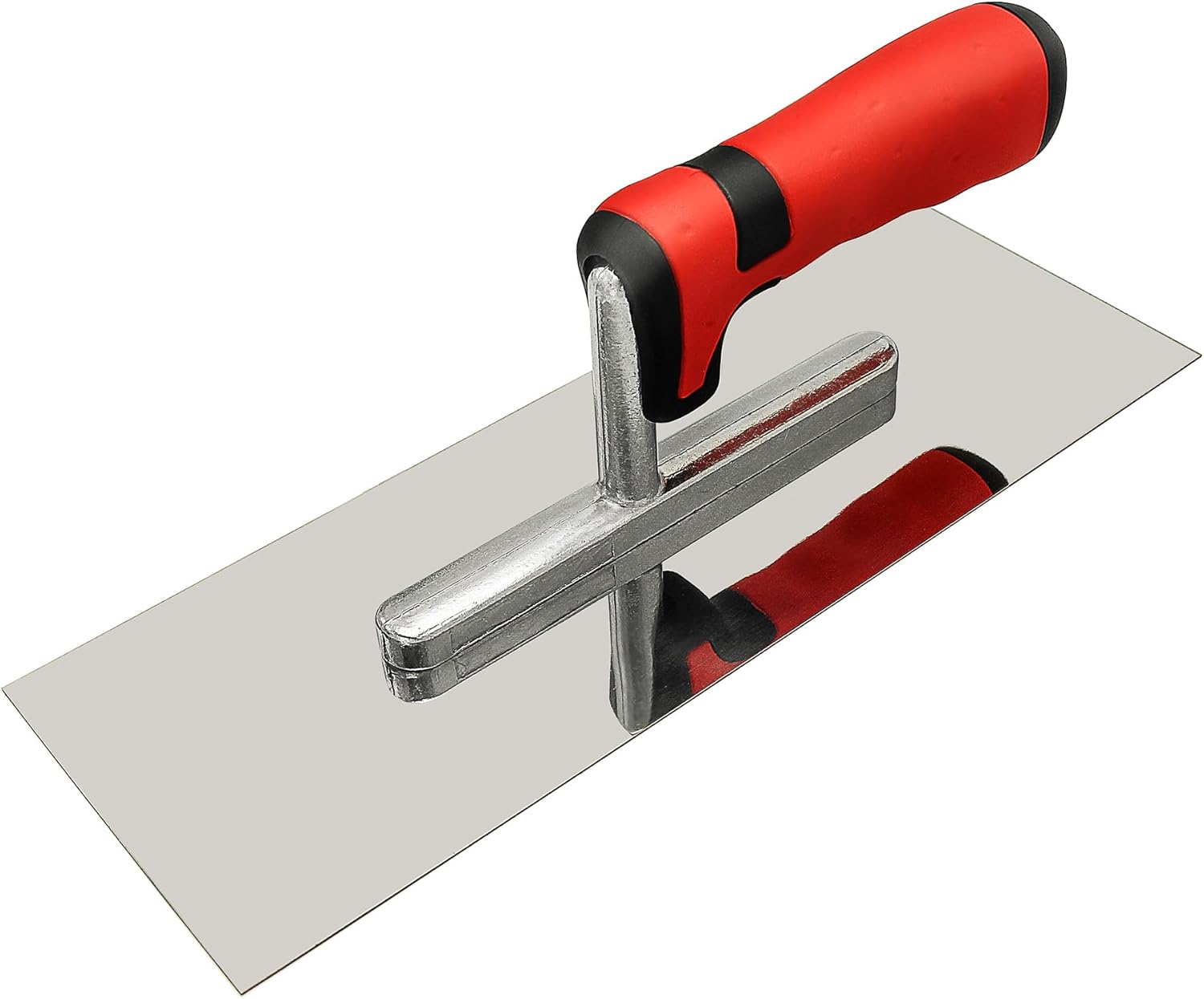
This DIXIANG stainless steel flat finishing trowel is a straightforward hand tool designed for applying and smoothing concrete, cement, mortar, and drywall joint compound. At 11 inches by 4 inches, it fits comfortably between a larger finish trowel and a smaller pointing trowel, making it useful for both small repairs and medium-sized finishing work.
This tool is best suited for DIY homeowners taking on basement patches or small concrete slabs, masons and brick layers working on mortar joints, and drywall finishers smoothing joint compound. Contractors on job sites will appreciate its lightweight design and easy cleanup, while workshop users can rely on it for leveling grout or thin-set on tile backsplashes.
Based on product specifications and user feedback, the stainless steel blade offers excellent resistance to rust and corrosion – a major plus when working with wet materials. The no-rivets construction means there are no raised fasteners to catch on the surface, allowing for a smooth, snag-free finish. The aluminum shank keeps the tool light (only 12 ounces), which helps reduce arm fatigue during extended use.
The ergonomic handle is made of plastic and rubber mounted over the shank, providing a secure grip that stays comfortable even with wet or gloved hands. Cleaning is straightforward: just rinse off any residue after use and wipe dry. For storage, you’ll need a spot in your toolbox or on a magnetic strip – no included pouch.
A realistic limitation is the size. At 11x4 inches, it works great for small to medium flatwork but may be too small for large concrete slabs where a 16- or 20-inch trowel would be faster. Also, the handle, while comfortable, can get a bit slippery if your hands are wet or have oil, so keeping a dry rag nearby is helpful.
Overall, if you need a reliable, easy-to-clean finishing trowel that won’t rust after a few uses, this DIXIANG model is a practical buy. It delivers good performance for the price and fits well into the kit of any serious DIYer or professional looking for a quality stainless steel option.
The build quality of this DIXIANG finishing trowel centers on its stainless steel blade and no-rivets design. The blade is pressed from a single sheet of stainless steel, which eliminates weak points common with riveted trowels. The aluminum shank is lightweight yet sturdy, and it’s bonded securely to the blade. The plastic and rubber handle is molded over the shank with a textured grip that doesn’t slip during use. Overall construction feels solid and well-balanced for a tool in this price range.
FAQs
What size plastering trowel is best for beginners?
A trowel around 11 to 12 inches long with a 4 to 5 inch width offers a good balance of control and coverage. For those learning how to use a plastering trowel for smooth wall finishes, a mid-size tool reduces fatigue while allowing enough surface area to practice even strokes. Smaller blades work for patches, larger ones speed up big walls but need more wrist strength.
How do you clean a plastering trowel?
Rinse immediately with water after use, then wipe dry with a cloth. Leftover plaster hardens quickly and can scratch future work. For dried-on compound, soak in warm water for a few minutes, then scrub with a stiff brush. Stainless steel trowels resist rust, but always dry them completely before storage.
Can you use a plastering trowel for concrete?
Yes, but a dedicated concrete finishing trowel often has a thicker, stiffer blade. Plastering trowels work on small concrete patches because the lightweight design helps control pressure. However, for large slabs or high-traffic areas, use a tool built for larger tile or concrete applications to avoid bending the blade.
What’s the difference between a finishing trowel and a plastering trowel?
Both look similar, but finishing trowels usually have a flatter, more flexible blade for smoothing concrete and cement. Plastering trowels often have a slightly curved shape to help spread compound without tearing. The choice depends on the material. For how to use a plastering trowel for smooth wall finishes, a specialized plastering trowel produces better results.
How to hold a plastering trowel correctly?
Grip the handle firmly but not tightly, keeping your wrist loose. The blade should sit at a slight angle to the surface, not flat. This allows the plaster to glide without sticking. Many beginners grip too hard, causing drag marks. Relax your hand and let the trowel do the work.
Is a plastic or steel trowel better for plastering?
Steel trowels offer durability and sharper edges for precise work. Plastic trowels are lighter, non-marking, and ideal for delicate finishes. For most plastering jobs, a stainless steel trowel provides the best balance of strength and control. Plastic works well for skimming and decorative plaster where you need a softer touch.
How to prevent rust on a stainless steel trowel?
Even stainless steel can spot if left wet. Wipe the blade dry after each use and store in a dry place. Occasionally apply a light coat of oil to the blade, especially if you work in humid conditions. Proper care keeps the blade smooth, which helps how to use a plastering trowel for smooth wall finishes over time.



Write Your Review
No reviews yet. Be the first to share your experience!