


Mud buildup, uneven seams, and messy corners can ruin a drywall job fast. That’s where a corner trowel comes in. This simple tool makes finishing inside and outside corners a lot easier. Instead of fighting with a standard knife, you get a dedicated angle that lays compound exactly where it needs to be. After looking at the specs and user feedback on each model, we’ve rounded up the best options for both pros and DIYers. If you’re tackling a tiling project, check out our guide on choosing the right trowel size for wall tile too. The right corner trowel saves time and reduces sanding. We’ve included stainless steel sets, adjustable angle tools, and even a bullnose option.

Pros
- Affordable 2-pack provides great value for contractors and DIYers
- Very lightweight and easy to handle, reducing arm fatigue over long hours
- Ergonomic grip feels comfortable and secure, even with wet or gloved hands
- Versatile enough for drywall, stucco, and concrete corner finishing
Cons
- Plastic construction may not hold up as long as metal trowels under heavy daily use
- Limited to inside corners only - not suitable for outside corners or flat surfaces
- 2-pack size might be unnecessary for small home projects
The Joyangy Drywall Corner Trowel 2 Pack is a practical inside corner finishing tool built for anyone who works with drywall, stucco, or concrete. Each trowel features a precise 90-degree angle to help you apply joint compound smoothly into corners without leaving ridges or gaps. This set comes with two identical plastic trowels, making it a budget-friendly option for both DIY homeowners and professional contractors.
This tool is best suited for drywall installers, painters, plasterers, and homeowners tackling room renovations. The lightweight plastic body makes it easy to handle for long periods, and the ergonomic handle reduces hand fatigue during repetitive mudding and taping tasks. According to user feedback, the flat board distributes pressure evenly, which helps minimize the sand marks that often appear after corner finishing.
In terms of build quality, the trowels are made from premium, eco-friendly plastic that resists corrosion and flexes slightly without cracking. While not as tough as stainless steel or carbon steel trowels, the plastic construction is more than adequate for typical drywall finishing and light stucco work. The handles are molded for a comfortable grip, though they are not padded.
Storage is simple since the trowels are compact and lightweight - they fit easily into a toolbox or tool belt pouch. Cleaning requires just rinsing with water before the mud dries. One realistic limitation is that plastic may wear faster than metal if used daily on rough concrete or heavy-duty stucco. Also, these trowels are designed only for inside corners; you will need separate tools for outside corners or flat finishing.
Overall, the Joyangy 2 Pack is a solid choice for budget-conscious DIYers and professionals who want a reliable corner trowel for everyday drywall work. The value is excellent given the low price, and the ergonomic design makes long mudding sessions more comfortable. If you are looking for a simple, effective inside corner tool without breaking the bank, this set may work well for your next project.

Pros
- Professional blade angle design delivers precise corner fit and reduces sanding
- Stainless steel blades are rust-resistant, durable, and easy to clean
- Ergonomic soft grip handle minimizes fatigue for all-day use
- Complete set covers both inside and outside corners
- Lightweight and easy to store with hanging hole
Cons
- Blades have some flexibility, which may not suit those preferring rigid tools for heavy-duty applications
- Handle attachment is welded, but the connecting rod could be a weak point under extreme force
- Beginners may need practice to master the angle technique for best results
The Goldblatt 2-Piece Drywall Corner Tool Set is a practical addition to any drywall professional's or DIY homeowner's toolkit. This set includes a 5-inch outside corner knife and a 3-1/2-inch inside corner knife, both designed to tackle one of the trickiest aspects of drywall finishing: getting crisp, smooth corners. Whether you're a contractor handling new construction, a homeowner patching up a room, or a tradesperson working on renovation projects, these tools aim to make corner work faster and less frustrating.
What sets this set apart is the professional blade angle design. The inside tool is angled slightly greater than 90 degrees, the outside tool slightly less. This pre-set angle, combined with the blade's controlled flexibility, allows the tool to fit corners snugly when pressed. According to user feedback, this design significantly reduces the need for sanding because the compound is applied more evenly right from the start. The blades also feature rounded corners, which help prevent gouging and create smoother finishes on concrete and cement-based plasters.
Build quality is a strong point. The blades are made from premium stainless steel with a mirror finish that resists rust and corrosion. This means they can handle repeated cleaning without degrading, and they remain durable even after extended use. The soft grip handle is ergonomically shaped to reduce fatigue during long sessions, and it's attached to the blade via a chrome-plated steel connecting rod that's welded for strength. The set also includes a hanging hole in each handle, making storage simple on a workshop pegboard.
In terms of real-world performance, these trowels excel at speeding up the corner finishing process. Users report that they can apply joint compound quickly and achieve a uniform thickness, reducing the number of coats needed. The stainless steel also makes cleanup easy - just rinse with water and wipe dry. However, the blade's flexibility might be a double-edged sword. While it helps fit corners, some professionals who prefer a stiffer tool for heavy-bodied compounds might need to adjust their technique. The handle attachment, while durable, uses a connecting rod rather than being a solid one-piece construction, which could be a potential weak point if abused on rough surfaces.
Overall, the Goldblatt drywall corner tool set offers excellent value for its price. It's a thoughtful combo that demystifies corner finishing, saving time and materials. For homeowners tackling their first drywall project, it's a user-friendly introduction to professional-grade results. For experienced contractors, it's a reliable, lightweight option that won't weigh down the toolbox. Just keep in mind that like any specialized tool, a little practice goes a long way in mastering the technique.

Pros
- Adjustable angle range covers most non-standard corners (90-154 degrees)
- Nylon blade is gentle on walls and easy to clean after use
- Comfortable DuraSoft handle reduces hand fatigue during long sessions
- Lightweight and compact for easy transport and storage
- Good value for DIYers dealing with odd-angle corners
Cons
- Plastic blade can flex under heavy pressure, requiring extra support from fingers
- Some users report the tool arriving warped or missing hardware like the wingnut
- Not as rigid as metal trowels, which may affect finish quality for professionals
The Marshalltown Exact Angle Inside Corner Trowel (model EA917) is a specialized drywall and plastering tool designed to handle inside corners that deviate from the standard 90-degree angle. With an adjustable range from 90 to 154 degrees, this trowel is ideal for DIY homeowners, contractors, and drywall professionals who encounter non-standard wall or ceiling corners in remodels, additions, or custom builds.
Performance-wise, the adjustable blade is a standout feature. Users can set the angle precisely to match the corner, allowing them to embed tape and smooth joint compound on both sides simultaneously. The nylon blade is easy to clean and won't scratch or mar the wall surface, which is a common concern with metal trowels. According to user feedback, the tool works well on 135-degree angles common in attic spaces and other unconventional layouts. However, because the blade is made of flexible plastic, it requires a light touch or finger support behind the blade to maintain consistent pressure and avoid gouges.
Build quality is a mix of thoughtful design and practical compromises. The DuraSoft handle offers a comfortable, non-slip grip that reduces fatigue during repetitive use. The trowel is lightweight at just 0.3 pounds and folds for easy storage. While Marshalltown is known for durable metal tools, this model uses a nylon blade to allow adjustability and prevent wall damage. Some users have reported the tool arriving warped or missing the adjustment wingnut, but most found it functional after minor adjustments. The product description highlights that it is made in the USA with global materials, which adds to its credibility.
Storage and maintenance are straightforward. The nylon blade rinses clean with water, and the foldable design means it takes up minimal space in a toolbox or on a shelf. No special care is needed beyond keeping it dry after use. For DIYers, this tool eliminates the need to buy multiple fixed-angle trowels for different corners.
Realistic limitations include the blade's flexibility, which can make it harder to achieve a perfectly crisp corner without extra effort. Professionals accustomed to rigid steel trowels may find the plastic construction less satisfying, though many users note that the flexibility is actually beneficial for conforming to slight wall irregularities. If you need a tool for occasional odd-angle corners, the Marshalltown Exact Angle trowel is a practical, cost-effective solution. For high-volume production work, a fixed metal trowel might be preferable, but for versatility and ease of use, this tool earns a solid recommendation.

Pros
- Stainless steel construction resists corrosion and is easy to clean.
- Ergonomic rubber handle reduces hand fatigue during extended use.
- Compact size makes it portable and easy to store in any tool kit.
- Affordable price point for DIY and professional use alike.
Cons
- Some users report the compact 2-inch head may be too small for large flat walls, requiring more passes.
- One review noted a potential manufacturing defect where the blade bends outward, pushing mud away from the corner.
- Only one trowel included; does not come with an outside corner version (sold separately).
The XuYelora Drywall Corner Tool is a specialized hand tool designed for applying joint compound or plaster to inside corners during drywall finishing, concrete work, and masonry tasks. It features a stainless steel blade and a rubber-wrapped handle, all at a very budget-friendly price point.
This tool is best suited for DIY homeowners tackling small drywall repairs, contractors working on renovation projects, and workshop users who need a compact corner finisher for tight areas. Its 3.15-by-2.36-inch head is specifically sized for inside corners, allowing you to feather compound into a sharp 90-degree angle without overworking the adjacent flat surface.
In real-world performance, users highlight the comfortable non-slip grip that gives good control during application. The stainless steel blade is corrosion-resistant and holds up well to repeated cleaning. However, one critical review points out that the trowel may be bent in a way that pushes compound to the outer edges rather than the corner itself, which could affect finish quality. This suggests that quality control may vary, so inspection upon arrival is advisable.
Build quality is generally solid for the price: the forged connection between handle and blade adds durability, and the rubber handle offers a cushioned grip. The tool is lightweight (under 5 ounces) and compact enough to slip into a small storage bin or tool bucket. No maintenance is required beyond wiping the blade clean after each use to prevent compound buildup.
A realistic limitation is the small size: while ideal for inside corners, it won't cover large flat areas efficiently. Also, this listing includes only the inside corner trowel; if you need an outside corner tool, you'll have to purchase separately. For the price, it's a reasonable addition to a drywall tool kit, especially for beginners or those with occasional drywall repairs.
Overall, the XuYelora Corner Trowel offers good value for its cost. It performs well for light to medium-duty inside corner work, but professionals may prefer a larger or more precisely tuned tool for consistent results. If you're a DIY homeowner or a contractor on a tight budget, this tool is worth considering for small projects.
The XuYelora corner trowel is constructed from stainless steel, which provides decent resistance to rust and wear. The blade is welded to the handle with a forged connection, adding strength for repeated use. The rubber handle is securely molded and feels solid in the hand without wobble. While the materials are not top-tier professional grade, they are appropriate for the price point and should hold up for occasional drywall work and home renovation tasks.
The handle is wrapped in a soft rubber that provides a non-slip grip even with slightly wet or compound-covered hands. The ergonomic shape fits naturally in the palm and helps distribute pressure evenly across the blade, reducing hand strain during extended use. At just under 9 inches overall length, the tool is easy to maneuver in tight corners without feeling cramped.

Pros
- Bi-directional wing design speeds up corner mudding by covering both sides at once
- Stainless steel blade is rust-resistant and easy to clean with no rivets or screws
- Comfortable polymer handle provides good control and reduces fatigue
- Compact size fits neatly into toolboxes and mud buckets for easy storage and transport
Cons
- Leading edges of the blade may feel slightly sharp out of the box; a quick pass with fine sandpaper can soften them
- Polymer handle lacks textured grips, which some users may find less secure when hands are wet or muddy
- Small learning curve for those new to bi-directional corner trowels; mud consistency matters for best results
The Buddy Tools D-Wing Corner Trowel is a specialized drywall tool designed to simplify one of the trickiest parts of finishing: inside corners. With a 7.5-inch stainless steel blade and a unique wing that feathers the adjacent wall, this tool applies mud to both sides of a corner in a single pass. It is best suited for DIY homeowners tackling room renovations, contractors finishing new construction, and tradespeople who need fast, clean results without excessive sanding.
In real-world use, the D-Wing trowel delivers noticeable productivity gains. According to user feedback, it cuts down on multiple passes and reduces the need for touch-ups compared to standard corner knives. The stainless steel blade stays smooth and resists corrosion, while the one-piece polymer handle eliminates gaps where compound can build up. This design keeps the tool easy to clean and maintain, even during large drywall projects.
Build quality is solid for the price point. The blade feels rigid enough to handle medium-bodied joint compound without flexing, and the over-mold handle provides a comfortable grip. Users appreciate that there are no rivets or screws to trap mud, making cleanup quick with just water. The compact 7.5-inch size also fits neatly into a 5-gallon bucket, so you can scoop mud directly without a separate hawk.
Setup is straightforward: load the corner with a drywall knife, then run the D-Wing trowel up or down the corner. The bi-directional handle allows you to switch direction easily, maintaining consistent pressure for even coverage. Some users note a small learning curve, particularly if the mud consistency is too thick or thin. But once dialed in, the tool produces smooth, uniform corners that require less sanding.
A realistic limitation is the slightly sharp leading edges, which some users soften with fine sandpaper for extra comfort. The polymer handle, while smooth, lacks textured grips; this might be a minor issue for those with sweaty hands. However, for the price, this trowel offers excellent value for anyone who does occasional drywall work or professional finishing. It is especially recommended for DIYers and contractors who want to speed up corner finishing without sacrificing quality.
Pros
- Flexible stainless steel blades conform to corners for a precise, smooth finish without extra effort.
- Ergonomic handle with non-slip grip reduces hand strain during long plastering sessions.
- Rust-resistant and easy to clean, ensuring the tools stay in good condition over time.
- Versatile set covers both inside and outside corners, making it a complete solution for drywall work.
Cons
- Some users may prefer a larger outside corner knife for wider surfaces, as the 3.5-inch size is best for standard corners.
- The stainless steel blades, while flexible, may require careful handling to avoid bending out of shape if excessive force is applied.
- Limited to corner finishing tasks; not a substitute for broader taping or smoothing knives.
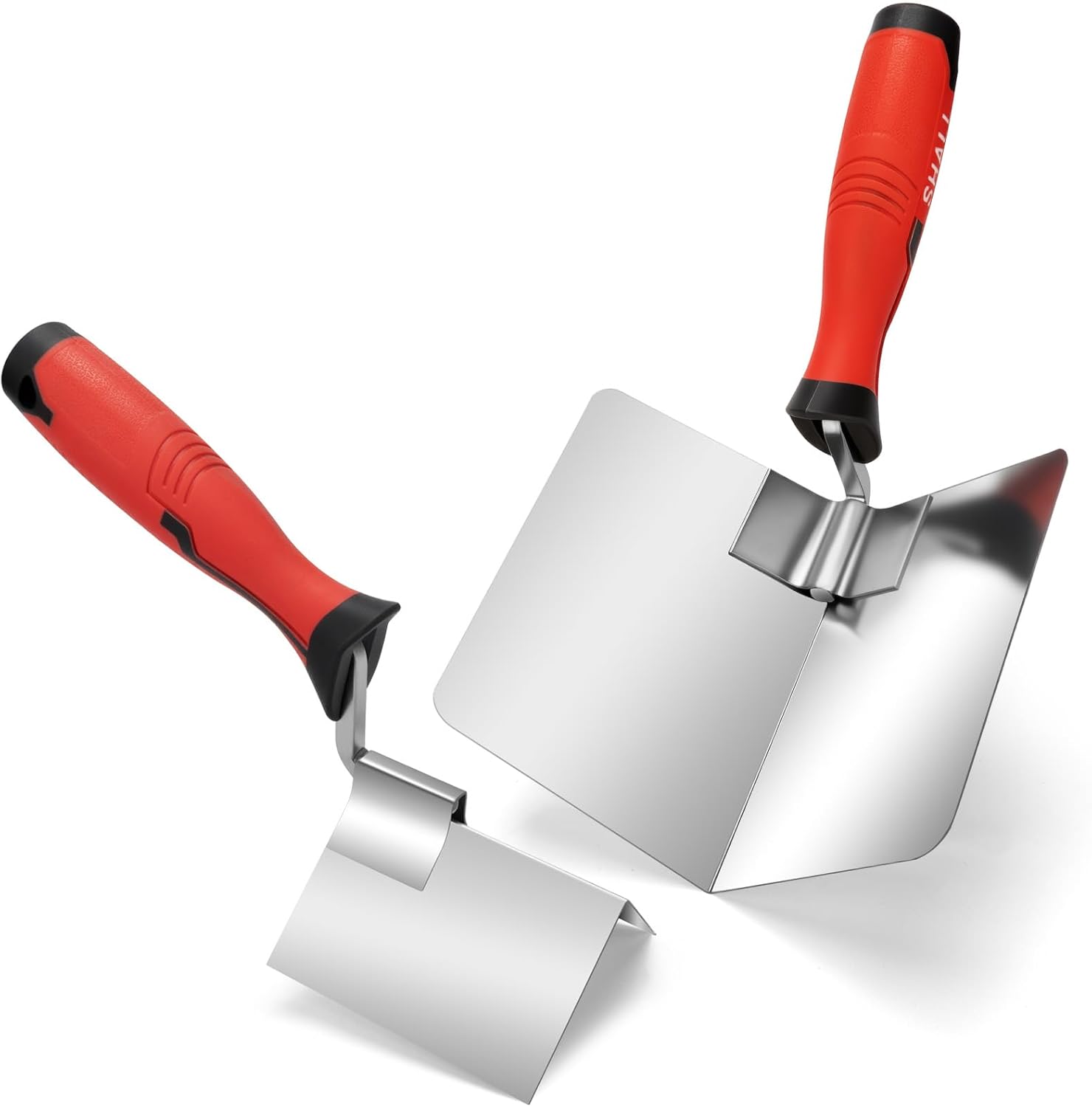
The SHALL 2-Piece Drywall Corner Tool Set is a practical addition to any drywall finisher's kit, whether you're a DIY homeowner tackling a weekend project or a professional contractor working on a large job site. This set includes a 5-inch inside corner trowel and a 3.5-inch outside corner knife, both crafted from flexible stainless steel. The multi-angle blade design is a standout feature: the outside blade is slightly less than 90 degrees and the inside blade slightly more, so when pressed, they flex to a perfect 90-degree fit around corners. This reduces the effort needed to achieve smooth, even finishes on both internal and external corners, saving time and minimizing sanding later.
Build quality is solid for the price point. The stainless steel blades are rust- and corrosion-resistant, which is a big plus for tools that get cleaned and stored after each use. The mirror-polished finish not only looks good but also makes cleanup straightforward. The handles are made from a combination of soft TPR and firm PP materials, providing a comfortable, non-slip grip that reduces hand fatigue during extended use. The double-welded chrome-plated steel connection between handle and blade feels secure, and the hanging hole at the end of the handle is a nice touch for pegboard storage.
In real-world use, these tools perform well for their intended purpose. The inside corner trowel is great for applying joint compound smoothly into internal corners, while the outside corner knife helps create crisp, clean edges on external corners. The rounded blade corners help prevent gouging and make the application of plaster or concrete smoother. This set is versatile enough to work with drywall compound, plaster, and even concrete, making it useful for a range of finishing tasks beyond just drywall.
One realistic limitation is the size of the outside corner knife. At 3.5 inches, it's ideal for standard corners but may feel small for larger surfaces or wide-angle corners. Some professionals might prefer a larger option for efficiency. Additionally, while the stainless steel is flexible, it's not indestructible. Applying too much force could potentially bend the blade, so a light touch is recommended. However, for most DIY and professional applications, the flexibility is actually a benefit, allowing the blade to conform to the corner without leaving ridges.
Storage and maintenance are straightforward. The tools are lightweight and compact, fitting easily into a tool bag or hanging on a wall hook. Cleaning is simple with water and a cloth, and the rust-resistant material means you don't have to worry about drying them immediately. Overall, this set offers good value for anyone who regularly finishes drywall corners. It's especially suited for DIY homeowners doing room renovations, contractors finishing basements or new construction, and workshop users who need reliable corner tools for occasional plastering projects.
Based on the product specifications and user feedback, the SHALL 2-Piece Drywall Corner Tool Set is a practical, well-made choice for achieving professional-looking corners without breaking the bank. It's not a replacement for a full set of taping knives, but for corner work specifically, it gets the job done efficiently. If you're looking to improve your drywall finishing results with tools that are comfortable to use and built to last, this set is worth considering.
Pros
- Specialized shape matches bull nose corners precisely for clean results.
- Flexible plastic blade allows smooth mud application and easy cleanup.
- Lightweight design reduces fatigue for DIY and occasional use.
- Ergonomic handle provides comfortable grip and control.
- Affordable price point for homeowners with one-time projects.
Cons
- Plastic construction may not hold up to daily professional use on busy job sites.
- Value could be better for the price given the simple plastic build.
- Only suitable for outside bull nose corners not a general-purpose trowel.
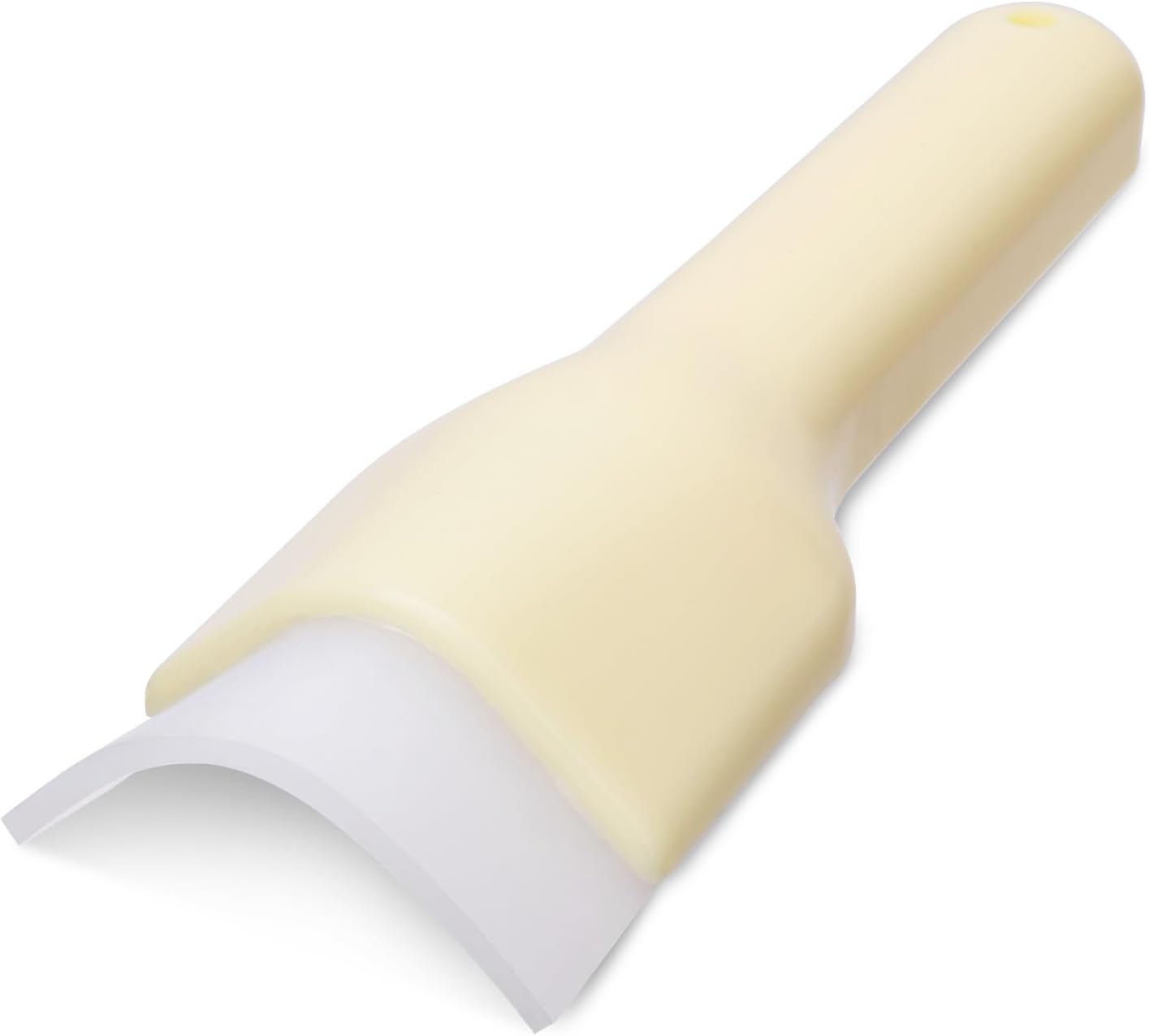
The Neowah 3/4" Outside Bull Nose Corner Trowel is a specialized plastering tool engineered specifically for finishing exterior rounded corners. Unlike standard flat trowels, this tool has a curved blade designed to match the contour of bull nose corner beads, allowing for smooth, even application of joint compound or mud. It's a niche but essential tool for anyone working on drywall corners with a softer, rounded profile.
This trowel is best suited for DIY homeowners tackling home renovation projects, as well as contractors who need a dedicated tool for rounding corner finishing. It's particularly useful for those who prefer a rounded look over sharp 90-degree angles. Based on product specs and user feedback, the flexible plastic blade helps quickly knock down excess mud while maintaining consistent pressure, resulting in cleaner corners with less effort. The ergonomic handle reduces hand strain during longer sessions, which is a plus for both weekend warriors and pros.
In terms of performance, the flexible blade provides smooth application and good control. Users report that it's easy to use and makes bull nose corners look professional with minimal practice. The lightweight construction (only 1.76 ounces) means it won't tire your hand, but it also raises questions about long-term durability. One reviewer noted it works fine for limited use but may not hold up to daily jobsite abuse. Another gave a 1-star review, calling it worthless after an older tool broke, so individual experiences vary.
Build quality is straightforward: the entire tool is plastic, including the blade and handle. It's not a heavy-duty metal trowel, so it's best viewed as a specialized, low-cost solution for occasional use. Storage is easy due to its small size it can slip into any drywall bucket or toolbox without taking up much space. Maintenance is simple just rinse off mud after use and let it dry.
A realistic limitation is that this trowel is only for outside bull nose corners. It won't replace a standard corner trowel or flat trowel for other tasks. The plastic construction means it may wear faster than metal alternatives, especially if used frequently with abrasive compounds. For the price, some users feel it could be more affordable given the simple materials, but it does the job for DIYers and light professional use.
Overall, the Neowah 3/4" Outside Bull Nose Corner Trowel is a practical buy for homeowners who want to achieve professional-looking rounded corners without hiring a pro. It's also a useful addition to a contractor's kit for specific finishing tasks. If you need a durable daily-use tool, a metal version might be better, but for occasional projects, this plastic trowel offers good value and ease of use.
Frequently Asked Questions About Corner Trowels
Can a corner trowel be used for both inside and outside corners?
Yes, many corner trowel sets include separate tools for inside and outside corners. The inside tool has a blade angle greater than 90 degrees, while the outside tool is less than 90 degrees. When pressed, they both flex to a perfect 90-degree fit. This design ensures smooth compound application on both types of corners. Some models, like the Marshalltown Exact Angle, are adjustable for various angles.
What size corner trowel should I get for drywall?
A 5-inch outside corner knife and a 3.5-inch inside corner knife are standard for most drywall work. These sizes cover joints efficiently without being too bulky. Larger wings, like the 7.5-inch blade on the Buddy Tools D-Wing, speed up inside corner finishing by spanning more of the joint. For smaller repairs or tight spots, a compact knife works fine.
Are stainless steel corner trowels better than plastic ones?
Stainless steel offers durability, rust resistance, and a smooth finish for professional results. Plastic trowels are lighter and cheaper, making them good for occasional use or scraping. However, plastic may wear down faster and doesn’t provide the same consistent flex. For frequent drywall or plastering work, stainless steel is the better long-term investment.
How do I clean a corner trowel without damaging it?
Wipe the blade with a damp cloth between coats to prevent compound buildup. For dried plaster, soak the trowel in warm water for a few minutes, then scrape gently with a plastic scraper. Avoid using metal brushes or abrasive pads that can scratch stainless steel. A mirror-finished blade is easier to clean and resists corrosion.
What is the best corner trowel for bullnose corners?
For outside bullnose corners, a specialized trowel with a curved blade is required. The Neowah 3/4-inch Outside Bull Nose Corner Trowel is designed specifically for this purpose. It has a flexible plastic blade that conforms to the rounded edge, allowing for smooth mud application. Standard corner trowels won’t work on bullnose profiles.
Does a corner trowel work for tiling and plastering?
Absolutely. Corner trowels are versatile and can be used with drywall compound, plaster, stucco, and tile adhesive. The angled design helps spread material evenly into corners, reducing waste and cleanup. For tiling, use a flexible stainless steel trowel to avoid scratching tiles. If you’re working with larger tiles, you might also find our guide on trowel sizes for 12×24 tile helpful.
How often should I replace a corner trowel?
A quality stainless steel corner trowel can last for years if cared for properly. Replace it when the blade becomes warped, chipped, or rusted beyond cleaning. Plastic trowels may need replacement more frequently, especially if they crack or lose their shape. Regular cleaning and proper storage extend the tool’s life significantly.





Write Your Review
No reviews yet. Be the first to share your experience!