


Cutting seasoned firewood or clearing fallen limbs quickly exposes a saw chain to sticky wood sap, bar oil residue, and abrasive sawdust. Over time, this gritty slurry cakes inside the drive link joints and around cutter gullets, creating friction that slows chain speed and accelerates thermal wear. Knowing how to clean chainsaw chain assemblies properly restores free mechanical articulation without damaging the hardened steel rivets or chrome-plated cutting teeth. Operators who routinely tackle heavy acreage management often use specialized tools like brush cutters for clearing saplings alongside their chainsaws, but every cutting tool demands targeted residue removal to maintain smooth performance. Routine cleaning also allows close inspection of depth gauges and cutter edges before minor dulling compromises cutting safety.
A clogged chain forces the guide bar to work harder, which puts undue stress on the powerhead and increases the risk of rotational kickback. When hardened resin binds the tie straps, the chain cannot flex naturally around the nose sprocket, generating excessive heat that discolors the bar rails. Removing baked-on pitch and fine dirt takes only a modest investment of time and standard workshop degreasers. Establishing a regular chain maintenance routine ensures your powerhead delivers consistent cutting torque through every crosscut while protecting critical drive components.

Pros
- Complete set with multiple file sizes for various chain pitches.
- Includes depth gauge and flat file for comprehensive chain maintenance.
- Compact and portable pouch with high visibility.
- Ergonomic wooden handle improves comfort.
- Quick gauge tool adds extra functionality.
Cons
- Files may wear out faster than premium brands like Stihl or Oregon.
- Wooden handle may not fit all users' preferences for grip.
- No file guides included, which some beginners might expect.
The Hipa 12-Pack Chainsaw Sharpening File Kit is a complete maintenance set designed for anyone who owns a chainsaw, from weekend DIYers to professional tree service crews. It includes six round files in the most common sizes (1/8", 5/32", 11/64", 3/16", 13/64", and 7/32"), a 6-inch flat file, a combination depth gauge tool (.025" and .030"), and a multi-function quick check gauge. All of these fit neatly into a bright orange zippered pouch for easy transport and storage.
This kit is best suited for homeowners, woodworkers, landscapers, farmers, and contractors who need to keep their chainsaws, pole saws, and other cutting equipment sharp. With the variety of file sizes, you can match nearly any standard chain pitch. The depth gauge ensures you maintain proper raker clearance, which directly affects cutting efficiency and safety. The flat file is handy for dressing off burrs or leveling depth gauges.
In terms of performance, the files are made from hardened steel and are designed to handle the tough task of reshaping chain cutters. While they may not last as long as some premium brands, they provide reliable sharpening for routine maintenance. The ergonomic wooden handle can be swapped between files, offering a comfortable grip and good control. Users appreciate the quick check gauge, which helps verify pitch size, filing angle, and cutter length at a glance.
Build quality is adequate for the price point. The files feature laser-etched size markings that remain legible, and the depth gauge is a simple but effective stamped metal tool. The flat file is standard size and fits the handle securely. The pouch is a basic nylon fabric with a zipper, but it does the job of keeping everything together. For workshop storage, you may prefer to keep the pouch in a drawer or hang it on a pegboard.
One realistic limitation is that the files themselves are individual items without their own handles, so you need to use the supplied wooden handle each time. Some users might prefer dedicated handles for faster changes. Also, the kit does not include file guides, which some beginners find helpful. However, the quick check gauge compensates partially by giving you the correct angles.
Overall, the Hipa chainsaw sharpening kit is a solid value for the money. It offers everything you need to maintain your chainsaw's cutting edge without buying individual tools. Whether you're touching up a chain after a day of cutting firewood or sharpening between jobs, this kit is a practical addition to any workshop or truck box. For the price, it's hard to beat the convenience and completeness.
Pros
- Rigid carbon steel edge effectively dislodges baked-on pitch and oily debris
- Promotes cooler chain operation and reduces bar wear by keeping oil channels open
- Ultra-compact profile fits easily into a pocket, saw scabbard, or small pouch
- Includes two cleaners so you can keep one on the workbench and one in the field
Cons
- Small footprint makes it easy to misplace in loose sawdust or leaf piles if dropped
- Basic flat metal design lacks a rubberized grip for extended maintenance jobs
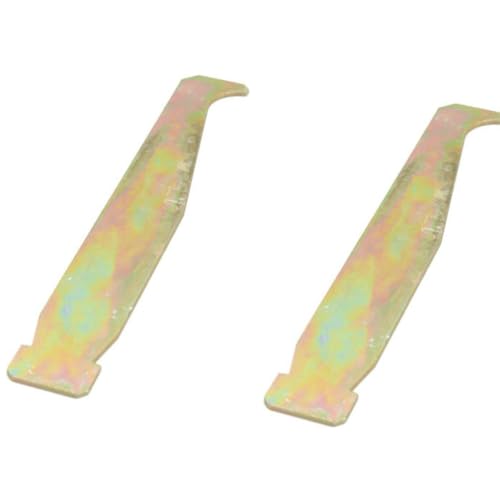
The Xinjincang Chainsaw Guide Bar Groove Cleaner is a specialized hand tool designed to keep chainsaw cutting systems operating smoothly. Routine cutting inevitably packs guide bar troughs with a dense mixture of wood chips, dirt, and sticky chain oil. Over time, this buildup blocks the oil delivery hole, starves the chain of lubrication, and creates excessive friction. This pair of scrapers provides a straightforward, manual way to strip out that grime before it causes premature bar wear or overheating.
This tool is well suited for DIY homeowners maintaining firewood saws, landscapers handling daily tree trimming, woodworkers using chainsaw mills, and equipment mechanics servicing small engines. Whether you run a heavy-duty professional gas saw or a lightweight cordless model around the yard, guide bar maintenance is a required chore. Having a dedicated tool on hand eliminates the risky habit of scraping bar grooves with utility knife blades, screwdrivers, or nails that can gouge rail edges.
In practical workshop and jobsite scenarios, the tool delivers solid scraping power. Made from carbon steel, the cleaner maintains its rigid profile without twisting or flexing when digging into hardened pitch. The tapered nose slips neatly into the rail trough, letting you sweep down the full length of the bar in a single motion. By clearing out the packed debris, bar oil can circulate freely along the rails and drive links, which supports cutting efficiency and extends the working life of both the chain and guide bar.
Build quality is simple and utilitarian. The carbon steel material offers good wear resistance against the abrasive grit often embedded in dirty timber. Sized at roughly 3.94 by 0.59 inches, each cleaner takes up negligible space. It easily slips into a small pocket of a chainsaw carry bag, a scabbard sleeve, or a workbench drawer. Routine maintenance for the tool itself is minimal: simply wipe off excess oil and sap after use to keep it clean and ready for the next service session.
As for limitations, the tool is strictly a flat piece of stamped carbon steel without an overmolded grip or lanyard hole. Users working in cold conditions with bulky work gloves may find the small metal surface slightly slick to hold. Because of its compact size, it can easily blend into a pile of wood chips if set down carelessly in the yard. Adding a bright wrap of tape can help improve visibility on outdoor jobsites.
For anyone who operates a chainsaw for seasonal storm cleanup, firewood preparation, or property maintenance, this two-pack is a practical and inexpensive addition to your maintenance kit. Keeping guide bar channels free of caked residue is one of the easiest ways to protect your equipment, and these sturdy scrapers handle that job reliably.
Keeping chainsaw guide bars clear of packed slurry is essential for consistent bar oiling. In shop maintenance routines, pulling this carbon steel cleaner through the bar trough quickly extracts stubborn pine sap and compacted wood dust that air blowers leave behind.
Clearing the bar rail ensures that drive links seat properly at their intended depth, which reduces vibration and uneven rail wear. It also ensures the bar oiler port remains open, preventing dry chain friction that can lead to scorched bars and snapped chains.
Based on standard bar specifications, this cleaner is designed with a universal profile that matches the guide bar channel widths found on the vast majority of consumer and professional chainsaws.
It works across common chain gauge sizes including .043, .050, .058, and .063 inch guide rails. This makes it compatible with major brands such as Stihl, Husqvarna, Echo, Oregon, Poulan, and Ryobi.

Pros
- Pre-loaded and ready for immediate lubrication out of the package
- Single-hand operation makes bar nose grease injection quick and clean
- Clear barrel allows instant monitoring of lubricant levels without disassembly
- Durable steel nozzle tip seats tightly against standard guide bar grease ports
Cons
- Plastic body requires careful alignment to avoid cross-threading during refills
- Designed specifically for flush, cup-style ports rather than standard automotive Zerk fittings
The Oregon Pre-Loaded Grease Gun is a specialized maintenance tool engineered specifically for lubricating the sprocket nose on chainsaw guide bars. Designed for arborists, landscapers, firewood processors, mechanics, and DIY homeowners, this compact hand tool delivers grease directly into high-friction contact zones. Regular grease injection at the guide bar nose reduces friction, lowers operating temperatures, and prevents premature bearing failure during heavy cutting jobs.
Operation is built around user efficiency and speed. The tool features a spring-loaded steel pump nozzle designed for one-handed operation. By pressing the pointed tip into the small cup-shaped lubrication port on the guide bar, the internal spring mechanism forces grease into the roller bearings. This eliminates the need for bulky lever-action grease guns or messy manual packing, allowing quick touch-ups directly on the tailgate or worktable between cuts.
In terms of construction, the housing is manufactured from heavy-duty plastic formulated to withstand temperature swings encountered during seasonal cutting. A clear reservoir barrel lets users inspect grease capacity at a glance, so running empty midway through a job is never a surprise. The steel nozzle tip resists rounding and wear, ensuring a tight seal against the bar nose port over repeated maintenance cycles.
Storage and portability are straightforward given its small profile. The grease gun easily tucks into a chainsaw carry case, field tool roll, or garage drawer without taking up valuable real estate. While the unit arrives pre-loaded with all-purpose lubricant, it is fully refillable when empty, making it an economical accessory for long-term power tool care.
A practical limitation to keep in mind involves the tip configuration. Because it is optimized for flush, cup-style chainsaw ports, it will not attach to snap-on automotive or machinery Zerk fittings. The plastic body threads also require a gentle touch during refills to prevent stripping. For anyone operating a chainsaw regularly, this tool serves as an inexpensive insurance policy against premature bar wear.
Taking care of equipment while away from the shop requires compact, mess-free tools. This grease dispenser does not leak in toolboxes when stored properly, making it dependable for mobile logging, trail clearing, and firewood gathering.
The push-to-pump design allows woodcutters to keep one hand on the chainsaw bar while applying targeted pressure with the other. This simple setup saves time during bar and chain servicing, keeping outdoor power tools running smoothly under tough jobsite conditions.
Complete Guide to Cleaning, Degreasing, and Maintaining a Chainsaw Chain
Maintaining a clean saw chain directly impacts cutting speed, operator safety, and the mechanical life of your powerhead. When sap, wood dust, and tacky bar lubricant combine, they form a thick residue that restricts chain movement along the guide bar. Clearing away this stubborn buildup restores cutting efficiency and allows a thorough inspection of cutter teeth, drive links, and tie straps. A clean cutting assembly ensures that bar oil flows freely to high-friction contact points without collecting unnecessary heat.
The Hidden Costs of Pitch and Sap Buildup on Saw Chains
Every time a chainsaw cuts through softwood, pine, or green timber, resinous sap coats the metal surfaces of the chain. This tacky substance collects airborne sawdust, creating a dense paste that hardens as the powerhead cools down. The resulting crust settles into the microscopic clearances between the drive links and side plates, creating rotational drag. That drag forces the engine or electric motor to consume additional power simply to rotate the chain around the guide bar.
Beyond power loss, sap buildup creates severe thermal problems along the guide bar rails. The hardened crust blocks bar and chain oil from reaching the bottom of the bar groove, causing metal-on-metal friction. This friction can lead to discolored bar rails, premature wear, and chain smoking during routine crosscuts. Operators accustomed to manual tools like swinging an axe for processing firewood know that friction robs energy from every strike, and power chainsaws suffer the same penalty when cutting surfaces become gummed with residue.
A fouled chain also interferes with safe cutter bite and chip clearance. When pitch packs into the cutter gullet, wood shavings cannot curl and exit the kerf smoothly. The saw begins producing fine, powdery dust instead of crisp wood chips, signaling poor cutting mechanics even if the tooth edge remains relatively sharp. Left unaddressed, this condition encourages operators to lean heavily on the rear handle, increasing the likelihood of rotational kickback and operator fatigue.
Essential Safety Equipment and Workspace Setup
Working on saw chains requires strict attention to physical safety before any maintenance begins. Even a dull cutter tooth retains sufficient edge to slice through exposed skin during removal or scrubbing. Heavy-duty leather work gloves or cut-resistant forestry gloves protect hands from jagged burrs and sharp chrome cutters. Eye protection is equally essential, shielding the eyes from flying solvent droplets or dislodged wood debris during scrubbing.
Always isolate the powerhead before handling the cutting system. On gas-powered chainsaws, engage the front hand guard chain brake, turn off the ignition switch, and disconnect the spark plug boot to prevent accidental ignition. For battery-powered saws, remove the lithium-ion battery pack entirely from the housing, while corded electric models must be unplugged. Lay out a shallow metal or polypropylene cleaning tray on a sturdy workbench away from open flames, providing a stable surface for solvent soaking.
Selecting the Right Cleaning Solutions and Degreasers
Selecting an appropriate solvent ensures thorough pitch removal without corroding chain rivets or degrading steel temper. Commercial citrus-based degreasers and dedicated pitch removers work well because they dissolve plant resins quickly without emitting hazardous fumes. Mineral spirits and kerosene also serve as effective soaking agents for stubborn, baked-on petroleum residues. These mild hydrocarbon solvents break down oxidized bar oil while leaving a light protective film that resists flash rusting.
Certain common household chemicals must never be used for cleaning saw chains. Pure gasoline is extremely flammable, volatile, and presents a severe vapor ignition hazard in closed workshop environments. Bleach, oven cleaners, and caustic soda solutions attack the molecular structure of steel, promoting stress corrosion cracking across drive links and rivets. Water-based household dish detergents can loosen surface dirt, but they require immediate, thorough drying to prevent oxidation.
Biodegradable degreasing concentrates offer a safe and environmentally conscious alternative for property owners working outdoors. When diluted with warm water according to manufacturer guidelines, these cleaners lift tree resin without harming soil or surrounding vegetation. Similar maintenance care applies to clearing gear like heavy duty brush cutter blades, where plant sap accumulation diminishes cutting efficiency over extended work sessions. Choosing mild yet effective solvents preserves the structural integrity of every cutting link.
Step-by-Step Chain Removal and Deep-Cleaning Workflow
Begin the process by loosening the guide bar retaining nuts with a scrench and backing off the chain tensioner screw. Remove the clutch cover, disengage the chain from the drive sprocket, and carefully slide the drive links out of the guide bar groove. Coil the chain loosely into a flat circle and submerge it in your shallow soaking container filled with your chosen degreaser. Allow the chain to soak for twenty to thirty minutes so the solvent can penetrate the tight tolerances around each rivet pin.
After soaking, lift the chain and scrub the cutters, tie straps, and drive links with a stiff nylon brush or a brass wire brush. Avoid using aggressive steel wire wheels or coarse grinding pads, as these can score the precision-ground chrome plating on the cutter teeth. Pay close attention to the drive link tangs, which ride directly inside the guide bar rail and often accumulate compacted grease. Work methodically around the entire loop, flexing each section by hand to dislodge grit trapped inside the pivoting joints.
Examine the articulation of each rivet link as you clean. Every joint should pivot smoothly without binding, stiffness, or excessive side play. If certain links remain stiff after brushing, re-soak the affected section and work the joint back and forth until full mechanical flexibility returns. A chain that binds between links cannot seat properly on the drive sprocket, which causes erratic chain travel and increased vibration.
Drying, Rust Prevention, and Immediate Re-Lubrication
Once the chain is free of pitch, remove it from the cleaning basin and wipe away residual solvent with clean workshop towels. If water-based cleaners were used, rinse the chain thoroughly with clean water, then immediately dry every link using compressed air or a heat gun set to low warmth. Steel chains are highly susceptible to flash rusting when exposed to ambient moisture without protective oil. Lingering water inside rivet bores can cause internal pitting that weakens the chain under tension.
Immediately apply a generous coating of clean bar and chain oil across the entire loop before storage or reinstallation. Place the dry chain in a clean container or plastic bag, pour a few ounces of bar oil over it, and rotate the links to distribute the lubricant evenly. This protective barrier seals the metal against atmospheric moisture and ensures that dry friction does not damage the rivets during subsequent startups. Never reinstall a completely dry chain onto a guide bar, as initial startup friction can glaze the rails before the automatic oiler engages.
Clearing the Guide Bar Groove and Oil Ports
Cleaning the chain without servicing the guide bar solves only half of the friction equation. The narrow guide bar groove collects an astonishing amount of packed sawdust, dried sap, and old bar oil during normal operation. A specialized scraping tool, such as the Xinjincang 2Pcs Bar Groove Cleaner Chain Saw Guide, provides the correct profile to reach the bottom of the rail channel. Made from durable carbon steel, this groove cleaner efficiently scoops out compacted debris that standard screwdrivers often fail to dislodge.
Run the scraper through the entire perimeter of the bar groove, starting from the powerhead mount and working toward the sprocket nose. Repeat the scraping pass until the tool pulls free from the channel without catching on accumulated sludge. Clear the tiny oil inlet holes located near the bar tail on both sides of the guide bar body. If these oil ports are clogged with wood fibers, bar lubricant cannot enter the groove, leading to rapid chain overheating and bar rail wear.
Inspect the guide bar rails for uneven wear, burring, or mushrooming along the outer edges. Over time, chain friction causes steel along the rail edges to flare outward, which pinches the drive links and causes the saw to cut at an angle. If minor burrs are detected, gently remove them with a flat file held perpendicular to the bar side. Keeping the bar groove clean and the rails flat ensures that the cleaned chain tracks straight through every cut.
Sprocket Nose Lubrication and Inspection
Most modern laminated and solid guide bars feature a revolving sprocket nose supported by internal needle bearings. This sprocket absorbs high radial loads as the chain rounds the tip of the bar at high velocity. Pitch and fine dust frequently migrate past the sprocket side plates, contaminating factory grease and causing bearing drag. Using a dedicated applicator like the Oregon Pre-Loaded Grease Gun for Chainsaws allows operators to deliver fresh all-purpose lubricant directly into the cup-shaped grease fitting on the bar tip.
Press the pointed steel nozzle firmly into the lubrication port and pump the spring-loaded dispenser until clean grease emerges from around the sprocket teeth. Rotate the sprocket by gloved hand between pumps to distribute grease across all internal bearing rollers. The transparent body of this dispenser provides visual control of the fill level, ensuring you always know how much lubricant remains. Purging contaminated grease from the nose sprocket prevents premature bearing seizure and extends the usable life of the guide bar.
Inspecting Cutters and Setting Depth Gauges After Cleaning
A thoroughly cleaned chain provides the ideal opportunity to inspect each cutting tooth for dulling, chipping, or uneven top-plate lengths. When dirt and sap are removed, physical damage to the chrome cutting edge becomes immediately visible under workshop lighting. Keeping a versatile tool set like the Hipa 12 Pack Chainsaw File on hand makes corrective sharpening straightforward. This comprehensive kit includes six round file sizes, such as 5/32-inch, 3/16-inch, and 7/32-inch, allowing you to match the precise diameter required by your chain pitch.
Touch up dull cutter teeth using the appropriately sized round file held in the ergonomic wooden handle, maintaining the manufacturer-specified thirty-degree filing angle. Equal stroke counts across every cutter preserve balanced tooth lengths, which prevents the saw from drifting or curving during heavy crosscuts. The Hipa kit also features a multi-function quick gauge tool that helps verify pitch size, filing angles, and tooth length uniformity. Consistent cutter geometry reduces cutting vibration and maximizes severance efficiency in dense hardwoods.
Sharpening the cutters naturally lowers their height, requiring periodic adjustment of the depth gauges, or rakers, positioned ahead of each tooth. The included two-in-one depth gauge tool provides accurate .025-inch and .030-inch clearance settings paired with a six-inch flat file. If the rakers are left too high, the cutters cannot take an adequate bite of wood, resulting in poor cutting performance and fine dust. Conversely, filing rakers too low causes aggressive grab, severe machine chatter, and dangerous kickback risks.
Reassembly, Proper Tensioning, and Verification Run
Once the chain, guide bar, and nose sprocket are clean and serviced, reinstall the cutting assembly onto the powerhead. Loop the chain over the drive sprocket and guide bar nose, ensuring the cutter edges point forward along the top rail. Fit the clutch cover loosely, tighten the bar nuts finger-tight, and adjust the tensioner until the drive link tangs just touch the bottom rail. Perform the standard snap test by pulling down on the chain at mid-bar; the chain should pull down cleanly and snap back securely into the groove without sagging.
Tighten the bar nuts securely with your scrench while holding the guide bar tip slightly upward to account for cutting clearance. Reconnect the spark plug boot or insert the battery, release the chain brake, and run the chainsaw at half throttle above a clean piece of cardboard or wood. A visible line of oil droplets spraying off the bar tip confirms that the lubrication circuit is functioning and bar oil is flowing across the cleaned chain. With clean components, correct tension, and active lubrication, your chainsaw is prepared for safe, efficient cutting.


Write Your Review
No reviews yet. Be the first to share your experience!