


Loose saw chains present a frustrating hazard during overhead yard maintenance. When trimming elevated branches, an improperly tensioned chain can slip off the guide bar, bind in the wood, or cause uneven cutting grooves. Understanding how tighten chain pole saw keeps your equipment running smoothly and prevents unnecessary wear on your guide bar, drive sprocket, and motor. While maintaining outdoor tools requires attention to detail, learning the proper balance between tight travel and free rotation takes only a few minutes once you recognize the mechanical principles involved.
Routine yard chores become much safer when your cutting gear stays properly adjusted. Much like selecting the right teeth and kerf in a reciprocating saw blade guide, matching your pole saw setup to the task ensures clean, predictable cuts. Whether your pole saw relies on a traditional screw-driven tensioning bolt or a modern tool-free dial system, keeping the cutting chain snug against the rails is essential for clean branch removal and consistent cutting speed.

Pros
- Lightweight design at 8.4 pounds reduces arm fatigue during overhead use
- Tool-free chain tensioning makes adjustments quick and easy
- 14-foot reach allows safe trimming from the ground
- 8-amp motor provides ample power for typical yard branches
- Comes with shoulder strap and blade cover for convenience and storage
Cons
- Corded design limits range to extension cord length, not ideal for remote areas
- 10-inch bar may struggle with larger diameter limbs over 8 inches
- Some users may find the pole heavy when fully extended for long periods
The WEN CP0810 is an electric pole saw designed for homeowners, gardeners, and DIY enthusiasts who need to trim overhead branches, prune trees, or clear brush around the yard, garage, or workshop. It combines a 10-inch bar and chain with an 8-amp motor that spins the chain up to 36 feet per second, delivering enough cutting speed for most residential limbs and saplings. The telescoping pole extends from 6.7 to 9 feet, giving you up to 14 feet of reach from the ground, which is a real safety advantage over climbing ladders or balancing on uneven terrain.
This pole saw is best suited for light to medium trimming tasks. DIY homeowners maintaining small to medium-sized properties, gardeners shaping ornamental trees, or anyone clearing low-hanging branches after a storm will find it practical. It's not designed for heavy logging or professional tree service, but for routine yard maintenance it offers a good balance of power and reach. The 8-amp motor is reliable for cutting limbs up to about 8 inches thick, though you may need to take multiple passes on denser wood.
Build quality is typical for this price range: durable plastic housing, a steel telescoping pole, and a well-sharpened chain out of the box. At 8.4 pounds, it's light enough to handle overhead without excessive strain, and the included shoulder strap helps distribute weight during longer sessions. Tool-free chain adjustments are a nice touch, letting you tighten the chain quickly without wrenches. The blade cover protects the chain during storage, and the two-year warranty adds peace of mind.
Ease of use is straightforward. Plug it into a standard extension cord, adjust the pole length, tension the chain, and start cutting. The trigger switch is comfortable, and the automatic oiler keeps the chain lubricated as you work. Storage is simple: collapse the pole, attach the blade cover, and hang it on a garage wall or lay it on a shelf. The corded design means you're tethered to an outlet, so you'll need a heavy-duty extension cord for larger yards, which is a realistic limitation for remote areas.
Performance in real-world trimming is solid for the price. The chain cuts through green wood smoothly, and the reach lets you clean up branches above fences, roofs, or garden beds without a ladder. Some users may find the pole gets a bit heavy when fully extended for long periods, but the shoulder strap helps. The 10-inch bar is adequate for most limbing, but if you regularly tackle thick branches over 8 inches, a larger gas or battery-powered saw might be a better fit.
Overall, the WEN CP0810 is a practical, affordable electric pole saw for DIY homeowners, gardeners, and light yard maintenance. It's not built for heavy commercial use, but for trimming branches, clearing brush, and keeping your property tidy from the ground, it offers good value. If you have a standard suburban lot and want to avoid ladders, this corded pole saw is a solid choice that won't break the bank.
The WEN CP0810 features a durable plastic motor housing and a steel telescoping pole that feels sturdy for its weight class. The chain and bar are standard 10-inch components, and the included chain is sharp right out of the box. The automatic oiler keeps the chain lubricated during use, reducing wear. The blade cover and shoulder strap are basic but functional. While not built for heavy commercial abuse, the construction is adequate for regular homeowner use and light trimming tasks. The two-year warranty provides some reassurance for the price point.
For garage and workshop owners, the WEN CP0810 is a handy tool for trimming branches that overhang driveways, fences, or storage sheds. Its corded design means you'll need an extension cord, but if you have an outlet nearby, it's ready to go. The lightweight build makes it easy to store on a wall hook or shelf, and the blade cover protects the chain from accidental contact. It's not a heavy-duty professional saw, but for routine yard maintenance around the garage and property, it's a practical addition to your tool collection.

Pros
- Lightweight 4.2-pound construction minimizes operator fatigue during overhead reach
- Automatic oiler delivers constant chain lubrication without manual pumping
- Provides a functional 6-inch cut capacity for managing medium yard branches
- Clear coupler dimensions (1-inch tube, 0.31-inch square drive) assist in verifying fit
Cons
- Engineered exclusively for gas powerheads and cannot be used with battery-powered multi-tools
- Requires careful physical measurement of your powerhead drive shaft to confirm compatibility
The Wild Badger Power Sunseeker 10-inch pole saw attachment is built for property owners, DIYers, and landscape caretakers who already own a compatible split-shaft gas powerhead. Rather than requiring the purchase of a dedicated, standalone pole saw, this unit slips into standard split-boom trimmer couplers to handle branch thinning, fence line clearing, and storm cleanup around the yard.
Equipped with a 10-inch guide bar, this attachment provides a manufacturer-rated 6-inch cutting capacity. That threshold is well-suited for taking down low-hanging tree limbs, overgrown brush, and saplings that regular hand pruners or shears cannot handle. An onboard automatic oiling system meters bar oil to the chain as the tool operates, which helps minimize operational friction and extends the service life of cutting components.
Compatibility is the most critical consideration for this attachment. Wild Badger Power explicitly specifies that this tool is built solely for gas-powered multi-tool bases and must not be installed on battery-powered platforms. In terms of mechanical dimensions, the coupler is designed to mate with a 1-inch outer diameter boom pipe and a 0.31-inch square drive shaft. Verifying these exact measurements on your existing equipment is necessary before ordering.
Handling remains manageable due to the attachment's lean 4.2-pound net weight. At an overall length of 35 inches, it extends your working range while keeping the total weight distribution balanced enough to avoid rapid shoulder and forearm fatigue. Storing the attachment between trimming seasons requires minimal room, hanging neatly on standard wall brackets or resting on a workshop shelf.
For homeowners who need to trim overhead wood without investing in a separate motor assembly, the Sunseeker attachment offers strong utility. Provided your gas trimmer shaft matches the 1-inch tube and 0.31-inch square drive requirements, it delivers reliable limb-clearing capability at an accessible price point.
Coupler fitment must be confirmed before mounting this attachment to any powerhead. The Sunseeker pole saw attachment is engineered with a 1-inch outer tube diameter and accepts an inner drive core measuring 0.31 inches square. It also notes a 1.25-inch universal receiver collar standard and a 0.216-inch pin alignment diameter for compatible tool-free split-boom couplers.
Wild Badger Power issues a strict compatibility restriction stating this attachment is for gas-powered equipment only. It should not be mounted to cordless, battery-powered multi-tool heads, as differences in torque profiles, RPM curves, and coupler housings can cause mechanical binding or premature tool failure.
Regular maintenance involves keeping the chain oil reservoir filled with clean bar and chain oil to support the automatic lubrication system. Operators should also ensure that the chain is properly tensioned and sharp before tackling dense hardwood branches to maintain smooth, bind-free operation.

Pros
- Exact OEM fit for the Sun Joe SWJ800E electric pole saw
- Durable all-metal build resists twisting during adjustment
- Lightweight and compact enough to keep in your pocket while trimming trees
- Simple operation makes regular chainsaw maintenance straightforward
Cons
- Designed specifically for select Sun Joe models rather than universal use
- Small footprint makes it easy to misplace if not kept in a designated pouch
- Lacks an ergonomic rubberized grip for prolonged handling
Keeping cutting equipment in top shape requires the right maintenance gear, and the Sun Joe SWJ800E-TOOL Replacement Pole-Saw Bar and Chain-Adjustment Tool serves that exact purpose. Designed as an authentic original manufacturer part, this specialized wrench handles the critical task of tensioning the bar and chain assembly on the Sun Joe SWJ800E electric pole saw. For homeowners managing overgrown branches, DIY property owners, and workshop enthusiasts who prefer handling their own outdoor power equipment repairs, having a dedicated adjustment tool on hand avoids unnecessary downtime.
Proper chain tension directly influences cutting efficiency, safety, and equipment longevity. Over extended trimming sessions, pole saw chains naturally stretch and loosen from vibration and heat. Using this purpose-built metal adjustment tool, users can quickly turn the tensioning screw to pull the chain back to factory spec. This precise adjustment ensures smooth bar travel, cleaner branch cuts, and reduced motor strain, which helps keep your equipment operating efficiently through seasonal yard cleanup.
Built from solid steel with a protective black finish, the tool is made to endure the torque needed for adjusting tensioner screws and bar nuts. The metal construction prevents premature rounding or stripping, providing dependable grip against the saw hardware. Measuring approximately 5.5 inches in length and weighing under two ounces, it offers sufficient leverage for routine adjustments without adding unnecessary bulk to your workshop tool collection.
Storage and portability are straightforward given the compact form factor. It easily slips into a utility belt, pocket, or toolbox drawer alongside spare chains and bar oil. Because it is dedicated equipment hardware, keeping it attached to the pole saw cord or secured in a tool organizer is recommended so it does not get buried under larger yard tools.
One limitation to keep in mind is model compatibility. This tool is built specifically around the dimensions and hardware setup of the Sun Joe SWJ800E platform. It is not intended as a universal scrench for larger gas chainsaws or unrelated outdoor power heads. Homeowners seeking a direct replacement for a lost factory wrench will find it to be an affordable, dependable solution that restores safe chain tensioning.
This adjustment tool is tailored specifically to match the hardware on the Sun Joe SWJ800E electric pole saw. While some multi-tools feature generic sockets, this dedicated OEM replacement aligns precisely with the manufacturer adjustment screw to deliver smooth turning without slipping.
Regular chain checks are essential before and during overhead cutting tasks. Keeping this tool handy in your outdoor equipment tote or workbench allows you to quickly correct chain slack, maintain chain lubrication channels, and ensure secure bar fastening before tackling high tree limbs.
Pros
- Fast chain speed helps cut through branches quickly
- Lightweight and well-balanced for comfortable extended use
- 2-in-1 design offers versatility for different cutting tasks
- Easy chain tensioning and auto lubrication simplify maintenance
Cons
- 8-amp motor may struggle with very thick or dense hardwood branches
- Electric cord limits mobility compared to battery-powered models
- Some users may find the pole length adjustment mechanism a bit stiff initially
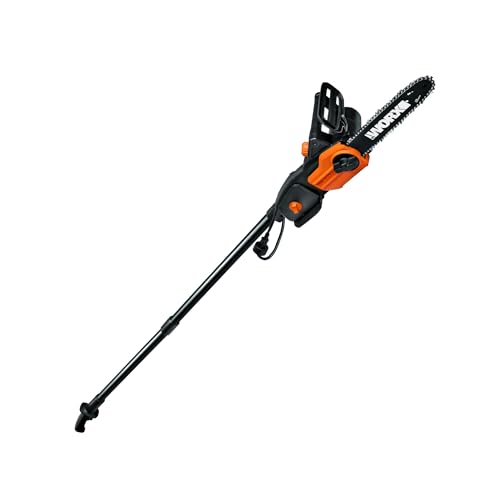
The WORX 8 Amp 10-Inch Electric Pole Saw is a practical tool for homeowners and gardeners who need to tackle high branches without climbing a ladder. With a chain speed of 28 feet per second, it delivers fast cuts through limbs up to about 6 inches thick, making it suitable for routine pruning and light tree trimming around the yard.
This pole saw is designed with versatility in mind. It extends to a full 10 feet, allowing you to reach branches that would otherwise require risky ladder work. The 2-in-1 feature lets you detach the saw head and use it as a standard electric chainsaw for ground-level cutting, which adds convenience for tasks like cutting firewood or clearing fallen branches.
Build quality is solid for a consumer-grade tool. The telescoping pole locks securely, and the 180-degree rotating rear handle helps you position the saw at comfortable angles. The one-button chain tensioning system is a standout feature, making adjustments quick and tool-free, so you can keep cutting without fussing with tools. The auto lubrication system also helps maintain chain performance and extends the life of the bar and chain.
At about 10 pounds, this pole saw is lightweight and well-balanced. It won't wear you out during a session of trimming a few trees, though extended use on larger properties could still be tiring. The electric cord means you'll need an extension cord and access to an outlet, which can be a minor inconvenience compared to a cordless model, but it also means you never have to worry about battery life or charging.
One realistic limitation is that the 8-amp motor is not meant for heavy-duty commercial use. It works well on typical residential trees like maples, oaks, and pines, but it may struggle with especially dense hardwoods or very thick branches. For most homeowners and DIY users, however, this saw offers a good balance of reach, power, and ease of use.
Overall, the WORX electric pole saw is a reliable choice for anyone looking to maintain their yard without professional equipment. It's especially well-suited for homeowners with mature trees, gardeners who need precision trimming, and DIY enthusiasts who want a tool that handles both high and low cutting tasks. Set up is straightforward, maintenance is minimal, and the storage footprint is manageable for a garage or shed.
Essential Steps and Techniques for Tensioning a Pole Saw Chain
A properly tensioned pole saw chain should fit snugly against the bottom rail of the guide bar without sagging, while still pulling smoothly around the bar by gloved hand. Achieving this balance prevents thrown chains, protects the drive links, and reduces strain on the electric or gas motor. Before adjusting any tensioning hardware, always ensure the power source is disconnected to eliminate any accidental startup risk during inspection.
Disconnecting Power and Preparing the Work Area
Safety begins with completely isolating the cutting tool from its energy supply. For a corded electric pole saw, unplug the extension cord directly from the handle receptacle. If you are servicing a cordless battery-powered unit, slide the battery pack out of its housing. For gas-powered pole saws or multi-tool attachments, switch the ignition switch to the off position and disconnect the spark plug boot from the terminal.
Place the pole saw head on a clean, flat, stable surface such as a sturdy workbench or flat ground clear of loose dirt and gravel. Working at ground level prevents the pole from tipping over while you loosen nuts or turn tensioning dials. Always put on heavy leather work gloves before touching the cutting chain, as sharp cutters can easily slice through skin even when stationary.
Take this opportunity to brush away packed wood chips, dried sap, and accumulated sawdust from the drive sprocket cover. Debris packed inside the housing can give a false sense of resistance when adjusting tension, leading to improper chain alignment once the tool starts running again.
Evaluating Chain Slack and the Snap Test Method
Determining whether your chain requires tensioning requires a simple physical inspection called the snap test. With thick work gloves on, grasp one of the cutting teeth along the bottom center of the guide bar. Gently pull the chain downward away from the bar rail and observe how the drive links behave.
If the chain sags naturally below the guide bar without being touched, it is significantly loose and unsafe for pruning. When pulling downward during the snap test, the drive links should lift slightly out of the bar groove, but the tips of the drive tangs should remain nestled inside the rail channel. Releasing the chain should cause it to snap back crisply against the underside of the bar without hanging loosely.
Conversely, if you cannot pull the chain down at all, or if you cannot slide the chain smoothly along the guide bar rails with moderate hand pressure, the assembly is overtightened. An excessively tight chain places tremendous friction on the bar nose sprocket, increases motor heat, and can burn out electric drive components in minutes.
Adjusting Traditional Screw-Tensioning Systems
Many traditional pole saws utilize a manual bar nut and tension screw mechanism. Models such as the Sun Joe SWJ800E use a dedicated adjustment tool or standard combination wrench to control chain play. To begin adjustment on these tools, loosen the bar retention nut or nuts located on the side cover by turning them counterclockwise one or two full turns.
Do not remove the bar nuts completely; they merely need to be loose enough to allow the guide bar to slide forward and backward smoothly. Next, support the nose of the guide bar slightly upward with one hand to simulate the upward pressure created during cutting. Locate the chain tensioning screw, which is typically positioned on the front face of the saw head next to the bar or directly through the side cover plate.
Using the appropriate screwdriver or hex key, turn the tensioning screw clockwise in quarter-turn increments. As you rotate the screw, the internal tension pin moves the guide bar forward, taking the slack out of the chain loop. Continue turning until the sagging links pull up flush against the underside of the guide bar rail. Once the chain meets the rail, tighten the bar retention nut securely while still holding the bar nose upward, then recheck the tension using the snap test.
Tensioning with Tool-Free and Dial-Based Pole Saws
Modern electric models, including the WEN CP0810 and WORX electric pole saws, incorporate tool-free chain adjustment mechanisms designed for rapid field maintenance. These designs replace standard bar nuts with an outer locking knob and an inner tensioning wheel or automated push-button tension system. Operating these systems requires a specific sequence to prevent stripping internal plastic or metal gears.
Start by loosening the large outer locking knob counterclockwise just enough to relieve clamping pressure on the guide bar. If the knob remains locked down tight, turning the tension dial will meet stiff resistance and can damage the tensioning cam. Once the clamp is slightly loose, rotate the tension wheel clockwise toward the indicator marks to advance the bar.
On models equipped with automated tensioning stops, rotate the tensioning collar until it clicks or reaches its designed stopping point, which establishes standardized tension. Lift the nose of the bar slightly and firmly tighten the main locking knob clockwise to secure the guide bar in place. Rotate the chain by hand along the bar track to confirm smooth, unimpeded motion before reconnecting power.
Tensioning Universal Gas Attachment Pole Saws
Universal pole saw attachments, such as the Sunseeker attachment designed for gas-powered string trimmer powerheads, experience different vibration stresses than lightweight corded saws. Gas engines produce continuous high-frequency vibrations that can loosen bar clamping hardware more rapidly. Proper tensioning on these units requires meticulous tightening of the bar retention studs.
Inspect the drive shaft connection point before beginning chain adjustment to verify the attachment shaft is fully seated in the powerhead coupler. Once confirmed, follow the manual screw-tensioning method by loosening the bar clamp nut, elevating the bar nose, and driving the tension screw clockwise. Ensure that the drive tangs on the bottom of the chain align perfectly with the teeth on the drive sprocket before applying final torque to the cover nut.
Because gas attachments generate higher chain speeds, checking chain tension after every ten to fifteen minutes of heavy branch cutting is strongly recommended. New chains stretch significantly under the higher operating heat generated by gas engines, making frequent initial adjustments necessary.
Crucial Differences Between Hot and Cold Chain Tension
Thermal expansion plays a major role in how a saw chain behaves during a work session. As a pole saw cuts through timber, friction between the steel cutters, the drive links, and the bar rails creates substantial heat. This heat causes the metal chain links to expand, resulting in noticeable chain sag after several minutes of cutting.
Always perform your baseline tensioning when the chain is completely cold. If you must adjust a chain that has become excessively loose during cutting, tighten it only enough to remove obvious sagging, but avoid setting it too tight. As the saw rests between jobs and cools down to ambient temperature, the metal chain contracts naturally.
A chain adjusted tightly while hot can contract so forcefully upon cooling that it binds against the bar rails, bends the drive shaft, or cracks the sprocket bearings. If you tension a hot chain during an extended pruning project, remember to slightly loosen the tensioning screw at the end of the day before storing the saw away in your garage or shed.
Verifying Automatic Oiler Flow and Rail Lubrication
Chain tension and bar lubrication work hand in hand to maintain cutting efficiency. Even a perfectly tensioned chain will quickly stretch, overheat, and bind if the automatic oiling system fails to deliver bar and chain lubricant. When servicing tension, take a moment to inspect the oil delivery port located behind the guide bar cover plate.
Sawdust and sticky tree sap frequently clog the tiny lubrication holes on the bar, starving the chain of oil. Clean out the oil inlet hole using a thin wire or pick whenever you remove the side cover. Fill the bar oil reservoir with fresh, seasonal bar and chain oil, ensuring the cap vent is clear.
After adjusting the chain and tightening the cover, verify oil flow by pointing the bar tip toward a piece of scrap cardboard or light wood, holding it a few inches away without touching. Run the motor for five to ten seconds at operating speed. A faint line of oil spray flung from the chain tip onto the surface confirms that the automatic oiler is functioning properly.
Troubleshooting Recurring Chain Looseness and Derailed Chains
When a pole saw chain repeatedly becomes loose after only a few cuts, several underlying mechanical issues may be responsible. First, examine the tensioning pin inside the side cover housing. If the pin is stripped, cracked, or improperly engaged in the matching hole on the guide bar, the bar will slide backward under the cutting load, instantly introducing heavy slack.
Inspect the guide bar rails for uneven wear, burrs, or spreading. Over extended use, friction flattens the bar rails, creating a mushroomed edge that prevents drive links from seating securely. Using a flat file to dress the edges of the guide bar restores parallel rails, much like maintaining accurate guides when using specialized cutting tools for precision construction work.
Another common cause of recurring looseness is a worn drive sprocket. When the sprocket teeth develop deep grooves, the chain links no longer seat at the correct pitch diameter, causing periodic jerking and rapid chain stretch. If replacing the chain does not resolve slack issues, inspect the drive sprocket and replace it if noticeable gouges or hooked teeth are visible.
Safe Inspection Routine and Final Checks
Developing a consistent pre-cut inspection routine prevents accidents and extends the service life of your pole saw. Before raising the pole into a tree canopy, confirm that all bar nuts or tool-free locking knobs are tightened to specification. A loose side cover allows the guide bar to shift sideways when under load, which almost immediately throws the chain off track.
Verify that the chain is installed in the correct cutting direction. The sharp cutting edges along the top of the guide bar must point forward, away from the powerhead, toward the bar nose. Installing a chain backward is an easy mistake to make during cleaning, resulting in excessive chatter, severe bar heat, and zero cutting progress.
Finally, perform one last manual rotation check by pulling the chain along the bar rail with your gloved hand. The chain should travel freely through the nose sprocket without binding or catching on metal burrs. Once your chain snaps cleanly into place, rotates without excessive drag, and receives adequate lubrication, your pole saw is prepared for safe and efficient elevated cutting.


Write Your Review
No reviews yet. Be the first to share your experience!