


Dull cutting edges can quickly turn an accurate woodworking session into a frustrating exercise filled with burning, blade deflection, and rough tear-out. Many woodworkers and DIYers naturally wonder how sharpen jigsaw blade edges effectively when a cut begins to drag or wander off a marked line. While high-volume power shop consumables are often treated as disposable items, touching up a slightly dulled tooth profile can occasionally get an urgent project across the finish line without a trip to the store. Learning the limits of manual filing also helps you understand why specific tooth patterns respond better than others, particularly when moving between soft woods and tougher materials covered in our aluminum cutting saw blade guide.
Understanding the exact mechanics behind jigsaw tooth profiles determines whether restoring an edge is worth your bench time or if installing a fresh blade is the safer and more accurate choice. Modern manufacturing produces diverse cutting geometries, ranging from aggressive plunge teeth to high-density scrolling blades engineered for splinter-free finishes. Evaluating tooth size, steel composition, and overall blade straightness will help you decide whether a miniature file can revive the cutting edge or if tooth fatigue has compromised the metal. This practical guide walks through realistic touch-up techniques, necessary shop precautions, and sensible criteria for knowing when replacement remains the superior path.
Pros
- Offset profile excels at flush cutting and tight-space trimming where standard blades cannot reach
- Universal T-shank fits nearly all modern cordless and corded jigsaws without adapters
- Protective black coating helps resist heat buildup and resin binding
- Sufficient tooth pitch for clean cuts in MDF, plywood, and synthetic plastics
Cons
- High carbon steel composition is not suitable for metal cutting or nail-embedded wood
- Aggressive curve cutting in dense hardwoods requires measured feed pressure to prevent deflection
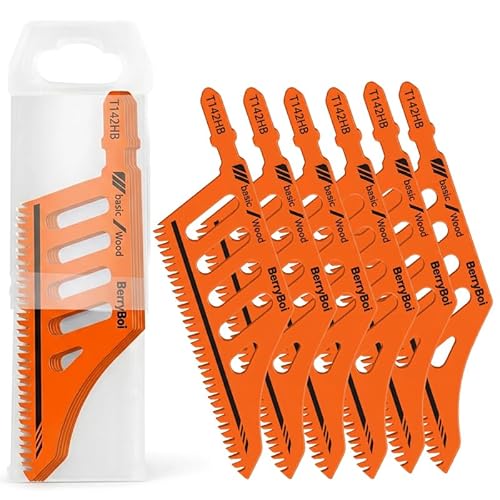
The BerryBoi T142HB T-Shank Jigsaw Blade set is a specialized cutting accessory designed to solve a common workshop headache: making clean cuts right against perpendicular faces or inside tight corners. While standard straight jigsaw blades leave an offset gap due to the base plate position, this special-shaped profile allows the cutting teeth to reach flush surfaces. It is an ideal addition to the kit bags of finish carpenters, DIY home renovators, cabinetmakers, and general workshop hobbyists.
In practical workshop applications, these blades stand out during edge trimming, flooring cutouts, and baseboard adjustments. The geometry allows the user to trim protruding material flush with an adjoining wall or cabinet panel without damaging adjacent workpieces. Beyond straight flush work, the narrowed body profile assists with contouring and moderate radius curves in sheet goods, plastics, and thinner panels.
Material construction relies on high carbon steel (HCS), which provides the right balance of flexibility and tooth hardness for wood-based products. The blades feature a black protective coating that reduces friction and heat accumulation during extended cutting passes. This surface treatment also helps prevent sap and adhesive residue from building up when working with resin-heavy composites like MDF, particleboard, or fiberboard.
Ease of use is straightforward thanks to the universal T-shank interface. These blades snap securely into modern tool-free quick-change jigsaw chucks from virtually all major power tool manufacturers. The standard shank prevents slipping under load and ensures solid power transfer from the tool motor straight to the cutting edge. Their compact size makes them easy to store inside standard jigsaw case compartments or magnetic bit organizers.
Like any specialized cutting accessory, there are operating limitations to keep in mind. High carbon steel blades are formulated specifically for timber, panel products, and rigid plastics. They should not be used on ferrous metals, aluminum, or lumber containing hidden construction fasteners. When tackling thicker hardwoods, maintaining a steady, moderate feed rate is necessary to avoid excessive blade deflection.
For homeowners and tradespeople frequently dealing with cabinetry modifications, flooring installations, or fine woodworking cuts in awkward spaces, this six-pack delivers practical utility. Having dedicated flush-cut jigsaw blades ready in your toolbox saves time and reduces the need for manual chisel cleanup on finish trim work.
When operating a standard jigsaw, the footplate usually prevents cutting directly against a wall or vertical partition. The T142HB blade configuration helps bridge this gap by placing the cutting teeth forward and outward, enabling true edge-to-edge trimming on job sites and in the shop.
The tooth geometry provides consistent chip clearing across various non-metallic materials, including plywood, soft pine, MDF, and PVC piping. The black coated finish assists in keeping operating temperatures manageable, which preserves tooth sharpness over multiple cuts and reduces surface burning on finished stock.

Pros
- Pointed teeth deliver splinter-free cuts on laminated materials and plywood.
- Wide compatibility with major jigsaw brands reduces the need for multiple blade sets.
- Includes a storage case for organized transport and protection.
- Budget-friendly price point for a 20-piece collection of wood-cutting blades.
- Good performance on curved and scrolling cuts for detailed woodworking projects.
Cons
- Case may be slightly loose for the smaller T101AO blades, allowing them to shift during transport.
- Blades are designed primarily for wood and laminates; not ideal for metal or masonry cutting.
- Some users may find the cutting edge dulls faster than premium-brand blades under heavy use.
If you're in the market for a versatile and affordable set of jigsaw blades, the GINEPAN 20-piece T101AO set is worth a look. These are T-shank blades made from high-carbon steel, engineered specifically for fine finish cuts in wood and wood-based materials like laminates, MDF, and plywood. The pointed tooth design helps reduce splintering on both sides of the cut, which is a real plus when working with double-sided laminates or finished surfaces.
This set is best suited for DIY homeowners, woodworkers, and hobbyists who regularly cut curved or scrolling profiles in their projects. The blades are also a good fit for contractors and tradespeople who need a bulk supply of reliable blades for light to medium-duty jobsite use. While they're not intended for metal or masonry cutting, they handle soft and hard woods with ease, delivering a clean edge without excessive tear-out.
Performance-wise, the blades cut smoothly through 1/2 to 3/4 inch plywood and MDF, and the 20 TPI (teeth per inch) provides a fine finish that reduces sanding time. The high-carbon steel construction, while not as wear-resistant as bi-metal blades, offers decent durability for the price. Many users will appreciate that the blades come in a plastic storage case, which keeps them organized and protected.
One thing to note is that the case is designed to fit a variety of blade sizes, so the smaller T101AO blades can shift around a bit inside. It's a minor inconvenience but doesn't affect the blades themselves. Also, because these are lower-priced blades, they may dull faster than premium options like Bosch or Freud when used on dense hardwoods or abrasive laminates. For most DIY tasks and occasional use, though, they offer impressive value.
Overall, the GINEPAN T101AO set is a practical choice for anyone who needs a reliable supply of fine-cutting jigsaw blades without breaking the bank. Their wide compatibility with popular saw brands means they'll work in your existing tool lineup, and the included case keeps everything tidy. If you're a weekend warrior or a hobbyist woodworker looking for a cost-effective blade solution, this set should serve you well.
Pros
- Assorted blades cover multiple materials (wood, plastic, metal) for one-set versatility
- T-shank fits many jigsaw models from major brands, ensuring broad compatibility
- Storage case keeps blades neatly organized and portable for shop or job site
- Good value for the quantity, making it a practical addition for occasional or frequent users
- Generally decent build quality for general-purpose cutting tasks
Cons
- May not include specialty blades for thick metal or extremely fine cuts
- Storage case may feel less rugged than premium professional cases
- Some users might find blades dull quicker under heavy or continuous use
The MRCGTCE 50 Piece Contractor Jigsaw Blades Set is a versatile T-shank blade assortment designed for cutting wood, plastic, and metal. With a variety of blade types included, this set aims to cover common cutting needs for DIY homeowners, woodworkers, and contractors alike. The T-shank design ensures compatibility with most major jigsaw brands, making it a convenient choice for workshop or job site use.
Based on the product description, this set provides a broad selection of blades that can handle materials ranging from softwood to thin metal. For typical DIY projects like cutting plywood, trimming laminate, or making plunge cuts, these blades offer reasonable cutting efficiency and decent edge retention. Woodworkers and construction workers may appreciate having multiple blades on hand to switch between materials without frequent trips to the hardware store.
The included storage case helps keep the blades organized and protected from damage. Each blade has its own slot, making it easy to find the right one for the task. For garage users and workshop enthusiasts, this keeps the workspace tidy and ensures blades are stored safely when not in use. The case is compact enough to fit in most toolboxes or shelves.
Build quality appears adequate for the price point. The blades are made from standard materials typical of general-purpose jigsaw blades, with likely heat treatment or hardened edges to improve wear resistance. While not top-tier professional-grade, they can handle moderate cutting tasks reliably. For electricians and plumbers who occasionally cut metal or plastic conduit, these blades should perform adequately.
One limitation to consider is that the set may not include highly specialized blades for demanding cuts, such as thick metal or very fine scroll work. Additionally, the storage case, while functional, may not withstand rough job site conditions as well as more expensive options. For light to moderate use, however, these drawbacks are unlikely to be deal-breakers.
Overall, the MRCGTCE 50 Piece Jigsaw Blades Set is a practical buy for DIY homeowners, hobbyists, and tradespeople who need a ready-to-use assortment without breaking the bank. It works well for general cutting tasks around the home, garage, or workshop, and the organized storage adds everyday convenience.

Pros
- Exceptional cut quality with minimal splintering on both sides
- Versatile for various wood and laminate materials
- Good for tight curves and scrolling work
- Bosch brand reliability and consistent performance
- Affordable 5-pack for multiple projects
Cons
- Not ideal for thick or dense materials due to fine tooth count
- May require slower feed rate for best results in hardwoods
- Limited to wood and laminate applications; not for metal or plastic
The Bosch T101AO 5-piece jig saw blades are a specialized cutting accessory designed for clean, splinter-free cuts in wood and wood-based materials. With a 3-1/4 inch length and 20 teeth per inch (TPI), these T-shank blades are optimized for precision work on double-sided laminates, laminated substrates, MDF, hard and soft woods, and plywood. The pointed tooth geometry reduces tear-out on both sides of the workpiece, making them a go-to choice for projects where appearance matters.
These blades are best suited for DIY homeowners tackling furniture builds, woodworkers creating intricate scrollwork, and contractors installing laminate flooring or trim. The narrow blade body allows tight radius curves without binding, which is a real advantage for detailed cutting tasks. While not intended for heavy demolition or thick stock, the T101AO excels in applications where a clean edge is critical.
In terms of performance, the 20 TPI configuration delivers smooth, chip-free cuts when used at moderate speeds. Users can expect minimal sanding or edge finishing, saving time on projects like cabinet making, shelving, or craft work. The T-shank design ensures secure fitment in most major jig saw brands, including Bosch, Dewalt, Makita, and Milwaukee, providing reliable blade retention during use.
Build quality is typical of Bosch accessories: the blades are made from high-speed steel with precision-ground teeth that hold an edge well through multiple cuts. The pointed tooth profile is specifically engineered to shear material cleanly rather than tear it, which is especially beneficial for double-sided laminates where both faces are visible. The 5-piece pack offers good value for occasional or regular users.
Storage and maintenance are straightforward. The blades come in a simple plastic case that keeps them organized and protected in a toolbox or workshop drawer. No special care is needed beyond keeping them dry to prevent rust. For users who frequently switch between blade types, the T-shank system makes changes quick and tool-free.
A realistic limitation is that these blades are not designed for thick hardwoods or fast rip cuts. The fine teeth can clog if fed too aggressively, and they are not suitable for metal or plastic. However, for their intended purpose - clean, curved cuts in wood and laminates - the Bosch T101AO blades deliver reliable results. They are a practical addition to any woodworker's or contractor's jig saw blade collection, especially for finish work where quality matters.

Pros
- Delivers splinter-free top and bottom surfaces in dense woods
- Rigid body minimizes blade deflection on curved and straight cuts
- Universal T-shank fits nearly all major jig saw brands
- Durable tooth construction resists heat and rapid dulling
Cons
- Finer 12 TPI tooth pitch cuts slower than coarse roughing blades
- Three-piece quantity may require multiple packs for high-volume jobs
- Not intended for cutting structural metals or masonry materials
The Bosch T307BFP Precision for Hardwood jig saw blade set is an engineered power tool accessory built to solve one of the most frustrating woodworking challenges: surface tear-out. Designed specifically for cutting tough, dense hardwoods, laminates, and abrasive composite sheet goods, this 3-pack is geared toward finish carpenters, cabinetmakers, furniture builders, and dedicated DIY hobbyists who require clean, ready-to-finish edges straight off the tool.
Real-world cutting efficiency shines in the blade tooth geometry. Featuring a specialized 12 TPI profile with optimized cutting angles, the blade cuts smoothly through material while maintaining precise right-angle vertical edges. Standard blades often flex and wander during tight curved cuts or deep straight passes, leading to beveled edges that ruin tight-fitting joinery. The rigid construction of these blades minimizes deflection, giving woodworkers the tool control needed for detailed scribe work, sink cutouts, and custom trim fabrication.
Build quality reflects heavy-duty engineering tailored to survive the friction and heat generated by abrasive hardwoods like oak, maple, walnut, and hickory. The teeth maintain their sharp cutting edges significantly longer than basic carbon steel blades, helping prevent blade burning and premature dulling on dense stock during continuous workshop use.
Handling and tool setup are straightforward thanks to the industry-standard T-shank interface. This shank configuration ensures positive locking and reliable power transfer in virtually any tool-less jig saw chuck on the market, including models from Bosch, DeWalt, Makita, and Milwaukee. The compact package easily stows inside a standard tool case or drawer organizer without taking up valuable shop space.
While these blades excel at fine finishing, their fine tooth count naturally cuts at a slower feed rate compared to coarse framing or demolition blades. They are specialized for clean cutting rather than rapid bulk stock removal. For craftsmen seeking splinter-free cuts on both faces of expensive hardwood lumber, this pack provides dependable jobsite performance and workshop precision.
The Bosch T307BFP blades feature an industry-standard T-shank profile that fits securely into modern quick-release jig saw clamp systems. This interface delivers maximum grip strength and reduces vibration, which directly improves user comfort and cutting precision during extended cutting sessions.
Because the 4-1/2-inch length provides ample stroke clearance for standard stock, users can smoothly guide their saw through countertops, butcher block cutouts, and hardwood flooring planks without binding or excessive chatter.

Pros
- Broad assortment covering fine wood cuts, rough ripping, curves, and metal slicing
- Standard T-shank profile fits modern tool-free chucks from major tool manufacturers
- High-speed steel and high-carbon steel construction tailored to distinct material densities
- Generous 20-piece quantity provides cost-effective backup blades for high-wear projects
Cons
- Does not include a dedicated hard-shell organizer or partitioned carrying case
- HSS blades are better suited for light sheet metal than thick structural steel
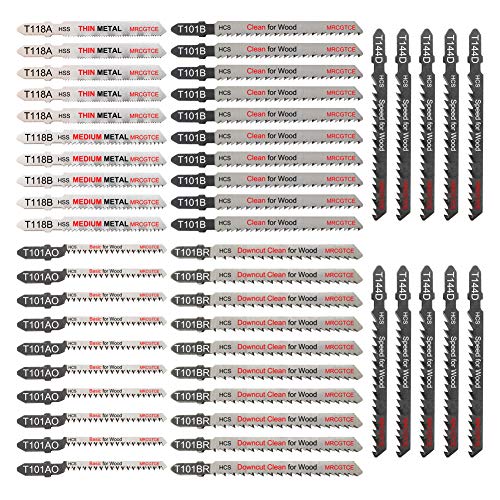
The Qoaimu 20-Piece T-Shank Jigsaw Blade Set is a versatile power tool accessory assortment designed to tackle multi-material cutting tasks. Featuring five distinct blade profiles, this package provides four blades per configuration, offering a practical mix for cutting softwoods, hardwoods, plastics, and thin metals. It serves as an accessible starter kit or consumable refill for everyday workshop projects, garage repairs, and general home renovations.
Woodworkers, DIY enthusiasts, and residential maintenance workers will appreciate the broad utility offered by this kit. The set includes T144D blades engineered for fast, aggressive wood cutting, T101B blades tailored for clean, tear-out-reduced finishes on finished lumber, and T119BO blades designed for tight curved scroll cuts. For garage mechanics or light metal fabricators, the included T118A and T118B blades offer fine-pitch teeth specifically crafted to handle thin sheet metals, aluminum, and dense synthetic materials.
Build quality centers on the split between high-carbon steel (HCS) for flexible wood cutting and high-speed steel (HSS) for heat-resistant metal slicing. The universal T-shank layout slots directly into modern quick-release jigsaw clamps without needing hex keys or manual fasteners. During typical workshop use, the teeth maintain solid biting action, providing adequate cutting speed and steady blade tracking through plywood, PVC pipe, and mild gauge sheet stock.
While the blades perform admirably on residential and workshop maintenance jobs, there are a few practical considerations to keep in mind. The package does not come with a partitioned plastic storage case, meaning users will need an aftermarket blade caddy or toolbox pouch to keep the sizes sorted. Additionally, while the HSS blades cut cleanly through thin sheet metal, heavy structural steel or abrasive composite materials will wear down the teeth much faster than specialized bi-metal or carbide-tipped options.
For homeowners, garage tinkerers, and carpentry hobbyists seeking an economical collection of utility blades, this 20-piece set delivers sensible versatility. It equips your power tool for a wide variety of daily repairs, rough timber sizing, and small remodeling tasks without requiring individual blade purchases at the hardware store.
The standard T-shank interface is universally recognized across the power tool industry, allowing these blades to latch securely into tool-free chucks. They work seamlessly with popular jigsaw models from Bosch, DeWalt, Makita, Ryobi, Milwaukee, Porter-Cable, Black+Decker, and Skil. This tool-free quick-change design ensures fast swaps on busy jobsites without the risk of stripped clamping screws or loose blade seating.

Pros
- 10 assorted blades cover multiple materials and cut types in one convenient set
- SK5 high carbon steel offers good durability and edge retention for the price
- T-shank fits most modern jigsaws and allows fast blade swaps without tools
- Versatile enough for basic metal, wood, and plastic cutting projects
- Very budget-friendly, ideal for occasional users or beginners
Cons
- No storage case included, so blades need separate organization to avoid loss
- Metal cutting blades are rated for basic metal only, not heavy-duty steel
- Limited user reviews available, making long-term reliability unknown
This Romeda jigsaw blade set is a practical 10-piece assortment designed to handle a variety of cutting jobs around the home, workshop, or job site. The blades feature a universal T-shank that fits the vast majority of modern jigsaws, making them a convenient choice for DIY homeowners, woodworkers, contractors, and mechanics who need quick blade swaps without reaching for a screwdriver.
When it comes to real-world performance, the SK5 high carbon steel construction offers a noticeable step up in wear resistance compared to cheaper blades. Users can expect clean, efficient cuts in soft and hard woods, as well as acceptable results in plastic and basic metal. The assortment includes specific blade types for speed cutting, clean finish cuts, and metal work, so you can match the blade to the material for better productivity.
Build quality is decent for the price point. The steel feels sturdy, and the T-shank locks securely into compatible jigsaws without wobble. While there is no included storage case, the blades are individually marked with their model numbers, helping you keep track of which blade is which. The set is lightweight and takes up minimal space in a toolbox or drawer.
Setup and use are straightforward: simply insert the T-shank into the saw's clamp and tighten. The blades cut well out of the box, and the variety means you can tackle a range of projects without buying separate packs. For storage, you may want to use a small organizer or blade case to keep them from getting damaged or lost.
One realistic limitation is that the metal-cutting blades (T118A, T118B) are intended for basic metal like thin sheet metal or aluminum, not thick steel or heavy-duty industrial work. Also, since this is a new product with no user reviews yet, long-term durability is unproven. However, the price is low enough that even if some blades wear faster than premium brands, the overall value remains solid for occasional use.
Overall, this Romeda jigsaw blade set is a smart buy for anyone who needs a versatile, affordable blade assortment for home repairs, garage projects, or light professional tasks. It covers the most common cutting needs without breaking the bank, making it a practical addition to any DIYer's or tradesperson's toolkit.
Complete Guide on How to Sharpen and Maintain Jigsaw Blades
Sharpening a small reciprocating blade requires realistic expectations, steady hands, and an understanding of cutting geometry. Unlike broad handsaws or circular saw plates, standard reciprocating blades feature compact bodies and narrow gullets that leave minimal room for standard shop stones. While coarse wood blades can handle light touch-ups with miniature files, intricate scrolling and metal-cutting profiles demand extreme precision that often exceeds manual capabilities. Addressing a dull edge promptly keeps cutting temperatures manageable and protects your tool motor from unnecessary strain.
Feasibility and the Practical Economics of Sharpening
Evaluating whether you should restore a dull cutting edge begins with a straightforward look at shop time versus consumable value. Standard high carbon steel blades designed for general timber cutting feature relatively large teeth spaced at four to eight teeth per inch. These wider tooth valleys provide sufficient clearance for a triangular needle file or diamond hone to reach the cutting faces without scraping adjacent steel. In contrast, fine finish blades featuring twenty teeth per inch offer virtually zero clearance for mechanical filing, making manual sharpening exceptionally tedious.
Cost efficiency also plays a decisive role in deciding whether to attempt sharpening at the workbench. Packaged sets from brands like BerryBoi, GINEPAN, and MRCGTCE provide replacement blades in bulk, frequently lowering the per-unit expense significantly. Spending fifteen or twenty minutes attempting to re-profile miniature teeth rarely balances out against simply swapping in a factory-ground replacement. However, if you are halfway through a weekend trim installation or custom cabinet build with closed hardware stores, a brief mechanical touch-up can save hours of project downtime.
Safety is another crucial dimension when assessing blade viability. Over-sharpening or uneven filing reduces tooth height erratically, leading to aggressive grabbing, tool kick, or wandering cuts that ruin expensive stock. If a blade shows visible bowing along its spine or stress discoloration near the shank, attempting to dress the teeth will not resolve the structural weakness. A blade must remain straight, flat, and structurally sound before any sharpening effort can produce reliable cutting performance.
Essential Workbench Tools for Edge Dressing
Securing the proper equipment ensures that any sharpening attempt preserves tooth geometry rather than grinding away useful cutting metal. A solid bench vise fitted with soft wooden or aluminum jaw liners provides the stable clamping platform required to prevent blade vibration. Because jigsaw bodies are thin, unsupported clamping creates chatter that quickly dulls delicate filing instruments. Clamping the blade low in the jaws with only the teeth protruding minimizes flex while filing.
The primary sharpening tool should always be a fine triangular needle file, an auger file, or a narrow diamond-coated contact slip. Standard mill bastard files are simply too thick to seat properly into small jigsaw gullets without stripping away the preceding tooth tip. Diamond needle files cut regardless of stroke direction and work well on hardened cutting edges where conventional steel files might struggle or skate. A pair of strong magnification lenses and good directional workbench lighting are equally vital for seeing small bevel angles clearly.
Some woodworkers prefer using a handheld rotary tool equipped with a miniature diamond disc or fine-tapered stone. While this motorized method speeds up the process on coarse demolition blades, it introduces considerable risk of overheating thin steel teeth. High rotational speeds can draw the heat treatment from high carbon steel in a fraction of a second, leaving the tooth soft and useless. For anyone seeking clean results on fine woodworking blades, patient manual filing remains far safer and more predictable.
Step-by-Step Procedure for Manual Tooth Dressing
Begin by disconnecting your power tool from its power source or removing its lithium battery pack before removing the blade for inspection. Clean off any built-up wood pitch, resin, or adhesive residue using a brass brush and a small amount of household mineral spirits or pitch cleaner. A clean surface allows you to clearly inspect the wear bevel on each tooth and prevents resin from gumming up your miniature file teeth. Once the blade is dry, inspect the spine to confirm it is completely flat without twists.
Mount the blade horizontally in your bench vise with the teeth facing upward, ensuring the teeth extend only a few millimeters above the clamping jaws. Position your light source so the reflective facet of the worn cutting tip is clearly visible. Observe the original factory grind on the top rake and the face of the tooth, noting whether the profile features straight cross-ground bevels or alternating angles. Matching the factory rake angle is critical for preserving clean chip evacuation and preventing premature binding during operation.
Apply your triangular needle file flush against the cutting face of the first tooth, applying light, uniform pressure on forward strokes only. Take two or three controlled strokes across the face, maintaining a consistent hand angle to preserve the original profile. Never drag the file backward under pressure, as back-dragging ruins the file teeth and leaves jagged burrs on the saw steel. Work methodically down the blade length, giving each tooth the exact same number of gentle strokes to keep the cutting line uniform.
After dressing the face of each tooth, examine the gullet to confirm that debris clearance has not been restricted. If the blade uses an alternating top bevel, file every other tooth from one side before repositioning yourself or the blade to finish the opposing teeth. Lightly brush the blade with a stiff nylon brush to remove metal dust, and inspect the tooth tips with your magnifier to verify that the rounded shine of the dull edge has disappeared.
Understanding Tooth Geometry and Steel Metallurgy
Jigsaw performance depends heavily on the metallurgy chosen by the manufacturer for specific tasks. High carbon steel (HCS), used in versatile models like the BerryBoi T142HB or Romeda wood blades, offers sufficient flexibility for general timber cutting and soft plastics. This relatively soft steel responds well to standard carbon steel needle files, making it the easiest material to touch up manually in a home shop. However, HCS blades dull quickly when cutting abrasive composites, fiberboard, or hardwood laminates.
High speed steel (HSS) and bi-metal (BIM) options, such as the precision Bosch T307BFP or Qoaimu metal cutting models, feature much harder tooth alloys welded onto flexible backing strips. The extreme hardness of bi-metal teeth resists thermal degradation and wear when slicing sheet metal, nails, or tough hardwoods. Attempting to file these blades with basic hand tools frequently dulls the file while barely scratching the saw tooth. Restoring bi-metal cutting edges generally requires diamond-grit stones, which increases the effort beyond what most workshops find practical.
Tooth set configuration adds another layer of complexity to manual maintenance. Milled, side-set teeth cut wider kerfs to provide blade clearance, while ground, taper-ground teeth, like those on the Bosch T101AO, rely on a narrowing blade body to prevent friction. Filing down taper-ground teeth unevenly destroys the clearance balance, causing the blade to bind, scorch the cutline, and wander wildly in deep stock. Recognizing how tooth configuration affects cut geometry prevents you from wasting effort on blades designed strictly for factory replacement.
Symptoms of a Worn Blade Versus Incorrect Saw Setup
Woodworkers frequently mistake power tool adjustment errors for dull cutting blades. A common sign of dullness is excessive feeding resistance, where you must push firmly against the tool body to keep the cut moving forward. A sharp blade should feed smoothly into the timber with light forward guidance, allowing the reciprocating motor to clear waste without bogging down. If the motor changes pitch under modest pressure, examine the tooth tips for rounded, polished wear surfaces.
Scorched wood along the cutline and noticeable smoke during operation point directly toward severe friction. This condition occurs when worn cutting points can no longer sever wood fibers cleanly, turning cutting action into high-pressure rubbing. In some cases, however, burning is caused by setting orbital pendulum action to zero while attempting rapid cuts in thick softwood. Understanding appropriate orbital settings helps preserve sharp edges and prevents premature tooth failure caused by excessive frictional heat.
Wandering cuts and angled kerfs represent another diagnostic challenge on the job. When a jigsaw drifts away from a 90-degree square cut, uneven tooth dulling is often the culprit, pulling the blade toward the sharper side. Similar deflection also happens when attempting heavy structural cuts using a flexible jigsaw rather than a dedicated saw to cut subfloor openings. Verifying the alignment of your tool roller guide and checking for bent blade shanks ensures that mechanical faults are not misdiagnosed as dull teeth.
When Replacement Is the Superior Strategy
While light maintenance can rescue an emergency cut, full replacement remains the industry standard for jigsaw maintenance. Modern multi-packs such as the MRCGTCE contractor set provide up to fifty assorted blades in a protective storage case. Having quick access to dedicated profiles, including T118A for metal, T144D for rapid framing cuts, and reverse-tooth T101BR for clean laminate tops, guarantees superior cut quality without compromise. Swapping out a worn blade takes merely seconds with standard tool-free T-shank locking systems.
Fine-finish scrolling work represents another application where replacement is mandatory. The Bosch T101AO features a narrow body and 20 TPI pointed teeth engineered for curved cuts in double-sided laminates, MDF, and fine plywood. Hand-filing twenty miniature pointed teeth across a three-inch blade without altering pitch or tooth height is practically impossible in standard workshop conditions. Installing a fresh blade guarantees splinter-free edges on decorative veneers and delicate cabinet faces where minor defects would ruin the workpiece.
Structural wear on the blade shank also dictates immediate retirement. Repeated clamping cycles in modern tool-less quick-release chucks can cause wear on T-shank retaining tabs over extended periods. A blade with a worn shank will wobble inside the clamp, causing significant cut chatter and tracking errors regardless of how sharp the teeth are. Discarding structurally fatigued blades protects your saw mechanism and maintains safe operating tolerances.
Preventive Practices to Extend Cutting Edge Life
Adopting disciplined cutting habits keeps your jigsaw teeth sharp through dozens of demanding cuts. Matching the tooth count and blade material to the specific workpiece prevents sudden tooth shearing and excessive heat generation. Cutting thick plastic with a fine wood blade quickly melts synthetic debris into the tooth gullets, while using a coarse timber blade on abrasive sheeting will strip cutting edges immediately. For specialized synthetic materials, choosing a dedicated saw blade for cutting PVC pipe keeps teeth sharp and cuts smooth.
Feed pressure management represents one of the simplest ways to protect your cutting edges. Forcing the jigsaw through lumber flexes the blade against the rear guide roller, concentrating heat at the base and causing friction hardening along the blade spine. Allow the tool motor speed and orbital pendulum action to dictate the cutting rate, maintaining gentle downward and forward pressure. If cutting dense hardwoods or thin metal sheets, reducing stroke speed prevents thermal build-up that destroys factory temper.
Proper storage also plays an overlooked role in cutting tool longevity. Throwing bare blades loose into a metal toolbox causes the delicate cutting edges to strike against each other, chipping sharp tooth corners before they ever touch timber. Using indexed cases like those provided with the GINEPAN T101AO sets prevents contact damage and keeps profiles organized. Storing blades in a dry environment prevents corrosion, ensuring each tooth stays clean, sharp, and ready for precision work.
Mastering these sharpening limits and cutting habits gives you complete control over your jigsaw operations. While coarse high carbon steel blades can benefit from a quick touch-up with a diamond needle file during an emergency, maintaining a well-stocked supply of fresh T-shank blades remains the most reliable path to clean, splinter-free cuts. Treat your blades with steady feed rates, select the right tooth geometry for each material, and replace worn consumables whenever precision is non-negotiable.




Write Your Review
No reviews yet. Be the first to share your experience!