


Trimming high tree limbs safely from the ground requires balancing physical tool reach with stability and cutting leverage. When determining how long pole saw equipment should be, homeowners often find that advertised measurements refer to either the physical length of the pole or the theoretical overhead working reach. Manual tree pruners and pole saws typically range from 7 feet in compact configurations up to 30 feet or more when fully extended. Selecting the proper pole length prevents the need for dangerous ladder setups while avoiding unnecessary weight and pole deflection during overhead work.
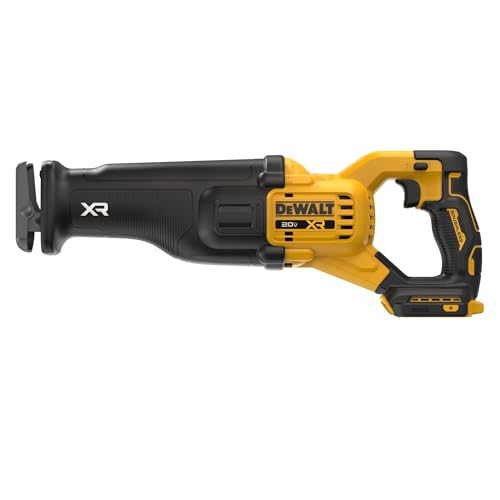
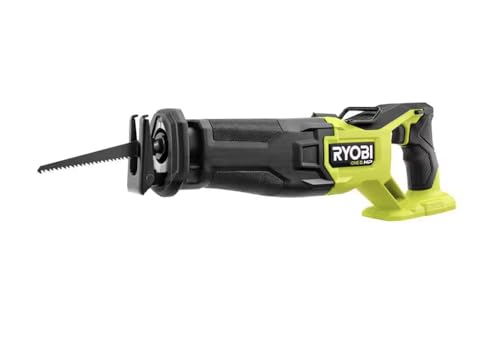
Physical pole length directly dictates how much control a user maintains over the cutting blade when tackling stubborn oak, pine, or palm fronds. While shorter setups around 8 to 14 feet offer nimble handling for routine yard cleanup, extra-long assemblies reaching 26 to 35 feet require careful technique and rigid pole materials to prevent excessive bowing. For general yard and tree maintenance, pairing the proper extension pole with capable cutting heads, or even keeping versatile reciprocating saw blades for pruning and demolition handy for ground-level cleanup, makes property care far more efficient.

Pros
- Impressive 27-foot reach for accessing high tree branches without a ladder.
- High-quality carbon steel blade stays sharp and resists rust with Teflon coating.
- Dual hook knives improve efficiency by clearing twigs and stuck branches.
- Pulley system and scissors add versatility for different trimming tasks.
Cons
- At 14.8 pounds, the pole saw may feel heavy for some users during extended overhead use.
- Assembly of the 8 pole sections can be time-consuming initially.
- Limited user reviews at launch, so long-term durability is not yet verified.
The VEVOR Manual Pole Saw is a versatile tree trimming tool designed for DIY homeowners, gardeners, landscapers, and even contractors who need to maintain tall trees or dense shrubs. With an adjustable length from 7.3 to 27 feet (2.24 m to 8.24 m), this extendable pruner allows you to cut high branches safely from the ground, eliminating the need for ladders or risky climbing.
In terms of performance, the pole saw features a 1.2 mm thick carbon steel blade with a Teflon coating that resists rust and stays sharp through repeated use. The blade includes a hook knife on top for pulling down twigs and another hook on the bottom to dislodge stuck branches during cutting, making the trimming process more efficient. Additionally, the included Mn steel scissors are perfect for snipping smaller twigs and leaves, while the pulley system and 11.5-foot nylon rope reduce the effort required for each cut.
Build quality is a key consideration. The pole is constructed from eight lightweight fiberglass handles that connect via double-lock joints. These joints lock firmly and are designed to prevent bending or breaking under normal use. The entire assembly weighs about 14.8 pounds, which is manageable for most users, though it might feel a bit heavy during prolonged overhead work. The included saw sleeve and storage bag help keep the tool and accessories organized and safe when not in use.
Storage and maintenance are straightforward. The blade can be wiped clean after use, and the storage bag keeps everything together. The pole sections collapse to a compact size, making it easy to store in a garage, shed, or workshop. One realistic limitation is the initial assembly time; putting together the eight pole sections can take a few minutes, but the instructions are clear.
Overall, the VEVOR Manual Pole Saw offers excellent value for homeowners and gardeners who need a reliable, extendable tree pruner. It combines reach, sharp cutting capability, and labor-saving features like the pulley system and scissors. While heavier than some models, its build quality and versatility make it a practical choice for anyone tackling branch trimming projects around the property.

Pros
- Sharp, rust-resistant Mn steel blade that cuts smoothly and doesn't clog easily
- Lightweight and well-balanced, reducing arm fatigue during extended pruning sessions
- Modular pole system makes length adjustment quick and tool-free
- Safe, ladder-free operation for trimming branches up to 14.5 feet high
- Comfortable anti-slip grip with a replaceable soft-wrapped handle
Cons
- Manual operation requires more physical effort than gas or electric pole saws for thicker branches
- At 5.2 lbs, the fully extended 14.5ft pole may feel slightly heavy for some users during prolonged overhead work
- Limited to cutting branches within the blade's capacity; very thick limbs may need a powered saw
The BlumeTrec 14.5FT pole saw is a manual pruning tool designed for homeowners, gardeners, and light forestry work. It combines a sharp manganese steel blade with a modular, adjustable-length pole to help you trim high branches safely from the ground. This saw is a solid choice for DIY users who want a reliable, low-maintenance alternative to gas or electric pruners.
This pole saw is best suited for DIY homeowners, gardeners, and anyone who regularly maintains trees, shrubs, or hedges around the yard. It's also practical for older adults or those who prefer not to climb ladders for routine pruning. While it's not a heavy-duty professional tool, it handles most residential trimming tasks with ease.
In real-world use, the Mn steel blade delivers clean cuts on branches up to several inches thick. The three-sided edge and double-sided barb design grip the branch securely, reducing slipping and allowing you to cut from multiple angles. The precision-ground teeth help discharge sawdust, so the blade doesn't clog during use. The modular pole system lets you quickly adjust the length from 8.5ft to 14.5ft, and the extra locking screw keeps the saw head firmly attached. The anti-slip grip and soft-wrapped handle provide comfortable control, even during longer sessions.
Build quality is decent for the price point. The stainless steel poles have a matte, powder-coated finish that resists rust, and the Mn steel blade is durable and corrosion-resistant. Assembly is straightforward: you simply screw the sections together. Storage is easy since the pole breaks down into compact sections, and the saw head can be detached. No special maintenance is required beyond occasional cleaning and blade sharpening.
One realistic limitation is that this is a manual saw, so cutting thicker branches requires more physical effort than a powered pruner. Also, at full extension, the 14.5ft pole can feel a bit heavy for some users during prolonged overhead work. The blade is best suited for branches up to about 3-4 inches in diameter; anything larger may be tough to cut by hand.
Overall, the BlumeTrec 14.5FT pole saw is a practical, budget-friendly option for DIY homeowners and gardeners who need a safe way to trim high branches without a ladder. It's lightweight, easy to assemble, and offers good cutting performance for routine yard maintenance. If you're looking for an affordable manual pruner that gets the job done without fuss, this saw is worth considering.

Pros
- Extensive reach eliminates the safety hazards associated with trimming branches from a ladder
- Dual-function pruner and saw head easily tackles both thin shoots and thicker tree limbs
- Modular section design allows quick height adjustments depending on the canopy level
- Comes complete with an extra replacement saw blade and a protective sheath
Cons
- Operating at the full 30-foot length creates noticeable pole flex that requires careful handling
- Extended overhead cutting can cause shoulder and lower back fatigue during prolonged jobs
The MEFBANT 30.1 FT Extendable Tree Pruner is a manual cutting system built for homeowners, landscapers, groundskeepers, and DIY property caretakers. Overhead tree maintenance often demands climbing shaky ladders or renting expensive powered boom lifts. This modular pole kit provides a ground-based alternative, allowing users to tackle thick hanging boughs, storm damage, and overgrown branches safely from the yard.
Cutting performance centers on a dual-purpose head that handles multiple branch diameters. For lighter growth, the bypass pruner utilizes a smooth pulley-assisted pull rope, multiplying hand leverage so users can snip smaller offshoots with minimal pulling force. When addressing larger limbs, the hardened steel saw blade takes over. Its curved profile and hooked tip help keep the teeth locked into the cut, preventing the blade from slipping out of the kerf while working at steep overhead angles.
Build quality focuses on structural integrity across high elevations. The tool features eight interlocking extension sections crafted from reinforced epoxy resin coupled with aluminum connecting joints. This pairing delivers strong resistance against bending stresses while guarding against moisture, rust, and outdoor corrosion. The kit also includes a spare saw blade, sheath, and a dedicated storage bag to protect the teeth and keep the poles organized in your garage or work shed.
As with any ultra-long manual pole tool, physical leverage creates natural limitations. While the system can assemble out to 30 feet, the pole inevitably flexes under its own weight at maximum extension, making precision control more demanding. Many users find that configuring the pole between 15 and 20 feet offers an ideal balance of stiffness and maneuverability. Wearing back support or taking periodic breaks helps mitigate upper body fatigue during extended pruning sessions.
For homeowners and rural property managers wanting to clear driveways, rooflines, and fence rows without relying on gas saws or climbing equipment, this pruner is a practical addition to any outdoor tool collection. It offers dependable cutting versatility, straightforward modular assembly, and the essential safety benefit of keeping both feet planted firmly on the ground.
The modular setup allows users to assemble only the number of sections required for the specific tree canopy height. Connecting the lightweight epoxy resin poles takes just minutes, and the aluminum joints secure each section to minimize wobble during back-and-forth sawing strokes.
Storage convenience is another key asset. Rather than dealing with a fixed, cumbersome 10-foot pole in the bed of a truck, this entire 30-foot kit breaks down into compact pole segments that slide cleanly into the included canvas carrying bag. This makes transport between jobsites or storage on a garage wall hook simple and organized.

Pros
- Extended ground reach eliminates the need for unstable ladder setups
- Sharp triple-ground teeth cut efficiently on the pull stroke with minimal binding
- Multi-use universal threaded head works with everyday utility attachments
- Detachable saw head doubles as a standalone hand saw for ground work
Cons
- Telescoping pole naturally exhibits some flex when fully extended to twenty feet
- Manual overhead sawing requires notable upper-body stamina during dense wood cuts
- Lacks an integrated rope-operated bypass pruner for thin, leafy twigs
The Karveden telescoping pole saw is a manual tree-trimming tool designed to handle tall, overgrown branches without forcing you onto a shaky ladder. Operating from ground level is one of the most effective ways to avoid yard maintenance injuries, and this tool pairs a multi-stage extendable aluminum pole with a dedicated high-reach saw blade. It is best suited for DIY homeowners, property caretakers, hobby farmers, and grounds maintenance workers who need an affordable, dependable way to clear deadwood, shape shade trees, and trim back encroaching limbs around fences or rooflines.
At the business end, the tool features a 19-inch curved blade made from high-carbon steel. The teeth are sharpened with a three-sided bevel profile designed to bite aggressively into green or seasoned wood, cutting smoothly on the pull stroke. A rust-resistant non-stick coating reduces sap buildup and friction, helping keep the blade from binding inside thick branches. When high trimming is finished, the blade assembly unbolts easily to serve as a standalone hand saw, making quick work of fallen limbs, low shrubs, and small logs on the ground.
Handling a pole saw at maximum length requires a balance of rigidity and weight management. Weighing just under five pounds, the four-stage aluminum pole adjusts smoothly from five feet up to twenty feet using flip-tab tension clamps. Dual high-density foam sleeves on the lower sections give your hands traction and cushion against vibration, while the reinforced screw-mount connection keeps the saw head stable during rigorous back-and-forth strokes. The standard 3/4-inch universal thread at the top also allows the pole to double as an extension handle for paint rollers, fruit pickers, or gutter cleaning attachments.
As with any manual pole saw extended past fifteen feet, working at maximum reach requires patient technique. There is noticeable flex when fully telescoped, meaning you will need to let the weight of the blade guide the cut rather than pressing upward with excessive force. Extended overhead work will also test your shoulder stamina compared to powered pole saws, and the tool does not include a spring-loaded bypass shear for thin, flexible greenery that tends to deflect a saw blade.
For routine yard clearing, seasonal storm cleanup, and safe pruning around the homestead, the Karveden manual pole saw offers strong value and straightforward utility. It collapses down to a compact 42 inches for easy storage along workshop rafters or garage wall racks, avoiding the fuel mixing, battery charging, and mechanical upkeep associated with power tools.
Constructed around lightweight aluminum tubing and hardened carbon steel, the assembly is built to withstand repeated outdoor chores while resisting moisture and rust. The clamp mechanisms can be adjusted for tension, ensuring tight lockups between the pole segments even after prolonged vibration during aggressive cutting strokes.
The universal 3/4-inch threaded tip adds substantial utility outside of tree pruning season. Homeowners and workshop users can unthread the saw bracket and mount utility dusters, light bulb changers, squeegees, or paint rollers, transforming a dedicated yard tool into a versatile high-reach home maintenance asset.

Pros
- Dual flip and screw locking collar setup holds pole sections firmly under load
- Integrated two-in-one head handles both thick limbs and fine branch pruning
- Eliminates the need for precarious ladder climbing during seasonal yard cleanups
- Smooth pulley action cuts green branches with minimal pulling effort
Cons
- Full 20-foot extension naturally introduces moderate pole flex that requires practice to control
- Pruner pull rope requires careful management around dense thickets to prevent snagging
The TONYINGO Manual Pole Saw and Tree Pruner is an extendable overhead cutting system designed to tackle high tree branches directly from the safety of the ground. By pairing a curved pruning saw blade with a bypass lopper operated by a double-pulley cord system, this tool gives property owners two distinct methods of attack. You can slice through larger limbs with a traditional pull-saw action or snap through green growth up to an inch thick using the spring-assisted bypass pruner.
This tool is best suited for DIY homeowners, groundskeepers, rural property managers, and landscapers who want to maintain trees without constantly setting up ladders on uneven terrain. Ladder falls remain one of the most common hazards in home maintenance, so having a grounded tool capable of reaching up to 26 feet overhead provides a tangible safety improvement for weekend pruning, storm clean-up, and seasonal fruit tree shaping.
In practical cutting performance, the combination head provides solid flexibility. The curved saw blade features aggressive pull-cut teeth that bite deeply into pine, oak, and maple limbs on the downward stroke, using gravity to assist your cutting motion. For smaller stems and encroaching shoots, the compound two-pulley setup significantly increases mechanical advantage, cutting down on the hand strain typically associated with long-reach pruning ropes.
Build quality centers around a multi-section aluminum pole that balances rigidity against overall weight. Telescoping poles often fail at the connection collars, but TONYINGO addresses this by using a dual-locking mechanism: an external flip latch for fast length changes, backed by a threaded twist lock that wedges the sections securely together. An EVA foam grip at the base gives a comfortable handhold, allowing for positive orientation of the cutting head even while wearing work gloves.
Handling any manual tool extended beyond 15 feet involves some pole deflection, so controlling your cutting tempo is essential for best results. When working at full extension, resting the curved blade hook against the branch before applying force helps stabilize the cut. Storage is straightforward, as the pole collapses down into a compact length that easily hangs on standard garage wall hooks or stows along the side rail of a pickup bed.
For homeowners and maintenance workers seeking an affordable, dependable way to trim back overgrown oak branches, deadwood, and encroaching canopy lines, this manual pole saw is a sensible addition to the outdoor tool collection. It delivers consistent cutting power without the fuel, noise, or weight associated with gas and battery-powered pole chainsaws.
The core structural advantage of this pole saw lies in its dual-lock telescoping design. Standard single-lock telescoping poles often loosen when subjected to the repeated pushing and pulling forces of manual sawing. Combining quick-release flip clamps with secondary screw collars locks each aluminum segment tightly, reducing rotational wobble and eliminating accidental retraction during tough cuts.
The cutting head is made with durable metal components to resist bending under side loads. The steel pruner spring quickly resets the lopper blade after each pull, while the nylon operating cord is routed through dual pulleys to double your mechanical advantage. Routine maintenance requires little more than brushing sap off the blade teeth, wiping down the aluminum tubes, and occasionally applying a light coat of machine oil to the pivot bolt and spring mechanism.
Pros
- Safe ground-level operation eliminates the danger of ladder work during tree maintenance
- Dual flip-and-screw locks keep telescoping segments firmly anchored under heavy sawing strokes
- 3-pulley mechanical advantage cuts down on the arm strength needed to snap tough twigs
- Lightweight six-pound aluminum pole reduces user fatigue during overhead pruning
Cons
- Noticeable pole flex can occur when fully extended to 24 feet, requiring steady patience to guide the saw
- Long pruner pull cord can catch on dense lower brush if not carefully managed
- Manual sawing through thick hardwood limbs requires moderate upper body stamina compared to motorized alternatives
The TONYINGO Manual Pole Saw is an extendable outdoor cutting tool engineered for overhead tree maintenance, branch trimming, and estate groundskeeping. It eliminates the hazards of setting ladders against uneven ground or balancing with heavy power tools. By pairing an adjustable telescoping aluminum pole that ranges from 5 to 24 feet with a dual-function cutting head, users gain up to 30 feet of working reach straight from the yard.
This setup is particularly well suited for DIY homeowners, groundskeepers, suburban property managers, and handymen who need to clean up storm damage or trim back encroaching tree lines. Woodworkers looking to harvest dry branches or clear their shop perimeter will also appreciate the straightforward utility. Because it requires zero gas, oil, or battery maintenance, it serves as a reliable grab-and-go solution whenever high limbs threaten roofing, fences, or overhead utility spaces.
For cutting performance, the tool employs a dual-action approach. A curved, hook-toothed saw blade glides through thicker limbs on the pull stroke, while a bypass pruner driven by a 3-pulley compound mechanism handles smaller branches. The pulley system leverages mechanical advantage to reduce the physical grip pressure needed to slice through dense wood, making repeated snips less exhausting. The rigid aluminum pole helps translate pulling energy straight to the cut without excessive side-to-side wobble.
Build quality centers around a lightweight aluminum pole weighing approximately six pounds, topped with secure hardware. Telescoping sections are secured by a dual-lock system that combines fast-action flip clamps with threaded screw tighteners. This redundant locking prevents the pole from slipping or collapsing mid-cut, which is a common hazard on single-lock extension poles. A dense EVA foam section along the base provides a dependable, non-slip grip that dampens vibrations and protects hands from cold metal during autumn and winter pruning.
Storage and handling remain straightforward since the entire assembly breaks down into compact nested sections that easily hang on garage tool racks or fit inside a truck bed. However, users should anticipate standard physical limitations. At the maximum 24-foot extension, leverage naturally introduces some pole bend, requiring patience and smooth cutting rhythm rather than brute downward force. Additionally, keeping the pruner cord organized prevents snags in thick undergrowth.
For property owners and DIYers who prioritize safety, value, and zero-maintenance gear, this manual pole saw is a smart workshop and shed addition. It provides the height required to manage mature oaks, maples, and fruit trees while keeping both feet safely planted on solid ground.
The standout structural feature of this pole saw is the dual flip-and-screw lock system engineered into every telescoping junction. Rather than relying solely on friction collars or single flip levers, the dual-action mechanism clamps the aluminum wall securely to minimize slip and rotational wobble during demanding pull cuts.
Constructed from lightweight aluminum, the six-pound frame balances structural rigidity against user fatigue. The upper cutting assembly combines a hardened steel curved saw blade with a compound 3-pulley pruner head, maximizing cutting power on overhead twigs while resisting corrosion when stored properly in a dry garage or shed.

Pros
- Dual flip-lock and screw system keeps pole segments securely locked under pull pressure
- Extensive reach eliminates hazardous ladder work for most residential tree trimming
- Multi-purpose pole threading accepts standard household and workshop maintenance attachments
- Detachable design doubles as a handheld saw for low branches and firewood processing
Cons
- Extended reach beyond 20 feet naturally introduces pole flex and requires upper-body endurance
- Manual stroke cutting requires significantly more physical effort than electric or gas alternatives
- Collapsed length near five feet requires dedicated wall hooks or bed space in work trucks
The TONYINGO Telescoping Manual Pole Saw is an extended-reach pruning tool engineered for property owners, landscapers, and DIY homeowners who need to manage overgrown tree canopies safely from the ground. Designed to bridge the gap between small hand pruners and expensive motorized tree trimmers, this manual saw gives users the capability to trim high limbs, palm fronds, and dense brush without balancing precariously on ladders or hiring professional tree services for routine maintenance.
Cutting efficiency centers on a 17-inch curved blade crafted from high-carbon steel. Featuring triple-ground teeth and a friction-reducing non-stick coating, the blade is configured to bite aggressively on the pull stroke. This design maximizes cutting force with gravity working in your favor, allowing the teeth to clear wood fibers quickly while minimizing binding in green wood and resinous branches. The rust-resistant finish also protects the cutting surface when working in damp yard conditions or cutting through sap-heavy limbs.
Telescoping pole stability is often a major concern with high-reach yard tools, and this unit addresses that with a dual-locking mechanism. By combining standard quick-release flip tabs with auxiliary threaded reinforcement screws, the seven-stage pole resists slipping or retracting under heavy pulling loads. This dual-lock setup maintains the chosen working length between 5 and 29 feet, offering reliable structural rigidity that keeps overhead trimming controlled and predictable.
Versatility extends beyond basic tree trimming. The saw head detaches cleanly, turning the blade into a comfortable handheld pruning saw for bucking fallen branches, cleaning up garden shrubs, and preparing firewood near the workshop. Furthermore, the universal threaded tip on the pole accepts common household attachments like paint rollers, gutter cleaning hooks, and window squeegees, transforming the pole into a multi-use tool for seasonal outdoor property maintenance.
As with any manual pole saw operating near 30 feet, users should expect some flex when fully extended, which requires steady arm control and good technique to guide the blade into the cut groove. For homeowners and estate managers looking for a dependable, ladder-free pruning solution that eliminates fuel mixing, cord hassles, and battery degradation, this manual pole saw serves as a durable and practical addition to any outdoor tool shed.
Operating manual tools at extreme overhead angles requires a balance of weight and control. At approximately six pounds, this pole saw minimizes the shoulder strain typically associated with heavy gas-powered equivalents, making it much more accessible for weekend yard chores and general garden upkeep.
The textured anti-slip handle provides solid grip purchase even when wearing work gloves or dealing with damp outdoor conditions. By keeping both feet firmly on solid ground while trimming limbs up to two stories high, users significantly reduce the slip-and-fall hazards associated with ladder work on uneven lawn turf.
Pros
- Impressive reach range from 7.3 to 27 feet, suitable for most residential trees
- Lightweight construction minimizes arm fatigue during extended use
- Includes both saw and pruner heads plus a spare saw blade for versatility
- Pulley mechanism makes pruning thicker branches easier than manual snips
- Carry bag keeps all parts organized and protected when not in use
Cons
- Fully extended 27-foot setup can feel heavy and difficult to control for smaller users
- Epoxy resin poles may feel less rigid than all-aluminum or fiberglass alternatives
- No customer reviews yet, so long-term durability is unproven
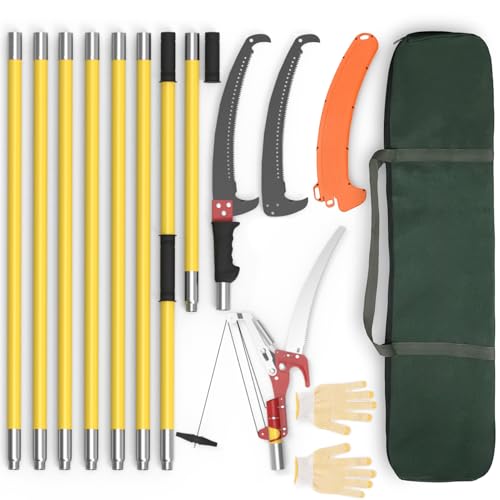
The LETYANGER 7.3-27 ft Extendable Pole Saw and Pruner Set is designed for homeowners and light-duty landscaping tasks where reaching high branches without a ladder is essential. This tool combines a manual saw blade with a pruner head, giving you two ways to trim overhead growth. The set includes seven poles that connect via aluminum alloy joints, allowing you to adjust the length from about 7.3 feet to a full 27 feet.
For DIY homeowners, contractors, and gardeners who regularly deal with overhanging limbs, this pole saw offers a practical solution. The saw blade is made from 65Mn alloy steel, which is harder than standard carbon steel and should hold its edge reasonably well. The pruner head uses a pulley system to multiply your pulling force, making it easier to slice through branches up to about an inch thick. An extra saw blade comes with a sheath, providing a backup if the main blade gets stuck or dulls.
Performance-wise, the tool is best suited for moderate trimming. The lightweight epoxy resin poles keep the overall weight manageable, though at the maximum 27-foot extension the setup weighs around 9.5 lbs. That may feel front-heavy and require some upper body strength to control accurately. Many users may find the 20-foot configuration (using six poles) a more comfortable balance between reach and stability. The hook knife at the saw tip helps clear small twigs, and the bright yellow color is a thoughtful safety feature to alert others nearby.
Build quality appears decent for the price point. The aluminum joints click together securely, and the saw attachment locks firmly. The pruner head has a plastic component around the pulley, but the cutting blade is steel. The included carry bag is basic but functional, keeping all parts together and protecting them during storage. After use, you can disassemble the poles and pack everything into the bag, which takes up minimal space in a garage or workshop.
Potential limitations include the lack of a telescoping mechanism - you have to attach or remove individual poles to change length, which takes a minute. The poles are made from epoxy resin, which is lighter than metal but may flex slightly under heavy loads. Also, with no customer reviews available yet, it's hard to gauge long-term durability. For occasional backyard use, it should hold up well, but heavy daily use might wear out the joints or blade faster.
Overall, the LETYANGER pole saw set is a reasonable choice for DIY homeowners and gardeners who need an extendable reach for branch trimming. It's not a professional-grade tool, but for the price and included accessories (saw, pruner, spare blade, bag), it offers good value for light to moderate trimming tasks. If you're planning to tackle large trees regularly, you might prefer a powered pole saw, but for manual trimming, this setup works well within its intended range.
Everything You Need to Know About Pole Saw Length and Reach
Choosing the correct pole saw length starts with understanding how manufacturers calculate working heights compared to actual physical shaft dimensions. In most cases, a manual pole saw features an adjustable length ranging anywhere from 5 feet to nearly 30 feet of hardware. Knowing how to assess your specific tree canopy height ensures you purchase a tool that can cut high branches cleanly without becoming too unwieldy to balance from the ground.
Actual Pole Length Versus Overhead Working Reach
A frequent point of confusion among buyers involves the distinction between actual pole length and total overhead reach. Actual pole length measures the physical tool from the base handle to the tip of the curved saw blade. In contrast, advertised reach specifications usually assume an operator of average height holds the tool at chest or waist level with arms extended upward. This standard calculation typically adds roughly 4 to 6 feet of human reach to the physical length of the shaft.
For example, a tool like the TONYINGO 26FT Reach Manual Pole Saw features an adjustable pole spanning from 5 to 20 feet in actual hardware length. When an operator holds that 20-foot extended pole, the cutting blade can reach branches located approximately 26 feet off the ground. Similarly, models advertising a 30-foot reach, such as the MEFBANT Pole Saw for Tree Trimming or the TONYINGO 30FT Reach Manual Pole Saw, typically utilize a physical pole that extends between 24 and 25 feet. Understanding this arithmetic prevents buyers from purchasing an unnecessarily long, heavy pole when a more compact system satisfies their vertical requirements.
Evaluating your property starts with measuring or estimating the height of your lowest and highest problematic tree branches. If your lowest branches sit at 12 feet and your highest problem branches peak around 18 feet, a pole with a physical length of 12 to 14 feet provides plenty of working clearance. Purchasing a 30-foot system for 15-foot limbs introduces extra weight, awkward handling, and unnecessary joint friction. Always match the tool to the realistic clearance zone of your mature landscape trees.
Standard Pole Saw Length Categories and Common Uses
Manual pole saws generally fall into three distinct functional length brackets, each suited to different property layouts and tree varieties. Compact pole saws typically span between 6 and 14 feet, making them ideal for small fruit trees, lower ornamental shrubs, and patio border maintenance. A tool in this category, such as the BlumeTrec 14.5FT Pole Saw with Adjustable Length, uses modular sections that assemble quickly for lightweight handling around garden perimeters. These shorter tools exhibit minimal flex, allowing the user to direct maximum cutting force straight into the wood grain.
Mid-range pole saws generally adjust from roughly 7 feet up to 20 or 22 feet of physical length, yielding working reaches between 20 and 26 feet. The Karveden 26FT Reach Pole Saws for Tree Trimming and the 20-foot configurations of the VEVOR Manual Pole Saw represent this balanced middle ground. This category handles the vast majority of residential yard tasks, including thinning maple branches, cleaning up storm-damaged oak limbs, and trimming suburban shade trees. Mid-range units provide enough reach to eliminate ladders while keeping overall tool weight manageable during an afternoon of trimming.
High-reach pole saws extend beyond 24 feet of physical shaft length, enabling working reaches of 27 to 35 feet from solid ground. Specialized tools such as the 35FT Manual Pole Saw for Tree Trimming from TONYINGO utilize 7-stage telescoping tubes to reach soaring branches on mature conifers and tall palm trees. While these extra-long saws conquer hard-to-reach limbs, they demand greater upper-body stamina and steady balance. Operating a 27-foot or 30-foot manual saw requires patience, as the long lever arm magnifies every slight movement made at the grip.
Sectional Assembly Versus Telescoping Extension Mechanisms
The method used to extend the saw directly influences how rigid the pole remains at various heights. Sectional pole saws, such as the VEVOR 7.3-27 ft Extendable Tree Pruner and the LETYANGER Pole Saws for Tree Trimming, rely on individual modular poles that screw or snap together using metal joint collars. Users can insert as few or as many sections as the task demands, which keeps the tool light when working on shorter trees. Because sectional poles maintain consistent wall thickness throughout each segment, they often resist flex better at extreme lengths than nested tubes.
Telescoping pole saws rely on concentric tube stages that slide inside one another and clamp into place. Models like the Karveden 5-20FT pole and the TONYINGO series utilize flip-tab levers reinforced with auxiliary screw locks to secure each telescoping collar. The primary advantage of a telescoping mechanism is seamless adjustability, allowing you to fine-tune the exact length in seconds without taking the tool apart. However, the upper stages of a telescoping pole are naturally narrower in diameter, which can introduce noticeable bend when fully extended.
Dual-locking systems on telescoping models play a critical role in preventing accidental retraction under heavy downward cutting pressure. When pulling a sharp blade across a hardwood branch, downward friction places significant axial stress on the locking collars. Saws combining quick-release flip clamps with manual tightening thumb screws keep the shaft firmly positioned throughout the cut. Regardless of mechanism type, inspecting joint collars for tightness before raising the pole saw overhead prevents sudden slippage during use.
Material Construction: Aluminum Versus Fiberglass and Epoxy Resin
The materials used to manufacture the pole determine both the overall weight and the structural rigidity of the assembly. Lightweight aluminum alloy is standard on many modern telescoping models, including the TONYINGO 26FT and 30FT manual pruners. Aluminum provides an impressive strength-to-weight ratio, ensuring that lifting a 20-foot pole does not rapidly fatigue your shoulders and arms. Modern aluminum poles frequently feature non-slip EVA foam grip zones along the lower section to maintain positive control in damp outdoor conditions.
Reinforced epoxy resin and fiberglass tubing serve as popular alternatives on heavy-duty sectional saws like the VEVOR and LETYANGER models. Epoxy resin handles offer exceptional tensile strength and natural vibration absorption, which reduces hand strain during aggressive sawing strokes. Manufacturers often color these resin rods in high-visibility yellow so bystanders can easily spot the overhead work zone in wooded areas. Furthermore, fiberglass and resin provide non-conductive properties, although operators must still observe strict clearances around all overhead utilities.
Stainless steel sectional poles, such as those found on the BlumeTrec 14.5FT pruner, deliver high structural durability and rust resistance at modest extension heights. While steel is slightly heavier per foot than drawn aluminum, it provides robust resistance against denting or bending if accidentally dropped against garden borders. For poles exceeding 20 feet, lightweight materials like epoxy resin and high-grade aluminum remain the top choices to keep total tool weight under 10 to 13 pounds.
Managing Leverage, Pole Deflection, and User Fatigue
As pole length increases, the physics of leverage dramatically changes how the tool behaves in your hands. A 10-pound pole saw held vertically exerts minimal rotational torque, but tilting that same pole at a 45-degree angle multiplies the perceived weight significantly. Pole deflection, or the tendency of the long shaft to bow under its own weight, becomes noticeable on any manual saw extended past 20 feet. Excessive bowing absorbs your manual sawing strokes, making it harder to maintain steady blade contact with the branch.
Manufacturers often recommend using a conservative length whenever possible to optimize balance and control. For instance, the product documentation for the LETYANGER 27-foot pruner explicitly notes that operating at a 20-foot setup with 6 poles provides better control and balance than running all 7 sections at maximum reach. Operating at 20 feet allows the user to plant both feet firmly, keep the pole closer to vertical, and maintain a cleaner cutting rhythm. If long sessions are required, wearing supportive work gear or taking regular rest breaks helps prevent lower back strain.
Controlling an extended pole also depends heavily on your stance and grip positioning. Spacing your hands roughly shoulder-width apart on the non-slip foam grips provides the leverage needed to guide the cutting head accurately. Resting the base of the pole momentarily against your hip or ground between cuts relieves arm strain while you assess the next branch. Never attempt to force the saw blade into the wood with brute strength, as letting the sharp teeth cut on the pull stroke produces cleaner results with far less pole bend.
Cutting Heads: Pull-Action Saw Blades Versus Pulley Pruners
The cutting head attached to the end of the pole dictates what diameter limbs you can sever cleanly. Most manual high-reach saws feature a curved carbon steel or Mn alloy blade measuring 14 to 19 inches with 3-sided ground teeth. These blades are specifically engineered to cut on the pull stroke, which naturally keeps the long pole under tension rather than compression. Pull-stroke cutting minimizes pole bowing, preventing the blade from chattering or buckling inside the kerf.
Many curved pole saw blades integrate specialized hook knives on both the top and bottom edges of the blade body. A top hook prevents the saw blade from sliding out of the cutting groove as you push the pole upward, while also allowing you to yank down severed twigs caught in neighboring branches. A bottom hook cuts thin bark on the underside of large limbs to prevent branch stripping when the main limb breaks. For specialized ground work or cutting non-wood materials around your garden, learning about dedicated tools like saw blades for cutting PVC pipe can help you tackle varied outdoor maintenance tasks with the proper edge geometry.
In addition to traditional saw blades, combo units like the VEVOR and TONYINGO models feature a bypass pruner head driven by a compound pulley system. A multi-pulley mechanism multiplies the mechanical force exerted on the pull rope, allowing operators to snip smaller twigs up to 1 or 1.5 inches thick with minimal effort. Using the scissor pruner for light crossing branches and saving the heavy steel blade for thicker limbs speeds up canopy thinning considerably. Checking rope routing through the nylon pulleys before lifting the pole ensures smooth, snag-free action overhead.
Safety Guidelines and Safe Operating Distances
Working with long extension poles introduces distinct safety considerations that differ substantially from ground-level woodworking. The most critical hazard involves overhead utility lines and electrical service drops passing through residential trees. Even when utilizing fiberglass or epoxy resin poles, moisture, sap, and dirt on the shaft can conduct lethal electrical current. Always maintain a strict minimum clearance of at least 10 feet, or greater as required by local utilities, between any part of your pole saw and electrical conductors.
Falling branches represent another immediate hazard when operating a long pole saw directly overhead. Standing directly underneath the branch being cut creates severe danger if the wood snaps unexpectedly or swings unpredictably. Position your body at a 45-degree angle relative to the limb whenever physical clearance allows, ensuring you have an unobstructed retreat path. Always wear personal protective equipment, including a sturdy hard hat, safety glasses, and heavy-duty work gloves to shield against falling bark and wood chips.
Proper cutting technique prevents branch binding, which can trap your saw blade 20 feet up in a tree. For limbs larger than 2 inches in diameter, perform an initial relief cut on the underside of the branch about 6 inches outward from the trunk. Follow this with a top cut slightly further out along the limb to drop the bulk of the branch weight without tearing tree bark. Once the heavy section falls away, make a final, clean cut near the branch collar to promote healthy tree healing.
Storage, Maintenance, and Attachment Versatility
Maintaining a long pole saw requires routine cleaning and proper off-season storage to protect the locking joints and cutting edges. After pruning sap-heavy trees like pines or weeping willows, wipe down the carbon steel blade with a mild solvent and apply a light coat of machine oil. Cleaning the telescopic collars or sectional joint threads removes abrasive grit that could otherwise cause locking mechanisms to bind. Utilizing the provided blade sheath and canvas carrying bag prevents accidental punctures and keeps modular extension segments organized in your garage.
Several modern telescoping pole designs feature standard 3/4-inch universal threaded tips beneath the detachable saw head. As seen on models like the Karveden and TONYINGO multi-tools, this universal threading allows homeowners to repurpose the extended pole for non-pruning property chores. Attaching paint rollers, window squeegees, gutter brushes, or cobweb dusters transforms your tree-trimming tool into a versatile high-reach property maintenance system. This modular flexibility adds substantial functional value to your tool shed throughout the entire year.
Ultimately, selecting the right pole saw length comes down to matching your yard’s tallest mature branches with your physical comfort level. While reach ratings between 26 and 35 feet provide tremendous capability for tall trees, modular configurations that adjust down to 8 or 14 feet offer the best control for everyday pruning. By considering pole materials, locking mechanisms, and realistic overhead clearance, you can maintain your trees safely from the ground with confidence.




Write Your Review
No reviews yet. Be the first to share your experience!