


Clean Cuts and Safe Glass Separation
Rough edges, jagged fractures, and shattered glass routinely ruin bottle upcycling projects when traditional scoring tools fail. Glass demands continuous cooling and fine diamond abrasives to separate without thermal shock or stress cracking. Finding the best saw to cut glass bottle shapes requires evaluating blade clearance, feed mechanisms, and wet lubrication reservoirs. Dedicated motorized units use diamond coated edges to grind through thick bottle walls gradually rather than snapping tension lines. Similar to how masonry workers rely on specialized wet cutting saws to prevent chipping dense materials, glass crafting requires steady water flow to control abrasive friction and fine glass powder.
Based on product specifications and user feedback, bottle cutting tools split between horizontal rotary grinding saws and tall vertical diamond band saws. The Deruilong Electric Bottle Cutter operates with a horizontal trim arbor and integrated water reservoir, utilizing 150-grit diamond abrasives to grind clean incisions across bottles, marble, and ceramics. For intricate curved profiles or larger wine vessels, the Gryphon C40 TALL Diamond Band Saw provides an extended 4.5-inch clearance (up to 5.56 inches with the blade guide detached) and drives a continuous 42-inch diamond blade at 40 mph. Selecting the proper diamond saw for glass cutting ensures your projects achieve smooth rim edges without hazardous blowouts or manual thermal tapping.

Pros
- Electric operation reduces effort compared to manual bottle cutters
- Water cooling system minimizes dust and keeps the blade cool for longer life
- Versatile enough for glass, stone, ceramics, and more
- Easy to use with no special training required
- Compact and lightweight design for easy storage and portability
Cons
- Limited to smaller cutting and trimming projects due to size
- May require a different blade for cutting materials like wood or metal
- Water tank needs regular refilling during extended use
The Deruilong Electric Bottle Cutter is a specialized trim saw designed to make cutting brittle materials like glass, stone, and ceramics much easier than traditional manual methods. This tool is best suited for DIY homeowners, workshop users, garage enthusiasts, and professionals who frequently work with glass bottles, stained glass, tiles, or small stone pieces. It's also handy for crafters and artists who need precise cuts on hard materials.
In terms of real-world performance, the diamond-coated blade and electric motor deliver consistent cutting action without the hand fatigue associated with manual cutters. The self-feeding water system is a standout feature - it cools the blade during operation and significantly reduces the dust that would otherwise fill the air. This makes it a cleaner and safer option for indoor workshop use. The horizontal design lets you see exactly where the blade is cutting, which improves accuracy and control.
Build quality appears solid with a graphite grey finish and a compact footprint that won't take up much bench space. The diamond blade is rated at Grit 150, which produces a smooth, sandpaper-like finish on cut edges - often reducing the need for additional grinding. The water tank is integrated into the base, keeping the setup tidy and self-contained. While the tool is not heavy-duty enough for large construction projects, it's well-suited for smaller trimming and detail work.
Setup is straightforward: fill the water tank, plug in the unit, and you're ready to cut. There's no complex assembly or calibration required. Maintenance mainly involves keeping the water tank clean and occasionally checking the blade for wear. Storage is easy thanks to its compact size - it can sit on a shelf or in a cabinet without hassle.
One realistic limitation is that this cutter is designed primarily for brittle materials. While the description mentions it can cut wood, plastic, or aluminum with the right blade, it's not a substitute for a full-size tile saw or angle grinder. The cutting capacity is also limited to smaller pieces, so it won't handle large slabs or thick stone. Additionally, the water tank may need refilling during longer sessions.
Overall, the Deruilong Electric Bottle Cutter is a practical addition for anyone who regularly cuts glass bottles, tiles, or small stone pieces. It's especially useful for DIYers and hobbyists who want a cleaner, easier alternative to manual cutting. Professionals in stained glass work or small-scale stone trimming will also appreciate its precision and dust control. If your projects involve cutting brittle materials and you value convenience and cleanliness, this tool is worth considering.
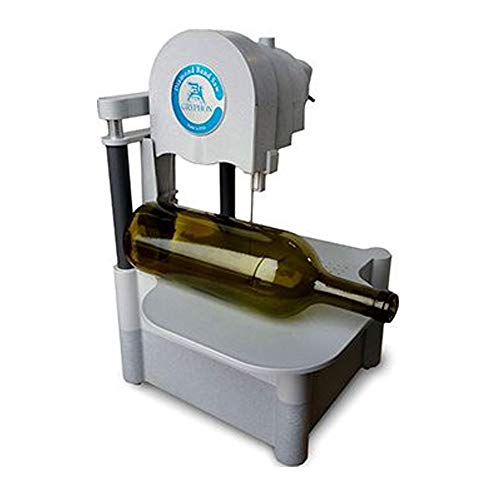
Pros
- Generous 5.56-inch clearance accommodates wine bottles and dimensional tile with the blade guide removed
- High-speed 40 mph blade creates crisp, clean edges on fragile glass and glazed ceramics
- Omnidirectional diamond blade allows tight radii and intricate scrollwork
- Compact 14 by 14-inch footprint takes up minimal bench space in small workshops
Cons
- Requires regular water reservoir monitoring and cleaning to keep slurry from building up
- Specialty diamond replacement blades are more expensive than traditional toothed bandsaw blades
- Not engineered for cutting hardwoods or structural metals
The Gryphon C40 TALL is a dedicated wet diamond band saw tailored for precision cutting across hard, brittle materials that would shatter under traditional toothed blades. Designed with an upgraded frame height compared to standard craft saws, this tall version addresses a frequent workshop challenge by expanding overhead clearance up to 5.56 inches with the upper guide removed. This makes it a capable machine for slicing cylindrical items like wine bottles, thick fused glass blocks, lapidary slabs, and custom ceramic tiles.
This tool is best suited for stained glass crafters, mosaic artists, custom tile setters, and creative DIY homeowners looking to step up their detailing capabilities. While general woodworkers or metal fabricators will need standard workshop saws for framing and steel work, anyone shaping glass, granite samples, porcelain, or decorative pottery will appreciate the smooth tracking and steady feed rate this platform provides.
In terms of cutting performance, the blade travels at roughly 40 miles per hour, allowing the diamond abrasive to grind smoothly through dense stock rather than tearing material away. The omnidirectional nature of the stainless steel diamond blade gives you the freedom to spin workpieces smoothly, turning sharp 90-degree corners or following intricate patterns that standard straight-line saws cannot replicate. The clean cut quality drastically cuts down on secondary edge grinding, boosting workshop productivity on intricate glass art or custom mosaic layouts.
From a build standpoint, the saw weighs in at a manageable 18 pounds, allowing quick relocation around a garage or studio as workspace needs shift. The housing and water containment surfaces are crafted to manage wet slurry cleanly, keeping coolant flowing to the blade to prevent heat build-up and extend diamond grit longevity. The direct motor configuration ensures steady power delivery without the maintenance hassles of stretched or slipping drive belts.
Routine maintenance centers on keeping the coolant basin topped off with clean water and clearing accumulated glass or stone sediment after big cutting sessions. While the open guide setup allows generous vertical clearance, operators should work at a measured pace on tall pieces to avoid blade deflection. If you need a reliable, compact specialty saw that tackles thick bottles, custom tile work, and intricate glass patterns without bogging down, the Gryphon C40 TALL represents a well-built workshop investment.
Operating a wet diamond saw requires balanced water distribution and steady workpiece feed pressure. The Gryphon C40 TALL circulates water directly to the cut line, which keeps dust completely suppressed while preserving the diamond matrix bonded to the stainless steel blade.
Because the blade grinds away material rather than using aggressive teeth, vibration against delicate glass edges remains exceptionally low. This allows users to execute delicate interior cutouts and tight scrollwork without risking structural cracks in expensive art glass or custom floor tiles.
Frequently Asked Questions
Can a standard tile saw cut glass bottles cleanly?
Standard tile saws can cut glass only if fitted with a continuous-rim glass diamond blade and continuous water cooling. Coarse masonry diamond blades will chip brittle bottle walls severely, while high blade vibration can shatter curved glass during entry. Dedicated equipment designed as the best saw to cut glass bottle operates with finer grit profiles, such as 150-grit diamond surfaces, to grind edges smoothly rather than chipping thick stock.
Why is water feed necessary when sawing glass bottles?
Water cools the diamond cutting surface to prevent thermal shock fractures and captures hazardous airborne glass dust. Running a diamond blade dry overheats the glass substrate instantly, causing stress fractures and stripping the electroplated diamond coating from the blade. Both the Deruilong trim saw and Gryphon diamond band saw rely on water reservoirs to maintain tool life and ensure smooth, satin rim finishes.
How does clearance height affect bottle cutting on a diamond band saw?
Vertical clearance dictates the maximum bottle diameter and upright height that can pass through the guide assembly. Standard glass band saws often provide under 2.5 inches of throat height, which blocks standard wine bottles. The Gryphon C40 TALL provides 4.5 inches of clearance under normal setup and expands to 5.56 inches when you remove the guide, accommodating 1.5-liter bottles with ease.
Do bottle cut edges require extra polishing after using a diamond saw?
Most diamond saw cuts require minimal secondary smoothing with wet silicone carbide sandpaper or rotary polishing pads before everyday handling. While a 150-grit diamond wheel creates an even, pre-ground rim, smoothing the sharp micro-edges ensures safety for drinkware or candle holders. When smoothing complex contours or flat projects, makers often turn to specialized detail sanders or wet glass grinding disks to achieve a rounded rim.
What safety precautions matter most when operating a glass bottle saw in 2026?
Eye protection and proper water containment represent the most vital safety considerations when cutting glass bottles. Always verify that water systems run continuously before engaging the diamond blade to eliminate airborne glass particles. Disconnect all electrical power before adjusting blade guides, draining sediment trays, or clearing small glass cutoffs from the work deck.





Write Your Review
No reviews yet. Be the first to share your experience!