


Dense salt-cured grain and embedded sand turn ordinary branch trimming into a punishing chore that ruins standard blades. When working with sun-bleached river logs or dense ocean timber, standard push saws bind up quickly in the twisted fibers. Evaluating tooth geometry, blade flexibility, and carbon steel hardness helps identify the best saw for hard driftwood for your specific craft or sculpting project. Japanese pull saws like the SUIZAN Ryoba or JORGENSEN double-edge models excel here because high-carbon SK5 steel pulls straight under tension without buckling against tough knots. Much like selecting a saw for rough exterior wood cuts, picking tools with hardened tri-bevel teeth keeps the cut line stable and reduces hand fatigue.
Irregular curves and stubborn knots in weathered logs also demand agile control that heavy power tools often destroy. Fine craft tasks frequently benefit from a dedicated coping frame or compass blade to navigate hollow pockets without splitting fragile dried edges. Based on listed specifications and user feedback, Japanese pull saws featuring dual-edge configurations allow you to alternate between rapid rip cuts and high-TPI cross cuts on dense hardwood fibers. That flexibility protects delicate natural contours while delivering smooth, ready-to-finish surfaces.

Pros
- Versatile mix of flush cut, dovetail, and coping saws covers both straight joinery and intricate curves
- Thin-kerf pull-cut design requires less physical effort while producing cleaner edges than standard Western push saws
- Corrosion-resistant plating helps protect the high-carbon steel from shop humidity and sap buildup
- Includes four assorted replacement coping blades to handle diverse craft and modeling tasks right out of the box
Cons
- Thin pull blades require disciplined pulling pressure to prevent bending or binding on forward strokes
- Does not include protective blade sheaths or a dedicated tool organizer for safe toolbox storage
- Not intended for heavy-duty demolition framing or thick structural lumber
The Lanties 8-piece Japanese saw set is a versatile manual cutting kit designed to give woodworkers, finish carpenters, model builders, and home DIYers access to clean, precision cuts without power tools. The package combines three distinct pull saws with a versatile U-shaped coping saw and four replacement blades. Based on the product specifications, this collection targets tasks where standard push saws leave excessive tear-out, such as flush-trimming dowels, cutting dovetails, sizing thin PVC conduit, and creating intricate curved profiles in craft boards.
At the core of the straight saws is SK5 high-carbon steel, a proven material valued for edge retention and controlled flexibility. Japanese saws cut on the pull stroke rather than the push stroke, which places the blade under tension during the cut. This mechanical advantage allows the saw plates to remain substantially thinner than conventional handsaws. The three-sided ground teeth slice cleanly through wood fibers, creating a narrow kerf that minimizes waste and reduces cutting resistance across hardwoods and softwoods alike.
Versatility is a strong point for this setup. The double-edge saw configurations provide fine crosscut teeth on one edge and coarser rip teeth on the opposite edge, allowing users to switch cutting directions simply by flipping the tool. For decorative work, the coping saw features a generous 4.3-inch throat depth that navigates around corners and cuts interior patterns with ease. Swapping or tensioning coping blades is straightforward thanks to the threaded handle mechanism, which eliminates the need for auxiliary tools.
Build quality focuses on functional workshop durability and comfort. The blades feature a transparent electroplated coating designed to resist rust and prevent corrosion from ambient garage humidity or moist wood fibers. Traditional rattan-wrapped handles and natural wooden grips offer solid non-slip grip ergonomics, helping users maintain fine directional control during delicate flush cuts against finished work surfaces.
Users should keep in mind that Japanese pull saws require proper cutting discipline. Applying heavy forward pressure can bend the thin steel plate or chip teeth, so cuts must always be initiated lightly and drawn smoothly backward. Additionally, the set does not supply rigid blade guards or a dedicated canvas roll, meaning owners will want to store the saws carefully on a workshop pegboard or in padded drawers to protect the sharp teeth.
For homeowners outfitting a home workshop, carpenters needing flush-cut capability on trim jobs, or craft hobbyists seeking clean joint fits, this Lanties handsaw set delivers substantial utility. It provides an accessible, broad-spectrum manual cutting toolkit that handles fine cabinetry details, joinery adjustments, and curved hobby cuts with precision.
In daily workshop tasks, the pull-cut action provides noticeable benefits over standard Western handsaws. Because the blade remains under tension during the working stroke, it tracks straighter lines with less wandering, which is particularly useful when cutting tenon shoulders or trimming exposed joinery plugs flush to a finished tabletop.
The coping saw complements the straight blades by tackling tight-radius scroll cuts, coping joint moldings, and clearing out waste between dovetail pins. With four blade types included, users can adjust tooth density based on whether they are cutting soft pine, dense craft plywood, or lightweight plastic components.
Constructed around SK5 high-carbon steel, the blades provide an optimal balance between hardness and flexibility. The high-frequency hardened teeth resist rapid dulling, while the transparent plating serves as a dependable barrier against moisture and workshop grime.
The traditional long rattan-wrapped handles on the larger saws give woodworkers ample leverage for two-handed control during longer rip cuts, while the compact wooden-handled saw is sized for quick one-handed adjustments in tight workshop corners.

Pros
- Produces exceptionally smooth, tear-out-free cuts in stubborn hardwood lumber
- Dual-edge functionality eliminates the need to switch saws between ripping and cross-cutting
- Thin kerf significantly reduces cutting effort compared to conventional Western push saws
- Comfortable rubberized handle provides a solid hold even during extended sessions
Cons
- Thin 0.02-inch blade requires proper pull technique to avoid bending on accidental push strokes
- Not intended for fast rough-cutting or demolition work with hidden nails
- Finer teeth require dedicated care and protection to prevent edge damage during storage
The SUIZAN 8-Inch Ryoba Saw is an authentic Japanese pull saw designed specifically for woodworkers tackling tough broadleaf species. Traditional Western handsaws operate on a push stroke, which requires a thicker blade to avoid buckling under compressive force. In contrast, this Japanese-style saw cuts on the pull stroke. Because the blade remains under tension during the cut, it can be manufactured significantly thinner, yielding cleaner surfaces with far less physical strain.
This tool is ideally suited for woodworkers, furniture makers, finish carpenters, and dedicated DIY hobbyists who work with demanding hardwoods such as walnut, oak, maple, or cherry. The blade features a dual-edge Ryoba configuration, presenting progressive rip teeth on one side and a fine 17 TPI cross-cut profile on the other. This setup lets you execute clean tenon cheeks, crisp dovetail pins, and accurate trim cuts without reaching for a second saw.
In terms of performance, the hardwood-specific tooth profiling helps prevent binding against dense, interlocking grain fibers. With a blade thickness of just 0.02 inches and an overall kerf width of 0.03 inches, the tool removes minimal stock. This thin profile produces minimal sawdust, reduces cut resistance, and leaves surfaces smooth enough to require little to no cleanup with a hand plane or sandpaper.
Crafted in Japan using high-grade carbon steel, the blade balances sharpness with wear resistance. SUIZAN pairs this steel with an ergonomic elastomer resin handle instead of traditional wrapped bamboo, offering modern slip resistance and solid tool control even if your palms get sweaty during prolonged shop sessions. At just 0.45 pounds, the saw feels light and balanced, making delicate layout lines easy to track.
Users should keep in mind that the thin blade demands proper cutting discipline. Applying heavy forward pressure can bend or damage the blade, so smooth, unforced pull strokes are essential for best results. Storing the saw in a protective sleeve or hanging it clear of rough shop tools will protect the sharp tooth pattern from accidental chips.
For anyone setting up a home workshop or looking to upgrade from standard push saws, this SUIZAN Ryoba offers an accessible path to precise joinery. It combines authentic Japanese craftsmanship with modern ergonomic handle materials, making it a reliable addition to any woodworking bench.
Precision joinery relies heavily on narrow kerfs and minimal blade deflection. Because the SUIZAN Ryoba operates on tension, the 0.02-inch blade stays straight throughout the stroke, reducing the tendency to drift off your knife lines during critical cuts.
The cross-cut edge sports 17 teeth per inch, which scores and severs wood fibers cleanly without tearing delicate face grain. Meanwhile, the graduated rip teeth clear waste efficiently down the length of the board, allowing woodworkers to cut tight mortise-and-tenon joints and dovetails with reliable consistency.

Pros
- Sharp, long-lasting tri-bevel teeth cut smoothly through multiple materials
- Comfortable, non-slip grip reduces hand strain during prolonged use
- Compact size fits easily in tight spots and tool storage
- Lightweight and easy to handle for precise curved cuts
- Corrosion-resistant alloy steel blade holds up well in various environments
Cons
- Not designed for heavy-duty lumber or thick hardwood cuts
- Blade length may be too short for larger framing or demolition tasks
- Limited to manual cutting; no power assist for faster work
The GreatNeck 12-inch compass saw is a compact hand saw built for precision curve cutting in wood, plastic, drywall, and non-ferrous metals. This tool is ideal for DIY homeowners tackling drywall repairs, woodworkers shaping small projects, and contractors needing a portable saw for tight spaces. Its induction-hardened tri-bevel tooth design delivers clean cuts and stays sharp longer than standard blades, reducing the need for frequent replacements.
Performance-wise, the alloy steel blade provides solid durability and corrosion resistance, making it suitable for both indoor and outdoor use. The anti-slip comfort handle allows you to maintain a firm grip even during longer cutting sessions, which helps reduce hand fatigue and improve control. For tasks like cutting drywall openings for electrical boxes or trimming plastic panels, this saw offers reliable efficiency without the bulk of larger hand saws.
Build quality is practical for its price range. The blade is heat-treated for strength, and the handle is ergonomically shaped to fit most hand sizes. While not a heavy-duty framing saw, it holds up well for light to medium cutting jobs around the garage, workshop, or jobsite. Storage is simple thanks to its compact size - it slips easily into a standard toolbox or hangs on a pegboard.
One realistic limitation is its blade length: at 12 inches, it's best suited for smaller cuts and curves rather than long straight rips or thick lumber. Users cutting dense hardwoods may find the blade flexes slightly under heavy pressure. Additionally, the saw is manual, so it won't replace power tools for high-volume production work.
Overall, the GreatNeck compass saw is a smart buy for DIYers, electricians, plumbers, and woodworkers who need a dependable, low-cost cutting tool for occasional use. It's also a good backup saw for contractors working in confined spaces. If you prioritize portability, comfort, and precision for light cutting tasks, this saw delivers solid value.
The GreatNeck 12-inch compass saw features an alloy steel blade that is induction-hardened for increased edge retention and corrosion resistance. The tri-bevel tooth geometry is designed to stay sharp through repeated use on wood, plastic, and drywall. The handle is made from a durable plastic with an anti-slip texture, providing a secure grip even when hands are sweaty or gloved. While the materials are not premium-grade, they are appropriate for the saw's affordable price and intended light-duty applications.
In a workshop setting, this compass saw excels at cutting curves in plywood, MDF, and drywall. Its narrow blade allows for tight-radius cuts that are difficult to achieve with larger saws. The comfortable handle reduces hand fatigue during detailed work like shaping wooden templates or trimming plastic sheets. For quick cuts in softwoods and composites, the saw performs efficiently without binding. However, for heavy ripping or thick hardwoods, users may find the blade lacks the stiffness needed for straight, aggressive cuts.

Pros
- Versatile blade assortment covers a range of materials from softwood to metal
- Comfortable hardwood handle with adjustable tension for precise control
- Lightweight and easy to maneuver for intricate cuts and curves
- Good value for the price, especially for occasional use
- Blade rotation feature allows cutting in any direction without repositioning the workpiece
Cons
- Frame depth may limit cutting reach on larger workpieces
- Blades can break under excessive force or when cutting thick materials
- Some users may prefer a metal frame for added rigidity
The IVY Classic 11110 coping saw is a classic hand tool designed for cutting intricate curves and shapes in wood, plastic, and even thin metals. It comes with five assorted blades, making it a versatile addition to any workshop or DIY toolkit. The saw features a rigid flat-profile frame made from high-carbon steel, paired with a comfortable hardwood handle that also adjusts blade tension.
This tool is best suited for DIY homeowners, woodworkers, hobbyists, and anyone who needs to make detailed cuts for projects like model building, scroll work, or light trim installation. It is not intended for heavy-duty construction but excels at precision cutting where a jigsaw or bandsaw might be too bulky.
In terms of performance, the saw handles well thanks to its lightweight design (under half a pound) and the ability to rotate the blade to any angle. This allows you to cut in tight spaces without moving the workpiece. The included blades cover a range of uses: fine blades for veneers and thin wood, a medium blade for hardwoods, a coarse blade for fast cuts, and a hacksaw blade for metals. Users report that the saw cuts smoothly when used with proper technique, though the blades are relatively thin and can break if twisted excessively.
Build quality is decent for the price point. The frame is sturdy enough for light to moderate use, and the hardwood handle provides a secure grip. However, the frame is made from flat steel rather than tubular, which may flex slightly under heavy pressure. The blade tensioning mechanism works well, keeping the blade taut for clean cuts. No carrying case is included, but the saw's compact size (about 11.75 inches long) makes it easy to store in a drawer or hang on a pegboard.
One realistic limitation is the cutting depth of 4-3/4 inches, which may not be sufficient for thicker stock. Additionally, the blades are consumable and may need frequent replacement if used on abrasive materials. For heavy-duty or professional use, a more robust coping saw with a deeper frame and stronger blades might be preferable.
Overall, the IVY Classic 11110 is a solid choice for hobbyists and DIYers who need an affordable coping saw for occasional intricate cuts. It offers good versatility with its included blades and comfortable handle. If you're a woodworker or DIY homeowner looking to add a reliable coping saw to your tool collection without breaking the bank, this model is worth considering.

Pros
- Exceptional cutting precision with minimal tear-out, perfect for joinery and finish work.
- Lightweight and easy to control, reducing arm fatigue during extended use.
- Versatile ryoba design allows crosscutting and ripping with one tool.
- Replaceable blade adds long-term value and convenience.
Cons
- Pull saw technique may require a short learning curve for users accustomed to Western push saws.
- Blade is thin and flexible, which might not suit heavy-duty demolition or very thick stock.
- No included storage case or sheath, users may need to purchase separate protection for the blade.
The SUIZAN Flush Cut Saw is a Japanese-style pull saw designed for woodworkers, DIY homeowners, and professionals who demand precision and clean cuts. Unlike traditional push saws, the pull motion allows for a thinner blade that cuts on the pull stroke, reducing effort and creating a smoother finish. This 6-inch double-edged ryoba saw features a hardened Japanese steel blade with 17 teeth per inch (TPI) on one side for hardwood and 20 TPI on the other for softwood, giving you versatility for different materials without switching tools.
In real-world use, the saw excels at flush cutting dowels, trim, and joints because the blade is thin (0.016 inches) and has a narrow kerf (0.018 inches). This minimizes material waste and leaves a clean edge that often requires little to no sanding. Woodworkers will appreciate the control offered by the lightweight design - the saw weighs only about 0.15 pounds, making it easy to guide along precise cut lines for dovetails, tenons, or curved cuts. Contractors and DIYers tackling home improvement projects like cutting baseboards or trimming door jambs will find the flush cut capability invaluable.
Build quality is a standout feature. The blade is made from top-grade Japanese steel and is replaceable, extending the tool's lifespan. Each saw is crafted in Japan by skilled artisans with over a century of toolmaking tradition, which reflects in the care put into the heat treatment and edge geometry. The blade attaches to a comfortable wooden handle via two screws, allowing easy swapping when it dulls. The handle itself is ergonomically shaped and provides a secure grip, though it lacks rubberized padding - still, most users find it comfortable for extended sessions.
Maintenance is straightforward: keep the blade dry and lightly oiled to prevent rust, and replace it when it loses its edge. Since there is no included storage case, you may want to purchase a blade guard or make a simple sleeve to protect the teeth and yourself. Storage is easy thanks to its compact size - it fits in most toolboxes or workshop drawers without taking up much space.
A realistic limitation is the learning curve for those accustomed to push saws. The pull saw requires a different technique: you start the cut gently and let the teeth do the work without forcing. Once mastered, however, it offers superior control and a cleaner cut. Also, the thin blade is not designed for heavy-duty tasks like cutting thick lumber or rough framing; for that, a Western-style saw or power tool would be more appropriate.
Overall, the SUIZAN Flush Cut Saw is a practical investment for woodworking enthusiasts, finish carpenters, and DIYers who prioritize precision. Its quality materials, replaceable blade, and traditional Japanese craftsmanship make it a reliable addition to any workshop or garage. For those who value clean, accurate cuts and don't mind a brief adjustment period, this saw delivers excellent value.
The SUIZAN Flush Cut Saw is built with high-grade Japanese steel that undergoes traditional heat treatment for optimal hardness and edge retention. The blade is attached to a solid wooden handle with two screws, allowing for easy replacement. The handle is shaped for a comfortable grip and good control, though it lacks rubber or ergonomic coatings. Overall construction feels sturdy and lightweight, typical of quality Japanese hand tools.
In a workshop setting, this saw shines for fine woodworking tasks such as cutting dovetails, tenons, and flush trimming. The double-edged ryoba design means you can crosscut and rip without changing blades. The thin kerf reduces waste and the pull stroke minimizes splintering, resulting in smooth surfaces that often need no further finishing. It is well-suited for hobbyists, cabinetmakers, and anyone who demands precision in joinery and trim work.

Pros
- Versatile TPI options let you switch between hardwood and softwood cuts.
- Flush cut design works cleanly without marring adjacent surfaces.
- Replaceable blade extends the tool's lifespan and saves money.
- Lightweight and ergonomic handle reduces fatigue during detailed work.
- Affordable price point for a quality Japanese-style saw.
Cons
- 5-inch blade limits use to small, precise cuts; not for large ripping or framing.
- Pull-stroke technique may require adjustment for users used to Western push saws.
- Switching between TPI sides can interrupt workflow when cutting mixed materials.
The Jorgensen Japanese Flush Cut Saw is a compact double-edge pull saw designed for precise woodworking cuts. With a 5-inch blade that offers 18 and 25 teeth per inch (TPI) on opposite edges, this tool provides versatility for cutting both hardwoods like oak and softwoods like pine. It's a practical addition for woodworkers, DIY homeowners, and professional carpenters who need clean flush cuts without damaging surrounding material.
Performance-wise, the geometric teeth design promotes fast chip removal and smooth cutting action. The 18 TPI side handles hardwood efficiently, while the 25 TPI side excels on softwoods, giving users control over different materials. The flush cut capability is ideal for trimming tenons, dowels, or any protruding wood flush to a surface. The blade is made from premium SK5 Japanese steel, which offers good elasticity and wear resistance, contributing to longer service life.
Build quality is solid for the price point. The handle features a soft grip with a non-slip surface, making it comfortable during extended use. The saw is lightweight at just over a quarter pound, so it won't fatigue your arm. Storage is straightforward - it fits easily into a toolbox or drawer. Maintenance is minimal: keep the blade clean and dry, and replace it when dull by loosening a screw.
One realistic limitation is the blade size. While 5 inches is great for precision work, it's not suited for larger framing or ripping cuts. Also, if you're accustomed to Western push saws, the pull stroke of Japanese saws might take some getting used to. Finally, switching between TPI requires flipping the saw or swapping the blade, which could slow down tasks that involve both wood types.
Overall, the Jorgensen Flush Cut Saw is a reliable choice for anyone doing fine woodworking, trim work, or hobby projects. It offers good value for the price, with a replaceable blade and comfortable grip. For woodworkers, DIYers, and professionals looking for a dedicated flush cut saw, this is a solid tool to have in your workshop.

Pros
- Double-edge design provides two saws in one for fast ripping and fine cross-cutting
- Replaceable SK5 blade offers excellent wear resistance and easy replacement without tools
- Comfortable, non-slip grip reduces fatigue during prolonged cutting sessions
- Lightweight and well-balanced for precise, effortless pulls
- Sharp, aggressive teeth cut quickly through both soft and hard woods with minimal tear-out
Cons
- Learning curve for users accustomed to Western push saws - requires a different cutting technique
- Blade is thin and flexible, which may bend under excessive force or when cutting thick stock
- No included storage case or blade guard, so careful storage is needed to protect teeth
The Jorgensen Japanese Pull Saw is a 10-inch double-edged hand saw designed for woodworkers, DIY homeowners, contractors, and anyone who values clean, precise cuts. Unlike traditional Western push saws, this pull saw cuts on the pull stroke, allowing for a thinner, more flexible blade that produces smoother cuts with less effort. The 10-inch length provides a good balance between reach and control, making it suitable for everything from trimming branches to cutting joinery.
Best suited for woodworking enthusiasts, carpenters, and tradespeople who need accurate cuts in hardwood, softwood, plywood, or even plastic pipes. The double-edge design is a standout feature: one side has coarse teeth (7-12 TPI) for fast rip cuts along the grain, while the other side has fine teeth (18 TPI) for clean cross-cuts and flush trimming. This versatility means you grab one saw for most cutting tasks around the workshop or job site.
Real-world performance is where this saw shines. The SK5 steel blade is induction hardened for wear resistance and flexibility, allowing it to follow a straight line with ease. The triple-ground teeth start cutting quickly and leave a smooth surface that often requires less sanding. Users will appreciate the reduced effort compared to push saws - just light, long pulls with a slight angle. It handles both softwoods like pine and hardwoods like oak efficiently, though thicker hardwoods may require patience.
Build quality is solid for the price point. The blade is replaceable via a simple screw mechanism, which extends the saw's life significantly. The handle is ergonomic with a soft, non-slip grip that stays comfortable even during extended use. The saw is lightweight (0.6 lbs) and easy to maneuver, but the thin blade does require careful handling to avoid bending if forced. There is no included storage case, so you'll want to store it in a safe place or use a blade guard.
Ease of use is excellent once you adapt to the pull technique. Cutting with the pull stroke takes some practice for those used to push saws, but most users find it intuitive after a few cuts. Maintenance is minimal - just keep the blade clean and replace when dull. Storage is a minor concern due to the exposed teeth, but the saw is compact enough to fit in a standard toolbox or hang on a pegboard.
Overall, the Jorgensen Japanese Pull Saw offers great value for woodworkers, DIYers, and professionals looking for a versatile, precise cutting tool. While it has a learning curve and requires careful storage, its double-edge capability, replaceable blade, and comfortable handling make it a smart addition to any workshop. Based on specifications and user feedback, it is a reliable choice for most cutting tasks from trim work to larger projects.
The Jorgensen Japanese Pull Saw uses premium SK5 Japanese steel for the blade, which is induction hardened for high elasticity and wear resistance. The blade is thin and flexible to allow precise cuts, but remains durable enough for repeated use. The handle is made from a soft, non-slip material that provides a secure grip even with sweaty or gloved hands. The blade replacement mechanism uses a simple screw, making it easy to swap blades without special tools. Overall, the build quality reflects a tool designed for regular workshop use at an affordable price point.
This pull saw features a lightweight design (0.6 pounds) and an ergonomically shaped handle with a non-slip surface. The handle is comfortable for both one- and two-handed operation, reducing fatigue during long cutting sessions. The balance is well-centered, allowing for controlled, accurate pulls. The grip size fits most hand sizes and provides good leverage without causing strain. For users who spend hours on trim work or joinery, this comfort factor makes a noticeable difference.
Pros
- Sharp double-edge blade provides versatility for different wood types and cuts
- SK5 steel blade offers good hardness and edge retention for the price
- Lightweight and easy to handle for detailed trimming and hobby projects
- Flexible blade reduces risk of binding and produces cleaner cuts
Cons
- Small 6-inch blade limits use to smaller stock and fine work, not suited for large lumber or framing
- Thin blade may be prone to bending if used aggressively on thick materials
- No included storage case or sheath for blade protection when not in use
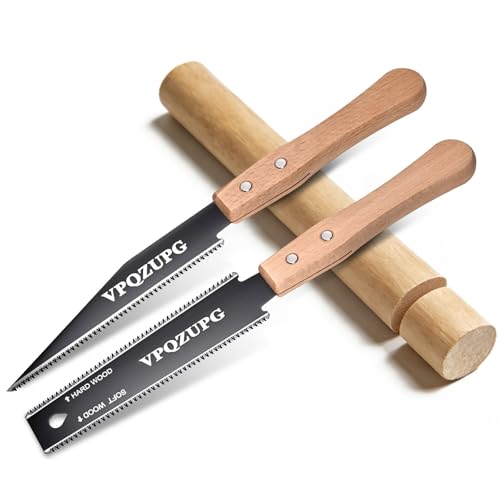
The VPQZUPG Japanese hand saw is a 6-inch pull saw designed for precision woodworking, trimming, and detail cuts. Unlike Western push saws, this pull saw cuts on the backstroke, allowing a thinner blade that removes less material and gives you more control. It’s a practical tool for DIY homeowners, woodworkers, and workshop users who need clean, accurate cuts in small to medium stock.
Who is this saw best suited for? It’s ideal for hobbyists and professionals alike—woodworkers doing joinery, model making, or trim work; electricians cutting small dowels or plastic; and DIYers tackling furniture repairs or home improvement projects. The double-edge blade offers flexibility: one side has 17 TPI for hardwoods and the other 11 TPI for softwoods, so you can handle both rip cuts and cross cuts without switching tools.
In real-world use, the saw’s performance stands out for its sharpness and precision. The SK5 high-carbon steel blade is heat-treated to HRC60-63, giving the teeth good wear resistance. Users report that the triple-ground teeth cut smoothly in both directions, leaving a clean edge that requires little sanding. The flexible blade helps prevent binding, especially when cutting curves or thin materials. However, because it’s a pull saw, there’s a slight learning curve for those used to push saws—but most adapt quickly.
Build quality is decent for the price point. The blade is securely attached to a plastic handle with a comfortable grip. While the handle is functional, it’s not ergonomically shaped for extended use, and the overall construction feels light. The saw does not come with any storage case or blade guard, so you’ll need to store it carefully to protect the teeth and prevent accidents. A magnetic holder or dedicated drawer slot works well.
One realistic limitation is the 6-inch blade length. This saw excels at small-scale work like cutting dowels, shaping tenons, or trimming veneers, but it won’t replace a full-sized panel saw or dovetail saw for larger projects. Also, the thin blade can bend under heavy pressure, so it’s best used with a light touch and proper technique.
Overall, the VPQZUPG Japanese pull saw is a budget-friendly addition to any workshop. It delivers sharp, precise cuts for fine woodworking and DIY tasks. If you need an inexpensive trim saw for small projects or detail work, this is a worthwhile buy. For heavy construction or large lumber, consider a longer saw or power tool.
The VPQZUPG pull saw uses SK5 high-carbon steel for the blade, which is heat-treated to achieve a hardness of HRC60-63. This provides good edge retention and wear resistance for light to medium woodworking tasks. The blade is thin and flexible, which helps reduce friction and binding during cuts. The handle is made of molded plastic with a non-slip texture, offering a secure grip. While the plastic feels a bit basic, it’s lightweight and adequate for the saw’s intended use. There are no metal reinforcements or premium finishes, but at this price point the build quality is acceptable for a hobbyist or occasional user.
In woodworking applications, this saw excels at small precise cuts. The 17 TPI side is ideal for hardwoods like oak or maple, producing smooth crosscuts and dovetails. The 11 TPI side works well on softwoods such as pine or cedar for faster rip cuts. Because the blade pulls through the wood, you get a thin kerf that reduces waste and leaves a clean surface. It handles detail work like cutting tenon shoulders or trimming dowels with accuracy. For larger boards or thick stock, the 6-inch length becomes a limitation—you’ll want a longer saw for those jobs. But for small projects, model making, or trim carpentry, it’s a capable tool.

Pros
- Exceptionally clean cuts with minimal tear-out, thanks to the Japanese pull saw design.
- Dual-edge blade (crosscut and rip) adds versatility without needing two separate saws.
- High-quality Japanese steel holds a sharp edge well, reducing frequency of sharpening.
- Lightweight and compact, easy to store in a tool drawer or apron pocket.
- Great for detailed woodworking like dovetails, tenons, and flush trimming dowels.
Cons
- The blade is not replaceable, so once dull the whole saw must be replaced.
- Learning curve for those used to Western push saws; initial technique adjustment required.
- Limited to smaller cuts; not suitable for large framing or heavy construction tasks.
The SUIZAN 5" Flush Cut Saw is a Japanese-style pull saw that offers a refreshing take on hand cutting. Unlike traditional Western push saws, this pull saw cuts on the draw stroke, giving you greater control and leaving a remarkably clean edge. Its ryoba (double-edge) blade features coarse teeth on one side for rip cuts and fine teeth on the other for crosscuts, making it a versatile tool for a wide range of woodworking tasks.
This saw is ideally suited for DIY homeowners tackling furniture repairs or small woodworking projects, as well as seasoned woodworkers and professional contractors who need a precise, flush-cutting tool for joinery, trim work, and model building. Its compact 5-inch blade excels in tight spots, such as cutting dowels flush with a surface or making delicate cuts in cabinets and shelves.
In terms of performance, the Japanese steel blade provides impressive sharpness out of the box. Users can expect fast, clean cuts in materials like oak, mahogany, walnut, and pine without splintering. The pull-saw action requires less force than a push saw, reducing user fatigue and allowing for longer, more accurate cuts. This makes it a practical choice for workshops where precision and comfort are priorities.
Build quality is a standout feature. The saw is made in Japan by skilled craftsmen, and it shows in the fit and finish. The blade is securely set into a wooden handle that feels comfortable and provides good grip, even during extended use. However, because the blade is fixed and not replaceable, the saw's lifespan is tied to the blade's sharpness. Once dull, the entire unit must be replaced, which is something to consider for heavy daily use.
Storage is straightforward: the saw's small size means it can be tucked into a tool drawer, hung on a pegboard, or carried in an apron pocket without taking up much space. Maintenance involves keeping the blade clean and dry to prevent rust, and occasionally wiping it with a light oil. There's no complicated setup, and it's ready to use right out of the package.
While the SUIZAN saw is not designed for heavy framing or demolition, it excels in fine woodworking and precision tasks. For anyone serious about woodworking or DIY projects that demand clean, accurate cuts, this saw offers excellent value. Its combination of Japanese craftsmanship, dual-edge versatility, and ergonomic design makes it a worthy addition to any workshop or garage tool collection.
The SUIZAN 5" Flush Cut Saw is built with high-quality Japanese steel that holds a sharp cutting edge well. The blade is securely set into a wooden handle, which is comfortable to grip and provides good control during cuts. The overall construction feels solid and carefully assembled, typical of Japanese hand tools. The saw is lightweight at just 0.11 pounds, making it easy to handle for extended periods. While the blade is not replaceable, the build quality suggests that with proper care, the saw will deliver consistent performance for many projects before needing replacement.
In a workshop setting, this saw truly shines for detailed joinery and flush cuts. The double-edge ryoba design means you can switch between crosscutting and ripping without changing tools, which speeds up workflow. The pull-saw action leaves a very clean surface, often requiring little to no sanding. It is especially useful for cutting dovetails, tenons, and trimming dowels or plugs flush to a surface. The saw is also effective for cutting small pieces of hardwood and softwood used in model making, furniture repair, and cabinet work. Its compact size allows it to access tight areas where larger saws cannot reach, making it a great companion for intricate projects.
Pros
- Affordable price point for a quality pull saw
- Sharp, durable SK5 blade with two useful tooth configurations
- Lightweight and comfortable for extended use on small projects
- Effective flush cutting capability for trim and joinery work
Cons
- Limited to smaller workpieces due to 6-inch blade length
- Handle may feel basic for users accustomed to ergonomic grips
- Not suitable for heavy-duty framing or large timber cutting
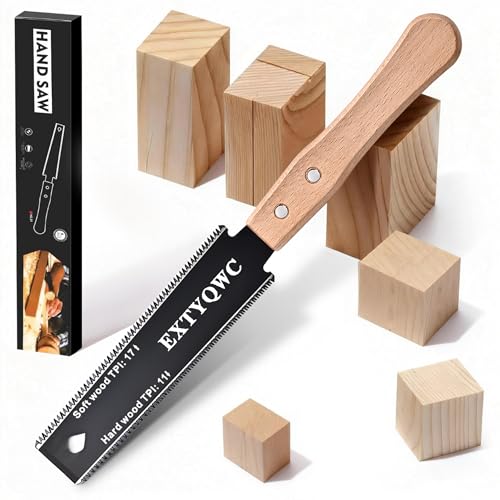
The EXTYQWC 6-Inch Double-Edge Japanese Pull Saw is a compact handsaw designed for precision woodworking, DIY projects, and detail trimming. Unlike traditional Western saws that cut on the push stroke, this pull saw cuts on the pull stroke, offering greater control and a thinner kerf. The double-edge blade features 17 TPI (teeth per inch) on one side for fine cross cuts and 11 TPI on the other for faster rip cuts in softwood, making it a versatile tool for various small-scale tasks.
This saw is best suited for DIY homeowners, woodworkers, hobbyists, and anyone who needs a flush cut saw for trimming dowels, tenons, or other protruding wood. Its compact size and lightweight design make it easy to maneuver in tight spaces, such as inside cabinets or furniture joints. The SK5 high-carbon steel blade is heat-treated to a hardness of HRC60-63, which helps maintain sharpness over time and resists wear from cutting both hardwoods like oak and maple and softwoods like pine and cedar.
In real-world use, the saw delivers clean, accurate cuts with minimal effort thanks to the pull-stroke action. The 17 TPI side excels at producing smooth cross-grain cuts, while the 11 TPI side removes material faster for rip cuts along the grain. Users appreciate the flush cut capability, which allows them to cut right against a surface without marring it – ideal for trim work or removing excess from joints. The thin blade flexes slightly, which helps in following a line but requires a steady hand for perfectly straight cuts.
Build quality is respectable for the price point. The blade is securely attached to a basic handle that provides adequate grip, though it lacks ergonomic contours found on higher-end models. The saw feels well-balanced and easy to control for detail work. Storage is simple – it fits easily into a toolbox drawer or can hang on a pegboard. Maintenance involves wiping the blade clean after use and occasionally applying a light oil to prevent rust, as SK5 steel is not stainless.
One realistic limitation is the 6-inch blade length, which restricts the saw to smaller workpieces and prevents it from cutting thicker stock. Users tackling larger boards or heavy framing will need a full-size saw. Additionally, the handle’s simple design may not be as comfortable for prolonged use, though for most small projects this isn’t a major issue. There is no included case or blade guard, so storing the sharp blade safely requires care.
Overall, the EXTYQWC Japanese Pull Saw is a practical and affordable addition to any woodworker’s or DIYer’s toolkit. It excels at precision cutting, flush trimming, and detail work where control matters more than brute force. For hobbyists, model makers, or homeowners tackling small repairs and projects, this saw offers good value and reliable performance. Professionals may prefer a longer or more ergonomic model, but for the price, it’s a handy backup or dedicated trim saw.
Frequently Asked Questions
Why are Japanese pull saws effective for dense driftwood?
Japanese pull saws cut on the pull stroke, which keeps the thin blade straight under tension and stops it from buckling against twisted grain. That thin kerf removes less wood, lowering cutting resistance through calcified or weathered hardwood sections. Pulling the blade also grants tighter hand control around irregular log curves without gouging delicate outer bark.
What tooth count works best when cutting weathered shoreline timber?
A tooth count between 14 and 18 TPI works best for cross-cutting dense driftwood without excessive tear-out. Coarser teeth under 10 TPI remove material faster along the grain, but they can catch and fracture brittle, sun-dried fibers. Using a double-sided Ryoba allows you to switch between aggressive clearing and fine detail cuts instantly.
How do embedded sand and minerals in driftwood affect handsaw blades?
Mineral deposits and silica dull standard steel teeth rapidly, making impulse-hardened or high-carbon SK5 steel essential. Hardened tooth tips resist abrasive ocean grit much longer than soft unhardened carbon blades. If a project involves square trim ends rather than natural carving cuts, pairing a sturdy hand tool with dedicated bench equipment like compound miter saws for rough stock prep helps preserve your specialty hand blades.
Can a coping saw cut intricate curves through thick driftwood?
Yes, a coping saw handles curved cuts and hollow cutouts well if the branch thickness stays under four inches. The thin, flexible blade pivots inside tight grain pockets where wider handsaws cannot maneuver. However, deep or dense hardwood logs require slow strokes to prevent narrow coping blades from twisting off line.
Should you use a flush cut saw on uneven driftwood surfaces?
A flush cut saw works reliably when trimming small protruding stubs flush against a curved branch. Because these blades lack traditional tooth set, the side of the blade bends against the surface without scratching surrounding weathered patina. They work best on smaller branch diameters up to two inches.
What is the primary advantage of SK5 steel for cutting hard wood?
SK5 carbon steel provides exceptional edge retention and elasticity, keeping teeth sharp even through dense, calcified grain. The alloy flexes under strain without taking a permanent bend, which prevents warping when negotiating unpredictable interior knots.





Write Your Review
No reviews yet. Be the first to share your experience!