


Sanding curved edges and contoured surfaces can be tricky with a standard sander. The wrong tool often leaves uneven finishes or misses tight spots. That is where a Best Rim Sander comes into play. These tools are designed to handle the curves and details that flat sanders struggle with, whether you are refinishing a table rim, shaping a cabinet edge, or smoothing a decorative profile. The products listed here range from pneumatic palm sanders to file sanders and wheel sanders, each offering different approaches to curved surface work. Some prioritize control and low vibration, while others focus on aggressive material removal or dust management. For a closer look at sanding contoured surfaces, check out our guide on best sander for contoured surfaces. If detail finishing is your main concern, our best rated hand sander guide covers additional options for fine finish work.
Pros
- Variable speed control offers versatility for wood, metal, plastic, and paint prep
- Auto-tracking keeps the belt running straight without constant tweaking
- Pivoting head makes it easy to sand inside curves and along edges
- Tool-free belt changes save time and hassle on the job
- Compact size stores easily in a toolbox or drawer
Cons
- Small 1/2x18 inch belt limits material removal rate for heavy stock removal
- Plastic housing may not withstand heavy drops on a construction site
- Dust port adapter may not fit all shop vacuums without additional attachments
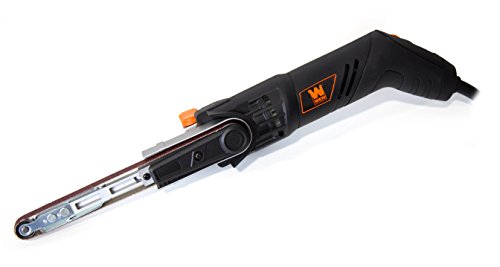
The WEN 6307 is a variable speed detailing file sander designed for precision work in tight spaces. Unlike larger belt sanders, this compact tool uses a 1/2-by-18-inch belt that can pivot up to 55 degrees, making it ideal for sanding inside corners, along edges, and on contoured surfaces. It's best suited for DIY homeowners, woodworkers, mechanics, and hobbyists who need to sand, shape, or finish small areas without the bulk of a full-size sander.
Performance-wise, the variable speed dial lets you adjust belt speed from 1080 to 1800 feet per minute. This range works well for everything from light sanding of softwoods to more aggressive material removal on metals or plastics. The auto-tracking belt system is a standout feature - it keeps the belt centered without manual tensioning, so you can focus on your work rather than fiddling with adjustments. According to user feedback, this reliability is a big plus for consistent results.
Build quality is practical for its price point. The housing is lightweight plastic, which keeps the tool at just 2.4 pounds for reduced fatigue during extended use. The pivoting head feels sturdy and locks securely at various angles. While it's not built for heavy-duty construction site abuse, it holds up well for workshop and garage projects. The included dust port helps connect to a vacuum for cleaner work, though the adapter may not fit all hose sizes without a reducer.
Ease of use is a strong point. Changing belts is tool-free - just release the tension, slide on a new belt, and you're ready. The auto-tracking means no alignment headaches. Storage is simple thanks to its compact size; it fits easily in a toolbox drawer or on a shelf. Maintenance is minimal - just keep the belt path clean and occasionally check the tracking.
A realistic limitation is the small belt size. This sander excels at detail work but won't remove material quickly like a larger belt sander. It's not ideal for flattening large surfaces or heavy stock removal. Also, the plastic construction means you'll want to handle it with care if you're using it on a job site.
Overall, the WEN 6307 is a solid choice for anyone who needs a precise, easy-to-use file sander for small projects. DIYers will appreciate the variable speed and pivoting head for furniture repair, model making, or automotive detailing. Woodworkers can use it for shaping and sanding in tight joinery. Mechanics will find it handy for deburring metal parts or prepping surfaces. If your work involves getting into nooks and crannies, this tool delivers reliable performance without breaking the bank.
In a workshop setting, the WEN 6307 shines for detail sanding tasks where precision matters more than speed. The variable speed control lets you dial in the right pace for different materials - slower for delicate wood inlays, faster for rough metal edges. The pivoting head is especially useful when sanding inside cabinets or along curved trim. Users report that the auto-tracking system holds up well even during extended use, reducing downtime. For woodworkers, it's a great companion for sanding dovetails, small carvings, or tight mortises. The lightweight design also makes it easy to maneuver one-handed while holding your workpiece steady.
The WEN 6307 comes with three 1/2-by-18-inch abrasive sanding belts, which is enough to get started on a few projects. The included dust port attachment helps keep your work area cleaner when connected to a shop vacuum or dust extractor. While the belts are a good start, you'll likely want to buy additional grits for finer finishing or more aggressive sanding. The two-year warranty covers defects in materials and workmanship, giving you added confidence in your purchase. No carrying case is included, but the tool's small size means it's easy to store in a toolbox or on a shelf.

Pros
- Versatile with two backing plate sizes (5 and 6 inches) for different grits and applications
- Lightweight at 1.5 pounds, improving maneuverability and reducing hand fatigue
- Integrated speed control allows adjustment for various materials and finishes
Cons
- Requires an air compressor, so not suitable for users without pneumatic tools
- Supplied data does not confirm orbit diameter or specific vibration levels, which may affect finish quality
- Dust collection via bag may not be as effective as vacuum attachment for fine dust
This ZFE pneumatic random orbital sander is a dual-action air tool designed for sanding and polishing wood, composites, and metal. It comes as a complete kit that includes both a 5-inch and a 6-inch backing plate, allowing you to switch between sizes depending on the project. The sander is powered by compressed air, so it requires a compatible air compressor, but it offers a lightweight and ergonomic palm grip that reduces fatigue during extended use.
The product description highlights a high-precision all-steel movement with an integrated regulator that provides speed control up to 10,000 rpm. This allows you to adjust the speed for different materials, from aggressive material removal on metal to finer polishing on painted surfaces. However, the supplied data does not specify the orbit diameter or no-load RPM range, so users should consider these factors when planning their work.
For dust management, the sander includes a dust bag and a 1-meter vacuum tube. While this provides basic dust collection, it may not capture all fine particles, especially during heavy sanding. Users with a shop vacuum might find it beneficial to connect the sander directly to a vacuum system for better dust control.
The kit includes 24 pieces of sandpaper, three sponge polishing pads, two microfiber cloths, and a washing mitt, giving you everything needed to start a project. The sandpapers allow you to tackle different grits for rough grinding, semi-fine grinding, and finishing. The polishing pads are useful for buffing painted surfaces or bringing a shine to metal.
One limitation is that this is a pneumatic tool, so it is not plug-and-play for those without an air compressor. Additionally, the supplied data does not confirm vibration levels or long-term durability, which may matter for frequent professional use. For DIYers, hobbyists, or workshop users who already have a compressor, this kit offers a cost-effective way to handle a variety of sanding and polishing tasks without investing in multiple dedicated tools.
Overall, the ZFE pneumatic random orbital sander is a practical choice for users who need a versatile air sander with multiple backing plates and a generous accessory kit. It is best suited for light to medium-duty projects in the garage, workshop, or home, where a pneumatic setup is available. While it may not replace a high-end professional sander, it provides good value for its price point.

Pros
- 2.5A motor with 14,000 RPM provides ample power for typical woodworking and surface sanding.
- Six speed settings and included grit assortment offer versatility for different sanding stages.
- Dust box and ergonomic grip enhance convenience and user comfort.
- Hook-and-loop pad simplifies abrasive changes.
Cons
- Orbit diameter not specified in provided data, making it harder to estimate aggressiveness.
- No information on vibration level or noise, which may be a concern for prolonged use.
- Only one dust bag included; no shop vacuum port mentioned for finer dust control.
The DEKOPRO 5-inch random orbital sander is a corded electric palm sander designed for hobbyists and DIY homeowners tackling woodworking projects, furniture refinishing, or general surface preparation. It combines a 2.5A motor capable of up to 14,000 RPM with six variable speed settings, giving users control over material removal and finish quality.
Performance-wise, the motor delivers consistent power for tasks like smoothing rough lumber, removing old paint, or sanding between coats. The six speeds allow you to dial in the right aggressiveness, and the included 16 sanding discs cover grits from 60 to 1000, so you have the essentials for coarse, medium, and fine work right out of the box. The hook-and-loop pad makes swapping discs quick and convenient.
Dust collection is handled by a detachable dust bag that captures a good portion of debris, helping keep the work area cleaner. The tool also features an ergonomic rubber grip and a balanced counterweight design to reduce vibration-related fatigue during longer sessions. This makes it easier to maintain control and comfort over extended use.
That said, the supplied data does not specify the orbit diameter, which is a key factor in determining the sander's aggressiveness and finish characteristics. Additionally, there is no mention of a vacuum port, which some users might prefer for even finer dust control. The tool is well-suited for light to medium-duty sanding around the home or workshop, but professionals who need precise specifications may want to look for more detailed documentation.
Overall, this DEKOPRO sander offers good value for the DIY user who wants an adjustable, ready-to-use sanding solution with included abrasives and a dust management feature. It is best suited for furniture projects, cabinet preparation, and general wood surface finishing where a balance of power and control is needed.

Pros
- Reduced vibration thanks to separate counterweight design.
- Improved dust collection helps keep the workspace cleaner.
- Comfortable rubber overmold grip in key areas.
- Dust-sealed switch adds durability in dusty environments.
Cons
- Corded operation limits mobility and requires access to an outlet.
- Dust port may need an adapter (sold separately) to fit standard 1-1/4 inch vacuum hoses.
- No sandpaper or storage case included, so you'll need to purchase separately.
The DEWALT DWE6423 is a corded random orbit sander designed for finish sanding and surface preparation tasks. It features a 5-inch hook-and-loop pad and variable speed control, making it a versatile tool for woodworking, furniture refinishing, and general DIY projects. As a corded model, it provides consistent power without the need for battery management, which can be an advantage for longer sanding sessions.
Powered by a 3-amp motor, this sander delivers an operating speed range of 8,000 to 12,000 orbits per minute. The variable speed capability allows you to adjust the pace for different materials and grits, giving you more control over the finish. While the orbit diameter is not specified in the product data, the OPM range suggests it can handle both light finishing and moderate material removal.
One of the standout features is the separate counterweight design, which helps reduce vibration transmitted to the user's hand. This can make a noticeable difference during extended use, particularly when working on larger surfaces. The tool also includes an improved dust collection system with a one-handed locking dust bag, and the dust port is designed to fit DEWALT DWV010 or DWV012 dust collectors. For use with standard shop vacuums, a separate adapter (DWV9000) is available.
Ergonomically, the sander features a rubber overmold in critical grip areas, providing a secure and comfortable hold. The shorter height of the tool allows the user to get closer to the workpiece, which can improve control and precision. Additionally, the dust-sealed switch is designed to resist dust ingestion, potentially extending the switch's lifespan.
On the downside, the corded nature of this sander means you'll be tethered to an outlet, which may be inconvenient for jobsites without nearby power. The dust port may require an adapter to connect to standard vacuum hoses, and no sandpaper or carrying case is included. These considerations are typical for tools in this class but are worth noting if you're planning a purchase.
Overall, the DEWALT DWE6423 is a well-rounded random orbit sander that suits homeowners and woodworkers who prioritize comfort and dust management. Its vibration reduction and dust collection features make it a practical choice for projects requiring a smooth finish. If you already own DEWALT dust extraction equipment or are willing to invest in the proper adapter, this sander can integrate seamlessly into your workshop.
Pros
- Belt speed over 13 ft/s provides fast material removal.
- Lightweight and compact design improves maneuverability.
- Lock-in trigger enables continuous sanding without constant grip.
- Includes a dust bag for basic debris containment.
- Two-year warranty offers added protection.
Cons
- Fixed belt speed may not be ideal for delicate finish sanding.
- Dust bag offers basic collection but no shop vacuum port for finer dust control.
- Corded design requires a nearby power outlet, restricting portability.
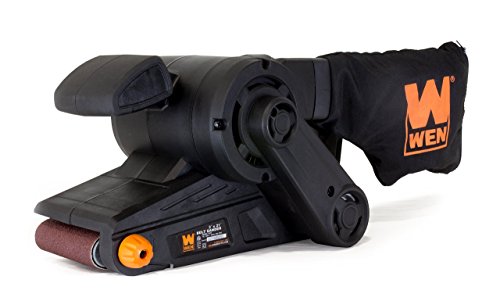
The WEN 6321 is a corded belt sander that uses a 7-amp motor to drive a 3x21 inch sanding belt at over 13 feet per second. This setup is built for aggressive material removal, making it a solid choice for DIYers, hobbyists, and homeowners who need to strip paint, smooth rough lumber, or refinish furniture quickly. The handheld-only design keeps the tool focused on portable sanding tasks.
Performance-wise, the belt speed delivers fast cutting action on wood and painted surfaces. The sander weighs just 6.2 pounds, which helps reduce arm fatigue during longer sessions. The lock-in trigger feature lets you sand continuously without holding the switch, adding convenience on repetitive passes. The included detachable dust bag captures much of the sanding debris, though it won't replace a dedicated dust extraction system for fine particles.
For everyday use, the compact dimensions (12x6x6.5 inches) make storage easy, and the corded power means you never have to worry about battery life. The dust bag is simple to remove and empty, and the two-year warranty provides some reassurance for occasional to moderate use. Setting up the sander is straightforward, and belt changes are typical for this class of tool.
That said, the sander operates at a fixed belt speed, which limits its versatility for fine finish work where slower speeds help prevent gouging. The dust bag is functional but lacks a port for connecting a shop vacuum, so you may see more airborne dust than with a vacuum-equipped model. Additionally, the cord requires a nearby outlet, which can be a minor inconvenience on job sites without easy power access.
Overall, the WEN 6321 is a practical, budget-friendly belt sander for DIY projects that demand heavy stock removal and basic smoothing. It's best suited for homeowners, hobbyists, and light workshop use rather than professional production or precision finish sanding. If your work involves rapid material removal on rough surfaces, this sander offers good value for the price.

Pros
- Brushless motor provides excellent runtime and no maintenance brushes
- Variable speed allows tailoring to different materials and tasks
- Dust collection works well with shop vac or included bag
- Lightweight and well-balanced, easy to handle for hours
- Part of the M18 platform, great for existing Milwaukee users
Cons
- Battery and charger sold separately, adding to initial cost
- No soft-start or anti-vibration features found on some higher-end models
- Hook-and-loop pad may wear out over time; replacement pads are available but an extra expense
The Milwaukee 2648-20 M18 Random Orbit Sander is a cordless power tool designed for finishing work, paint removal, and surface preparation. It is part of Milwaukee's M18 lineup, which means it runs on the same rechargeable battery system as many other tools from the brand. This sander is aimed at a wide range of users including DIY homeowners, woodworkers, auto body enthusiasts, contractors, and professional tradespeople who value portability and convenience without sacrificing performance.
In terms of real-world performance, the brushless motor delivers consistent orbital motion with a 5-inch random orbit pattern. The variable speed dial (6,000 to 12,000 orbits per minute) allows users to adjust the aggressiveness for different tasks. For example, lower speeds work well for fine sanding on wood, while higher speeds handle paint removal or metal finishing. The sander is relatively quiet and produces minimal vibration compared to corded sanders, which helps reduce user fatigue during long projects. According to user feedback, dust collection is effective when connected to a shop vac, and the included dust bag works decently for quick jobs.
Build quality is what you'd expect from Milwaukee: a durable housing, sealed bearings, and a well-designed dust port. The random orbit action is smooth and leaves a swirl-free finish when used correctly. The 5-inch hook-and-loop pad is easy to change and accepts standard sandpaper discs. The sander is lightweight at just 2 pounds, making it easy to handle overhead or on vertical surfaces. The rubber overmold on the grip provides a comfortable, non-slip hold even with sweaty hands.
Storage and setup are straightforward. As a bare tool, you need to purchase an M18 battery and charger separately. The sander is compact enough to fit in most toolboxes or on a shelf. There's no case included, but the tool is rugged enough to toss in a bag. Maintenance is minimal: keep the pad clean, occasionally check the dust port for clogs, and store the battery properly. The lack of a cord is a huge benefit for garage and workshop users who hate dealing with cords tangling around workbenches.
One realistic limitation is that the sander does not have a soft-start feature or an advanced anti-vibration system found on some premium models. Also, the included dust bag is small and may need frequent emptying. For heavy daily use, you'll likely want to pair it with a shop vac. The absence of a case is another minor drawback, but many users already have storage solutions.
Overall, the Milwaukee 2648-20 is a solid choice for anyone already invested in the M18 system or looking for a reliable cordless sander. It performs well for woodworking, auto body repair, and general DIY projects. If you value portability, decent runtime, and good dust control, this sander is worth considering. For professional contractors who need maximum power and continuous runtime, a corded sander might still be a better fit, but for most users, the freedom of cordless operation is a game-changer.
This sander is part of Milwaukee's M18 battery platform, which includes over 200 tools. It accepts all M18 batteries, from compact 2.0Ah to high-capacity 12.0Ah packs. For sanding, a 5.0Ah or larger battery is recommended to get through a full day of light to moderate use. The tool has a fuel gauge and a battery release button that is easy to operate even with gloves on. If you already own other M18 tools, this sander is a seamless addition to your collection. If you're new to the system, consider a starter kit with a battery and charger.

Pros
- Powerful 2.8 amp motor with 13,000 OPM for efficient material removal.
- Cyclonic dust box keeps the workspace cleaner and is easy to empty.
- Variable speed control adds versatility for different sanding tasks.
- Ergonomic design with low vibration and soft grip for comfort during extended use.
- Compact size allows access to tight areas.
Cons
- Only three sanding sheets are included; additional abrasives will be needed for larger projects.
- No vacuum port is provided, so dust collection relies solely on the built-in container.
The SKIL SR211601 is a 5-inch random orbital sander that pairs a 2.8 amp motor with a cyclonic dust collection system. It is designed for DIY homeowners, woodworkers, and hobbyists who need a reliable tool for finish sanding, paint removal, and surface preparation. The variable speed control and low-vibration features make it a practical choice for projects that require both power and control.
Performance-wise, the motor spins at 13,000 orbits per minute, which is sufficient for smoothing wood, removing old finishes, and preparing surfaces for paint or stain. The variable speed dial lets you dial down the speed for delicate tasks like between-coat sanding, or crank it up for more aggressive material removal. The 5-inch pad size is standard and accepts widely available hook-and-loop sanding discs, though the product does not specify the attachment method.
Dust management is handled by the X-flow dust collector, which uses cyclone force to separate debris from the airflow and deposit it into a transparent, easy-to-empty container. This setup helps keep the surrounding area cleaner compared to a traditional dust bag, but it does not offer a port for attaching a shop vacuum. For users who prioritize fine dust control, the built-in container may be sufficient for moderate sanding, but heavy use could require more frequent emptying.
The sander is designed with user comfort in mind. The soft rubber grip and counterweight balance reduce vibration, minimizing hand fatigue during longer sessions. Its compact size and ergonomic shape allow you to reach into tight spaces, such as corners and between cabinet doors, with better control. The dust-sealed on/off switch is a thoughtful touch that prevents debris from causing switch failure.
Setup is straightforward: the sander comes with a 3-piece sanding sheet set, so you can start sanding immediately. However, the included sheets are limited, so you will likely need to purchase additional abrasives for larger projects. The corded design means you have unlimited runtime, but you will need access to a power outlet and manage the cord while working.
Overall, the SKIL SR211601 is a solid choice for the DIY enthusiast or weekend woodworker who values a clean workspace and comfortable operation. It is not aimed at heavy-duty professional use, but for home improvement tasks, furniture refinishing, and craft projects, it offers a good balance of power, dust control, and ergonomics at a reasonable price point.
Pros
- Powerful motor with high OPM for fast material removal.
- Versatile 4-in-1 design handles multiple sanding tasks.
- Effective dust collection with micro-filter and vacuum compatibility.
- Quick and easy sanding sheet changes with hook and loop.
- Comfortable, low-vibration grip for extended use.
Cons
- Corded design limits mobility compared to cordless models.
- Dust box capacity may be small for large projects.
- Some users may prefer a larger sanding pad for heavy stock removal.
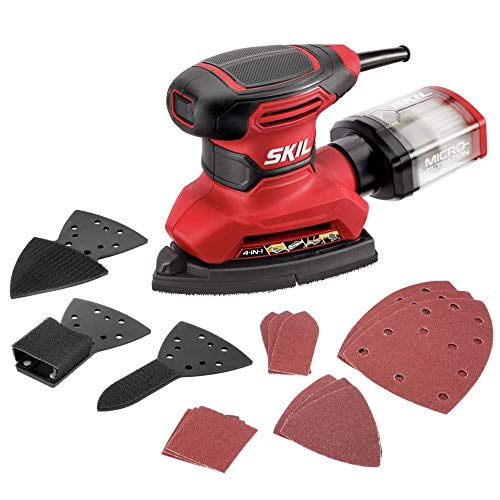
The SKIL SR232301 is a corded multi-function detail sander designed to handle a wide range of sanding tasks with ease. This 4-in-1 tool includes a main sander pad plus three additional attachments, making it suitable for large flat surfaces, tight corners, edges, and contoured shapes. With a 1.2 amp motor spinning at 13,500 orbits per minute, it delivers consistent and smooth material removal for DIY homeowners, woodworkers, contractors, and anyone who needs a reliable sander for home repairs, garage projects, or construction work.
Performance is where this sander shines. The high OPM rate allows for efficient sanding without excessive heat buildup, which is important when working on delicate surfaces or when using finer grits. The hook and loop system makes changing sanding sheets fast and easy, so you can switch between grits without fumbling with clamps or adhesive. The included 12 sanding sheets give you a good starting point for various applications, from rough stock removal to fine finishing.
Dust management is a key feature. The built-in micro-filter dust box captures fine particles, keeping your work area cleaner and reducing airborne dust. For even better control, the 1-1/4" dust port lets you connect a shop vac directly, which is a big plus for prolonged sanding sessions. This setup is particularly useful for contractors and workshop users who prioritize a clean jobsite.
Build quality is solid for the price point. The sander feels well-balanced and the soft rubber grip reduces vibration, thanks to the counterweight balance system. This ergonomic design helps minimize hand fatigue, allowing you to work longer on projects like refinishing furniture, smoothing drywall, or prepping surfaces for paint. The dust-sealed on/off switch is a thoughtful touch, preventing debris from interfering with the switch mechanism.
One realistic limitation is that this is a corded tool, which means you need access to a power outlet. For some users, especially those working on job sites without readily available power, a cordless sander might be more convenient. Additionally, the dust box is relatively compact, so you may need to empty it frequently during heavy use. The sander is also best suited for detail work rather than aggressive stock removal; for heavy material take-down, a larger random orbital sander would be more appropriate.
Overall, the SKIL SR232301 is a practical choice for anyone needing a versatile detail sander for home improvement, woodworking, or professional finishing work. Its combination of power, dust control, and ergonomic comfort makes it a strong value. Whether you're a DIY homeowner tackling weekend projects or a contractor doing touch-ups, this sander delivers reliable performance without breaking the bank.
The SKIL SR232301 is built with a durable plastic housing and a soft rubber overmold on the grip for comfort and control. The motor is rated for 1.2 amps and is designed to withstand regular use in workshop and jobsite environments. The dust-sealed switch adds reliability by preventing debris from entering the mechanism. The hook and loop pad is sturdy and holds sanding sheets securely during operation. While not a heavy-duty industrial tool, its build quality is appropriate for DIY and light professional use.
The SKIL SR232301 comes with three additional detail attachments: one for large surfaces, one for corners and edges, and one for contoured shapes. These attach without tools, making it easy to switch between tasks. Also included are 12 sanding sheets in various grits, giving you a good selection for different sanding stages. The micro-filter dust box is pre-installed, and the sander also includes a 1-1/4" vacuum adapter for connecting to a shop vac.

Pros
- High motor power for aggressive sanding on tough surfaces
- Flush sanding design saves time on edges and corners
- Adjustable roller for precise pressure control
- Well-balanced ergonomics reduce fatigue during extended use
- Versatile applications from woodworking to concrete mold cleaning
Cons
- Premium price point may not suit occasional DIYers
- No integrated dust collection port mentioned
- Requires some practice to master even pressure with the roller
The Makita 9741 Wheel Sander is a specialized power tool designed for surface preparation tasks that demand both power and precision. With a 7.8 AMP motor spinning at 3,500 RPM, this sander can quickly remove rust, paint, and concrete residue while also revealing grain textures on wood. Its unique wheel design allows for flush sanding against walls and vertical surfaces, making it a versatile addition to any workshop or jobsite.
This tool is best suited for woodworkers, contractors, mechanics, and serious DIY homeowners who regularly tackle heavy-duty sanding projects. Whether you are stripping paint from a deck, cleaning concrete molds, or smoothing out rough lumber, the Makita 9741 delivers consistent results. The adjustable front roller helps maintain uniform pressure, which is especially useful for achieving an even finish on flat surfaces.
In terms of performance, the 7.8 AMP motor provides ample torque for aggressive material removal without bogging down. The 3,500 RPM speed is well-suited for both fast stock removal and finer finishing work. The flush sanding capability is a standout feature - you can sand right up to a wall or into a corner without switching to a different tool. This saves significant time on trim work and edge sanding.
Build quality is typical of Makita professional tools: a sturdy housing, well-balanced design with a low center of gravity, and comfortable grip. The sander weighs 9.3 pounds, which is manageable for overhead or vertical work but may still cause fatigue over long periods. No dust collection port is mentioned, so you will likely need to use a shop vacuum or work in a well-ventilated area.
Storage and maintenance are straightforward. The sander is compact enough to fit on a shelf or in a large toolbox, though it does not come with a dedicated carry case. Keeping the roller and motor clean after use will prolong its life. One realistic limitation is the price - at over $800, it is a significant investment for occasional DIYers. Also, mastering the adjustable roller pressure takes a bit of practice to avoid uneven sanding.
Overall, the Makita 9741 Wheel Sander is a top-tier choice for professionals and dedicated hobbyists who need a reliable, powerful sander for heavy-duty surface preparation. Its flush sanding design and adjustable roller set it apart from standard disc sanders, making it a worthwhile investment for those who frequently work on large surfaces or need to clean up concrete and metal.

Pros
- Lightweight and easy to control for long sanding sessions
- Velcro attachment makes sandpaper swaps fast and convenient
- Dust port compatible with standard vacuum hoses for cleaner operation
- Affordable price point for budget-conscious DIYers and hobbyists
Cons
- Motor may struggle on heavy stock removal compared to larger sanders
- Dust collection port is not universal; may need adapter for some vacuums
- Limited to 1/4 sheet sandpaper size, which is less common than full sheets
The WEN 6301 Electric Detailing Palm Sander is a purpose-built tool for anyone who needs to smooth out small surfaces, reach tight spots, or put a fine finish on woodworking and DIY projects. Unlike larger orbital sanders, this palm sander is designed for precision and control, making it a great addition to the workshop of a DIY homeowner, woodworker, or even a contractor who does fine finishing work.
With a 1-amp motor that spins the pad at 13,500 orbits per minute, this sander delivers enough speed to quickly remove light material without bogging down. The lightweight 2-pound design means you can hold it comfortably for extended periods, which is a real plus when you are sanding door frames, cabinet edges, or automotive body panels. The angled tip on the 3.75 x 5.5 inch pad lets you get into corners and along profiles that larger sanders simply cannot reach.
Build quality is typical for WEN: a durable plastic housing that keeps weight down, a reliable motor, and a Velcro base that makes swapping sandpaper a snap. The dust collection port is a thoughtful addition, helping to keep your work area cleaner when connected to a shop vac. While the port is not a universal fit for all vacuum hoses, many users find it works well with standard 1-1/4 inch attachments.
Setup is straightforward: just attach your sandpaper to the hook-and-loop pad, plug in the cord, and you are ready to go. Storage is easy thanks to its compact size, and maintenance is minimal - just keep the pad clean and replace sandpaper as needed. One realistic limitation is that this sander is not meant for heavy stock removal; it excels at finishing and detail work. For rough sanding, you would want a larger random orbital sander.
Overall, the WEN 6301 is a practical choice for anyone who values precision and ease of use in a small package. It is especially well-suited for DIY homeowners tackling furniture refinishing, woodworkers doing final sanding on projects, and garage users working on small repairs. While it may not replace a full-size sander for heavy jobs, it fills a valuable niche for detail-oriented tasks.
The WEN 6301 is built with a lightweight plastic housing that keeps the tool at just 2 pounds. The motor is sealed and reliable, and the Velcro pad is securely attached. The power cord is a standard length for a palm sander, and the dust port is molded into the housing. While the construction is not heavy-duty metal, it is adequate for the tool's intended use - light to medium detail sanding. The angled tip is a thoughtful design element that adds to its precision capability.
Frequently Asked Questions About Best Rim Sander
What types of sanders work best for curved edges?
File sanders like the WEN 6307 and wheel sanders like the Makita 9741 are specifically designed for curved surfaces. The WEN file sander has a pivoting belt that can angle up to 55 degrees, making it easier to follow contours. The Makita wheel sander uses a rotating wheel that can sand flush to a wall, ideal for rounded edges.
Can a random orbital sander be used for rim sanding?
Yes, but with limitations. Random orbital sanders like the DEWALT DWE6423 or SKIL SR211601 are better suited for flat surfaces. They can handle gentle curves, but for tight or complex contours, a dedicated file sander or detail sander will give better control and access.
What is the advantage of a pneumatic sander for rim work?
Pneumatic sanders like the ZFE Random Orbital Sander are lightweight and have low vibration, which can reduce fatigue during extended sanding. The ZFE model includes both 5-inch and 6-inch backing plates, allowing you to switch between different radii for curved surfaces.
How important is dust collection for rim sanding?
Dust collection is important because sanding curved edges often produces fine dust that can accumulate quickly. Many sanders here include dust bags or ports. For example, the SKIL detail sander has a micro-filter dust box and a 1-1/4-inch dust port for vacuum attachment, keeping your workspace cleaner.
Should I choose a corded or cordless sander for curved surfaces?
Corded sanders like the WEN 6321 belt sander offer continuous power without battery concerns, which is useful for longer projects. Cordless models like the Milwaukee M18 Random Orbit Sander provide portability but may require battery swaps. For rim work that involves moving around a workpiece, cordless can be convenient, but corded is more reliable for sustained use.
What sanding grits should I use for finishing curved edges?
Start with a coarse grit like 60 or 80 for shaping, then move to medium (120-240) and fine (400+) for smoothing. The DEKOPRO orbital sander includes 16 sanding discs from 60 to 1000 grit, covering the full range for wood and metal projects. For detail sanders, hook-and-loop sheets make changing grits quick.
Are there attachments that help with tight corners and edges?
Yes, detail sanders often come with shaped attachments. The SKIL multi-function detail sander includes three additional attachments for corners, edges, and contours. These attach without tools, making it easy to switch between different shapes. For more on detail sanding, see our best handrail belt sander notcher guide.


Write Your Review
No reviews yet. Be the first to share your experience!