


Sanding large flat surfaces or tight spots with an air-powered tool can be more efficient than using a corded electric sander, especially in a shop with an existing compressor. The Best Harbor Freight Air Sander category includes straight-line, belt, and orbital models that each handle different tasks. Some of these pneumatic sanders focus on aggressive material removal, while others aim for a swirl-free finish. Understanding the differences in pad size, stroke rate, and abrasive compatibility helps match the tool to the job. For more on selecting the right sander, see our guide to glass sanding tools.

Pros
- Twin piston design prevents stalling on demanding leveling jobs
- Long 15-inch pad bridges high and low spots effectively
- Fast-action mechanical clamps hold abrasive strips securely
- Comfortable grip design helps manage operational vibration
Cons
- Requires a dedicated workshop air compressor system to operate
- Large footprint is not intended for curved areas or tight detailed sanding
The Ingersoll Rand 315G is a dedicated straight-line pneumatic sander engineered for shaping, leveling, and flattening broad surfaces. Equipped with a dual-piston drive and an expansive 2.75 by 15 inch sanding shoe, this air-powered tool is built specifically for heavy surface preparation tasks such as cutting down body filler, blending patches, and smoothing out large sheet metal panels.
A standout characteristic of this tool is its twin-piston configuration, which stores extra power in reserve to keep the pad moving steadily even when significant downward force is applied. Operating at 3,000 reciprocating strokes per minute, the sander delivers reliable material removal. The straight reciprocating movement avoids the circular scratch patterns typical of rotary sanders, making it particularly valuable for block sanding and initial leveling stages.
Handling a tool of this size requires thoughtful ergonomics. Ingersoll Rand designed the 315G with a contoured hand grip and balanced mass distribution, which helps isolate vibration and ease strain over long work sessions. Weighing approximately 6.5 pounds, the tool provides sufficient natural downward presence to let the abrasive do the cutting without demanding excessive muscular effort from the operator.
Abrasive installation is managed through heavy-duty, fast-action paper clamps positioned at the front and rear of the pad. The clamp geometry requires sandpaper measuring 17.5 inches long to wrap around the ends securely. This setup ensures that abrasive strips stay tight against the pad face during continuous reciprocating motion and allows technicians to swap out worn sheets quickly.
As a specialized pneumatic tool, the 315G requires a compressor setup capable of delivering consistent airflow, and its 15.8-inch overall length is strictly meant for broad surfaces rather than tight corners or contoured panels. For auto body technicians, restoration builders, and metalworkers seeking true flat-panel leveling, this straight-line sander remains a dependable, purpose-built shop solution.
Straight-line sanders are essential tools in automotive refinishing because their long, flat shoes span uneven areas that smaller sanders miss. The 15-inch pad on the 315G bridges highs and lows across vehicle doors, hoods, and quarter panels, providing the true surface reference needed to smooth polyester body fillers and glazing putties.
The reliable stroke consistency provided by the twin-piston drive helps technicians establish uniform panel geometry prior to priming. Utilizing properly dimensioned 17.5-inch abrasive strips, the tool delivers the flat, repeatable results required for high-standard automotive paint preparation.

Pros
- Pneumatic operation offers low vibration and high speed.
- Includes a comprehensive accessory kit with pads and sandpapers.
- Multiple pad sizes provide flexibility for different tasks.
- Compact size allows access to tight areas.
- Suitable for both polishing and sanding applications.
Cons
- Requires an air compressor, limiting portability.
- No sandpaper grits or pad sizes are explicitly listed in the specifications.
- May not be suitable for heavy-duty material removal on large surfaces.
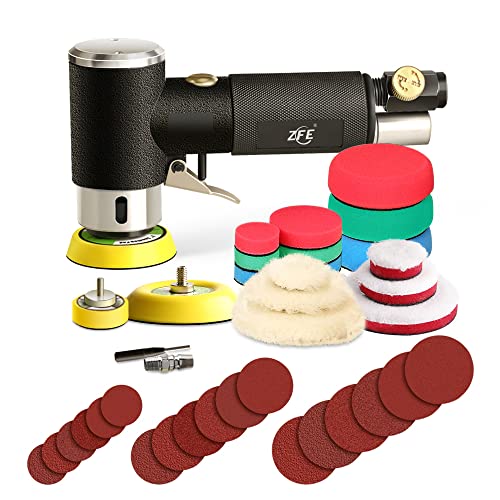
This ZFE random orbital air sander is a compact pneumatic tool designed specifically for automotive bodywork, metal surface preparation, and detailing tasks. It operates at a high speed of 15,000 RPM, using an eccentric double-rotation polishing method to deliver a uniform finish. The sander is best suited for auto body professionals, hobbyists, and detailers who already have an air compressor and need a versatile tool for spot sanding, rust removal, and polishing.
Performance-wise, the 15,000 RPM speed allows for efficient material removal and polishing, while the pneumatic design keeps vibration low and control smooth. The included three backing plates (1, 2, and 3 inch) give you flexibility for different job sizes, from small tight spots to slightly larger areas. The kit also comes with 15 polishing buffing pads and 18 sandpapers, so you can start working immediately without buying additional supplies.
Practicality is a strong point: the sander weighs only 2.31 pounds, making it easy to handle and maneuver in tight spaces like door jams, engine bays, or curved panels. Changing between pad sizes is straightforward, and the hook-and-loop (or similar) attachment system allows quick paper swaps. However, you will need a compatible air compressor with sufficient CFM rating, which is not included.
Limitations worth noting: the supplied data does not specify the grits of the included sandpapers or the exact sizes of the backing plates beyond the 1/2/3 inch range. This means you may need to purchase additional abrasives if your project requires specific grits. Additionally, the tool is not designed for large flat surfaces or heavy stock removal, so it is best kept for detail work and spot repairs.
For the American buyer who already owns an air compressor and works on automotive detailing, metal fabrication, or small woodworking projects, this ZFE air sander offers a practical, ready-to-use solution. It provides good value with the included accessories, though it is not a standalone tool. If you need a self-contained sanding system, consider a corded or cordless orbital sander instead.
This kit includes 15 polishing buffing pads, 18 sandpapers, 3 backing plates, 1 screw, and 1 screwdriver. The three backing plates correspond to the 1, 2, and 3 inch sizes, allowing you to switch between small and medium sanding or polishing areas. The buffing pads are designed for polishing, while the sandpapers cover sanding and finishing tasks. The screw and screwdriver are likely for attaching the backing plates to the sander.

Pros
- Provides a linear sanding pattern ideal for automotive bodywork.
- High stroke rate enables efficient material removal.
- Ergonomic two-handle design reduces fatigue.
- Quick-action clamps simplify abrasive changes.
- Durable construction suitable for heavy use.
Cons
- Requires a separate air compressor, adding to overall cost and setup.
- No integrated dust collection, so users must rely on external dust control.
- The linear sanding pattern is specialized and may not be versatile for all sanding tasks.
The Ingersoll Rand 315 is a pneumatic straight-line sander, also known as a reciprocating sander, designed for tasks that demand a linear sanding pattern. Unlike random orbital sanders, this tool moves the sandpaper back and forth in a straight line, which helps eliminate swirl marks on painted surfaces. This makes it a go-to choice for automotive bodywork, metal finishing, and any application where a flawless, streak-free surface is the goal.
Power comes from a twin-piston air motor that delivers 3,000 strokes per minute. This provides a good balance of material removal and control, allowing you to work through paint, primer, or light rust without excessive heat buildup. The pad measures 2.75 inches by 17.5 inches, offering a long, narrow contact area that suits flat panels and long, straight strokes. Quick-action paper clamps hold the sandpaper securely and make changes fast.
Ergonomics are addressed with a two-handle design that gives you a solid grip and helps dampen vibration. The lever throttle is positioned to reduce pressure on your palm, which can make a difference during extended sanding sessions. The tool weighs 6.6 pounds, which is manageable but does require some arm strength when working overhead. The all-metal construction feels robust and built to last, consistent with Ingersoll Rand's reputation for heavy-duty tools.
One important consideration is that this is a pneumatic tool, so you will need a compatible air compressor with sufficient capacity. The product data does not specify air consumption, so you should check the manufacturer's specifications before purchasing. Additionally, there is no built-in dust collection, so you will need to use a shop vacuum or other method to keep the work area clean, especially when sanding paint or body filler.
The straight-line action is excellent for specific jobs, but it is not a general-purpose sander. If you need a tool for everyday woodworking or drywall sanding, a random orbital sander would be more versatile. However, for professionals and serious DIYers who frequently work on automotive panels or metal surfaces, the Ingersoll Rand 315 offers a reliable, purpose-built design that can help you achieve a high-quality finish.

Pros
- Quiet enough for indoor or enclosed workspace use
- Smooth dual-action eliminates swirl marks for professional finishes
- Compact and lightweight for easy handling in tight areas
- Durable ball-bearing construction withstands daily shop use
Cons
- Requires a compatible air compressor with adequate CFM output (17 CFM at free speed)
- No dust collection system included; requires separate vacuum attachment or mask
- Pad size limited to 6 inches; may not suit larger surface areas
If you're looking for an air-powered sander that balances power with finesse, the Ingersoll Rand 311A Dual-Action Angle Air Sander is worth a close look. This tool is built for professionals and serious DIYers who need a reliable finishing sander for automotive bodywork, woodworking projects, and metal preparation. It's a 6-inch random-orbit sander with a right-angle head, making it handy for reaching into tight spots like door jambs, dashboards, and furniture joints.
This sander is best suited for mechanics, woodworkers, contractors, and garage enthusiasts who already have an air compressor. It's not a standalone tool, so you'll need a compressor capable of delivering at least 17 CFM at free speed. The 311A features a built-in silencer that keeps noise levels down, which is a big plus if you're working in a shared space or just want to keep your ears comfortable. The dual-action pad motion ensures a swirl-free finish, which is crucial when you're prepping a car for paint or sanding a fine piece of furniture.
Performance-wise, the 0.25 hp motor spins the pad up to 12,000 RPM, giving you plenty of power for fast material removal while still being controllable for finer work. The adjustable regulator lets you dial in the speed to match the task, from aggressive feather edging to gentle finish sanding. The balanced ball-bearing construction helps reduce vibration, which means less fatigue during long sessions and better control over the tool. The 4.2-pound weight is light enough to maneuver easily, even when working overhead or in awkward positions.
Build quality is what you'd expect from Ingersoll Rand: solid, durable, and designed for daily use. The housing is tough, and the pad is replaceable when it wears out. The 3/8-inch hose size and 1/4-inch air inlet are standard, so hooking it up to your existing air system is straightforward. The tool doesn't come with a dust collection bag or port, but you can attach a vacuum hose to the built-in exhaust port if you have the right adapter. Keep in mind that this sander requires regular maintenance, like oiling the air motor, to keep it running smoothly.
One limitation is that the sander is designed for a 6-inch pad, which is great for detail work but not ideal for large flat surfaces where a larger pad would speed things up. Also, the lack of a dust collection system means you'll need to wear a mask and work in a well-ventilated area, or rig up a dust extractor. The price point is reasonable for a professional-grade pneumatic sander, especially considering the quiet operation and smooth finish quality.
Overall, the Ingersoll Rand 311A is a practical choice for anyone who already has a decent air compressor and needs a reliable sander for automotive, woodworking, or metal finishing tasks. It's not a budget tool, but it offers consistent performance, low noise, and the precision needed for quality work. If you're a mechanic, woodworker, or contractor who values a swirl-free finish and comfortable operation, this sander is a solid investment.
In a workshop setting, the Ingersoll Rand 311A shines for detail sanding on curved surfaces and edges. The right-angle head allows you to reach into tight areas where a standard orbital sander won't fit. The dual-action motion reduces the chance of gouging or leaving swirl marks, so you can move from sanding to priming without extra steps. The built-in silencer is a real advantage when you're working near others or in a home garagelate at night.
Pair this sander with a good quality air filter and regulator to keep moisture and debris out of the motor. The 17 CFM air consumption is moderate, so a standard 20-gallon compressor should handle it for intermittent use. For continuous sanding, a larger tank or higher CFM compressor is better.

Pros
- Lightweight 2.6-pound construction handles overhead and vertical sanding comfortably
- Integrated regulator allows quick on-tool speed adjustments
- Rear exhaust routing keeps air discharge off the working surface
- Standard 5-inch hook-and-loop pad accepts widely available abrasives
Cons
- Demands an average of 10.5 CFM at 90 PSI, requiring a substantial air compressor
- Lacks an integrated dust extraction shroud or vacuum collection port
The Gedu 5-inch pneumatic random orbital palm sander is a dual-action air-powered tool designed for surface prep, stock leveling, and finishing tasks. Built with a low-profile palm grip measuring under three inches tall, this pneumatic tool provides immediate tactile feedback over your project. Because it relies on an external air compressor rather than an electric motor, the overall assembly remains compact while maintaining a free speed of up to 12,000 RPM.
This sander is well-suited for automotive bodywork hobbyists, metal fabricators, and woodworkers whose shops are already configured with robust pneumatic lines. The dual-action random orbital motion blends sanding scratches to minimize visible swirl marks on wood or primed body panels. An integrated speed regulator sits on the body, enabling you to dial back the rotational speed for delicate between-coat smoothing or open it up for heavier stock cleanup.
Ergonomics are an obvious strength of the tool's physical footprint. Weighing approximately 2.6 pounds, the lighter air-motor layout significantly reduces strain during vertical face sanding and overhead panel work. The exhaust is positioned at the rear of the tool body, directing oily exhaust air and minor airborne debris away from your hand and away from the fresh surface you are leveling.
The unit features a standard 5-inch hook-and-loop backing pad, making abrasive changes straightforward and ensuring compatibility with commonly available sanding discs. Setup is simple via the standard 1/4-inch air inlet. As with all pneumatic tools, routine inline lubrication and dry, regulated air supply are necessary maintenance steps to maintain internal air-motor reliability over time.
The primary consideration before buying is your air supply capacity. Operating at 90 PSI with an average consumption rating of 10.5 CFM, this tool requires a high-output stationary or heavy portable workshop compressor; small consumer pancake units cannot sustain continuous operation. Additionally, because there are no built-in dust collection ports or shroud hookups, you must plan for ambient dust management in your workspace.
Overall, the Gedu air sander provides a durable, low-profile sanding solution for anyone who already owns a high-capacity compressor. For garage mechanics preparing body panels or woodworkers needing an agile finishing palm sander, it represents a solid pneumatic option that keeps weight down and surface control high.

Pros
- High-speed 10,000 RPM motor provides effective sanding and polishing
- Lightweight pneumatic design reduces user fatigue
- Dual-action random orbit prevents swirl marks for a smooth finish
- Standard 5-inch pad compatible with widely available sanding discs
- Low air consumption works well with smaller compressors
Cons
- Requires an air compressor, limiting portability
- Listed specifications do not include variable speed control
- No dust collection provisions are mentioned in the product data
The TOOLPEAK 5-inch air palm random orbital sander is a pneumatic tool designed for sanding and polishing tasks. It uses compressed air to drive a 10,000 RPM motor, delivering a dual-action random orbit motion that helps produce a swirl-free finish. The sander is equipped with a standard 5-inch hook and loop pad, making it compatible with a wide range of sandpaper discs.
This sander is best suited for users who already own an air compressor and need a lightweight, palm-sized tool for auto body work, woodworking, metal surface preparation, and furniture refinishing. Its ergonomic design features a palm grip and composite housing that reduce vibration and fatigue during extended sessions, which is a practical advantage for both hobbyists and professionals.
The dual-action random orbit mechanism is a key feature because it minimizes swirl marks, allowing for a clean, even surface. The 5-inch pad size is standard, so finding replacement discs is easy. With an air consumption of 8 CFM, it can run on a moderately sized compressor, though larger tanks may be needed for continuous use.
One limitation of this tool is that it requires an air compressor, which adds to the overall cost and reduces portability compared to corded or cordless sanders. The product data does not mention variable speed control, so the sander likely operates at a fixed speed, which may not be ideal for all materials or finishes. Additionally, no dust collection system is included or described, so users will need to manage dust separately, perhaps with a shop vacuum or by working in a well-ventilated area.
For those who already have a compressor and want a budget-friendly, straightforward pneumatic sander, the TOOLPEAK model offers a practical solution. It is suitable for occasional to regular use on automotive panels, wood projects, and metal surfaces. While it lacks some refinements like variable speed or dust collection, its core sanding performance and lightweight design make it a reasonable choice for the price.

Pros
- Direct-drive motor design for enhanced durability
- Built-in air regulator allows precise speed adjustment
- Includes 41 roll lock discs for a variety of grits
- Lightweight and compact for detailed work
Cons
- Requires an air compressor (not included) for operation
- Roll lock disc system may limit abrasive choices compared to hook-and-loop
- Small 2-inch disc size restricts use to detail and small-area tasks
The UPWOOD 2-Inch Air Right Angle Sander is a pneumatic tool designed for precision sanding in tight spaces. It is specifically marketed for small-area sanding and paint repair, making it a targeted solution for auto body work and detailing tasks.
This sander kit is best suited for automotive enthusiasts, body shop technicians, or anyone who needs to sand small, contoured areas. The included 41 roll lock discs provide immediate usability, so you can start working without an additional purchase.
The direct-drive motor eliminates bevel gears, which the manufacturer claims contributes to longer tool life. The built-in air regulator allows you to adjust speed during operation, giving you control over material removal. The 2-inch disc size is ideal for accessing tight spots, such as door jambs, edges, and complex curves.
The sander is lightweight at 1.5 pounds, reducing fatigue during extended use. However, because it is pneumatic, you will need a compatible air compressor to power it. The roll lock disc attachment system is secure but may not have the same variety of abrasives as more common hook-and-loop systems.
The small disc size means this tool is not suitable for large flat surfaces or heavy stock removal. It is designed for detail work and light sanding. Additionally, as a relatively new product with no customer reviews available, long-term reliability is not yet confirmed by user experience.
If you already own an air compressor and frequently work on automotive paint repair or small woodworking projects, the UPWOOD 2-Inch Air Right Angle Sander Kit offers a convenient all-in-one package. For those without a compressor or needing larger-scale sanding, other options may be more practical.

Pros
- Lightweight build minimizes fatigue during overhead or long-duration sanding
- Low vibration design helps achieve smooth, swirl-free surfaces
- Durable heat-treated cylinder ensures long-lasting performance
- Compact size and ergonomic grip make it easy to maneuver in tight spaces
- Affordable price point for a professional-grade pneumatic sander
Cons
- Requires an air compressor and appropriate air fittings for operation
- No sanding discs or backup pads included in the package
- Limited to 6-inch pads, which may not suit larger sanding tasks
The Gedu 6-inch Professional Air Random Orbital Palm Sander is a dual-action pneumatic tool designed for smooth, efficient sanding across a variety of surfaces. As a random orbital sander, it combines spinning and oscillating motion to reduce swirl marks, making it a go-to choice for finish work. This tool targets DIY homeowners, mechanics, contractors, woodworkers, and other tradespeople who need a reliable sander for automotive bodywork, woodworking projects, or construction prep.
Performance-wise, the sander stands out for its low vibration and lightweight construction. The balanced sanding pad helps deliver swirl-free finishes, which is critical for painting or clear-coat preparation. Its low center of gravity and lighter air-motor assembly make it especially useful for vertical and overhead sanding, reducing user fatigue during long jobs. According to the product specifications, the heat-treated cast steel cylinder adds strength and power, supporting consistent performance even in heavy-duty use.
Build quality focuses on durability and ergonomics. The cast steel cylinder is heat-treated for hardness and wear resistance, while the overall design keeps weight at just over 2 pounds. This makes the sander easy to handle for extended periods. The palm-style grip offers decent comfort, though users with larger hands might prefer a thicker handle. The tool requires a standard air compressor with a suitable regulator and moisture filter to maintain optimal performance.
In terms of storage and maintenance, the sander is compact enough to fit in most toolboxes or garage drawers. Regular cleaning of the air inlet and lubrication of the motor are necessary to keep it running smoothly, as with any pneumatic tool. No carrying case is included, so users may want to store it in a padded bag or dedicated drawer to protect the pad.
Realistically, the sander has a few limitations. It does not come with sanding discs or a backup pad, so buyers need to purchase those separately. The 6-inch pad size is standard but may not suit larger surface areas where a larger sander would be more efficient. Additionally, users without an existing air compressor will need to factor that cost into their setup. However, for those already invested in pneumatic tools, this sander offers good value for the price.
Overall, the Gedu 6-inch Air Random Orbital Palm Sander is a practical choice for DIYers and professionals who prioritize low vibration and lightweight design. It works well for automotive finishing, woodworking, and general workshop sanding tasks. While it lacks some accessories and requires a compressor, its durable construction and performance make it a worthwhile addition to any garage or jobsite tool collection.

Pros
- Powerful 0.6 HP motor for fast material removal.
- Lightweight and ergonomic for all-day comfort.
- Tool-free belt adjustment saves time on the job.
- Versatile for weld removal, rust, burrs, and final finishing.
- Compact size fits in tight spaces and stores easily.
Cons
- Requires an air compressor with sufficient CFM (not included).
- Limited to 3/8x13 inch belts, not compatible with wider belts.
- No dust collection port; may need to work in a ventilated area.
The Ingersoll Rand 360-313 Air Belt Sander is a compact pneumatic tool designed for metal finishing and surface preparation. With a 0.6 HP motor spinning at up to 20,000 RPM, it delivers 4,700 SFPM of belt speed, making it a solid choice for removing spot welds, rust, burrs, and surface deposits on steel, aluminum, and other metals.
This sander is best suited for mechanics, fabricators, body shop pros, and DIY enthusiasts working in automotive repair, welding, or general metal fabrication. Its lightweight 2.29-pound body and ergonomic grip help reduce fatigue during extended use, and the tool-free articulating arm lets you adjust the belt angle quickly to reach into tight spots like engine compartments or frame rails.
Build quality is typical of Ingersoll Rand's professional line. The chrome-plated housing resists corrosion and daily abuse in a busy shop. The pneumatic motor runs cooler than electric units and poses no spark risk around flammable dust or fumes. The belt tension adjustment is straightforward, and the power regulator gives you variable speed control for different tasks.
One thing to note: this sander requires a steady air supply. You will need a compressor that can deliver at least 0.6 HP equivalent flow (check specs for CFM requirements). It uses standard 3/8-by-13-inch belts, which are widely available. However, there is no built-in dust collection port, so expect some debris in the air -- a mask and eye protection are recommended.
For storage, the compact footprint fits easily in a toolbox or on a shelf. Maintenance involves occasional lubrication with pneumatic tool oil and keeping the air inlet clean. Overall, the Ingersoll Rand 360-313 offers a good balance of power and portability for anyone who regularly works with metal. It is a practical addition to a professional shop or serious home garage.
The Ingersoll Rand 360-313 is built with a chrome-plated housing that resists rust and corrosion, making it suitable for humid shop environments. The pneumatic motor is sealed to keep out debris and requires minimal maintenance beyond routine oiling. The belt tracking mechanism is robust and holds alignment even under heavy load, and the articulating arm uses a metal pivot that should withstand repeated adjustments. Overall, this sander feels solid for its weight class and should hold up well in professional or DIY use.
This air belt sander excels at metalworking tasks such as removing spot welds, grinding down weld beads, stripping rust, and deburring sharp edges. The 0.6 HP motor provides enough torque to handle moderate stock removal, while the power regulator allows you to dial down speed for more delicate finishing. It also works on wood or plastic with appropriate belts, but its primary strength is on metal. The compact belt size (3/8x13 inches) makes it particularly useful for reaching into tight spaces where larger sanders cannot fit, such as inside automotive frames or around brackets.
Weighing only 2.29 pounds, the Ingersoll Rand 360-313 is easy to maneuver and control with one hand. The grip is shaped for comfort and reduces vibration, though prolonged use may still require a break. The tool-free belt change and articulating arm adjustment are major time-savers on the job. The power regulator is conveniently located near the trigger for quick speed changes. Users will need to connect it to a proper air hose and maintain the tool with pneumatic oil, but these are standard steps for air tools. Overall, it is designed to be intuitive and efficient for both experienced pros and DIY beginners.
FAQs
What is the difference between a straight-line air sander and a random orbital air sander?
A straight-line air sander moves in a linear back-and-forth motion, which is ideal for flat surfaces and aggressive stock removal. A random orbital sander uses a dual-action motion that reduces swirl marks, making it better for finish work. The Ingersoll Rand 315G is a straight-line model, while the ZFE random orbital sander is designed for finer finishes.
How do I choose the right belt size for an air belt sander?
Belt size determines the sanding area and access to tight spaces. The Ingersoll Rand 360-418 uses a 1/2″ x 18″ belt for compact areas, while the 360-313 uses a 3/8″ x 13″ belt for even narrower spots. Choose a belt size that matches the workpiece dimensions and the level of detail required.
What air pressure and CFM do I need to run these pneumatic sanders?
Most pneumatic sanders require an air supply of 90 PSI and adequate CFM. For example, the TOOLPEAK sander consumes 8 CFM, while the Gedu models use about 10.5 CFM. Ensure your compressor can deliver consistent flow to avoid performance drops during extended use.
Can I use these sanders for auto body work?
Yes, several models are designed for automotive tasks. The Ingersoll Rand 311A dual-action sander is suited for feather edging and metal preparation, and the ZFE mini orbital sander includes buffing pads for polishing. The UPWOOD right angle sander is also marketed for auto body repair and paint repair.
Are replacement sanding pads easy to find for these models?
Most models use standard hook-and-loop pads or roll lock discs. The 5-inch and 6-inch pads on the Gedu and TOOLPEAK sanders are common sizes, and replacement discs are widely available. The Ingersoll Rand straight-line sanders use a unique wrap-around paper clamp system, so paper must be cut to the specified length.
Which sander is best for removing paint from metal?
For paint removal, a belt sander or an aggressive straight-line sander works well. The Ingersoll Rand 360-418 belt sander with 60-grit Norton belt can strip paint quickly. The Ingersoll Rand 315G straight-line sander is also effective for smoothing body filler and removing coatings on flat surfaces.
Do these sanders come with sanding discs or belts included?
Some models include accessories. The Ingersoll Rand 360-418 comes with three Norton belts (60, 80, 100 grit). The ZFE kit includes 15 buffing pads and 18 sandpapers. The UPWOOD sander includes 41 roll lock discs. Check the product listing for included items, as many sanders are sold as tool-only.




Write Your Review
No reviews yet. Be the first to share your experience!