


High-Speed Drill Attachments for Flawless Surface Finishing
Chuck wobble, aggressive rotational friction, and motor bogging can easily burn delicate clear coats or ruin metal trim during heavy detailing tasks. Securing the best drill applicator for buffing and polishing transforms an everyday cordless drill driver into a versatile rotary finishing tool without demanding a dedicated rotary buffer. Safe operation relies on a balanced backing pad, a solid quarter-inch shank, and smooth variable speed trigger modulation to keep compound splatter under control. Many weekend hobbyists and garage mechanics rely on these attachments after initial smoothing with a dedicated DA sander for auto body paint prep to achieve mirror reflections.
Motor architecture and gearbox durability play major roles when driving dense foam pads or wool bonnets across painted panels, alloy wheels, and oxidized headlights. A capable brushless motor paired with an all-metal ratcheting chuck delivers sustained torque delivery without suffering from thermal bog-down or slippage under continuous friction. Our technical analysis of manufacturer specifications, adapter thread designs, and aggregated user feedback indicates that matching pad density to compound aggressiveness protects clear coats from swirl marks. Selecting durable attachments ensures your drill motor stays cool while producing pristine, professional-grade surface clarity across diverse workpieces.



Frequently Asked Questions
Can a standard cordless drill replace a dedicated rotary buffer for car detailing?
Yes, a standard cordless drill can handle spot corrections and light compounding effectively when fitted with the right adapter. While dedicated rotary buffers provide larger backing plates and specific ergonomics for broad vehicle panels, a cordless drill driver excels at spot repairs, tight bumper curves, and alloy wheels. Maintaining a low dual-speed transmission setting around 1,000 to 1,500 RPM prevents clear coat burn through.
What drill speed and clutch setting work best for applying wax and polish?
Low gear speed settings between 800 and 1,200 RPM with the drill clutch set to drill mode work best for controlled polishing. Engaging low gear provides maximum sustained torque without overheating the drill motor or slinging liquid polish across the work area. For tight trim pieces or recessed contours where a rotary pad might chatter, some woodworkers and detailers switch to a detailing sander for tight spaces before final hand buffing.
Will using a buffing pad attachment damage my drill chuck or motor?
No, buffing pad attachments will not harm your tool if you avoid applying excessive downward force. Modern cordless drill drivers feature robust planetary gear sets designed to handle steady rotational friction without gear stripping. However, running a brushed motor continuously at low trigger positions can generate excess heat, so choosing a brushless drill with thermal overload protection helps ensure maximum tool lifespan during extended sessions.
How do I prevent the drill applicator shank from slipping inside the chuck jaws?
Tighten the all-metal ratcheting chuck firmly by hand and inspect the adapter shank for hex flats. A quarter-inch hex shank locks into three-jaw drill chucks far more securely than smooth round shanks, preventing rotational slippage under heavy compounding friction. Ensuring zero chuck runout before spinning the pad eliminates wobbling that could mar delicate finishes.
What is the best drill applicator for buffing and polishing intricate wheels and tight engine bays in 2026?
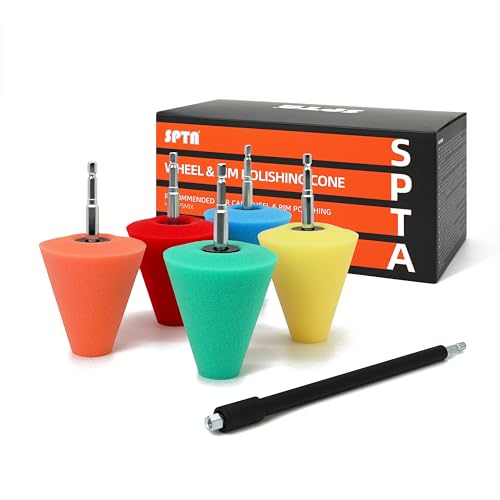
Conical foam pads and tapered polishing balls provide the best drill applicator for buffing and polishing for tight wheel spokes and narrow contours in 2026. Their tapered geometry lets the foam compress into tight lug nut recesses and casting grooves where flat circular pads cannot reach. Paired with a compact 12V or 18V drill, these cone attachments deliver precise control without scratching adjacent brake components.
Should I choose wool pads or foam pads for drill polishing tasks?
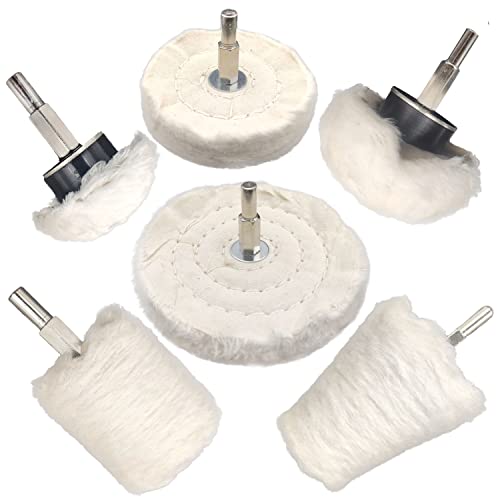
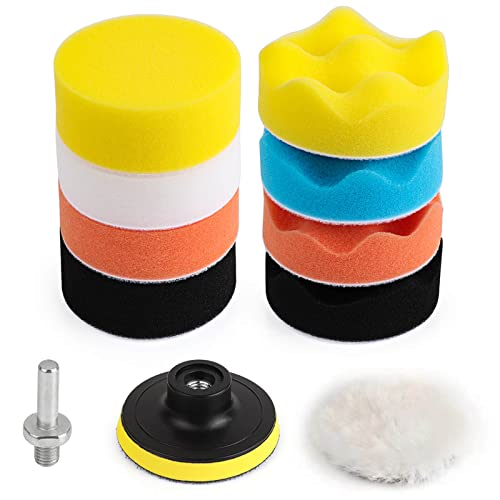
Wool pads are ideal for heavy oxidation removal, while foam pads excel at fine polishing and glaze application. Dense wool bonnets cut through severe clear coat oxidation and heavy metal tarnishing quickly due to their aggressive fiber structure. Foam waffle pads distribute finishing waxes evenly and reduce swirl marks, creating a high-gloss final shine across automotive clear coats and plastics.




Write Your Review
No reviews yet. Be the first to share your experience!