


Removing material quickly without overspending is a common challenge in woodworking. A belt sander is the go-to tool for fast stock removal, but finding one that fits a tight budget while still offering useful features takes a bit of sorting. Best Belt Sander Under 100 covers models that balance power, belt size, and dust management without pushing past the hundred-dollar mark. Whether you’re stripping paint, shaping edges, or smoothing rough lumber, the options here range from compact handheld units to versatile bench-convertible designs. If you need a sander for finer finish work, you might also want to look at budget-friendly orbital sanders for a different approach.

Pros
- Variable speed allows matching belt speed to the task, from aggressive sanding to delicate finishing
- Bench sander conversion adds versatility for stationary use, especially for small parts and precise edges
- Generous 10-piece belt assortment saves money and time by providing common grits out of the box
- Effective dust collection with both bag and vacuum adapter keeps the work area cleaner
Cons
- 7-amp motor may struggle with heavy-duty continuous use on hardwoods or large surfaces compared to higher-amp models
- Belt tracking may need occasional adjustment during use to keep the belt centered
- Plastic dust bag can be less durable than cloth alternatives over long-term use
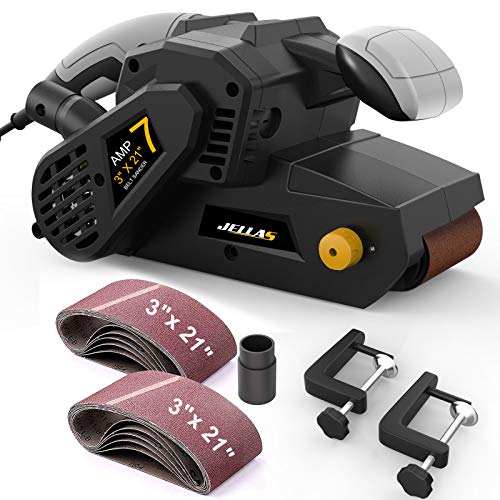
The Jellas 7Amp Handheld Belt Sander is a versatile tool designed for woodworking enthusiasts, DIY homeowners, and workshop users who need reliable material removal and finishing capabilities. This 3x21 inch belt sander combines a 7-amp motor with variable speed control, allowing you to adjust the belt speed from 120 to 400 RPM depending on the task. Whether you are stripping paint, shaping wood, or smoothing surfaces, the speed dial gives you the flexibility to match the tool to the material.
One of the standout features is its ability to convert into a bench sander. The package includes two metal C clamps that let you secure the sander upside down to a workbench. This turns it into a stationary sander, ideal for detailed edge work or small parts. The lock-on button keeps the sander running without holding the trigger, reducing hand fatigue during extended use. This dual-mode design makes it a practical addition to any garage or workshop where space is limited.
Performance-wise, the 7-amp motor delivers adequate power for most DIY and light professional tasks. The variable speed control is a real advantage, letting you dial in slower speeds for delicate surfaces or higher speeds for aggressive stock removal. The included 10 aluminum oxide sanding belts cover a range of grits from 40 (coarse) to 180 (fine), so you can start with heavy material removal and progress to a smooth finish without buying extra belts. The belt installation is straightforward, but it is important to align the arrow on the belt with the arrow on the machine to avoid scratches and extend belt life.
Dust collection is handled by a detachable bag and a dual-size vacuum adapter (35mm and 32mm). While the plastic dust bag works for basic collection, connecting a shop vacuum significantly improves dust containment, keeping your workspace cleaner. The 10-foot power cord is a thoughtful touch, offering plenty of reach for larger work areas without needing an extension cord. The soft grip handle and low-profile design help reduce vibration and fatigue, making the sander comfortable to use for longer sessions.
Build quality is solid for its price point. The housing is durable plastic with a rubberized grip, and the metal clamps for bench conversion feel sturdy. However, the 7-amp motor may not be ideal for continuous heavy-duty sanding on hardwoods or large surfaces; it is best suited for intermittent use on typical DIY projects. The belt tracking may require occasional adjustment during use, which is common for belt sanders in this class. The plastic dust bag might not hold up as well as cloth bags over many years, but it is replaceable.
Overall, the Jellas belt sander is a practical choice for DIY homeowners, woodworkers, and workshop users who want a versatile sander that can switch between handheld and bench modes. It is well-suited for furniture refinishing, paint removal, edge sanding, and general woodworking projects. While it may not replace a heavy-duty industrial sander for daily professional use, it offers good value for hobbyists and occasional users who appreciate variable speed and included accessories. If you need a reliable, budget-friendly belt sander for your garage or workshop, this model is worth considering.
In a workshop setting, the Jellas belt sander proves its versatility by offering both handheld and bench-mounted operation. The variable speed control is particularly useful when working on different wood types or when switching between aggressive material removal and fine finishing. The 7-amp motor provides enough power for typical DIY projects like shaping wood, removing old paint, or smoothing rough lumber. The bench sander conversion is a space-saving feature that allows you to use the tool for precision edge sanding or small part finishing without needing a separate stationary sander. The included dust bag and vacuum adapter help keep sawdust under control, though connecting a shop vacuum is recommended for the best dust management. For workshop users who tackle a variety of projects, this sander offers good flexibility without breaking the bank.
The Jellas belt sander comes with a useful set of accessories that add value right out of the box. You get 10 aluminum oxide sanding belts in five grits: two each of 40, 60, 80, 120, and 180. This range covers everything from heavy stock removal to fine finishing, so you can start most projects immediately. Two metal C clamps are included for converting the sander into a bench sander, along with a detachable dust bag and a dual-size vacuum adapter (35mm and 32mm) for connecting to your shop vac. The 10-foot power cord is also a practical addition, giving you extra reach without an extension cord. These accessories make the sander a complete package for DIYers and workshop users who want to get started right away.
Pros
- Variable speed gives you versatility for different wood grains and finishes
- Bench sander conversion is handy for small parts and edges without handheld instability
- Included belt assortment saves you an extra purchase and covers common grit needs
- Dust bag design is better than a rigid box for easy emptying and airflow
- Lock-on switch improves comfort during longer sanding tasks
Cons
- Weight of 7 pounds may feel heavy for overhead or vertical sanding over long periods
- Belt tracking adjustment may require careful alignment per the manual to avoid wandering
- Dust bag capacity is limited for large projects; you'll need to empty it often
The Jellas 7Amp Handheld Belt Sander is a versatile 3x21-inch tool aimed at DIY homeowners, woodworkers, and garage users who need a capable sander for shaping, smoothing, or removing material. With a 7-amp motor and variable speed from 120 to 400 RPM, you can dial in the right pace for softwoods, hardwoods, or even light metal prep. This sander covers a sweet spot for hobbyists and part-time contractors who want performance without stepping up to a pro model.
In terms of real-world performance, the variable-speed knob is a standout. Lower speeds work well for delicate surfaces or sanding near edges, while higher speeds let you hog off material quickly. The 3x21 belt size is common and easy to find replacements. The included ten belts (two each of 40, 60, 80, 120, and 180 grit) give you a solid starting range. For woodworkers, this means you can progress from aggressive stock removal to a smoother finish without swapping belts constantly.
Build quality appears decent for the price point. The housing is sturdy black plastic with a comfortable grip. The lock-on button is a practical touch for reducing fatigue when you're sanding for extended periods. The 2-in-1 bench sander mode is clever: just mount the two metal C-clamps upside down to secure the sander to a workbench. This frees your hands for small parts or precise edge work. Just be sure to clamp it down well to prevent shifting.
The dust collection system uses a cloth bag with exhaust holes, which is more breathable than a solid dust box. It does a reasonable job of catching fine particles, though you'll need to empty it frequently on large jobs. For stationary use, you might want to connect a shop vac instead. Setup is straightforward: align the belt arrow with the machine arrow (as noted in the instructions) to reduce scratching and extend belt life.
A few realistic limitations: at 7 pounds, this sander is heavier than some 3x21 models, so overhead or vertical sanding can tire your arms. The belt tracking may need occasional adjustment if you change belts often. And while the dust bag is better than nothing, it won't replace a proper dust extraction system for serious workshop use. The 2-year customer support from Jellas is a nice safety net, especially for buyers new to belt sanders.
Overall, the Jellas 7Amp Belt Sander is a solid value for homeowners tackling furniture refinishing, deck repairs, or hobby woodworking. Garage users and DIYers will appreciate the variable speed and bench conversion. If you need a daily driver for heavy construction or continuous production sanding, you might prefer a higher-end model. But for moderate workshop and project use, this sander offers good performance and thoughtful features without breaking the bank.
Pros
- Efficient 400W motor handles a range of sanding tasks
- Versatile angle adjustments on both belt and disc table
- Dust collection port helps maintain a cleaner workspace
- Compact footprint fits well in small workshops
Cons
- Fixed belt and disc speeds limit control for delicate work
- Sanding accessories such as abrasive belts and discs are not included
- Dust collection requires a separate shop vacuum (not included)
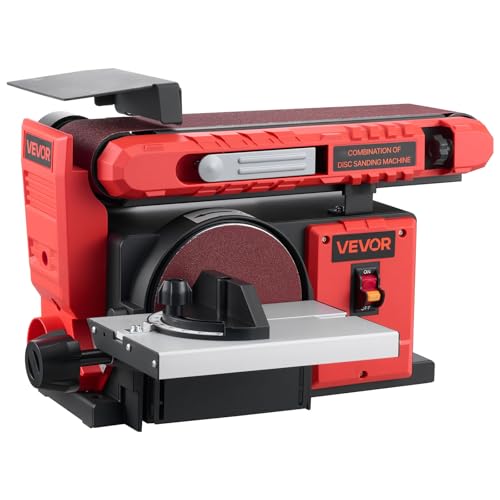
The VEVOR 6-inch disc and 4x36-inch belt sander combo is a benchtop unit designed for home woodworking, DIY projects, and knife sharpening. Powered by a 400W motor, it delivers consistent sanding performance for a variety of tasks.
The disc operates at 3550 RPM and the belt at 600 RPM, providing adequate material removal for common applications. The combination allows you to switch between flat surface sanding with the disc and edge or contour sanding with the belt.
Versatility is a key feature: the belt can be adjusted from 0 to 90 degrees for horizontal or vertical sanding, while the disc worktable tilts from 0 to 45 degrees. A miter gauge is included to improve accuracy when making angled cuts.
Dust management is handled by a dust collection port that can be connected to a shop vacuum, helping to reduce airborne debris. The unit measures 19.9 x 15.7 x 12 inches and weighs 33.73 pounds, making it a stable but space-efficient addition to small workshops.
However, the fixed speeds may not suit all materials or finishing requirements, and no sandpaper or abrasive accessories are included, so you will need to purchase belts and discs separately. As of now, there are no user reviews available to confirm long-term reliability.
Overall, this combo sander offers good value for hobbyists and DIYers who want both disc and belt sanding in one machine. If you need variable speed or higher precision for fine woodworking, you may want to consider more advanced models.

Pros
- Angled belt design enhances edge sanding capability for tight corners
- Fast 800 fpm speed enables efficient stock removal on wood and composites
- Tool-free belt changes save time and hassle on job sites
- Comfortable over-molded handle with multiple positions reduces hand fatigue
- Effective onboard dust collection keeps airborne debris manageable
Cons
- Dust bag capacity may be small for large-volume sanding projects
- Corded design limits mobility compared to cordless alternatives
- Single-speed operation offers no variable speed control for different materials
The CRAFTSMAN 7 Amp Belt Sander (CMEW213) is a corded electric tool designed for fast material removal and edge sanding. With a 3-inch by 21-inch belt running at up to 800 feet per minute, it tackles rough shaping, deburring, and smoothing on wood, plastic, and composite surfaces. The angled belt housing allows users to sand closer to walls, floors, and adjoining surfaces than many conventional belt sanders.
This sander is best suited for woodworkers, DIY homeowners, and contractors who need a reliable tool for workshop or job site use. It is also a good fit for garage users and anyone doing furniture refinishing, deck prep, or trim work. The 7-amp motor provides enough power for aggressive sanding without bogging down under moderate pressure.
Performance-wise, the 800 fpm belt speed delivers quick material removal, helping you move through projects faster. The tool-free belt release makes swapping belts effortless, reducing downtime. The dust collection system, while not perfect, captures a significant amount of debris into the onboard bag, keeping your work area cleaner than sanders without dust ports.
Build quality is solid for the price point. The housing is durable, and the over-molded three-position handle adds comfort and control. Weighing 6.64 pounds, it is manageable for overhead or vertical sanding. However, being corded means you need a nearby outlet or extension cord, which can be a limitation on larger job sites.
Storage and maintenance are straightforward. The dust bag is easy to empty, and the belt tension mechanism is simple to operate. The sander does not come with a carrying case, so you will need to store it carefully to avoid damaging the housing. The cord is a standard length, but may require an extension cord for reach.
Overall, this Craftsman belt sander offers good value for woodworking enthusiasts and professionals who prioritize speed and edge sanding capability. The angled design is a practical advantage, and the tool-free belt changes are a time saver. If you need variable speed or cordless portability, look elsewhere, but for most workshop and construction sanding tasks, this sander performs reliably.
In a workshop setting, the CRAFTSMAN 7 Amp Belt Sander proves its worth for major material removal tasks. The 800 fpm belt speed handles rough lumber, glued joints, and paint removal efficiently. The angled belt design is especially handy when sanding flush to edges or along baseboards. Tool-free belt changes mean less interruption between sanding grits, keeping workflow smooth.
The dust collection system works well enough for most indoor projects, though serious woodworkers may want to connect a shop vac to the dust port for better capture. The three-position handle allows comfortable use in horizontal, vertical, and overhead orientations, reducing fatigue during long sessions. For DIYers and professionals working in a garage or dedicated woodshop, this sander brings solid performance and convenience at a reasonable cost.

Pros
- Versatile 2-in-1 design works as both handheld and benchtop sander
- Variable speed range suits diverse sanding tasks from heavy stock removal to fine finishing
- Quick belt changes save time and keep workflow moving
- Effective dust collection with included bag and port
- Lock-on switch allows continuous operation without gripping trigger
Cons
- No onboard belt tracking adjustment is visible in the specs, which may require careful alignment
- Conversion to benchtop adds some weight compared to dedicated handheld sanders
- Small dust bag may need frequent emptying during larger projects
The WEN HB424V is a 10-amp variable speed belt sander designed for both handheld and benchtop use. This 4x24-inch tool suits DIY homeowners, woodworkers, contractors, and garage enthusiasts who need a single sander that can handle flat surfaces in various orientations. Its combination design gives you the flexibility to switch between hand sanding large workpieces and stationary sanding for precise control on smaller pieces.
Performance-wise, the variable-speed motor ranges from 660 to 1310 feet per minute, allowing you to match belt speed to the material and task at hand. Whether you are removing thick stock from rough lumber or doing fine finishing on cabinetry, this range offers good versatility. The conversion to benchtop mode is straightforward using the included mounting clamps and rubber pad, turning the tool into an upward-facing stationary sander. The lock-on power switch is a nice touch for continuous operation, reducing trigger fatigue during long sanding runs.
Build quality appears solid for the price point. The 10-amp motor delivers ample power, and the quick-release belt tension lever makes changing sandpaper fast and tool-free. The dust bag and 1.2-inch dust port help minimize cleanup, which is especially important in a workshop or garage setting. Included accessories like two 80-grit belts and mounting hardware mean you can get started right out of the box.
Setup is simple: attach the rubber pad and clamps to your benchtop, then secure the sander. Switching between modes takes only a few seconds. Belt changes are equally fast thanks to the tension lever. The dust bag clips on easily, though it is on the smaller side, so you will need to empty it frequently during heavy use. Maintenance is minimal, just occasional belt cleaning and dust bag emptying.
A realistic limitation is the lack of an obvious belt tracking adjustment; some users may need to gently guide the belt during installation. Additionally, while the benchtop conversion is handy, the sander is heavier than a dedicated handheld model, which could be a minor factor if you primarily need a portable tool. The dust bag capacity is adequate for light to moderate sanding but may fill up quickly for bigger jobs.
Overall, the WEN HB424V offers solid value for budget-conscious buyers who want a dual-purpose belt sander. It works well for home workshops, garage projects, and job site tasks where portability and stationary use are both needed. If you are a woodworker, DIYer, or contractor looking for a versatile sanding tool without breaking the bank, this model is worth considering.

Pros
- Pressure control helps beginners and pros avoid over-sanding and gouges.
- Effective dust collection with both onboard micro-filtration and vacuum port.
- Belt tracking stays true with minimal adjustment needed.
- Flush edge capability expands sanding possibilities.
Cons
- Corded design limits mobility; requires extension cord for larger work areas.
- No variable speed control; operates at a fixed belt speed.
- Dust bag fills quickly on heavy sanding; a vacuum is recommended.
The SKIL 6 Amp 3x18 Inch Belt Sander (model 7510-01) is a practical tool for anyone who needs to shape or smooth wood surfaces efficiently. It's a traditional belt sander that uses a continuous loop of abrasive paper driven by a powerful motor, making it suitable for material removal, flattening, and finishing on everything from rough lumber to finished furniture.
This tool is best suited for DIY homeowners tackling home repairs, woodworkers building projects, contractors doing on-site trim work, and garage users maintaining workbenches or restoring furniture. The pressure control feature is a standout, giving you a visual cue when you're pressing too hard - this helps prevent gouges and ensures a more consistent finish, which is especially useful for less experienced users.
In terms of performance, the 6-amp motor delivers plenty of power for rapid stock removal. The micro-filtration dust system captures fine particles into the included bag, or you can attach a standard shop vacuum for near-dustless operation. This makes a big difference in keeping your workshop or jobsite clean and your lungs safe. The auto-track belt alignment means the belt stays centered as you work, reducing the need for manual adjustments and prolonging belt life. Flush edge sanding allows you to sand right up to a perpendicular surface, useful for corners and edges.
Build quality is solid for the price point. The sander feels sturdy in hand, with a comfortable grip and lightweight design at just over 5.5 pounds. The dust port is a standard 1-1/4 inch size, compatible with most shop vac hoses. Setup is straightforward: attach the dust bag or vacuum, plug in, and you're ready. Maintenance involves occasionally cleaning the dust port and replacing the belt when it wears out.
One realistic limitation is that this sander is corded, so you'll need an extension cord for larger projects away from outlets. It also lacks variable speed, operating at a fixed pace that works well for most general sanding tasks but may not suit delicate work. The dust bag is small, so for heavy use, you'll want to connect a vacuum to avoid frequent emptying.
Overall, the SKIL 7510-01 is a reliable, user-friendly belt sander that offers good value for woodworkers, DIYers, and professionals who need a straightforward tool for everyday sanding jobs. It's a practical addition to any workshop or garage, especially if you prioritize dust control and ease of use.
Frequently Asked Questions
What belt size is best for general woodworking under $100?
The most common belt size in this price range is 3 by 21 inches, which offers a good balance between coverage and maneuverability. Some models like the WEN 10-Amp 4-by-24-Inch provide a wider belt for faster material removal on larger surfaces.
Is variable speed important on a budget belt sander?
Variable speed gives you more control over the sanding process. Lower speeds are useful for finishing or working on heat-sensitive materials, while higher speeds handle aggressive stock removal. Several models in this guide, including the Jellas and WEN, include a variable-speed dial.
Can I use a belt sander as a stationary tool?
Some belt sanders can be clamped upside down to a workbench to function as a stationary sander. The Jellas models come with metal C-clamps and a lock-on button for this purpose, and the WEN also attaches to a benchtop for upward-facing use.
How do I connect a shop vacuum to a belt sander?
Many budget belt sanders include a dust port that fits standard vacuum hoses. For example, the Jellas has a 2-in-1 adapter for 35mm and 32mm hoses, and the SKIL model is compatible with 1-1/4 inch vacuum hoses. The VEVOR combo also has a dust collection port.
What is pressure control and why does it matter?
Pressure control technology alerts you when you’re pressing too hard, which can cause uneven sanding or damage the workpiece. The SKIL belt sander includes this feature, helping you maintain consistent results without guesswork.
Are belt sanders suitable for fine finishing?
Belt sanders are primarily designed for rapid material removal, not fine finishing. However, with a high-grit belt and light pressure, they can produce a decent surface. For final smoothing, many woodworkers switch to a palm sander or random orbital sander.




Write Your Review
No reviews yet. Be the first to share your experience!