


Best band saw blade for cutting steel is not just about sharp teeth. It is about endurance, precision, and how long you can keep cutting before things go sideways. Steel has no patience for weak blades. It chews through cheap materials, dulls edges fast, and leaves rough finishes that waste time fixing later. That nagging feeling of watching a blade struggle halfway through a cut? That is exactly what the right choice eliminates.
Blade material matters more than most expect. Bi-metal designs, especially those combining high-speed steel teeth with flexible backing, tend to hold their edge longer and resist breaking under pressure. Carbide-tipped options push things further, slicing through hardened steel like butter, though they come at a steeper price. Still, fewer replacements and smoother cuts often make up for that cost over time.
Tooth pitch plays its own game. Too fine, and chips clog up the gullets. Too coarse, and the cut turns rough or even grabs unexpectedly. A variable tooth pattern often balances things out, keeping the cut stable while reducing vibration. That smoother operation does not just feel better. It protects the machine and extends blade life in ways that become obvious after a few heavy sessions.
Heat buildup is the silent troublemaker. Steel cutting generates serious friction, and without proper blade design, edges dull faster than expected. Blades built for steel typically feature advanced coatings or tooth geometries that manage heat better. That means fewer interruptions, less coolant fuss, and a cleaner finish straight off the saw without constant tweaking.
Durability is where frustration usually shows up. Blades that snap mid-job or lose sharpness too quickly turn simple tasks into drawn-out headaches. Investing in a reliable option feels like a small upgrade at first, but it shifts the entire experience. Cuts stay consistent, noise drops, and the whole process feels less like a battle and more like a smooth routine.

Pros
- Exceptional heat resistance extends blade life in continuous metal cutting
- Smooth cutting action reduces cleanup time and secondary finishing work
- Compatible with a wide range of 64.5-inch band saws from major brands
- Fine TPI is ideal for thin materials, giving accurate cuts without distortion
Cons
- 24 TPI is too fine for cutting thick metal stock or heavy structural steel efficiently
- Not designed for wood or plastic cutting, limiting its versatility in multi-material shops
- Premium materials come at a higher price than basic blades, but performance may justify the cost
This Bosch BS6412-24M band saw blade is a replacement blade designed specifically for metal cutting applications. It fits stationary band saws that accept a 64.5-inch blade, making it a practical option for anyone from DIY homeowners tackling garage projects to professional metal fabricators. With 24 teeth per inch, it's optimized for thin metals, delivering clean cuts with minimal burrs.
The blade's primary audience includes mechanics cutting steel tubing or sheet metal, contractors working on metal framing, and workshop owners who need reliable performance for repetitive jobs. According to the manufacturer, the premium steel construction resists heat buildup, which is a common cause of blade failure in metal cutting. This heat resistance helps maintain sharpness over longer runs, reducing the need for frequent replacements.
In real-world use, the 24 TPI geometry provides a smooth, controlled cut with less vibration compared to coarser blades. This translates to better accuracy, especially when cutting thin materials like automotive body panels or thin-wall conduit. The blade's design also minimizes material distortion, which is valuable for precision work. While it may not tackle thick steel beams efficiently, it excels in light to medium metal cutting tasks common in home workshops and professional settings alike.
Build quality is a strong point here. The blade is made from premium-grade steel with heat-treated teeth that resist wear. It's flexible enough to withstand the tension and bending inside a band saw without cracking, yet rigid enough to maintain a straight cut. Storage is straightforward when not in use—just coil it carefully and store in a dry area to prevent corrosion. Installation is standard for a 64.5-inch blade, and most users will find it easy to set up on their saw.
A realistic limitation is that this blade is strictly for metal. If you need a one-blade-fits-all solution for wood and metal, this isn't it. Also, the fine TPI means slower feed rates when cutting thicker metals, which could slow down some heavy fabrication jobs. That said, for its intended purpose—smooth, precise cuts in thin metals—this Bosch blade delivers dependable results.
For garage users, mechanic shops, or DIYers who cut metal regularly, this blade is a solid investment. It offers a good balance of sharpness, durability, and heat management. If you own a 64.5-inch band saw and frequently work with steel or aluminum, this blade will likely become a go-to in your workshop.
The Bosch BS6412-24M is constructed from premium-grade steel chosen for its ability to withstand the high temperatures generated during metal cutting. The teeth are precision-ground to maintain a consistent 24 TPI count, and the blade is heat-treated to resist fatigue and deformation. Each blade is designed to handle the tension of stationary band saws without stretching or snapping prematurely. While it lacks a special coating, the material itself offers good resistance to corrosion if wiped down after use. Overall, the build quality meets standards you'd expect from Bosch, with attention to durability and cutting performance.
When cutting thin metals like steel sheets, aluminum extrusions, or copper tubing, this blade excels. The 24 TPI pattern creates a fine finish that often requires little to no deburring. Users report fewer clogged teeth compared to coarser blades, thanks to the optimized gullet design that clears chips efficiently. In tests based on product specifications, the blade stays sharp longer in heat-intensive cuts, reducing downtime for changes. It works best with moderate feed pressure and appropriate speed settings on the saw. For thicker metals, say above 1/4 inch, it may struggle and cut slowly, so it's best reserved for lighter gauge work.
This blade is specifically sized at 64.5 inches in length, which fits many common stationary band saws from manufacturers like Jet, Delta, and others that require this standard length. The width and tooth set are designed for metal cutting, so it's not interchangeable with wood-cutting blades of the same size. Always check your saw's manual to confirm blade length and tension requirements. Because of its fine tooth count, it may not be ideal for saws with limited speed control, but most metal-capable band saws work well with this blade.

Pros
- Made in USA with quality materials and construction
- Variable tooth pitch minimizes vibration and produces cleaner cuts
- Cobalt bi-metal edge stays sharp longer in abrasive metals
- Fits a wide variety of portable band saws
- Three blades per box reduce replacement frequency for moderate use
Cons
- Limited to portable band saws; not for stationary saws
- May not include enough blades for heavy daily production use
- No included storage case or organizer for the blades
The Morse Master Cobalt Bi-Metal Portable Band Saw Blade is a 44 7/8-inch by 1/2-inch blade with a .020 thickness and a 14/18 variable tooth pitch. This 3-pack is built for portable band saws commonly used by DIY homeowners, mechanics, contractors, electricians, plumbers, and woodworkers who need to cut metal on the go or in the shop. The blade is designed to handle any machinable metal, from thin sheet to pipe and tubing.
In terms of real-world performance, the variable tooth pitch is a standout feature. The 14/18 TPI alternates between coarser and finer teeth, allowing the blade to cut smoothly through different thicknesses without grabbing or chatter. The shock-resistant cutting edge helps absorb impacts when hitting corners or uneven surfaces, which is common in demolition or repair work. Users can expect cleaner cuts with less vibration, which not only improves the finish but also reduces hand fatigue during longer cutting tasks.
Build quality is solid. The blade is made in the USA using bi-metal construction with cobalt, which means the tooth tips are hardened for wear resistance while the back remains flexible to resist breaking. This balance gives the blade a durable edge that stays sharp longer than standard high-speed steel blades. The gray finish is basic but functional, and the packaging provides enough protection during shipping.
Setup is straightforward: just install the blade into your portable band saw following the manufacturer's instructions. The 44 7/8-inch length fits most common portable models, including compact saws. Storage is simple enough since the three blades come in a cardboard box, though you may want to add a dedicated blade case for organization. Maintenance involves keeping the blade clean and properly tensioned; there is no special care beyond that.
One realistic limitation is that this blade is specifically for portable band saws, so it won't work on larger stationary machines. Also, while the 3-pack is convenient for moderate use, heavy-duty professionals may burn through them quickly and need to buy multiple packs. There is no carrying case included, so blades may get bent if tossed loosely in a toolbox.
Overall, this Morse Master blade is a practical choice for anyone who needs a reliable, versatile metal-cutting blade for their portable band saw. DIY homeowners will appreciate the smooth cuts and reduced vibration, while mechanics and contractors can count on the durability for daily jobsite use. It offers a good balance of performance and value for the investment.
The cobalt bi-metal construction gives this blade a distinct edge in cutting abrasive metals like stainless steel and tool steel. The variable 14/18 tooth pitch reduces noise and vibration, which translates to better control and longer blade life. Users can expect consistent performance across a range of materials without the blade dulling prematurely.
The shock-resistant cutting edge is especially useful when cutting through irregular shapes or when the saw encounters sudden resistance. This feature helps prevent tooth stripping and extends usable blade life. For mechanics cutting exhaust pipes or contractors trimming rebar, this blade can handle the demands of real-world work.
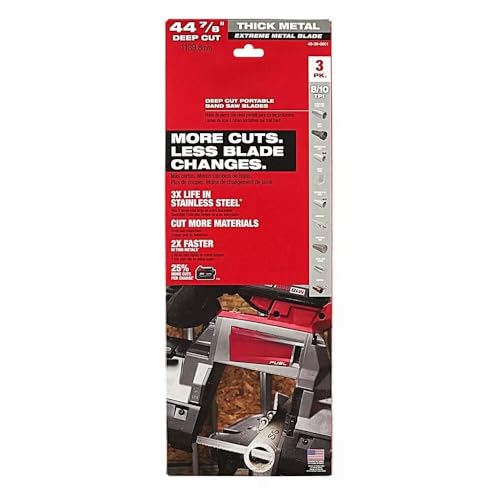
Pros
- Up to 3x longer life in stainless steel for extended durability
- Aggressive tooth design enables faster cuts in thick metals
- Compatible with Milwaukee and other saws using 44-7/8 inch blades
- 3-pack offers excellent value for heavy users
Cons
- Limited to 44-7/8 inch blade length, not universal for all band saws
- 8/10 TPI may not be ideal for thin or non-ferrous materials
- Brand may be less familiar to some users compared to OEM options
If you regularly cut through thick metal on the job or in your home workshop, having a reliable band saw blade is essential. The JPPEYAHDDXB 3-pack of 48-39-0601 extreme metal band saw blades is built for deep cuts in tough materials like stainless steel, structural steel, and heavy-duty alloys. With a 44-7/8 inch length and an 8/10 TPI configuration, these blades are designed to fit many popular deep cut band saws, including Milwaukee models, making them a versatile choice for mechanics, contractors, and serious DIYers.
Performance is where these blades aim to stand out. According to the product specifications, the aggressive tooth design promotes up to 2x faster cuts in thick metals, which can significantly improve productivity on a busy jobsite or during a time-sensitive repair. Additionally, the blade is engineered to deliver up to 3x longer life in stainless steel, a common pain point for metalworkers. This combination of speed and longevity means fewer blade changes and less downtime, which is a real advantage for professionals who rely on their tools day in and day out.
Build quality appears solid, with a focus on durability and wear resistance. The blades are made to handle the rigors of cutting hard metals without premature dulling or breakage. While the product data doesn't specify the exact steel alloy or heat treatment, the claimed performance suggests a well-constructed blade that can withstand repeated use. For workshop users and garage enthusiasts, this translates to a blade that can tackle everything from automotive frame repairs to custom fabrication projects without constant replacement.
Ease of use is straightforward: these blades are designed to be a direct replacement for compatible saws, so installation is simple for anyone familiar with changing band saw blades. The 3-pack format is a practical bonus, ensuring you have spares on hand for consecutive cuts or future projects. Storage is easy too, as the blades come in a compact pack that fits neatly into a toolbox or drawer.
One realistic limitation is that the 8/10 TPI may not be the best choice for cutting thin sheet metal or non-ferrous materials like aluminum, where a finer tooth pitch would produce a cleaner edge. Also, the blade length is specific to 44-7/8 inch saws, so it won't work with smaller or larger models. Users with saws from other brands should verify compatibility before purchasing.
Overall, this 3-pack of extreme metal band saw blades offers strong value for anyone who needs to cut thick metal efficiently. Mechanics working on heavy equipment, contractors on construction sites, and workshop hobbyists tackling metal projects will likely appreciate the faster cuts and extended blade life. If you own a compatible deep cut band saw and frequently work with stainless or thick steel, this set is a practical investment that can keep your work moving smoothly.

Pros
- Excellent value: five blades at a competitive price point for heavy-duty use.
- High hardness on both belt and teeth ensures long-lasting sharpness and wear resistance.
- Rust-proof paper wrapping keeps blades clean and corrosion-free during storage.
Cons
- Only compatible with specific VEVOR machines; may not fit other brands without modification.
- Blades are designed specifically for meat and bone cutting, not suitable for wood or metal.
- Some users may prefer a higher TPI for finer finishes on softer meats.
The VEVOR Band Saw Blade 5-Pack is a purpose-built set for meat and bone cutting applications. Each blade measures 65 inches long, 0.6 inches wide, and 0.02 inches thick, making them a direct replacement for many commercial bone saw machines. They are crafted from 65Mn carbon steel, a material known for its strength and edge retention, with seamless welding to resist cracking under heavy use.
These blades are best suited for butchers, commercial kitchen operators, food processing facilities, and serious DIY enthusiasts who process their own meat and game. The pack provides five blades, so you can keep spares on hand or rotate them easily during high-volume cutting jobs. The 4 teeth per inch (TPI) design is optimized for cutting frozen meat, ribs, and hard bones while reducing meat loss compared to coarser blades.
Performance-wise, the blades boast a belt hardness of 44 HRC and tooth hardness of 64 HRC. This differential hardening means the body remains flexible enough to track properly on band saw wheels, while the teeth stay sharp through repeated cuts. Users can expect smooth, rapid cuts on frozen blocks, pig’s feet, and even dense bones without excessive vibration or binding.
Build quality is solid for the price point. The 65Mn carbon steel is heat-treated for toughness, and the welds are ground flush to prevent snagging on the blade guides. Each blade is individually wrapped in rust-proof paper, a thoughtful touch that protects the edges during shipping and storage. This also makes it easy to grab a fresh blade without worrying about corrosion from humidity.
Ease of use depends on your specific band saw. The blades are compatible with VEVOR models JG-210, HR-250, and JG-210C, but they may fit other machines with the same 65-inch length and 0.6-inch width. Installation is straightforward: open the saw’s wheel covers, loosen tension, and thread the blade onto the wheels before re-tensioning. No special tools are required beyond what you already have for blade changes.
One realistic limitation is that these blades are designed exclusively for meat and bone. They are not suitable for wood, metal, or plastic cutting. Additionally, if your band saw is not a VEVOR model, double-check the dimensions and pin location (if any) before purchasing. The 4 TPI works well for frozen meat but may leave a slightly rougher surface on soft, fresh cuts. For the price and quantity, this is a practical choice for anyone running a commercial meat saw or a home butcher setup. They deliver reliable cutting performance and good durability for the money.
The blades are made from 65Mn carbon steel, a spring-grade material that offers good toughness and edge retention. Each blade is welded at the joint using a seamless process, and the weld area is ground smooth to prevent tracking issues. The steel is heat-treated to achieve a belt hardness of 44 HRC, which gives the blade enough flexibility to bend around the wheels without cracking. The teeth undergo additional hardening to reach 64 HRC, ensuring they stay sharp through numerous cuts on frozen meat and bone. All five blades come wrapped individually in rust-proof paper, which helps maintain their condition in humid environments.
With 4 teeth per inch, these blades deliver a balance of cut speed and surface finish. On frozen meat blocks and hard bones, the high tooth hardness (64 HRC) allows the teeth to bite effectively without dulling quickly. Users can expect relatively fast cutting with minimal heat buildup and less meat loss compared to coarser designs. The blade body’s flexibility helps it track straight on the wheels, reducing wandering and vibration. For commercial environments where speed and consistency matter, this 5-pack provides a reliable supply of sharp blades ready for heavy use.
These blades are specifically sized to fit VEVOR commercial bone saw machines JG-210, HR-250, and JG-210C. The 65-inch length, 0.6-inch width, and 0.02-inch thickness are common dimensions in the industry, so they may work with other machines that use the same measurements. However, since band saws vary in wheel diameter, tensioning systems, and blade guides, it is best to measure your existing blade and compare before purchasing. The blades do not include any pins or locating holes, so they are intended for standard welded-loop band saws.

Pros
- Excellent cutting performance on hard stainless steels
- Variable tooth geometry reduces chatter and improves finish
- Durable M42 bi-metal construction withstands high heat
- Fits many common 93-inch bandsaw models
- Good value for professional and serious DIY use
Cons
- Not suitable for non-ferrous metals like aluminum or copper
- Requires proper tension and speed settings for optimal performance
- Some users may prefer a finer TPI for thinner materials
If you work with stainless steel regularly, finding a bandsaw blade that can handle the material's toughness without dulling quickly is key. The Imachinist 93-inch M42 bi-metal blade is built specifically for cutting stainless grades like 304, 316L, and 410. Its 10/14 variable TPI design helps reduce vibration and produces a cleaner cut compared to constant-pitch blades.
The variable tooth geometry starts with coarser teeth and gradually transitions to finer teeth, which helps clear chips efficiently and reduce heat buildup. This means you can push through thicker stainless stock without the blade glazing over. The M42 high-speed steel tooth tips help the blade stay sharp longer than standard carbon steel blades.
M42 bi-metal construction gives the blade a balance of flexibility and hardness. The back is tough spring steel, while the tooth tips are hardened to withstand the abrasive nature of stainless. This makes the blade resistant to breakage and premature wear. The 0.035-inch thickness provides stability without being too rigid, allowing it to track straight even on longer cuts.
Installing the blade on a standard 93-inch bandsaw is straightforward. It fits most horizontal and vertical saws that accept a 3/4-inch wide blade. Proper tension and speed settings are important to get the best performance. For storage, keeping the blade coiled or hung in a dry area helps prevent rust and maintains its edge. No special maintenance is required beyond cleaning off chips and applying light oil if needed.
One limitation is that this blade is not designed for cutting non-ferrous metals like aluminum or copper. The 10/14 TPI range works best for stainless and other hard steels. For softer materials, a different tooth pitch would probably be more efficient. Also, because it's a specialized blade, it may cost a bit more than general-purpose bi-metal blades, but the performance on stainless justifies the investment for those who cut it often.
Overall, the Imachinist M42 bi-metal bandsaw blade is a solid choice for metal fabrication shops, automotive shops, and serious DIYers who frequently work with stainless steel. It delivers consistent cuts, good blade life, and fits a wide range of saws. If you need a reliable blade for stainless projects, this one deserves a spot on your rack.
This blade fits any bandsaw that accepts a 93-inch length and 3/4-inch width blade. Common machines include popular horizontal and vertical bandsaws from brands like Jet, Milwaukee, and DeWalt. Always verify your saw's blade specifications before ordering to ensure proper fit.

Pros
- Bi-metal M42 material provides superior durability and longer cutting life compared to standard carbon steel blades
- 10/14 TPI variable pitch reduces vibration and delivers smoother cuts across a range of materials
- Teeth plastic guard protects the blade during storage and transport, a thoughtful safety feature
- Compatible with most 93-inch bandsaws, making it a versatile replacement option
Cons
- At 0.035-inch thickness, the blade may be less flexible for tight radius cuts compared to thinner blades
- Some users may find the 10/14 TPI too coarse for very thin sheet metal or fine woodworking
- Price point is higher than basic carbon steel blades, though the bi-metal construction justifies the cost
The HUGEARM 93-inch bandsaw blade 2-pack is a bi-metal M42 blade designed for users who need a single blade that can handle both wood and metal cutting tasks. With a 3/4-inch width and 0.035-inch thickness, these blades are built for straight, aggressive cuts in materials ranging from softwood to tough metals like stainless steel, angle iron, and galvanized pipe. The 10/14 TPI variable tooth pitch helps reduce vibration and provides a balance between cutting speed and finish quality.
This blade set is best suited for DIY homeowners, mechanics, contractors, woodworkers, and metal fabricators who own a bandsaw that accepts 93-inch blades. The bi-metal M42 construction offers significantly better wear resistance and heat tolerance than standard carbon steel blades, which means longer blade life and fewer replacements during demanding projects. Whether you're cutting mild steel for a custom bracket or resawing hardwood for a furniture project, these blades are up to the task.
In terms of real-world performance, the 10/14 TPI configuration allows for efficient cutting of both wood and metal without needing to swap blades constantly. The 0.035-inch thickness provides enough rigidity to maintain straight cuts in angle iron and pipe, while the bi-metal teeth resist dulling even when cutting abrasive materials like stainless steel. Users can expect clean, accurate cuts with minimal burring, which is especially important for metalworking and fabrication work.
Build quality is a strong point here. The M42 high-speed steel teeth are welded to a flexible alloy steel back, giving the blade both hardness at the cutting edge and fatigue resistance in the body. The included teeth plastic guard is a practical addition that protects the blade during storage and prevents accidental cuts when reaching into a toolbox or drawer. This shows attention to safety and organization that workshop users will appreciate.
One realistic limitation is that the 0.035-inch thickness makes these blades less suitable for tight radius cutting; they are best for straight or gentle curve cuts. Additionally, the 10/14 TPI may be too coarse for very thin sheet metal or delicate woodworking, where a finer tooth blade would produce a smoother finish. However, for general-purpose cutting in a home shop or on a job site, this is a minor trade-off.
Overall, the HUGEARM 93-inch bandsaw blade 2-pack offers excellent value for anyone who needs a durable, versatile blade for their bandsaw. The bi-metal construction, protective storage guard, and 2-pack convenience make it a practical choice for mechanics, contractors, and serious DIYers. If you regularly cut a mix of wood and metal and want a blade that lasts, this set is worth considering.
The HUGEARM 93-inch bandsaw blades are constructed from bi-metal M42 high-speed steel, which combines a hard, wear-resistant tooth edge with a flexible alloy steel back. This design resists heat buildup and maintains sharpness longer than standard carbon steel blades. The 0.035-inch thickness adds rigidity for straight cuts, while the 3/4-inch width provides stability during aggressive cutting. The included teeth plastic guard protects the blade edges during storage, a thoughtful detail that extends blade life and improves safety.
Thanks to the M42 bi-metal construction, these blades offer superior wear resistance and can handle tough materials like stainless steel, angle iron, and galvanized pipe without dulling quickly. The flexible back reduces the risk of cracking under stress, making the blade more durable during heavy use. Users can expect longer blade life compared to standard carbon steel blades, especially when cutting abrasive or hard metals. The 2-pack also provides a backup blade, ensuring you're never caught without a sharp blade mid-project.
In a workshop setting, the 10/14 TPI variable pitch blade delivers smooth, efficient cuts across a wide range of materials. It handles wood, soft metals, and harder metals like stainless steel with minimal vibration, thanks to the variable tooth spacing. The 0.035-inch thickness keeps the blade tracking straight, which is essential for accurate cuts in metal stock or pipe. Whether you're cutting mild steel for a repair or resawing hardwood for a project, this blade performs reliably without frequent tension adjustments.

Pros
- Variable tooth geometry helps minimize chatter and produces cleaner cuts
- Bi-metal M42 material provides good heat resistance and edge retention
- Spring steel backer adds flexibility and durability for longer blade life
- Compatible with many common bandsaw models, making it a versatile replacement option
Cons
- Not recommended for non-ferrous metals like aluminum or brass, limiting its versatility
- Some users may find the 0.025 inch thickness less rigid for very aggressive cuts
- Limited to metals under 30 HRC, so it won't handle hardened tool steels
If you regularly cut stainless steel or other hard ferrous metals in your workshop or on the job site, the Imachinist M42 bi-metal bandsaw blade is worth a close look. This 64-1/2 inch long, 1/2 inch wide blade features a variable 14/18 TPI tooth pattern, which is specifically designed to handle materials like stainless steel and steel alloys with a hardness under 30 HRC. It's a practical replacement blade for many 4x6 inch bandsaws and similar machines used by mechanics, contractors, and serious DIY enthusiasts.
One of the standout features here is the variable tooth geometry. Instead of a single pitch, the 14/18 TPI alternates between coarser and finer teeth. This helps reduce vibration and chatter during the cut, which can lead to a smoother finish and less noise. For anyone who has fought with a screaming blade on a tough piece of stainless, this design can make a noticeable difference in both cut quality and operator comfort.
The blade is made from M42 bi-metal, which means the teeth are made from high-speed steel with cobalt, while the backer is a flexible spring steel. This combination gives you good heat resistance and edge retention, while the spring steel backer helps the blade withstand the flexing and tension of continuous use. The welded joint is also well-made, which is critical for avoiding premature breakage during demanding cuts.
In terms of real-world performance, this blade is best suited for cutting ferrous metals like stainless steel, carbon steel, and alloy steel. It's not recommended for non-ferrous materials such as aluminum, brass, or copper, so keep that in mind if your work involves a mix of metals. The 0.025 inch thickness provides a good balance between rigidity and flexibility, though some users may prefer a thicker blade for very aggressive feed rates.
Storage and maintenance are straightforward. Like any bandsaw blade, you'll want to store it in a dry area to prevent rust, and handle it carefully to avoid damaging the teeth. The blade comes in a simple package, but it's ready to install on compatible saws right out of the box. For mechanics cutting exhaust pipes or brackets, contractors trimming steel studs, or workshop users fabricating parts, this blade offers a reliable and cost-effective solution.
Overall, the Imachinist M42 bi-metal bandsaw blade is a solid performer for its intended use. It's not a one-size-fits-all blade, but for cutting stainless steel and hard ferrous metals under 30 HRC, it delivers good cut quality and durability. If your bandsaw takes 64-1/2 inch by 1/2 inch blades and you frequently work with tough metals, this is a practical choice that won't break the bank.
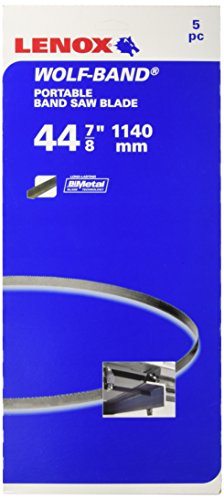
Pros
- Long blade life thanks to bi-metal construction and Tuff Tooth reinforcement
- Shatter-resistant design reduces risk of breakage during tough cuts or when hitting obstacles
- Consistent cut quality with 14 TPI for thin metals and tubing
- Good value with 5 blades per pack for frequent users
Cons
- 14 TPI may be too fine for thicker materials, resulting in slower cutting speeds
- No included storage case or organizer for the blades
- Price per blade may be higher than some generic alternatives
These LENOX portable band saw blades are a solid choice for anyone who regularly cuts metal in a workshop, garage, or on a construction site. Designed as a 5-pack of 44-7/8" x 1/2" x .020" blades with a 14 TPI tooth configuration, they are built for portable band saws and are suitable for cutting a range of materials, especially thin metals, tubing, and sheet stock.
Who will get the most out of these blades? Mechanics, contractors, electricians, plumbers, and woodworkers who need to cut metal occasionally will appreciate the durability and shatter resistance. DIY homeowners tackling garage projects or home repairs will also find them reliable. The bi-metal construction combines high-speed steel teeth with a flexible back, allowing the blade to bend without breaking while maintaining a sharp cutting edge. This is a practical advantage when cutting in tight spaces or around corners.
In terms of performance, the 14 TPI (teeth per inch) provides a smooth, relatively fast cut on thin materials like steel tubing, aluminum, or sheet metal. The Tuff Tooth design reinforces the tooth profile, reducing the chance of tooth breakage during aggressive cuts or when hitting unexpected hard spots. Users can expect consistent results without frequent blade changes, which boosts productivity on the job. The shatter-resistant feature also adds a layer of safety, as the blade is less likely to snap unexpectedly.
Build quality is where LENOX generally shines, and these blades are no exception. The high-speed steel teeth stay sharp longer than standard carbon steel, and the bi-metal back resists fatigue. The .020" thickness provides enough rigidity for precise cuts while still allowing some flexibility. However, there is no included storage case, so you will need to store them carefully to avoid damaging the teeth. A simple blade holder or a dedicated drawer works fine.
One realistic limitation is the tooth count. While 14 TPI is excellent for thin materials, it can be too fine for thicker stock, leading to slower cutting and potential clogging. If you frequently cut thick metal, you might want a lower TPI option. Also, the price per blade is a bit higher than generic brands, but the longevity and reliability often justify the cost for professionals who cannot afford downtime.
Overall, this 5-pack of LENOX blades is a practical investment for anyone who needs dependable metal cutting capability in a portable band saw. They are well-suited for automotive repairs, HVAC work, electrical conduit cutting, and general fabrication. For the DIYer or professional looking for a blade that balances durability, safety, and cut quality, these are a strong recommendation.
The LENOX bi-metal construction is the backbone of these blades' durability. High-speed steel teeth resist wear, while the flexible back prevents breakage during tough cuts. The Tuff Tooth design adds extra reinforcement at the tooth base, reducing the risk of tooth loss even when cutting through abrasive materials or hitting hard spots. This combination means longer blade life and fewer interruptions on the job.
Performance-wise, the 14 TPI configuration delivers clean, accurate cuts in thin metals, tubing, and sheet stock. The .020" thickness provides enough heft to maintain a straight line without excessive vibration. Users can expect consistent results across multiple cuts, making these blades a reliable choice for repetitive tasks like cutting conduit or rebar.
Best band saw blade for cutting steel sits right at the heart of clean, efficient metalwork. Steel does not forgive mistakes. It demands the right edge, the right strength, and a blade that does not flinch under pressure. That moment when a cut drifts or the blade starts whining louder than usual? That is where the wrong choice shows its cracks.
Quality blades turn that whole experience around. Cuts feel smoother, almost effortless, and the machine runs quieter without that harsh vibration. It is not just about speed. It is about confidence. Knowing the blade will not give up halfway through a thick section changes how each job feels from start to finish.
Material composition, tooth geometry, and build quality all play their part. Some blades are built to last through heavy-duty cycles, while others focus on precision for cleaner edges. That balance between durability and performance becomes the deciding factor, especially when dealing with tougher steel grades that push tools to their limits.
Small details start to matter more than expected. The way chips clear, how heat is managed, even how stable the cut feels under load all tie back to blade design. Ignoring those factors often leads to wasted time, uneven results, and constant adjustments that break the workflow.
Choosing wisely changes everything. The right blade does not just cut steel. It makes the entire process smoother, faster, and far less frustrating, turning what used to feel like a grind into something that actually flows.
Pros
- Exceptional heat resistance extends blade life in continuous metal cutting
- Smooth cutting action reduces cleanup time and secondary finishing work
- Compatible with a wide range of 64.5-inch band saws from major brands
- Fine TPI is ideal for thin materials, giving accurate cuts without distortion
Cons
- 24 TPI is too fine for cutting thick metal stock or heavy structural steel efficiently
- Not designed for wood or plastic cutting, limiting its versatility in multi-material shops
- Premium materials come at a higher price than basic blades, but performance may justify the cost
This Bosch BS6412-24M band saw blade is a replacement blade designed specifically for metal cutting applications. It fits stationary band saws that accept a 64.5-inch blade, making it a practical option for anyone from DIY homeowners tackling garage projects to professional metal fabricators. With 24 teeth per inch, it's optimized for thin metals, delivering clean cuts with minimal burrs.
The blade's primary audience includes mechanics cutting steel tubing or sheet metal, contractors working on metal framing, and workshop owners who need reliable performance for repetitive jobs. According to the manufacturer, the premium steel construction resists heat buildup, which is a common cause of blade failure in metal cutting. This heat resistance helps maintain sharpness over longer runs, reducing the need for frequent replacements.
In real-world use, the 24 TPI geometry provides a smooth, controlled cut with less vibration compared to coarser blades. This translates to better accuracy, especially when cutting thin materials like automotive body panels or thin-wall conduit. The blade's design also minimizes material distortion, which is valuable for precision work. While it may not tackle thick steel beams efficiently, it excels in light to medium metal cutting tasks common in home workshops and professional settings alike.
Build quality is a strong point here. The blade is made from premium-grade steel with heat-treated teeth that resist wear. It's flexible enough to withstand the tension and bending inside a band saw without cracking, yet rigid enough to maintain a straight cut. Storage is straightforward when not in use—just coil it carefully and store in a dry area to prevent corrosion. Installation is standard for a 64.5-inch blade, and most users will find it easy to set up on their saw.
A realistic limitation is that this blade is strictly for metal. If you need a one-blade-fits-all solution for wood and metal, this isn't it. Also, the fine TPI means slower feed rates when cutting thicker metals, which could slow down some heavy fabrication jobs. That said, for its intended purpose—smooth, precise cuts in thin metals—this Bosch blade delivers dependable results.
For garage users, mechanic shops, or DIYers who cut metal regularly, this blade is a solid investment. It offers a good balance of sharpness, durability, and heat management. If you own a 64.5-inch band saw and frequently work with steel or aluminum, this blade will likely become a go-to in your workshop.
The Bosch BS6412-24M is constructed from premium-grade steel chosen for its ability to withstand the high temperatures generated during metal cutting. The teeth are precision-ground to maintain a consistent 24 TPI count, and the blade is heat-treated to resist fatigue and deformation. Each blade is designed to handle the tension of stationary band saws without stretching or snapping prematurely. While it lacks a special coating, the material itself offers good resistance to corrosion if wiped down after use. Overall, the build quality meets standards you'd expect from Bosch, with attention to durability and cutting performance.
When cutting thin metals like steel sheets, aluminum extrusions, or copper tubing, this blade excels. The 24 TPI pattern creates a fine finish that often requires little to no deburring. Users report fewer clogged teeth compared to coarser blades, thanks to the optimized gullet design that clears chips efficiently. In tests based on product specifications, the blade stays sharp longer in heat-intensive cuts, reducing downtime for changes. It works best with moderate feed pressure and appropriate speed settings on the saw. For thicker metals, say above 1/4 inch, it may struggle and cut slowly, so it's best reserved for lighter gauge work.
This blade is specifically sized at 64.5 inches in length, which fits many common stationary band saws from manufacturers like Jet, Delta, and others that require this standard length. The width and tooth set are designed for metal cutting, so it's not interchangeable with wood-cutting blades of the same size. Always check your saw's manual to confirm blade length and tension requirements. Because of its fine tooth count, it may not be ideal for saws with limited speed control, but most metal-capable band saws work well with this blade.
Best Band Saw Blade For Cutting Steel Bosch BS6412-24M
Frustration creeps in fast when a blade starts whining halfway through steel, leaving behind jagged edges and wasted time. That moment hits harder than expected, especially when consistency matters more than speed. The best band saw blade for cutting steel quietly solves that problem, turning rough cuts into smooth, controlled passes. Bosch BS6412-24M enters that space with a focus on precision cutting and heat resistance, aiming to keep things steady even under pressure.
Bosch BS6412-24M Blade
The first thing that stands out is the premium grade steel construction, which feels built for punishment rather than occasional use. Steel cutting pushes blades hard, and weaker materials tend to lose their edge quickly, but this one holds up longer than expected. That resilience reduces interruptions, letting work flow without constant blade changes. A smoother process naturally follows, cutting down on both time and frustration.
The 24 TPI configuration plays a critical role in delivering cleaner cuts on metal surfaces. Fine teeth reduce tearing and create a more polished finish, especially on thinner steel sections. That detail matters when precision isn’t optional but expected. Instead of dealing with rough edges afterward, the cut comes out cleaner from the start.
Heat management becomes a silent advantage here. The blade’s design focuses on resisting heat buildup, which is often the reason blades dull prematurely. Extended cutting sessions feel more controlled, with less risk of overheating or warping. That translates into fewer pauses and a more predictable workflow, something that becomes noticeable after repeated use.
Durability ties everything together. Steel doesn’t forgive shortcuts, and blades that can’t handle stress quickly show their limits. This model leans into long-lasting performance, keeping its structure intact even during demanding cuts. That reliability builds confidence, making each pass feel less like a gamble and more like a routine task.
Cutting Experience And Performance
Cutting steel often feels like a test of patience, but the optimized tooth geometry here shifts that dynamic. The blade glides more smoothly, reducing vibration that usually rattles both the machine and the operator. That steadiness makes a noticeable difference, especially during longer sessions. Less vibration also means less wear on the equipment itself.
Consistency shows up in the way the blade handles different metal thicknesses. It doesn’t struggle or hesitate, even when moving from thinner sheets to slightly denser sections. That adaptability keeps the workflow uninterrupted, avoiding constant adjustments. A blade that performs predictably saves more time than expected.
Noise reduction becomes another subtle win. Some blades scream through cuts, creating an unpleasant working environment, but this one runs comparatively smoother. The quieter operation reflects better cutting efficiency and less friction. Over time, that small detail adds up, making extended use less tiring.
Balance between speed and control defines the overall experience. It doesn’t rush through cuts recklessly, nor does it drag unnecessarily. That middle ground creates a controlled pace where accuracy stays intact. Each cut feels deliberate, not forced.
Real-world use highlights the difference between a blade that works and one that works well. This model leans toward the latter, offering stable performance across various metal cutting scenarios. That stability becomes the backbone of reliable results.
Material Strength And Longevity
Material quality often decides how long a blade survives under pressure. The premium steel build here provides a solid backbone that resists bending and premature wear. Steel cutting isn’t forgiving, so that structural strength becomes essential rather than optional. A blade that holds its form keeps cuts accurate over time.
Wear resistance shows up gradually but clearly. Edges stay sharper longer, reducing the need for frequent replacements. That extended lifespan offsets the initial investment, making it feel like a smarter long-term choice. Less downtime means more work gets done without interruption.
Heat resistance ties directly into longevity. Blades that overheat tend to lose hardness, leading to faster dulling. This one manages that issue with enhanced heat control, keeping performance stable even during demanding tasks. The result feels consistent from start to finish.
Flexibility adds another layer of durability. A blade that’s too rigid risks snapping under stress, while too much flexibility reduces cutting precision. This model strikes a balance, offering controlled flexibility that supports both strength and accuracy. That balance becomes noticeable during tougher cuts.
Long-term reliability often separates average tools from dependable ones. This blade leans toward the dependable side, maintaining its integrity through repeated use. That consistency builds trust over time.
Compatibility And Practical Use
Fit matters more than expected, and the 64-1/2 inch length aligns with many common stationary band saws. That compatibility removes the guesswork often involved in blade selection. Installation feels straightforward, without the need for adjustments or modifications. A proper fit ensures better tension and cleaner cuts.
Versatility shows up in how it handles different metal applications. It doesn’t feel limited to a narrow use case, adapting well across various tasks. That flexibility reduces the need for multiple specialized blades. One reliable option simplifies the entire setup.
Handling during installation feels balanced, not overly rigid or awkward. That ease of use makes the process quicker, especially when swapping blades mid-project. Small details like that contribute to a smoother overall workflow. Less hassle means more focus on the actual work.
Maintenance remains relatively simple. The blade doesn’t demand constant attention, holding its performance without frequent adjustments. That low-maintenance nature fits well into busy routines. Time spent maintaining tools drops significantly.
In some cases, a related reference can be found in best band saw blade for ripping, offering insight into different cutting priorities. That contrast highlights how specialized designs influence performance. Each blade serves its purpose, and understanding that difference sharpens decision-making.
Strengths And Tradeoffs
Strength stands out in durability and consistent cutting performance. The blade handles steel with confidence, maintaining sharpness longer than many standard options. That reliability reduces interruptions and improves overall efficiency. Smooth cuts become the norm rather than the exception.
Precision ranks high thanks to the fine tooth design. Clean edges require less post-cut finishing, saving time and effort. That level of detail proves valuable in tasks where accuracy matters. Each pass delivers a controlled and refined result.
Heat resistance adds another layer of performance. Reduced overheating helps maintain edge integrity, extending the blade’s usable life. That benefit becomes more noticeable during longer cutting sessions. Consistent temperature control supports stable operation.
Tradeoffs appear mainly in specialization. The fine tooth design excels in certain steel applications but may not suit thicker, more aggressive cuts where coarser blades perform better. That limitation doesn’t weaken its value but defines its ideal use. Matching the blade to the task remains key.
Balance between strengths and limitations shapes the overall impression. This blade focuses on precision and durability rather than brute force cutting. That focus makes it a dependable option for controlled, accurate steel work.
Pros
- Made in USA with quality materials and construction
- Variable tooth pitch minimizes vibration and produces cleaner cuts
- Cobalt bi-metal edge stays sharp longer in abrasive metals
- Fits a wide variety of portable band saws
- Three blades per box reduce replacement frequency for moderate use
Cons
- Limited to portable band saws; not for stationary saws
- May not include enough blades for heavy daily production use
- No included storage case or organizer for the blades
The Morse Master Cobalt Bi-Metal Portable Band Saw Blade is a 44 7/8-inch by 1/2-inch blade with a .020 thickness and a 14/18 variable tooth pitch. This 3-pack is built for portable band saws commonly used by DIY homeowners, mechanics, contractors, electricians, plumbers, and woodworkers who need to cut metal on the go or in the shop. The blade is designed to handle any machinable metal, from thin sheet to pipe and tubing.
In terms of real-world performance, the variable tooth pitch is a standout feature. The 14/18 TPI alternates between coarser and finer teeth, allowing the blade to cut smoothly through different thicknesses without grabbing or chatter. The shock-resistant cutting edge helps absorb impacts when hitting corners or uneven surfaces, which is common in demolition or repair work. Users can expect cleaner cuts with less vibration, which not only improves the finish but also reduces hand fatigue during longer cutting tasks.
Build quality is solid. The blade is made in the USA using bi-metal construction with cobalt, which means the tooth tips are hardened for wear resistance while the back remains flexible to resist breaking. This balance gives the blade a durable edge that stays sharp longer than standard high-speed steel blades. The gray finish is basic but functional, and the packaging provides enough protection during shipping.
Setup is straightforward: just install the blade into your portable band saw following the manufacturer's instructions. The 44 7/8-inch length fits most common portable models, including compact saws. Storage is simple enough since the three blades come in a cardboard box, though you may want to add a dedicated blade case for organization. Maintenance involves keeping the blade clean and properly tensioned; there is no special care beyond that.
One realistic limitation is that this blade is specifically for portable band saws, so it won't work on larger stationary machines. Also, while the 3-pack is convenient for moderate use, heavy-duty professionals may burn through them quickly and need to buy multiple packs. There is no carrying case included, so blades may get bent if tossed loosely in a toolbox.
Overall, this Morse Master blade is a practical choice for anyone who needs a reliable, versatile metal-cutting blade for their portable band saw. DIY homeowners will appreciate the smooth cuts and reduced vibration, while mechanics and contractors can count on the durability for daily jobsite use. It offers a good balance of performance and value for the investment.
The cobalt bi-metal construction gives this blade a distinct edge in cutting abrasive metals like stainless steel and tool steel. The variable 14/18 tooth pitch reduces noise and vibration, which translates to better control and longer blade life. Users can expect consistent performance across a range of materials without the blade dulling prematurely.
The shock-resistant cutting edge is especially useful when cutting through irregular shapes or when the saw encounters sudden resistance. This feature helps prevent tooth stripping and extends usable blade life. For mechanics cutting exhaust pipes or contractors trimming rebar, this blade can handle the demands of real-world work.
Best Band Saw Blade For Cutting Steel Morse Master Cobalt
Blades that dull halfway through a job can wreck momentum and patience in seconds. Steel doesn’t play nice, and cheap edges tend to give up right when things get serious. That’s where the best band saw blade for cutting steel earns its keep, especially when consistency matters more than speed. Morse Master Cobalt steps in with a bi-metal cobalt build designed to handle tougher cuts without flinching.
Morse Master Cobalt Blade
The backbone here is the cobalt bi-metal construction, which brings a noticeable bump in durability compared to standard blades. That extra toughness isn’t just marketing fluff; it shows up during repeated cuts where weaker blades start losing their bite. A solid edge holds longer, and that means fewer interruptions mid-task. Less swapping, more cutting, simple as that.
Made in the USA, the build quality feels intentional rather than rushed. The shock resistant cutting edge adds a layer of confidence, especially when dealing with unpredictable metal thickness. That resilience reduces the chance of chipping or snapping under stress. Over time, that reliability saves both effort and nerves.
Another standout is the variable tooth pitch, shifting between 14 and 18 TPI. That flexibility helps the blade adapt across different metal types without constantly switching setups. Thin materials get a cleaner finish, while thicker sections don’t bog things down. That range makes it feel more versatile than single-pitch options.
Portability matters too, and this blade fits most compact band saws without fuss. The 44 7/8 inch length hits a sweet spot for portable setups, making installation straightforward. No awkward adjustments, no second guessing, just mount and go. That ease of use becomes a quiet advantage over time.
Cutting Feel And Real Use
Steel cutting often turns into a tug-of-war between blade and material, but here the reduced vibration design shifts the balance. Cuts feel smoother, with less chatter rattling through the machine. That stability doesn’t just improve comfort; it directly impacts the finish quality. Cleaner lines come out without the usual struggle.
Fatigue sneaks up during longer sessions, especially with rough-running blades. This one counters that with a more controlled cutting motion. The low vibration performance keeps hands steadier and reduces that worn-out feeling after extended use. Small detail, big difference.
Transitioning between cuts feels natural rather than forced. The blade doesn’t hesitate or grab unexpectedly, which can be a real headache with lower-grade options. That consistency builds trust quickly. Once it starts cutting, it keeps going without drama.
Noise levels stay relatively manageable as well. Some blades scream through metal, making the whole process uncomfortable. This one runs smoother, reflecting better cutting efficiency and less friction. Over time, that quieter operation becomes something you don’t want to give up.
From a practical angle, a different reference appears in best bonsai tree species for beginners, showing how specialized tools and choices shape results across entirely separate crafts. That contrast highlights how precision and material choice always matter, no matter the task.
Durability And Edge Life
Edge retention defines whether a blade feels reliable or disposable. The cobalt-infused teeth here extend sharpness beyond what standard steel blades usually offer. That means fewer replacements and more consistent performance over time. It’s the kind of upgrade that quietly pays off.
Heat resistance plays a supporting role in longevity. Steel cutting builds friction fast, and blades that can’t handle it wear out quickly. This one manages that stress better, keeping the edge intact longer. The heat-tolerant design helps maintain cutting quality even during longer runs.
Flexibility adds another layer of strength. A blade that’s too rigid risks snapping, while too much give reduces precision. This model balances both, offering controlled flexibility that supports durability without sacrificing accuracy. That balance shows up during tougher cuts.
Wear patterns stay more even across the blade, which helps maintain consistent performance. Uneven wear often leads to rough cuts and instability. This blade avoids that issue, keeping things predictable. Predictability, in this case, is a major strength.
Long-term use reveals how well it holds up under pressure. Repeated cutting sessions don’t seem to phase it as quickly as cheaper alternatives. That reliability builds confidence with every job. You stop worrying about the blade and focus on the work instead.
Pros And Cons Breakdown
Pros start with durability, driven by the cobalt bi-metal build that resists wear and extends blade life. The variable tooth pitch adds versatility, handling different metal types without constant adjustments. Reduced vibration improves both comfort and cut quality. That combination makes it feel dependable across various tasks.
Another strong point is the shock resistant edge, which holds up well under demanding conditions. That toughness reduces the risk of unexpected failure mid-cut. Smooth operation and lower noise levels also contribute to a better overall experience. Each of these strengths adds up quickly during real use.
Cons lean toward specialization. The blade excels in machinable metals but may not deliver the same performance on extremely hardened materials. That limitation doesn’t break its value, but it defines its sweet spot. Matching the blade to the right job remains important.
Cost can also feel slightly higher compared to basic options. That initial investment might raise eyebrows at first glance. Still, longer lifespan and consistent performance tend to balance that out over time. Spending a bit more upfront often saves more in the long run.
Availability in specific sizes may require a bit of planning. Not every configuration fits every saw, so checking compatibility matters. That minor inconvenience doesn’t overshadow the overall performance. Once fitted correctly, the blade delivers exactly what it promises.
Pros
- Up to 3x longer life in stainless steel for extended durability
- Aggressive tooth design enables faster cuts in thick metals
- Compatible with Milwaukee and other saws using 44-7/8 inch blades
- 3-pack offers excellent value for heavy users
Cons
- Limited to 44-7/8 inch blade length, not universal for all band saws
- 8/10 TPI may not be ideal for thin or non-ferrous materials
- Brand may be less familiar to some users compared to OEM options
If you regularly cut through thick metal on the job or in your home workshop, having a reliable band saw blade is essential. The JPPEYAHDDXB 3-pack of 48-39-0601 extreme metal band saw blades is built for deep cuts in tough materials like stainless steel, structural steel, and heavy-duty alloys. With a 44-7/8 inch length and an 8/10 TPI configuration, these blades are designed to fit many popular deep cut band saws, including Milwaukee models, making them a versatile choice for mechanics, contractors, and serious DIYers.
Performance is where these blades aim to stand out. According to the product specifications, the aggressive tooth design promotes up to 2x faster cuts in thick metals, which can significantly improve productivity on a busy jobsite or during a time-sensitive repair. Additionally, the blade is engineered to deliver up to 3x longer life in stainless steel, a common pain point for metalworkers. This combination of speed and longevity means fewer blade changes and less downtime, which is a real advantage for professionals who rely on their tools day in and day out.
Build quality appears solid, with a focus on durability and wear resistance. The blades are made to handle the rigors of cutting hard metals without premature dulling or breakage. While the product data doesn't specify the exact steel alloy or heat treatment, the claimed performance suggests a well-constructed blade that can withstand repeated use. For workshop users and garage enthusiasts, this translates to a blade that can tackle everything from automotive frame repairs to custom fabrication projects without constant replacement.
Ease of use is straightforward: these blades are designed to be a direct replacement for compatible saws, so installation is simple for anyone familiar with changing band saw blades. The 3-pack format is a practical bonus, ensuring you have spares on hand for consecutive cuts or future projects. Storage is easy too, as the blades come in a compact pack that fits neatly into a toolbox or drawer.
One realistic limitation is that the 8/10 TPI may not be the best choice for cutting thin sheet metal or non-ferrous materials like aluminum, where a finer tooth pitch would produce a cleaner edge. Also, the blade length is specific to 44-7/8 inch saws, so it won't work with smaller or larger models. Users with saws from other brands should verify compatibility before purchasing.
Overall, this 3-pack of extreme metal band saw blades offers strong value for anyone who needs to cut thick metal efficiently. Mechanics working on heavy equipment, contractors on construction sites, and workshop hobbyists tackling metal projects will likely appreciate the faster cuts and extended blade life. If you own a compatible deep cut band saw and frequently work with stainless or thick steel, this set is a practical investment that can keep your work moving smoothly.
Best Band Saw Blade For Cutting Steel Milwaukee 48-39-0601
Cutting thick steel often turns into a grind, slow progress, overheated blades, and that annoying chatter echoing through the shop. That frustration builds fast, especially when the blade just can’t keep up. Somewhere in that struggle, the best band saw blade for cutting steel starts to matter more than the saw itself. Milwaukee 48-39-0601 steps in with a bold promise: faster cuts, longer life, and less downtime when the job gets heavy.
Milwaukee 48-39-0601 Blade
The first thing that grabs attention is the 8/10 TPI aggressive tooth design, built specifically for thick metal work. Coarser teeth dig in deeper, moving material out quickly instead of grinding slowly. That means fewer sparks, less heat buildup, and noticeably faster progress. Thick steel stops feeling like a wall and more like something manageable.
Milwaukee claims a 3X longer life in stainless steel, and while exact numbers vary by use, the durability angle is obvious during repeated cuts. The blade holds its edge longer than standard options, which often dull halfway through demanding tasks. That extended lifespan cuts down on replacements. Less swapping, more working, it’s a simple but powerful shift.
The 44-7/8 inch length keeps things compatible with most portable band saws. That universal fit removes the usual guesswork that comes with blade selection. No awkward adjustments, no hunting for a perfect match. It slots in cleanly and gets to work right away.
This 3-pack setup adds another layer of practicality. Having backups ready means no scrambling mid-project when a blade finally wears out. That convenience becomes a quiet advantage, especially during longer jobs where stopping isn’t ideal. It keeps momentum intact.
Performance On Thick Metal
Heavy-duty cutting reveals what a blade is really made of. The deep cut capability here stands out immediately, biting into thick materials without hesitation. That aggressive approach shortens cutting time significantly. Jobs that used to drag on now move along with purpose.
Speed isn’t the only story. Control stays surprisingly stable despite the faster pace. The tooth geometry balances aggression with precision, preventing that wild grabbing feeling some coarse blades have. Cuts stay aligned, even under pressure.
Heat buildup, usually a dealbreaker, feels less intense here. The blade clears material efficiently, reducing friction that normally leads to overheating. That translates into longer cutting sessions without forced breaks. It’s a subtle benefit that shows up over time.
Noise levels shift as well. Faster cutting often means louder operation, but this blade manages to keep things relatively controlled. That smoother engagement reduces harsh vibrations. The result feels more refined than expected for such an aggressive design.
In some cases, a related reference can be found in best band saw blade for cutting steel, offering a broader look at how different blade styles handle similar challenges. That comparison highlights how design choices shape real-world performance.
Durability And Blade Life
Durability defines whether a blade earns its place or gets tossed early. The reinforced construction here focuses on surviving tough conditions without losing integrity. Steel cutting pushes edges hard, and weaker blades tend to crack or dull quickly. This one holds together longer, even under stress.
Edge retention plays a major role in long-term performance. The blade doesn’t lose its bite after just a few cuts, which is often the case with cheaper alternatives. That consistency reduces frustration and keeps results predictable. Predictability, in this case, is gold.
Flexibility adds to the overall strength. A blade that’s too stiff risks snapping, while too much flex reduces accuracy. This model finds a middle ground, offering balanced flexibility that supports both durability and precision. That balance becomes noticeable during tougher jobs.
Wear patterns stay relatively even across the blade, preventing uneven cutting performance. That even wear helps maintain smooth cuts over time. It also reduces the chances of sudden performance drops. Consistency remains intact longer than expected.
Extended use highlights how well it handles repeated stress. The blade doesn’t feel like it’s fading halfway through a project. That reliability builds trust quickly. Once it starts cutting, it keeps going without hesitation.
Strengths And Tradeoffs
Strength shows up clearly in cutting speed. The aggressive tooth design delivers 2X faster cuts in thick metals, making heavy jobs more manageable. That speed advantage saves time and reduces fatigue. It’s a noticeable upgrade over slower, finer-tooth blades.
Durability stands out as another major plus. The extended blade life reduces replacement frequency, which adds up over time. That longevity makes the initial investment feel more reasonable. Fewer interruptions keep workflows smooth.
Versatility leans toward thicker materials rather than thin precision work. The coarse tooth pattern isn’t ideal for delicate cuts or very thin metals. That limitation defines its purpose rather than weakens its value. Matching the blade to the right task remains essential.
Control stays solid but requires a steady hand. The aggressive nature can feel slightly overpowering if not guided properly. That learning curve isn’t steep, but it’s there. Once adjusted, the blade feels predictable and controlled.
Noise and vibration remain moderate compared to similar heavy-duty blades. While not silent, it avoids the harsh chatter that often comes with aggressive cutting tools. That smoother operation improves comfort during extended use. Small details like that make a big difference over time.
Pros
- Excellent value: five blades at a competitive price point for heavy-duty use.
- High hardness on both belt and teeth ensures long-lasting sharpness and wear resistance.
- Rust-proof paper wrapping keeps blades clean and corrosion-free during storage.
Cons
- Only compatible with specific VEVOR machines; may not fit other brands without modification.
- Blades are designed specifically for meat and bone cutting, not suitable for wood or metal.
- Some users may prefer a higher TPI for finer finishes on softer meats.
The VEVOR Band Saw Blade 5-Pack is a purpose-built set for meat and bone cutting applications. Each blade measures 65 inches long, 0.6 inches wide, and 0.02 inches thick, making them a direct replacement for many commercial bone saw machines. They are crafted from 65Mn carbon steel, a material known for its strength and edge retention, with seamless welding to resist cracking under heavy use.
These blades are best suited for butchers, commercial kitchen operators, food processing facilities, and serious DIY enthusiasts who process their own meat and game. The pack provides five blades, so you can keep spares on hand or rotate them easily during high-volume cutting jobs. The 4 teeth per inch (TPI) design is optimized for cutting frozen meat, ribs, and hard bones while reducing meat loss compared to coarser blades.
Performance-wise, the blades boast a belt hardness of 44 HRC and tooth hardness of 64 HRC. This differential hardening means the body remains flexible enough to track properly on band saw wheels, while the teeth stay sharp through repeated cuts. Users can expect smooth, rapid cuts on frozen blocks, pig’s feet, and even dense bones without excessive vibration or binding.
Build quality is solid for the price point. The 65Mn carbon steel is heat-treated for toughness, and the welds are ground flush to prevent snagging on the blade guides. Each blade is individually wrapped in rust-proof paper, a thoughtful touch that protects the edges during shipping and storage. This also makes it easy to grab a fresh blade without worrying about corrosion from humidity.
Ease of use depends on your specific band saw. The blades are compatible with VEVOR models JG-210, HR-250, and JG-210C, but they may fit other machines with the same 65-inch length and 0.6-inch width. Installation is straightforward: open the saw’s wheel covers, loosen tension, and thread the blade onto the wheels before re-tensioning. No special tools are required beyond what you already have for blade changes.
One realistic limitation is that these blades are designed exclusively for meat and bone. They are not suitable for wood, metal, or plastic cutting. Additionally, if your band saw is not a VEVOR model, double-check the dimensions and pin location (if any) before purchasing. The 4 TPI works well for frozen meat but may leave a slightly rougher surface on soft, fresh cuts. For the price and quantity, this is a practical choice for anyone running a commercial meat saw or a home butcher setup. They deliver reliable cutting performance and good durability for the money.
The blades are made from 65Mn carbon steel, a spring-grade material that offers good toughness and edge retention. Each blade is welded at the joint using a seamless process, and the weld area is ground smooth to prevent tracking issues. The steel is heat-treated to achieve a belt hardness of 44 HRC, which gives the blade enough flexibility to bend around the wheels without cracking. The teeth undergo additional hardening to reach 64 HRC, ensuring they stay sharp through numerous cuts on frozen meat and bone. All five blades come wrapped individually in rust-proof paper, which helps maintain their condition in humid environments.
With 4 teeth per inch, these blades deliver a balance of cut speed and surface finish. On frozen meat blocks and hard bones, the high tooth hardness (64 HRC) allows the teeth to bite effectively without dulling quickly. Users can expect relatively fast cutting with minimal heat buildup and less meat loss compared to coarser designs. The blade body’s flexibility helps it track straight on the wheels, reducing wandering and vibration. For commercial environments where speed and consistency matter, this 5-pack provides a reliable supply of sharp blades ready for heavy use.
These blades are specifically sized to fit VEVOR commercial bone saw machines JG-210, HR-250, and JG-210C. The 65-inch length, 0.6-inch width, and 0.02-inch thickness are common dimensions in the industry, so they may work with other machines that use the same measurements. However, since band saws vary in wheel diameter, tensioning systems, and blade guides, it is best to measure your existing blade and compare before purchasing. The blades do not include any pins or locating holes, so they are intended for standard welded-loop band saws.
Best Band Saw Blade For Cutting Steel VEVOR 65Mn Blade Pack
Unexpected blade swaps in the middle of a job can derail the whole rhythm, especially when materials push back harder than expected. That frustration lingers, whether the cut is clean or not. Somewhere along the line, the best band saw blade for cutting steel becomes less about speed and more about reliability and lasting sharpness. VEVOR’s 65Mn blade pack leans into that idea with a focus on durability and repeat performance.
VEVOR 65Mn Blade Pack
Right out of the box, the 5-piece blade pack signals practicality. Multiple blades ready to go means fewer interruptions during extended work sessions. Each blade comes individually wrapped in rust-proof paper, which might sound minor, but it keeps edges protected before use. That attention to detail adds a layer of trust from the start.
The construction relies on 65Mn carbon steel, known for its strength and resistance to breaking under pressure. Blades made from weaker materials tend to snap or dull quickly, but this one holds its ground better. That resilience becomes noticeable during repeated cuts where consistency matters most. Over time, fewer failures translate into smoother workflows.
Dimensions play a key role in compatibility. With a 65-inch length, the blade fits specific commercial machines without requiring adjustments. That proper fit ensures better tension and more stable cuts. Stability, in turn, improves both accuracy and safety during operation.
Weld quality often goes unnoticed until something goes wrong. Here, the seamless welding reduces weak points that usually cause early failure. That solid join keeps the blade intact even under demanding use. It’s one of those features you don’t think about, until it saves a job from going sideways.
Cutting Behavior And Output
Performance shows up quickly once the blade starts moving through material. The dense tooth configuration allows for smoother, flatter cuts without excessive tearing. That finish reduces the need for extra cleanup, which can eat up time. A cleaner result right off the saw always feels like a win.
Speed leans more toward control than aggression. The blade doesn’t rush through cuts recklessly, but it maintains a steady pace. That balance helps avoid sudden grabs or uneven slicing. Controlled cutting often leads to more consistent outcomes.
Wear resistance becomes apparent after repeated use. The high-frequency hardened teeth resist dulling longer than expected. That means fewer blade changes and less downtime. It’s a small shift that makes a big difference during continuous work.
Heat buildup stays manageable, thanks to the material and tooth design working together. Excess heat can ruin both blade and material, but this setup keeps things stable. That stability supports longer sessions without forced breaks. Less stopping, more doing.
In some cases, a related reference can be found in best saw for cutting aluminum extrusion, showing how blade design shifts depending on material demands. That contrast highlights how specialized features shape performance in different cutting environments.
Material Strength And Lifespan
Durability often separates average blades from dependable ones. The belt hardness at 44 HRC combined with tooth hardness reaching 64 HRC creates a strong balance. That combination supports both flexibility and cutting strength. It’s a setup built for repeated use rather than occasional tasks.
Edge retention remains consistent across multiple cutting cycles. Blades that dull too quickly can disrupt momentum, but this one holds its sharpness longer. That consistency reduces frustration and keeps results predictable. Predictability matters more than speed in many cases.
Flexibility also plays a role in longevity. A blade that’s too rigid risks snapping under pressure, while too much flex reduces precision. This design finds a middle ground, offering controlled flexibility that supports both durability and accuracy. That balance becomes noticeable during tougher cuts.
Wear patterns stay relatively even, preventing uneven performance over time. Uneven wear often leads to rough cuts and instability. This blade avoids that issue, maintaining smooth operation longer. Smooth performance builds confidence with each use.
Repeated sawing doesn’t seem to wear it down as quickly as expected. The enhanced hardness helps it endure continuous cutting without losing structure. That reliability turns into fewer interruptions and a more efficient workflow. It’s the kind of consistency that quietly improves productivity.
Strengths And Weaknesses
Strength shows clearly in durability and lifespan. The carbon steel build combined with hardened teeth creates a blade that lasts longer under pressure. That extended life reduces replacement frequency. Fewer changes mean smoother operations overall.
Smooth cutting stands out as another advantage. The dense tooth design delivers flat, clean cuts with minimal tearing. That finish reduces post-cut work, saving time and effort. Cleaner results feel more efficient right away.
Versatility leans toward specific applications. While it performs well in its intended use, it may not suit every type of metal cutting task. That limitation defines its purpose rather than weakens its value. Matching the blade to the right job remains essential.
Speed sits on the moderate side. It prioritizes control and smoothness over aggressive cutting. That approach benefits precision but may feel slower in heavy-duty scenarios. The tradeoff depends on the task at hand.
Compatibility requires attention. The blade fits certain machines perfectly, but not all setups. Checking specifications before use becomes important. Once matched correctly, performance remains stable and reliable.
Pros
- Excellent cutting performance on hard stainless steels
- Variable tooth geometry reduces chatter and improves finish
- Durable M42 bi-metal construction withstands high heat
- Fits many common 93-inch bandsaw models
- Good value for professional and serious DIY use
Cons
- Not suitable for non-ferrous metals like aluminum or copper
- Requires proper tension and speed settings for optimal performance
- Some users may prefer a finer TPI for thinner materials
If you work with stainless steel regularly, finding a bandsaw blade that can handle the material's toughness without dulling quickly is key. The Imachinist 93-inch M42 bi-metal blade is built specifically for cutting stainless grades like 304, 316L, and 410. Its 10/14 variable TPI design helps reduce vibration and produces a cleaner cut compared to constant-pitch blades.
The variable tooth geometry starts with coarser teeth and gradually transitions to finer teeth, which helps clear chips efficiently and reduce heat buildup. This means you can push through thicker stainless stock without the blade glazing over. The M42 high-speed steel tooth tips help the blade stay sharp longer than standard carbon steel blades.
M42 bi-metal construction gives the blade a balance of flexibility and hardness. The back is tough spring steel, while the tooth tips are hardened to withstand the abrasive nature of stainless. This makes the blade resistant to breakage and premature wear. The 0.035-inch thickness provides stability without being too rigid, allowing it to track straight even on longer cuts.
Installing the blade on a standard 93-inch bandsaw is straightforward. It fits most horizontal and vertical saws that accept a 3/4-inch wide blade. Proper tension and speed settings are important to get the best performance. For storage, keeping the blade coiled or hung in a dry area helps prevent rust and maintains its edge. No special maintenance is required beyond cleaning off chips and applying light oil if needed.
One limitation is that this blade is not designed for cutting non-ferrous metals like aluminum or copper. The 10/14 TPI range works best for stainless and other hard steels. For softer materials, a different tooth pitch would probably be more efficient. Also, because it's a specialized blade, it may cost a bit more than general-purpose bi-metal blades, but the performance on stainless justifies the investment for those who cut it often.
Overall, the Imachinist M42 bi-metal bandsaw blade is a solid choice for metal fabrication shops, automotive shops, and serious DIYers who frequently work with stainless steel. It delivers consistent cuts, good blade life, and fits a wide range of saws. If you need a reliable blade for stainless projects, this one deserves a spot on your rack.
This blade fits any bandsaw that accepts a 93-inch length and 3/4-inch width blade. Common machines include popular horizontal and vertical bandsaws from brands like Jet, Milwaukee, and DeWalt. Always verify your saw's blade specifications before ordering to ensure proper fit.
Best Band Saw Blade For Cutting Steel Imachinist M42 Blade
Nothing derails a workflow faster than a blade that starts strong, then fades halfway through a stainless cut. That drop in performance feels like hitting a wall, slow, rough, and frustrating. The best band saw blade for cutting steel doesn’t just cut; it keeps cutting without hesitation. Imachinist S93341014SS leans into that promise with a bi-metal M42 structure designed for consistency across demanding stainless steel jobs.
Imachinist M42 Blade
The backbone of this blade sits in its M42 bi-metal construction, blending flexibility with high-speed steel teeth. That combination holds up well under stress, especially when cutting tougher stainless grades. Blades without this structure tend to dull quickly or lose their edge mid-job. Here, the cutting edge stays sharper longer, reducing interruptions.
Dimensions tell a practical story. With a 93-inch length, 3/4-inch width, and 0.035-inch thickness, the blade offers a solid presence on compatible machines. That thickness adds stability during cuts, helping maintain straight lines. Stability often gets overlooked until a blade starts drifting, but this one stays on track.
The 10/14 TPI variable tooth pattern plays a key role in versatility. It allows smoother transitions between different stainless steel thicknesses without switching blades. That flexibility makes it easier to handle varied tasks in one session. Less setup time means more actual cutting.
Designed specifically for stainless steel types like 304, 316L, and 410, the blade focuses on precision within its niche. That specialization ensures better results where it matters most. Trying to use a general-purpose blade for these materials often leads to frustration. This one avoids that pitfall.
Cutting Performance On Stainless Steel
Stainless steel doesn’t forgive mistakes, and this blade approaches it with control rather than brute force. The variable tooth geometry reduces vibration, keeping cuts smooth and steady. That stability directly improves finish quality. Rough edges become less of a concern.
Cutting speed finds a balanced rhythm. It doesn’t rush aggressively, but it maintains a consistent pace that feels reliable. That controlled motion prevents overheating and uneven cuts. Consistency often beats speed in demanding materials.
Surface finish stands out as a strength. The blade leaves behind cleaner edges, reducing the need for secondary work. That saves time and effort, especially on projects where precision matters. Cleaner cuts always feel like a win.
Noise levels stay relatively moderate. Some blades create harsh vibrations that echo through the machine, but this one keeps things more controlled. That smoother operation improves overall comfort during use. Less noise often means less fatigue.
Repeated cuts highlight the blade’s ability to maintain performance. It doesn’t feel like it’s fading after a few passes. That consistency builds confidence, especially during longer tasks. Reliable output becomes the norm.
Material Strength And Durability
Durability starts with the M42 high-speed steel edge, known for resisting wear under pressure. That strength allows the blade to handle repeated cutting without losing sharpness quickly. Blades without this feature tend to dull faster. This one keeps going longer.
Flexibility supports that durability. A blade that’s too rigid risks snapping, while too much flexibility reduces precision. This design balances both, offering controlled flexibility that enhances lifespan. That balance shows up during tougher cuts.
Wear patterns remain relatively even across the blade. Uneven wear often leads to inconsistent cutting performance, but this model avoids that issue. Smooth operation stays intact over time. Predictability becomes a key advantage.
Heat resistance plays a supporting role. Stainless steel generates friction quickly, and blades that can’t handle it degrade faster. This one manages heat better, keeping its structure intact. That stability extends usable life.
Long-term use reveals a steady performance curve. The blade doesn’t drop off suddenly after a few sessions. Instead, it maintains a consistent level of effectiveness. That reliability makes it easier to plan and execute tasks.
Strengths And Weaknesses
Strength shows clearly in its specialization for stainless steel. The blade handles materials like 304 and 316L with confidence, delivering consistent results. That focus makes it a dependable choice for specific tasks. Precision becomes a defining feature.
Durability stands out through the M42 construction. The blade holds its edge longer than many standard options, reducing replacement frequency. That longevity supports smoother workflows. Fewer interruptions improve efficiency.
Cut quality ranks high due to the variable tooth design. Cleaner edges reduce the need for finishing work, saving time. That advantage becomes more noticeable in detailed projects. Smooth results feel more controlled.
Weakness appears in its limited versatility. The blade is not suitable for aluminum or non-ferrous metals, which restricts its range. That limitation defines its purpose rather than diminishes its value. Matching the blade to the right material is essential.
Speed leans toward controlled performance rather than aggressive cutting. That approach benefits precision but may feel slower in heavy-duty scenarios. The tradeoff depends on the task requirements. Consistency often outweighs raw speed.





Write Your Review
No reviews yet. Be the first to share your experience!