


Tight radius curves in auto body panels often spell disaster for bulky angle grinders and full-sized reciprocating saws. Getting a clean cut without warping thin sheet metal or tearing up fiberglass requires compact agility and high cycle speed. Pneumatic power changes the game by delivering thousands of strokes per minute in a pencil-slim chassis that slips effortlessly into cramped wheel wells, exhaust tunnels, and dash frames. Finding the best air reciprocating saw comes down to balancing stroke length, vibration damping, and air consumption so your air compressor keeps up while your hands stay steady on delicate outlines. For specialized aluminum fabrication, pairing the right tool with the best saw blade to cut aluminum makes trimming intricate brackets straightforward and chatter-free.
Careful analysis of product specifications and user feedback reveals that blade support and throttle control make or break these pneumatic cutters. A rigid, adjustable guide keeps narrow bi-metal blades from flexing off-line, extending blade life and safeguarding delicate finishes. Whether you are slicing rusty tailpipes, trimming quarter panels, or tackling fiberglass fabrication, picking a dependable body saw keeps your shop productive and your cuts burr-free.

Pros
- High cutting speed of 10,000 SPM handles curved and intricate cuts with ease
- Extremely compact and lightweight body reduces fatigue during overhead or vertical cutting
- Spring-loaded throttle lock-out adds dependable safety in busy shop environments
- Supplied with six high-speed steel blades and adjustment wrenches
Cons
- Requires an air compressor with steady airflow to maintain maximum cutting speed
- Air hose tether restricts mobility compared to cordless battery alternatives
- Blade replacements require a hex wrench rather than a quick-change chuck
The Ingersoll Rand 429 Reciprocating Air Saw is a compact pneumatic cutting tool engineered specifically for precision fabrication and body panel work. Operating at up to 10,000 strokes per minute, this air saw targets thin metal, curved plastics, composites, and fiberglass where larger reciprocating saws or angle grinders are simply too bulky or aggressive. It is primarily suited for automotive mechanics, collision repair technicians, sheet metal fabricators, and serious garage DIY builders who already have a dedicated workshop air supply.
In practical workshop use, the high stroke rate makes a noticeable difference in cutting efficiency and edge cleanliness. Trimming patch panels, cutting out rusted floor pans, or shaping inner fenders can be done with high accuracy because the tool produces minimal chatter compared to standard reciprocal saws. The adjustable blade guide helps support the workpiece while setting the stroke depth, which keeps the blade from bottoming out against interior brackets or wiring hidden behind panels.
Build quality reflects the industrial heritage of the brand, featuring a rugged housing designed to survive drops, shop grime, and harsh fabrication conditions. At just 1.32 pounds and roughly ten inches long, it sits comfortably in one hand and provides excellent maneuverability inside cramped vehicle chassis spots. The throttle features a spring-loaded lock-out lever that snaps shut each time the trigger is released, reducing the risk of accidental starts when repositioning the tool across a workbench.
Getting the tool ready for operation is straightforward, as it includes six high-speed steel blades and two hex keys right out of the box. Regular maintenance requires adding a few drops of pneumatic tool oil into the air inlet before each work session to keep the internal motor operating smoothly and prevent internal corrosion. While blade changes require tightening set screws with the provided hex key rather than a tool-free lever, the positive retention system ensures the blade stays locked firmly in alignment during high-vibration cuts.
The main limitation to keep in mind is the requirement for a consistent pneumatic air supply, meaning this tool is restricted to garages, workshops, and jobsites equipped with a capable air compressor. For users needing high-precision metal shaping, auto body reconstruction, and intricate trimming in tight quarters, the Ingersoll Rand 429 offers a lightweight, reliable, and smooth-cutting solution that easily outperforms bulkier cutting alternatives.
Auto body and repair shops benefit significantly from the narrow profile and high-speed operation of the Ingersoll Rand 429. It is well-suited for trimming replacement quarter panels, cutting out rotted rocker panels, and trimming exhaust tubing without creating excessive sparks or heat distortion on surrounding paint.
Mechanics working around custom installations, such as intercooler piping, firewall pass-throughs, or aftermarket dashboard modifications, can use the low-profile snout to make surgical cuts without disassembling adjacent components.
Pros
- Lightweight and compact profile provides outstanding control in cramped garage spaces
- Adjustable guard extends blade utility by engaging unused teeth along the blade length
- Smooth cutting stroke makes following intricate stencil lines and tight curves manageable
- Comes supplied with five 24 TPI blades suitable for thin-gauge metal and auto body panels
Cons
- Requires an adequate air compressor supply with clean pneumatic line lubrication to maintain power
- Designed strictly for light to medium gauge metals and composites, not heavy structural plate steel
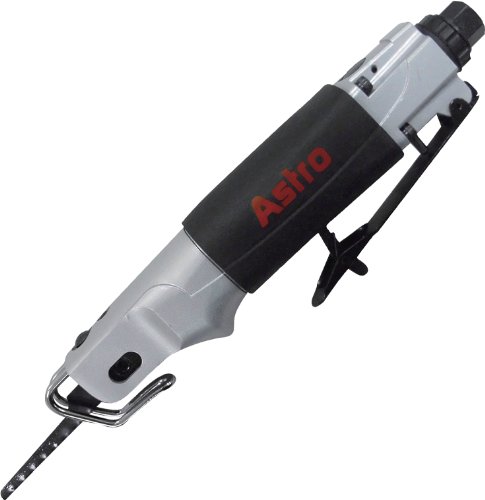
The Astro Pneumatic Tool 930 Air Body Saber Saw is a specialized pneumatic cutting tool built to tackle fine-tolerance cuts where standard reciprocating saws or angle grinders are simply too bulky. Operating on shop air, this compact saw is purpose-built to deliver fast, controlled strokes through sheet materials without warping or distorting delicate workpieces.
This tool is best suited for auto body technicians, exhaust specialists, metal fabricators, and DIY restoration enthusiasts working in home garages. Whether you are cutting out rusted floor pans, trimming quarter panels, or customizing fiberglass body kits, the agile chassis allows you to track intricate cut lines that larger power tools would easily botch.
In terms of workshop performance, the saw shines when executing tight radius curves and complex contour cuts. The adjustable blade guide is a standout functional feature, letting operators shift the cutting contact patch to utilize fresh teeth along the blade stroke. This prolongs blade life and ensures stable support directly against the workpiece, minimizing chatter on thin sheet metal, aluminum skin, and composite panels.
Weighing only 1.7 pounds and measuring under 10 inches in length, the tool excels in ergonomics and handling. The slim barrel grip gives you confident one-handed control when reaching into restricted spots like undercarriages or deep engine compartments. Routine maintenance is straightforward, requiring standard pneumatic tool oil before daily operation to keep internal air components running smoothly and resist internal moisture corrosion.
While this tool handles sheet metal, exhaust pipes, and plastics with ease, users should keep in mind that it is not intended for thick structural channel or heavy solid bar stock. It also demands a dependable workshop air compressor to sustain continuous operation without pressure drop-offs. For fabricators and mechanics seeking clean, precise cuts in tight automotive quarters, this air saber saw offers dependable utility and solid value.
Body shop technicians frequently turn to air body saws for precise patch panel fabrication. The Astro Pneumatic 930 allows clean seam trimming without introducing excessive heat, which prevents the panel distortion often caused by abrasive cutoff wheels.
It also serves exceptionally well during exhaust repair, muffler removal, and trimming bumper covers or interior plastics. The compact stroke length and narrow blade access give mechanics the clearance needed to cut pipes directly under a vehicle lift without damaging nearby brake lines or wiring harnesses.


Pros
- Lightweight 1.76-pound design allows easy one-handed control in cramped engine compartments and chassis gaps.
- High stroke rate delivers clean, burr-reduced cuts across sheet metal and plastic panels.
- Safety paddle lever prevents accidental actuation around the busy workshop.
- Includes six multi-purpose replacement blades for immediate project readiness.
Cons
- Requires a continuous shop air compressor setup with steady CFM output to prevent stalling.
- Short stroke length limits efficiency on thick timber and heavy structural steel.
- Tethered air hose can limit movement compared to cordless reciprocating saws.
The GRDM Air Reciprocating Saw is a specialized pneumatic cutting tool engineered specifically for precision trimming, sheet metal work, and light metal fabrication. Operating on standard shop air through a 1/4-inch inlet, this compact body saw is ideally suited for automotive technicians, auto body repairers, exhaust specialists, and dedicated garage hobbyists. Anyone frequently dealing with floor pan patches, wheel arch trims, or tight vehicle sheet metal modifications will appreciate its nimble form factor.
Operating at speeds up to 8,500 strokes per minute, this air saw delivers fast, clean cutting action capable of handling up to 1.6 mm sheet steel and roughly 2 mm aluminum panels. Because pneumatic power supplies constant reciprocating momentum without the added weight of an onboard battery, the saw glides smoothly through thin stock. The rapid stroke frequency minimizes material chattering, which in turn reduces the time required for subsequent deburring, sanding, or weld prep.
Weighing only 1.76 pounds and measuring 11 inches in total length, the tool housing is built for access in awkward spaces where standard reciprocating saws or angle grinders simply cannot fit. A metal front guide shoe protects the workpiece and stabilizes the cut, while the integrated safety throttle paddle prevents unintentional start-ups while maneuvering under a vehicle. The front-to-rear airflow design also assists in keeping loose metal dust directed away from the cut line.
Setup and daily operation are straightforward. The saw hooks up to any standard 1/4-inch pneumatic coupler, requiring only a few drops of air tool oil before each work session to protect the internal reciprocating mechanism from moisture. The slim body profile stores neatly in a shallow rollaway drawer, service cart, or compact toolbox tray without consuming valuable shop space.
While exceptional for sheet metal, exhaust pipe trimming, and vehicle body modifications, this saw is not designed for cutting heavy structural beams or thick framing lumber. Users must also have an air compressor capable of maintaining adequate airflow for sustained cutting runs. For automotive bodywork, HVAC sheet metal shaping, and tight workshop trimming tasks, this lightweight air saw provides dependable, cost-effective utility.
In automotive repair and restoration environments, this pneumatic body saw excels at cutting out rusted rocker panels, wheel arches, and floorboards. Its narrow nose profile allows mechanics to work directly inside wheel tubs and behind bumper covers without removing adjacent suspension components.
Fabricators will find it equally useful for notching lightweight exhaust tubing, trimming interior bracketry, and modifying dash structures during custom roll cage or audio installations. The rapid cycling rate reduces distortion in thin automotive steel, ensuring welded patch panels fit cleanly with minimal gap correction.

Frequently Asked Questions
What air compressor size is needed to run an air reciprocating saw?
A compressor delivering at least 4 to 6 CFM at 90 PSI is typically required for continuous cutting without pressure drop. While compact body saws operate briefly on smaller pancake tanks, sustained cutting through sheet steel quickly drains limited air reserves. Maintaining consistent line pressure ensures the motor achieves its rated strokes per minute without stalling mid-cut.
How do pneumatic body saws compare to standard cordless reciprocating saws?
Pneumatic body saws offer significantly smaller physical profiles and much higher cycle speeds suited for fine, low-burr sheet metal work. Standard cordless models provide longer stroke lengths designed for heavy demolition, but they lack the delicate control needed for tight curves. For heavy-duty framing cuts or rough pipe demolition, using the best saw blades for Milwauke Sawzall remains the better workflow choice.
Can the best air reciprocating saw cut fiberglass and thick plastics?
Yes, air reciprocating saws cleanly cut fiberglass and rigid plastics when paired with high-tooth-count bi-metal blades. High stroke frequencies shear composite fibers cleanly without chipping surface gel coats or melting soft edges. Adjusting the throttle lever allows you to control heat generation across synthetic materials.
What blade tooth count works best for auto body sheet metal?
A blade with 24 to 32 teeth per inch provides the cleanest finish on thin sheet metal panels. Finer teeth prevent the blade from snagging the metal edges, which drastically reduces chatter and protects your workpiece from denting. Using at least three teeth in contact with the material thickness at all times ensures smooth operation.
How should an air body saw be lubricated for daily maintenance?
Add three to five drops of pneumatic air tool oil directly into the air inlet before each work session. Consistent lubrication keeps internal sliding vanes and reciprocator linkages cool while purging ambient moisture introduced by compressed air lines. Regular oiling protects internal steel cylinders from rust and maintains optimal operating speed throughout 2026.


Write Your Review
No reviews yet. Be the first to share your experience!