


Crooked miter cuts and premature tooth stripping can turn routine metal fabrication into an exercise in pure frustration. Heavy structural tubing or solid bar stock demands steady downfeed pressure, precise tracking, and a rigid frame that won’t twist under heavy loads. Setting up the Best 4×6 Bandsaw requires matching dependable drive systems with high-grade bimetal tooling to keep cuts square and true. When stock blades chatter or wander off line, upgrading to hardened M42 bi-metal bandsaw blades delivers the edge retention needed to slice tough alloys without bogging down.
Careful evaluation of workpiece thickness and tooth pitch helps avoid stripped teeth and ruined workpieces on standard horizontal cutting frames. Pairing fine pitch profiles for thin tubing with coarser tooth patterns for solid billet work keeps cut speeds consistent and prevents overheating. Post-cut cleanup moves faster when edges come off the bed cleanly, though smoothing curved brackets or custom fixtures might still call for the best oscillator sander back at the workbench. Reviewing motor ratings, spring-assisted feed controls, and user feedback ensures your shop setup delivers dependable service across every job.
Pros
- Resilient M42 bi-metal edge withstands cutting heat and resists premature dulling
- Dense 24 TPI design eliminates snagging on thin-walled tubing and sheet stock
- Direct fit for widely available 4x6 inch workshop bandsaws
- Flexible backer helps prevent premature breakage under normal tension
Cons
- Slow cutting speed when tackling thicker solid metal bar stock
- Not recommended for soft non-ferrous metals like aluminum due to potential chip clogging
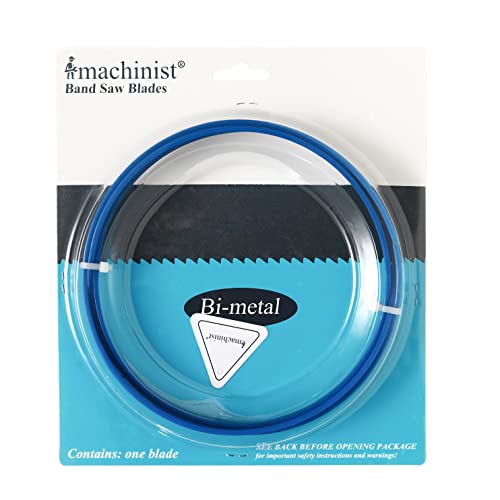
The Imachinist S64121224SS is a replacement bi-metal bandsaw blade engineered specifically for handling tough ferrous metals. Sized at 64-1/2 inches long by 1/2 inch wide with a fine 24 TPI tooth pattern, it is built for compact horizontal and vertical metal-cutting bandsaws. It suits automotive mechanics, custom fabricators, exhaust technicians, and garage woodworkers who cross over into sheet metal and structural fabrication.
Construction quality centers on an M42 bi-metal design, combining a tough high-speed steel cutting edge with a shock-absorbing spring steel backer. This metallurgy provides the hardness required to slice through work-hardening stainless steel while remaining flexible enough to bend continuously around compact saw wheels without developing fatigue cracks. The blue-finished backer provides an extra measure of corrosion protection during storage in unconditioned garage spaces.
In practical cutting applications, the 24 TPI profile excels at processing thin-gauge material. Tubing, thin-wall conduit, and sheet metal cuts remain smooth and controlled because multiple teeth engage the workpiece at all times. This prevents the teeth from hooking the edge and stripping, which is a common failure mode when running coarser blades on thin sections. The blade tracks reliably, maintaining clean straight lines with minimal deflection under proper guide adjustment.
Setup is direct on standard 4x6 bandsaws, dropping right onto the wheels without excessive fuss. Tensioning and tracking behave consistently thanks to the uniform width and thickness. As with any fine-pitch metal blade, there are limitations to consider. The tight gullet spacing means it is not built for thick solid bar stock, where chips can pack tightly and cause excessive friction. It is also not suitable for softer non-ferrous metals like aluminum, which quickly load up fine teeth.
For workshop fabricators and maintenance technicians who routinely cut stainless exhaust tubing, light steel angle, or thin-wall conduit, this Imachinist blade offers steady cutting performance. It keeps cuts clean, minimizes post-cut grinding, and stands up well to demanding shop duties when paired with the right feed rates and blade speed.
This blade measures 64-1/2 inches (5 feet 4-1/2 inches) in length, 1/2 inch in width, and 0.025 inches in thickness. This size represents the standard footprint for most benchtop and standalone 4x6 inch horizontal/vertical utility metal-cutting bandsaws.
It fits machines from popular workshop brands including Central Machinery, Grizzly, WEN, Jet, Shop Fox, and similar import models using the 64-1/2 inch blade specification. Always verify your machine manual to confirm required blade length, width clearance, and guide roller adjustments before mounting.
Pros
- M42 bi-metal teeth maintain sharpness on abrasive stainless alloys
- 14 TPI tooth spacing excels at cutting thin-walled tubing without tooth stripping
- Standard size fits a wide range of common 4x6 utility horizontal bandsaws
- Produces clean, square cuts that save time during edge preparation
Cons
- Not intended for non-ferrous metals like aluminum or soft brass
- Straight 14 TPI cuts slower through thick, solid bar stock than variable pitch blades
The Imachinist S64121214SS is a dedicated metal-cutting bi-metal bandsaw blade engineered for demanding fabrication tasks. Measuring 64-1/2 inches long, 1/2 inch wide, and 0.025 inches thick, this blade features a 14 TPI (teeth per inch) configuration. It is built using an M42 cobalt high-speed steel cutting edge electron-beam welded to an alloy spring-steel backing, producing a durable solution for small-shop metal cutting.
This blade is best suited for metal fabricators, automotive mechanics, exhaust builders, maintenance technicians, and serious DIY garage users. Anyone running a standard 4x6 inch horizontal or vertical metal-cutting bandsaw will find this size directly compatible with their tool. It provides the right balance of flexibility and tooth hardness needed for shop projects that involve routine cutting of tough ferrous metals.
In real-world workshop cutting, tooth stripping is one of the most common blade failures when tackling thin-walled material. The 14 TPI profile addresses this by ensuring that at least three teeth remain engaged in thin cross-sections like exhaust pipe, electrical conduit, and structural square tubing. The M42 tooth composition resists work-hardening effects often encountered with stainless steel, keeping the teeth sharp longer and reducing cutting friction.
Build quality centers around the bi-metal construction. The flexible spring-steel backer absorbs the continuous bending stress over small-diameter bandsaw wheels, which prevents fatigue cracking along the blade body. At the same time, the hardened M42 tooth tips withstand abrasive friction and moderate cutting temperatures. The consistent weld joint runs smoothly through blade guides and bearings without catching or causing erratic cuts.
Setup involves adjusting standard blade tension, setting tracking along the guide wheels, and aligning guide bearings close to the work piece. Because this blade features a fine 14 TPI straight pitch, it is specialized for thin-to-medium wall profiles and ferrous metals under 30 HRC. It is not recommended for soft non-ferrous materials such as aluminum, which can quickly load up fine teeth, nor is it optimized for rapid slicing through heavy solid billets.
For workshop owners and fabricators who frequently work with stainless steel tube, conduit, or light structural channel, this Imachinist blade offers a reliable, purpose-built upgrade over general-purpose carbon blades. Matching the material thickness to this fine tooth pitch yields clean, burr-free cuts that reduce prep time before fitting and welding.
Running an M42 bi-metal blade on a small horizontal bandsaw changes how cleanly a shop can process tough stock. The hardened teeth resist heat buildup during dry or lubricated cutting, maintaining their edge across repeated passes on stainless tubing and mild steel angles.
The 14 TPI tooth pitch provides smooth, controlled feed rates without grabbing or jumping into thin profiles. This stability protects both the blade teeth and the workpiece, leading to square cuts with minimal edge distortion that fit together cleanly during assembly and welding.
The 64-1/2 inch length and 1/2 inch width make this blade compatible with virtually all standard 4x6 inch utility horizontal-vertical metal-cutting bandsaws found in home workshops and fabrication garages.
It is specifically formulated for ferrous metals and stainless alloys rated under 30 HRC. For larger solid stock or soft non-ferrous alloys, users may prefer coarser variable-pitch blades, but for thin-wall metal profiles, this blade matches standard saw requirements seamlessly.

Pros
- Variable tooth geometry helps minimize chatter and produces cleaner cuts
- Bi-metal M42 material provides good heat resistance and edge retention
- Spring steel backer adds flexibility and durability for longer blade life
- Compatible with many common bandsaw models, making it a versatile replacement option
Cons
- Not recommended for non-ferrous metals like aluminum or brass, limiting its versatility
- Some users may find the 0.025 inch thickness less rigid for very aggressive cuts
- Limited to metals under 30 HRC, so it won't handle hardened tool steels
If you regularly cut stainless steel or other hard ferrous metals in your workshop or on the job site, the Imachinist M42 bi-metal bandsaw blade is worth a close look. This 64-1/2 inch long, 1/2 inch wide blade features a variable 14/18 TPI tooth pattern, which is specifically designed to handle materials like stainless steel and steel alloys with a hardness under 30 HRC. It's a practical replacement blade for many 4x6 inch bandsaws and similar machines used by mechanics, contractors, and serious DIY enthusiasts.
One of the standout features here is the variable tooth geometry. Instead of a single pitch, the 14/18 TPI alternates between coarser and finer teeth. This helps reduce vibration and chatter during the cut, which can lead to a smoother finish and less noise. For anyone who has fought with a screaming blade on a tough piece of stainless, this design can make a noticeable difference in both cut quality and operator comfort.
The blade is made from M42 bi-metal, which means the teeth are made from high-speed steel with cobalt, while the backer is a flexible spring steel. This combination gives you good heat resistance and edge retention, while the spring steel backer helps the blade withstand the flexing and tension of continuous use. The welded joint is also well-made, which is critical for avoiding premature breakage during demanding cuts.
In terms of real-world performance, this blade is best suited for cutting ferrous metals like stainless steel, carbon steel, and alloy steel. It's not recommended for non-ferrous materials such as aluminum, brass, or copper, so keep that in mind if your work involves a mix of metals. The 0.025 inch thickness provides a good balance between rigidity and flexibility, though some users may prefer a thicker blade for very aggressive feed rates.
Storage and maintenance are straightforward. Like any bandsaw blade, you'll want to store it in a dry area to prevent rust, and handle it carefully to avoid damaging the teeth. The blade comes in a simple package, but it's ready to install on compatible saws right out of the box. For mechanics cutting exhaust pipes or brackets, contractors trimming steel studs, or workshop users fabricating parts, this blade offers a reliable and cost-effective solution.
Overall, the Imachinist M42 bi-metal bandsaw blade is a solid performer for its intended use. It's not a one-size-fits-all blade, but for cutting stainless steel and hard ferrous metals under 30 HRC, it delivers good cut quality and durability. If your bandsaw takes 64-1/2 inch by 1/2 inch blades and you frequently work with tough metals, this is a practical choice that won't break the bank.

Pros
- Heavy-duty M42 bi-metal edge resists tooth stripping much better than standard carbon steel blades
- 14/18 variable pitch provides smooth, low-vibration cuts on thin pipe and structural shapes
- Direct fit for widespread 4x6 saw models from WEN, Grizzly, JET, and Central Machinery
- Includes plastic edge guards for safer handling and compact toolbox storage
Cons
- Fine 14/18 tooth pattern cuts slower through thick, solid billet material compared to coarser pitch blades
- Requires proper saw speed regulation and tension adjustment to maximize service life on stainless steel
The HUGEARM 64-1/2-inch Bi-Metal M42 Bandsaw Blade 2-Pack is designed specifically for standard 4x6 horizontal and vertical metal cutting band saws. Measuring 64.5 inches in length and 1/2 inch in width, these replacement blades are built for garage hobbyists, automotive mechanics, metal fabricators, and home workshop users looking to replace entry-level factory blades. They fit widely used machines from Grizzly, WEN, Shop Fox, JET, Central Machinery, and Harbor Freight.
Metal fabricators and DIY mechanics will appreciate the versatile 14/18 variable teeth-per-inch pitch. This tooth spacing excels at dampening chatter and cutting harmonic vibration, resulting in smooth finishes on thin-walled conduit, square tubing, angle iron, and sheet metal. It also handles solid mild steel, aluminum, brass, and stainless steel when running your saw at appropriate lower surface speeds.
The build quality centers on an M42 bi-metal design, combining a tough spring-steel alloy backing with high-speed steel tooth tips. This construction delivers strong heat and wear resistance during demanding metal cuts, helping to prevent the stripped teeth that commonly occur when standard carbon blades hit work-hardened spots or interrupted cuts.
Setup on standard 4x6 saws follows normal blade tensioning and tracking procedures. Each blade includes a flexible plastic tooth guard that shields the cutting tips from accidental impacts in your tool chest or wall rack. This protective cover keeps your spare blade sharp and ready for installation while reducing the risk of sliced gloves or nicked fingers during handling.
While the 14/18 TPI tooth configuration provides great versatility for general structural metalwork, it is not meant for high-speed wood resawing or thick billet cutting where a coarser pitch is necessary. For home mechanics, metalworkers, and maintenance specialists looking for dependable cutting performance on tubing and everyday structural stock, this two-pack offers a practical and durable shop solution.
These 64-1/2 inch by 1/2 inch bandsaw blades are sized to fit a wide range of benchtop and stand-mounted 4x6 horizontal/vertical metal cutting band saws. They are directly compatible with WEN 3970, Grizzly G0622 and G9742, Central Machinery 93762, Shop Fox W1715, JET HBS-56S and HVBS-56M, and BILT HARD 4x6 models.
The 0.020-inch blade body thickness allows for smooth tracking over standard guide bearings without placing excessive fatigue stress on smaller saw wheels. Always verify your bandsaw manual for proper tension settings, guide alignment, and recommended cutting speeds based on the hardness of your workpiece.

Pros
- Tough M42 cobalt tooth edges resist dulling on harder metals like stainless steel and angle iron
- Smooth weld joint allows even tracking through roller guide bearings
- 14 TPI configuration offers clean cuts with minimal burr on pipes, channel, and bar stock
- Direct fit for widespread 4x6 utility bandsaws across multiple major brands
Cons
- A 14 TPI tooth profile can cut relatively slowly through thick, heavy solid bar stock
- Requires proper saw speed adjustments and cutting fluid to maximize lifespan on tough alloys
- Limited to saws requiring 64-1/2 inch blades and will not fit larger industrial machinery
The FOXBC 64-1/2 Inch 14 TPI Bi-Metal Bandsaw Blade set is an essential power tool accessory engineered for standalone horizontal and vertical metal-cutting bandsaws. Packaged as a two-piece set, each blade measures 64.5 inches in length, 1/2 inch in width, and 0.02 inches in thickness. This size is standard across countless small-to-medium workshop bandsaws, making these blades a frequent consumable purchase for metal fabricators, automotive mechanics, maintenance technicians, plumbers, and DIY garage builders who regularly size structural metals, pipe, and bar stock.
Construction quality is centered around a bi-metal design featuring M42 high-speed steel teeth bonded to a fatigue-resistant spring steel backer. The addition of 8 percent cobalt within the tooth material significantly improves red hardness, allowing the cutting edges to withstand elevated temperatures during friction-heavy dry or wet cuts. A critical feature of any bandsaw blade is the weld joint, and these blades utilize a reinforced, ground-smooth weld to prevent the annoying clicking and jumping that often leads to tracking problems or premature breakage at the seam.
In practical workshop cutting tasks, the 14 TPI tooth pitch serves as an all-around workhorse configuration. It offers an ideal compromise between material removal speed and smooth cut finish on structural shapes, including angle iron, square tubing, galvanized water pipe, copper, brass, and aluminum. The tooth density prevents snagging or stripping when engaging medium-wall hollow sections, while still retaining enough gullet capacity to clear chips effectively. Slower cutting speeds allow the blade to tackle tougher materials like stainless steel and chrome-moly tubing without excessive chatter.
Blade installation and setup are straightforward for anyone familiar with tensioning a 4x6 horizontal bandsaw. The 1/2-inch band width easily seats between standard roller guide bearings and tracks true on common drive wheels. Maintaining proper blade tension, selecting the correct pulley speed for the workpiece density, and applying a bit of cutting wax or flood coolant when processing hard alloys will help extend the lifespan of each band. Keeping the spare blade stored flat or loosely coiled in its protective sleeve protects the sharp teeth from workshop moisture and accidental contact with other steel tools.
While the 14 TPI tooth layout is exceptionally versatile for common fabrication stock, users working primarily with heavy solid billets thicker than two inches may experience slower cutting rates and might prefer a coarser 6 to 10 TPI tooth pitch. Conversely, very thin sheet metal may still catch without careful feed control. For general garage projects, automotive exhaust fabrication, bracket cutting, and farm equipment repair, this two-pack represents a dependable and economical choice that keeps your metal-cutting bandsaw productive and accurate.
These 64.5-inch bandsaw blades match the factory specifications for widespread 4x6 horizontal and vertical metal-cutting bandsaws found in thousands of workshops. Compatible models include the WEN 3970, Grizzly G0622 and G9742, Harbor Freight 4x6 utility saw, JET HBS-56S and HVBS-56M, Shop Fox W1715, as well as units from POWERTEC, Bilt Hard, and Sears Craftsman requiring a 64-1/2 inch by 1/2 inch band.
Material versatility is one of the strongest features of this bi-metal blade. It handles mild carbon steel, structural angle, solid round stock, copper tubing, brass fittings, aluminum channel, and dense plastics. While primarily intended for metalworking operations, the teeth are sharp enough to make clean cuts through hardwoods and composite lumber when used at appropriate saw speeds, making it a handy multi-material blade for general repair shops.
Pros
- Durable bi-metal build resists premature tooth dulling and stripping
- Standard sizing matches widely used benchtop and portable 4x6 metal band saws
- 14 TPI pitch provides smooth cuts across thin-wall tubing and angle iron
- Significantly outlasts conventional carbon steel replacement blades
Cons
- Not intended for cutting hardened alloys or tough stainless steels
- Straight 14 TPI profile can load up if fed too aggressively through heavy solid bars
- Requires careful blade tracking and proper break-in passes to maximize service life
The Imachinist S64514 is a dedicated metal-cutting band saw blade measuring 64-1/2 inches long, 1/2 inch wide, and featuring a 14 teeth-per-inch (TPI) configuration. This specific length is the benchmark standard for many horizontal and vertical 4x6 inch metal-cutting band saws found in small shops and residential garages. Designed primarily for soft ferrous metals, it acts as a direct replacement blade that aims to step up cutting capability beyond fragile factory-supplied carbon blades.
This blade is ideal for home mechanics, metal fabricators, maintenance workers, and DIY hobbyists who frequently cut stock in their personal garages or light manufacturing shops. Whether squaring off structural tubing, trimming solid mild steel round stock, or sizing angle iron for a welding table, the 1/2-inch blade width maintains beam strength through the cut while the 14 TPI profile keeps tooth engagement balanced.
In real-world shop use, the bi-metal construction serves as the primary reliability factor. By bonding high-speed steel tooth tips to a fatigue-resistant spring steel backing, the blade absorbs cyclic bending stress around drive wheels while retaining sharp tooth points. The 14 TPI arrangement delivers clean, minimal-burr cuts across mild steel profiles and structural shapes, reducing post-cut grinding time and improving overall fabrication efficiency.
Durability hinges heavily on proper setup and speed control. Users operating small metal band saws should ensure proper blade tracking, appropriate guide bearing clearance, and an initial break-in period at lighter feed pressure. When run at the correct surface feet per minute (SFPM) for mild steel and paired with a mist or drip lubricant where available, the blade resists heat buildup and tooth stripping far better than entry-level carbon steel alternatives.
As with any cutting accessory, there are practical boundaries to keep in mind. A fixed 14 TPI pitch works best on medium wall thicknesses and small structural profiles, but it can choke on thick, solid billets or chatter on ultra-thin sheet stock where a finer pitch or variable TPI setup would be more suitable. It is also not suited for hardened tool steels or abrasive composites that require specialized carbide tooling.
For workshop enthusiasts and small fabricators seeking dependable cuts without spending heavily on commercial industrial consumables, this Imachinist blade represents a practical, value-driven choice. It drops smoothly into standard 4x6 band saw platforms and delivers steady, predictable cutting performance across routine metalworking projects.
The 64-1/2 inch by 1/2 inch profile is designed to fit standard 4x6 horizontal and vertical metal-cutting band saws from brands like Central Machinery, WEN, Grizzly, Shop Fox, and similar import workshop models.
To achieve the best results, always verify blade tension and align the guide rollers so the teeth run clear of bearing faces. Running a moderate feed rate during the first few cuts helps hone the tooth edge, preventing premature chipping and extending overall blade longevity in mild steel stock.

Pros
- Affordable 2-pack offers great value for frequent blade changes
- Versatile cutting performance on wood, plastic, and non-ferrous metals
- Durable carbon steel with heat-resistant welds for extended use
- Hook tooth design provides aggressive yet smooth cuts
- Easy to install on compatible Sears Craftsman 12" band saws
Cons
- Limited to 6 TPI, which may not be ideal for very fine or detailed cuts
- No user reviews yet, so long-term durability is unconfirmed
- Only compatible with 80-inch band saws; not universal for all models
If you own a Sears Craftsman 12-inch band saw, you know that keeping a sharp blade on hand is key to getting clean cuts. The FOXBC 80-inch bandsaw blade 2-pack offers a practical solution for woodworkers, DIY enthusiasts, and hobbyists who need reliable replacement blades. These blades are crafted from premium carbon steel with a hook tooth profile at 6 TPI, making them suitable for cutting hardwood, softwood, plastic, and even non-ferrous metals.
The 6 TPI hook teeth are designed for aggressive yet smooth cutting. According to the product description, the optimal geometric tooth arrangement reduces vibration and provides seamless cutting. This means you can expect efficient cuts in both thick and thin materials. The heat-resistant welds and carbon steel construction contribute to blade longevity, so you won't be swapping blades as often during heavy use.
The blades measure 80 inches long, 1/2 inch wide, and 0.02 inches thick, matching the specifications for many Craftsman 12-inch band saws. The carbon steel material offers a good balance of flexibility and hardness, which helps the blade handle curved cuts and intricate shapes without breaking. The thinner blade profile is said to extend blade life, which is a plus for users who push their saws regularly.
Since this is a 2-pack, you can keep a spare blade ready for quick changes. Storing blades properly is important to maintain their sharpness; a simple blade storage rack or even the original packaging can work. No special maintenance is required beyond keeping the blade clean and dry to prevent rust. The blades come black in color, likely with a basic coating for corrosion resistance.
One limitation is the 6 TPI tooth count. While it's great for general ripping and crosscutting, it may not produce the smoothest finish for very fine work like veneer or thin plywood. For those applications, a higher TPI blade would be better. Also, since this product has no reviews yet, it's hard to gauge real-world durability, though the specs look promising. Compatibility is specifically for 80-inch band saws, so verify your saw's blade length before purchasing.
Overall, the FOXBC 80-inch bandsaw blade 2-pack is a solid choice for Craftsman 12-inch band saw owners who need a versatile, everyday cutting blade. It's affordable, covers a range of materials, and the two-pack adds convenience. Woodworkers, DIYers, and small workshop users will find these blades a practical addition to their tool collection.
Frequently Asked Questions
What blade size does a standard 4×6 bandsaw use?
Standard 4×6 metal-cutting machines take a 64-1/2 inch blade length with a 1/2-inch width and 0.025-inch thickness. This universal dimension fits popular models from WEN, Grizzly, Shop Fox, JET, and Central Machinery. Installing the correct blade thickness ensures proper tracking over the drive wheels without putting excessive strain on the tension mechanism.
How do you select the right TPI for cutting metal on a 4×6 bandsaw?
Select your tooth pitch so at least three teeth contact the metal at all times. A finer 24 TPI blade works best for thin-walled tubing, sheet metal, and small channel profiles to prevent tooth stripping. Coarser options like 14 TPI or variable 14/18 TPI profiles excel on thicker angle iron and solid steel bar stock by clearing chips efficiently.
Can a 4×6 horizontal bandsaw cut stainless steel?
Yes, but you must use an M42 bi-metal blade running at the slowest blade speed setting. Stainless steel work-hardens rapidly if teeth rub rather than cut, so steady downfeed pressure is essential. High-speed steel teeth with cobalt content resist thermal breakdown much better than standard carbon steel blades.
Why does a 4×6 bandsaw cut crooked or drift during operation?
Crooked cuts usually stem from loose blade guide bearings, dull teeth, or excessive feed pressure. When the guide arm sits too far from the workpiece, the blade twists as it enters the stock. Tightening blade tension, aligning guide rollers snugly, and keeping downfeed spring pressure balanced eliminates cut wander.
What is the benefit of a variable pitch blade on a Best 4×6 Bandsaw?
Variable pitch blades like 14/18 TPI significantly reduce harmonic vibration and chatter during interrupted cuts. Varying tooth spacing interrupts rhythmic resonance when cutting structural shapes like angle iron or rectangular tubing. This design broadens the range of material thicknesses a single blade can handle cleanly in your 2026 workshop.
How should you clean up metal burrs after cutting on a 4×6 bandsaw?
Deburr freshly cut edges using a flat file, a wire wheel, or the best detailing sander fitted with abrasive grit. Even with sharp bi-metal bandsaw teeth, horizontal metal cuts often leave a slight flashing edge on the exit side. Quick touch-ups remove sharp edges before welding or mechanical assembly.


Write Your Review
No reviews yet. Be the first to share your experience!