


That sinking feeling when you flip a freshly cut laminate board and see a jagged edge staring back? Yeah, it kills the momentum. One bad chip and suddenly the whole plank is trash, or you’re spending extra time sanding and patching. A good best chop saw blade for laminate flooring 2026 smooth cuts stops that frustration before it starts. It’s not just about the cut itself. It’s about keeping the workflow smooth, avoiding waste, and getting that tight seam that makes the floor look professional without the headache.
Laminate’s tough top layer is the culprit. Cheap blades tear at it instead of slicing clean. That’s where high tooth counts and smart tooth geometry come in. Blades with tungsten carbide or PCD teeth hold their edge longer against that abrasive surface, reducing tear-out and keeping edges crisp. Less time fixing mistakes, more time laying down rows that fit perfectly. And when you’re working through a whole room, that consistency speeds everything up. If you’re already thinking about saw performance, checking out the best metal cutting blade for circular saw might give you extra insight into what makes a blade last.

Pros
- Exceptional durability with PCD teeth that outlast carbide blades by a wide margin
- Delivers very smooth, chip-free cuts on laminate and engineered wood flooring
- Anti-kickback and vibration-dampening features improve safety and cut accuracy
- Non-stick coating reduces gumming and heat buildup, keeping the blade cleaner longer
- Compatible with miter, slide miter, and table saws, offering flexibility for various setups
Cons
- Premium pricing compared to standard carbide blades, though the longer life often offsets the cost
- Not suitable for cutting metal, masonry, or lumber with nails; it is strictly for wood-based flooring materials
- Limited tooth count (12 teeth) means a slightly rougher finish on solid wood compared to finer-tooth blades
The Diablo D1012LF PergoBlade is a purpose-built saw blade designed specifically for cutting laminate flooring, engineered wood, bamboo, and hardwood. Unlike general-purpose blades, this one uses polycrystalline diamond (PCD) tips that can last up to 75 times longer than standard carbide. That makes it a smart investment for anyone who does regular flooring work, whether you are a full-time contractor or a dedicated DIY homeowner.
Best suited for contractors, woodworkers, and serious DIYers, this blade excels in miter saws, sliding compound miter saws, and table saws. If you have a large flooring installation ahead, the PergoBlade will save you time and frustration by maintaining its sharpness through hundreds of cuts without needing a swap. The anti-kickback design adds a layer of safety, while the laser-cut anti-vibration slots keep the blade stable for clean, precise cuts.
In real-world use, the blade’s cutting efficiency is impressive. The 12-tooth configuration is aggressive but still produces a very clean edge on laminate and engineered planks. The non-stick coating helps reduce friction and heat, which means less burning and longer life. Many users report fewer chip-outs and smoother edges compared to standard carbide blades, especially when cutting delicate laminate surfaces.
Build quality is solid. The PCD tips are brazed onto a hardened steel plate, and the 5/8-inch arbor fits most standard saws. The red coating is more than cosmetic; it actively reduces resin buildup. At 0.087-inch kerf and 0.063-inch plate, the blade is fairly thin, which helps reduce waste and motor strain. Storage is straightforward - it slides into any standard blade case or drawer. No special maintenance is needed beyond occasional cleaning of the coating.
A realistic limitation is the price. At around $68, it costs more than a typical carbide flooring blade. However, given its lifespan, many professionals find it cheaper in the long run. Also, this blade is not meant for general ripping or crosscutting of lumber, especially if the wood contains nails or dirt. Stick to clean flooring materials and it will serve you well.
Overall, the Diablo PergoBlade D1012LF is a practical choice for anyone who tackles flooring projects frequently. It offers exceptional longevity, cleaner cuts, and improved safety. For DIY homeowners planning a single room, a cheaper carbide blade might suffice, but for pros and serious workshop users, the PCD investment pays off quickly.
The Diablo PergoBlade is built with a hardened steel plate and brazed PCD (polycrystalline diamond) tips. The diamond material is extremely wear-resistant, allowing the blade to outlast carbide by a wide margin. The laser-cut anti-vibration slots are precision-machined to reduce wobble and ensure straight cuts. The non-stick coating is applied evenly and resists pitch and resin buildup, which helps maintain cutting performance over many uses. The blade is balanced well from the factory, minimizing vibration even in high-speed miter saws. Overall, this is a durable, professional-grade accessory meant for heavy daily use.
With only 12 teeth, the PergoBlade is designed for speed and longevity rather than a polished finish on solid wood. On laminate and engineered flooring, it produces surprisingly smooth edges with minimal chips or fraying. The aggressive hook angle (10 degrees) helps pull the material through for fast cuts. The anti-kickback shoulder behind each tooth reduces the risk of the blade grabbing unexpectedly. The non-stick coating keeps the blade cool, so you can make repeated cuts without overheating. On a sliding miter saw, this blade handles full-width laminate planks with ease. For tongue-and-groove installations, the clean cut helps joints fit tightly without extra sanding.
Pros
- Exceptional finish quality with minimal tear-out on crosscuts and miters
- Thin kerf allows for efficient cutting with smaller motors and less blade binding
- Compatible with a wide range of 10-inch saws, including some sliding compound miter saws
- Affordable price point for a carbide-tipped blade with 80 teeth
Cons
- Thinner kerf may flex under heavy rip cuts or dense material, not ideal for rough lumber
- Arbor size is fixed at 5/8 inch; reducers may be needed for saws with smaller arbors
- Limited user reviews available to confirm long-term durability
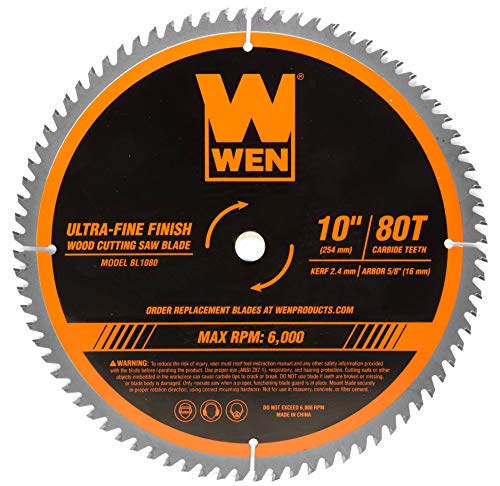
The WEN BL1080 is a 10-inch, 80-tooth carbide-tipped saw blade designed specifically for finish work on miter saws and table saws. It's built for woodworkers, DIY homeowners, contractors, and cabinet makers who demand clean, splinter-free cuts in hardwoods, softwoods, and plywood. Whether you're trimming baseboards, cutting crown molding, or making precise miter joints, this blade aims to deliver professional-grade results without breaking the bank.
In real-world use, the 80 teeth and thin 1/10-inch kerf work together to reduce tear-out and produce a smooth edge that often requires little sanding. The carbide tips stay sharp through extended use on materials like oak, maple, and pine. With a maximum rating of 6000 RPM, it handles fast cuts on most standard saws without bogging down. For workshop users focused on finish carpentry or fine woodworking projects, this blade offers noticeable improvements over general-purpose blades.
Build quality is solid for the price. The blade body is made from a silver-coated steel that resists corrosion, and the carbide teeth are securely brazed. While professional blades from premium brands may use thicker steel or more advanced coatings, the WEN BL1080 holds its own for light to moderate use. The 5/8-inch arbor fits most common saws, but if your saw uses a smaller arbor, you'll need a reducer ring (not included).
Storage and maintenance are straightforward. Keep the blade clean with resin remover and store it in a blade guard or case to protect the teeth. WEN does not include a storage case, so you may want to pick up a blade sleeve or keep it in the original packaging. The blade's lightweight design (just over 1.5 pounds) makes it easy to swap between saws without much hassle.
A realistic limitation is that the thin kerf isn't ideal for heavy rip cuts on thick stock. The blade can flex under pressure, leading to less accurate cuts or potential binding. It's best reserved for crosscutting, mitering, and finer ripping in materials up to about 1.5 inches thick. Additionally, since there are no user reviews yet, long-term durability is unproven, but WEN's reputation for value-oriented tools suggests it should hold up well for most hobbyists and DIY projects.
Overall, the WEN BL1080 is a smart buy for anyone who wants clean, finished cuts without spending a lot. It's especially suited for DIY woodworkers, garage workshop users, and contractors who do a lot of trim or cabinet work. For heavy-duty ripping or high-volume production, you may want a thicker kerf blade, but for everyday finish cuts, this blade delivers reliable performance at a great price.

Pros
- Exceptional cut quality on laminates and plywood with minimal splintering.
- Affordable price point that competes with higher-end blades in smoothness.
- Teflon coating reduces friction and pitch build-up, extending blade life between cleanings.
- Anti-vibration slots help maintain control and accuracy during cuts.
- Universal arbor fits most saws without adapters.
Cons
- 80-tooth count is best for crosscuts and fine finishes; not as efficient for fast ripping of thick hardwoods.
- Some users may find the blade slightly heavier than premium ultra-thin kerf models.
- Limited user feedback available as a newer product, so long-term durability under heavy shop use is not yet proven.
The COMOWARE 10-inch 80-tooth miter saw blade is a carbide-tipped circular saw blade designed for woodworkers, DIY homeowners, and contractors who need clean, accurate cuts in wood and sheet goods. With its alternating top bevel (ATB) geometry and Teflon anti-stick coating, this blade aims to minimize splintering and resin buildup, making it a practical choice for both workshop projects and job site use.
Performance-wise, the 80 teeth allow for fine, polished cuts in plywood, MDF, laminate, and hardwoods. Many users appreciate how the ATB tooth design scores the wood fibers before the following teeth remove material, which reduces tear-out on crosscuts. The anti-vibration features help keep the blade stable, reducing chatter and improving cut accuracy. While this blade can handle rip cuts in softwoods, it is primarily optimized for crosscutting and finish work, so users tackling thick hardwood ripping may prefer a lower tooth count.
Build quality is solid for the price point. The tungsten carbide teeth are heat and wear resistant, and the Teflon coating helps keep the blade running cooler and cleaner by preventing pitch adhesion. The 5/8-inch arbor is universal and fits most miter saws and table saws without requiring additional bushings. The blade feels sturdy and well-balanced, though it is not an ultra-thin kerf design, so it may remove slightly more material than some premium blades.
Setup and storage are straightforward. The blade mounts easily on standard arbor saws, and the coating reduces the need for frequent cleaning. For maintenance, occasional sharpening or replacement is expected with heavy use, but the carbide teeth can be sharpened multiple times before needing a new blade. There is no included storage case, so users will need to store it in a blade guard or sleeve to protect the teeth.
One realistic limitation is that the 80-tooth count may not be ideal for fast, aggressive ripping of thick hardwoods or pressure-treated lumber. For those tasks, a 24-tooth or 40-tooth blade would be more efficient. Additionally, because this is a newer product, long-term durability data under heavy professional use is not yet widely available from user reviews.
Overall, the COMOWARE 10-inch 80T miter saw blade offers excellent value for woodworkers, DIYers, and finish carpenters who need smooth, splinter-free cuts on plywood, laminate, and hardwoods. It is a reliable, budget-friendly option that performs well in home workshops and on job sites where cut quality matters more than raw speed.

Pros
- 80-tooth count produces exceptionally smooth, splinter-free edges on plywood and melamine
- Two-pack offers great value for woodworkers who need a dedicated finish blade and a spare
- Thin kerf design reduces cutting resistance and extends saw motor life
- Tungsten carbide tips hold an edge well for extended use between sharpenings
Cons
- Thin kerf blades may deflect more under heavy feed pressure, requiring careful technique on thick stock
- Not ideal for ripping thick hardwood or heavy construction lumber due to high tooth count and thin kerf
- Limited user reviews available to confirm long-term durability and edge retention
The Luckyway 10 Inch Table Saw Blade 2-Pack is a purpose-built set of 80-tooth fine finish saw blades designed for woodworkers, contractors, and serious DIYers who demand clean, chip-free cuts from their table saw or miter saw. Each blade features tungsten carbide tipped (TCT) teeth and a thin 0.1-inch kerf, making it well-suited for crosscutting hardwoods, plywood, melamine, laminate, and molding. With a standard 5/8-inch arbor and a max RPM rating of 5350, these blades fit most 10-inch miter saws, jobsite saws, and table saws commonly found in workshops and on construction sites.
For woodworkers and finish carpenters, the 80-tooth geometry is the standout feature. It produces exceptionally smooth edges on plywood and melamine, reducing the need for sanding or edge banding. This makes the blade a strong candidate for cabinet making, trim work, and furniture projects where surface quality matters. The thin kerf also helps conserve material and allows the saw to cut with less effort, which can be a real advantage when working with a jobsite saw or a less powerful motor.
Build quality appears solid for the price point. The carbide tips are brazed onto a hardened steel body, and the blade is laser-cut for stability. While the thin kerf improves cutting efficiency, it does mean the blade is more prone to deflection if you push too hard or try to cut thick, dense lumber. For ripping or heavy construction work, a thicker-kerf general-purpose blade would be a better choice. But for crosscutting sheet goods and finish lumber, this blade performs admirably.
Storage and maintenance are straightforward. The two-pack comes in a simple cardboard sleeve, so you may want to invest in a blade case or magnetic holder to protect the teeth during transport and storage. Keeping the blades clean of pitch and resin will extend their life, and the carbide tips can be resharpened when they eventually dull. Given the affordable price of the two-pack, many users may simply replace them when performance drops.
A realistic limitation is the lack of long-term user feedback. With zero reviews at the time of writing, it's hard to gauge how the blade holds up over months of heavy use. However, based on the specifications and materials used, it should perform well for light to moderate finish work. For professional contractors who cut sheet goods daily, this blade offers a cost-effective way to keep a sharp finish blade on hand without breaking the bank.
Overall, the Luckyway 10-inch 80T blade 2-pack is a practical buy for woodworkers, cabinet makers, and DIYers who prioritize clean crosscuts and value. It's not a heavy ripping blade, but for fine finish work on a miter saw or table saw, it delivers the smooth results you need. If you're looking for an affordable way to upgrade your finish cutting setup, this two-pack is worth considering.
The Luckyway 10-inch saw blades are constructed with a hardened steel body and tungsten carbide tipped teeth. The carbide tips are securely brazed to the blade, which helps maintain tooth retention during use. The blade body is laser-cut for consistent flatness, and the 5/8-inch arbor hole is precisely machined to fit snugly on standard saw arbors. While the thin kerf design reduces material waste, it also means the blade is more flexible than a full-kerf blade. For finish work on sheet goods and softwoods, this is rarely an issue, but users should avoid forcing the blade through thick or dense hardwoods to prevent deflection. Overall, the build quality appears appropriate for the price point and intended use.
In a workshop setting, these blades excel at producing clean, splinter-free crosscuts on plywood, melamine, and hardwood. The 80-tooth configuration leaves a smooth edge that often requires little to no sanding, which is a major time-saver for cabinet makers and finish carpenters. The thin kerf also reduces dust generation and allows the saw to cut more efficiently, which can be beneficial when using a jobsite saw or a lower-horsepower table saw. For ripping operations or cutting thick stock, a lower-tooth-count blade would be more appropriate. But for fine finish work, this blade delivers the performance most woodworkers are looking for.

Pros
- Exceptionally long blade life thanks to PCD tips - outlasts carbide blades many times over.
- Produces clean, smooth cuts with minimal chipping on fiber cement and laminate flooring.
- Thin kerf helps reduce airborne dust and makes cutting easier on the saw motor.
- Laser-cut body and expansion slots keep the blade cool and stable during extended use.
- Good value compared to premium PCD blades - cost-effective for frequent heavy cutting.
Cons
- Only 6 teeth - may leave a slightly rougher finish on softer materials compared to higher-tooth-count blades.
- PCD tips are brittle - not recommended for cutting metal or wood with embedded nails, which could chip the tips.
- Requires a saw with at least 6000 RPM maximum - check your tool's specs before use.
The Janchi 10-inch 6T PCD tip saw blade is a specialized cutting tool designed for hard, abrasive materials like fiber cement board, HardiePlank, laminate flooring, and other composite panels. It packs polycrystalline diamond (PCD) teeth that are significantly harder and more wear-resistant than standard carbide, making it a go-to for contractors and serious DIYers who regularly cut tough siding or flooring materials.
In terms of performance, this blade shines where carbide blades dull quickly. The six diamond-tipped teeth maintain their edge far longer - the manufacturer claims up to 60 times longer cutting life. This means fewer blade swaps on the job site and more consistent cut quality over time. The ultra-thin kerf (only 2.2 mm) reduces dust generation and requires less effort from your saw, which is helpful when cutting thick cement board. Anti-vibration slots in the laser-cut body help keep cuts accurate and reduce noise.
Build quality is solid for the price point. The blade body is laser-cut with expansion slots that prevent warping as the blade heats up during heavy use. The 5/8-inch arbor fits the vast majority of 10-inch circular saws, miter saws, and table saws, so you can use it across multiple tools without needing adapters. The yellow coating is functional, though not as flashy as some premium blades.
Setup is straightforward - just mount it on your saw arbor and tighten the nut. There's no special maintenance required beyond keeping the blade clean and storing it in a blade guard or protective sleeve to avoid damaging the PCD tips. Because the tips are harder they are also more brittle, so careful handling is recommended to prevent chipping if dropped.
A realistic limitation is the 6-tooth count. While 6 teeth are ideal for fast cuts in fiber cement and laminates, they won't give the fine finish you expect from a wood-cutting blade with more teeth. This blade is optimized for speed and durability in abrasive materials, not for fine furniture joinery. Also, avoid using it on metal or wood with nails - hitting a fastener could fracture a diamond tip.
Overall, the Janchi PCD blade is a practical investment for anyone regularly cutting fiber cement, HardiePlank, or laminate flooring. It is well-suited for professional siding installers, remodeling contractors, and DIYers tackling major home upgrades. The combination of longevity and clean cutting makes it a reliable addition to any workshop or job site tool collection.
Pros
- Extremely long lifespan compared to standard carbide blades; ideal for high-volume flooring contractors.
- Anti-kickback feature enhances safety when cutting laminate, which can be unforgiving with standard blades.
- Non-stick coating minimizes gumming and heat, leading to cleaner cuts and less maintenance.
- 12-inch diameter offers deep cutting capacity for thick flooring materials on miter and table saws.
Cons
- Premium pricing (around $86) may be a barrier for occasional DIY users; cost-effective only for frequent use.
- 16-tooth configuration leaves a somewhat rough cut on solid wood; best reserved for laminate and engineered flooring only.
- PCD teeth are extremely hard but can chip if abused (e.g., hitting nails or debris); require careful handling.
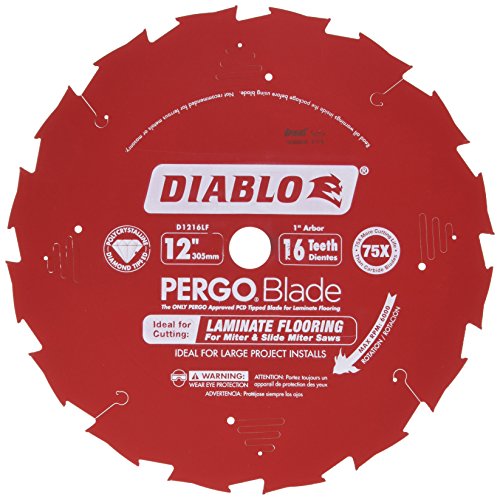
The Diablo D1216LF PergoBlade is a specialized 12-inch circular saw blade designed exclusively for cutting laminate flooring, engineered wood, bamboo, and hardwood. Unlike general-purpose blades, this model uses polycrystalline diamond (PCD) teeth that last up to 75 times longer than standard carbide, making it a serious investment for anyone who installs flooring regularly. With 16 teeth and a 10-degree hook angle, it balances aggressive feed rates with smooth chip evacuation, which is critical when dealing with laminated materials that can chip or splinter easily.
This blade is best suited for DIY homeowners tackling a large laminate floor installation, contractors running crews on multi-room projects, and woodworkers who frequently cut engineered flooring for custom pieces. It also works well for garage and workshop users who need a dedicated blade for laminate work. However, it's not a general-purpose blade; the low tooth count produces a rougher finish on solid wood, so you'll still want a finishing blade for trim work.
In real-world performance, users appreciate the anti-kickback design that reinforces each tooth, reducing the risk of dangerous kickback when feeding dense laminate. The laser-cut anti-vibration slots also stabilize the blade, minimizing flutter and delivering cleaner cuts with less noise. The non-stick coating on the plate reduces friction and heat buildup, which prevents resin from sticking and extends the blade's life between cleanings. Many flooring professionals note that they can cut hundreds of linear feet without noticeable dulling.
Build quality is excellent, as expected from Diablo. The PCD tips are brazed onto a hardened steel body that resists warping under high-speed use. The 1-inch arbor fits most miter, slide miter, and table saws, but you may need a bushing for tools with a 5/8-inch arbor (not included). The blade comes in a clear plastic clam shell package that protects the teeth, but it doesn't include a case for storage; many users prefer to store it in a blade sleeve or dedicated box to prevent damage to the PCD tips.
Setup is straightforward: mount the blade with the correct arbor, check the maximum RPM (5,000 RPM for this 12-inch blade - ensure your saw doesn't exceed that), and make a few test cuts to dial in the saw's bevel and fence settings. Regular maintenance involves cleaning the non-stick coating with a solvent if pitch builds up, but the coating itself reduces the frequency needed. The primary limitation is cost: at around $86, it's an investment that pays off only if you cut a lot of laminate. Occasional DIYers might be better off with a less expensive carbide blade.
Overall, the Diablo D1216LF PergoBlade is a top-tier choice for anyone serious about laminate flooring installation. It delivers long life, safety features, and consistently clean cuts that reduce the need for edge sanding or filler. If you're a contractor or a devoted DIYer with a large flooring project ahead, this blade will earn its keep quickly. For occasional use, consider a mid-range carbide blade instead. Pair it with a good miter saw and dust collection for the best results.

Pros
- Exceptionally long cutting life compared to standard carbide blades, reducing replacement frequency
- Produces smooth, chip-free cuts on laminate and engineered flooring, saving cleanup time
- Reduces friction and heat with stabilizer vents and non-stick coating, improving cutting consistency
- Works with standard circular saws, easy to install and swap between jobs
- Suitable for high-volume cutting tasks on the job site, boosting productivity
Cons
- Higher upfront cost compared to carbide-tipped blades may not be ideal for occasional users
- Not recommended for cutting wood with nails or other abrasive materials that could damage diamond tips
- Limited to laminate, engineered wood, and some hardwood applications; not a general-purpose blade
The Diablo 7-1/4 inch PCD laminate flooring blade is a specialized circular saw blade built for contractors and DIY homeowners who install laminate and engineered wood flooring. This blade uses polycrystalline diamond (PCD) tips instead of standard carbide, which gives it a significant edge in wear resistance and cutting life. It's designed to handle the tough, abrasive materials found in modern flooring without dulling quickly.
Best suited for flooring contractors, woodworkers, and serious DIYers, this blade excels at making clean, chip-free cuts in laminate planks and engineered hardwood. The diamond-tipped teeth maintain sharpness far longer than carbide, meaning fewer blade changes during large installations. For anyone tackling a whole house or commercial flooring project, that adds up to real time savings and less frustration.
In terms of performance, the blade's thin kerf design slices through material efficiently, requiring less power from your circular saw. Laser-cut stabilizer vents help dissipate heat and reduce vibration, which keeps cuts smooth and prevents burning. The Perma-SHIELD non-stick coating also minimizes gumming from adhesives and resins, so the blade stays cleaner and cuts consistently throughout the day.
Build quality is top-notch: the PCD tips are brazed onto a hardened steel body, and the plate is precision-ground for true running. The coating protects against rust and corrosion, which is helpful if you work in humid basements or outdoor job sites. While there's no included storage case, the blade is lightweight and easy to store in a standard blade pouch or toolbox slot.
One realistic limitation is the price. This blade costs more than a typical carbide laminate blade, so occasional DIYers who only cut a few planks may not see the value. Also, PCD tips don't handle nails or screws well, so avoid cutting reclaimed wood or anything with embedded metal. But for dedicated flooring work, the investment pays off in performance and longevity.
Overall, the Diablo PCD blade is a smart buy for anyone who cuts laminate flooring regularly. It delivers cleaner cuts, lasts longer, and keeps your saw running efficiently. If you're a professional installer or a serious DIYer with multiple rooms to floor, this blade will earn its place in your workshop.
The Diablo PCD laminate flooring blade is built to outlast standard carbide blades by a wide margin. The polycrystalline diamond tips are extremely hard and resistant to wear from the abrasive silica and aluminum oxide used in laminate flooring. Under normal use, this blade can cut thousands of linear feet before showing signs of dulling. The Perma-SHIELD non-stick coating also protects the blade from rust, pitch, and adhesive buildup, which extends its effective life even more. For contractors who cut laminate day in and day out, this blade offers exceptional durability and value per cut.

Pros
- Exceptional durability from polycrystalline diamond tips – outlasts carbide blades on abrasive materials.
- Smooth, chipless cuts in laminate and fiber cement due to trapezoidal tooth geometry.
- Thin kerf improves cutting speed and reduces dust and debris.
- Universal 1-inch arbor fits standard 12-inch miter and table saws.
- Backed by WEN's reputation for reliable power tool accessories.
Cons
- Specifically designed for fiber cement and laminate – not ideal for wood, metal, or general-purpose cutting.
- Premium PCD construction makes it more expensive upfront than standard carbide blades.
- Requires a saw with sufficient power (at least 15 amps recommended) to maintain speed under load.
The WEN BL1216 is a specialized 12-inch circular saw blade engineered for two notoriously tough materials: fiber cement board and laminate flooring. Unlike standard carbide blades that dull quickly on abrasive silica-rich cement board or the hard resin layers in laminate, this blade uses polycrystalline diamond (PCD) tips to maintain its edge through hundreds of cuts. The result is consistent performance without the frequent blade changes that slow down projects.
This blade is best suited for contractors, woodworkers, flooring installers, and serious DIY homeowners who regularly work with fiber cement siding, cement backer board, or laminate planks. If you're remodeling a bathroom, installing new floors, or updating exterior siding, the BL1216 can save time and frustration. The 16 diamond-tipped trapezoidal teeth shear through material rather than scraping, producing clean edges with minimal chipping – crucial for visible finish work.
In real-world use, the ultra-thin 1/10-inch kerf is a standout feature. It removes less material per cut, which means your saw doesn't have to work as hard, battery life lasts longer on cordless models, and there's less dust to manage. The blade handles the rated 4800 RPM without vibration when properly mounted, contributing to accurate cuts and safer operation. Many users report that this blade stays sharp for dozens of sheets of fiber cement board, far outperforming standard carbide alternatives.
Build quality is solid: the plate is laser-cut for true running, and the diamond tips are brazed on securely. The 1-inch arbor with keyhole slots fits most 12-inch miter saws and table saws, though you'll want to verify your saw's arbor size and speed rating before purchase. Maintenance is minimal – just clean any pitch or resin buildup with a blade cleaner occasionally. The blade does not come with a case, so you'll need to store it safely to protect the diamond tips.
One realistic limitation is its specialization. This blade is not for general-purpose cutting of wood, metal, or plastic. Using it on inappropriate materials will accelerate wear and may damage the teeth. Also, because of the PCD construction, the upfront cost is higher than a typical carbide blade, but for frequent users of fiber cement or laminate, the longer lifespan often makes it more economical in the long run.
Overall, the WEN BL1216 delivers dependable cutting performance for its intended niche. If you have a high volume of fiber cement or laminate cuts ahead of you – whether on a job site or in a home workshop – this blade can save you time and expense. It's a practical investment for professionals and dedicated DIYers who want clean cuts and less downtime. For occasional users, a standard carbide blade might suffice, but for those tackling regular tough-material projects, the BL1216 is well worth considering.
Frequently Asked Questions
What tooth count is best for a chop saw blade cutting laminate flooring?
For clean, splinter-free cuts in laminate, an 80-tooth blade is a solid choice. More teeth mean finer cuts, which reduces chipping on the brittle surface. Some specialized laminate blades use fewer teeth but with PCD tips for durability, like the Diablo PergoBlade with 12 or 16 teeth, balancing speed and finish. For most DIY jobs, an 80-tooth carbide blade works great on a 10-inch miter saw.
Can I use a regular wood-cutting blade for laminate flooring?
You can, but expect more chipping and a rougher edge. Standard wood blades are designed for softer material. Laminate’s hard resin layer grabs and tears. A blade with ATB (Alternating Top Bevel) teeth or a dedicated laminate blade scores the surface first, minimizing chip-out. If you already have a high tooth count carbide blade (80T or higher), it will do a decent job if you feed slowly and use a zero-clearance insert.
Are PCD blades worth the extra cost for laminate cutting?
Yes, if you’re doing a large installation or plan to cut laminate regularly. Polycrystalline Diamond (PCD) blades last up to 75 times longer than carbide on abrasive materials, according to manufacturer claims. They stay sharp through hundreds of cuts, reducing downtime and the need for frequent blade swaps. The initial investment is higher, but pros and heavy DIYers find the longevity pays off. For a single room project, a quality carbide blade is more budget-friendly.
What arbor size do most chop saw blades use for laminate?
Most 10-inch blades come with a 5/8-inch arbor, which fits standard miter saws and table saws. Larger 12-inch blades often use a 1-inch arbor. Always check your saw’s arbor size before purchasing. Many blades include reducer rings to fit smaller arbors, making them compatible with a wider range of saws. If you’re shopping for a new saw, a best miter saw under 250 in 2026 that won’t quit can pair well with these blades for cost-effective setups.
How do I prevent laminate from chipping when using a chop saw?
Start with the right blade: high tooth count (80T) or a specialized PCD laminate blade. Use a zero-clearance insert on your saw to support the laminate right at the cut line. Score the cut line with a utility knife before cutting for extra protection. Feed the material slowly and steadily; forcing it causes more chipping. Also, position the laminate with the good side facing up (for a miter saw) or down (for a table saw) depending on blade rotation.
Can I use a 12-inch blade on a 10-inch miter saw?
No, never. The blade diameter must match the saw’s capacity. A 12-inch blade won’t fit safely in a 10-inch miter saw; the blade guard won’t cover it, and the arbor might not align. Stick with the size your saw is designed for. If you need a 12-inch blade for wider boards, you need a 12-inch miter saw. Many laminate blades come in both sizes to fit different tools.
What is the best brand for chop saw blades on laminate flooring?
Based on product specifications and user feedback, Diablo is a top choice for their PergoBlade line (PCD) and general carbide blades. WEN and COMOWARE offer excellent value with high tooth count carbide blades that deliver clean cuts at lower prices. For heavy-duty professional use, Diablo’s PCD options lead in durability. Each brand has strengths, so match the blade to your project size and budget.




Write Your Review
No reviews yet. Be the first to share your experience!