


Wood movement and surface warping can quickly disrupt fine furniture projects, cabinetry joinery, and architectural millwork. Standard plainsawn lumber expands and contracts unevenly across its face because the annual growth rings sit at varying angles to the board surface. When woodworkers ask what quarter sawn wood lumber provides, the answer centers on dimensional stability, straight vertical grain lines, and distinctive visual figures like medullary ray flecks. Choosing quarter sawn boards helps minimize cupping, twisting, and seasonal movement in moisture-sensitive environments.
Milling quarter sawn lumber requires cutting the log into quarters before slicing boards perpendicular to the annual rings. This saw technique leaves the growth rings oriented between sixty and ninety degrees relative to the face of each piece. Whether preparing material for cabinet doors, musical instruments, or fine turnings, matching the cut pattern to the specific application produces durable assemblies that hold their shape over time. For general workshop sizing questions, exploring our subfloor cutting saw recommendations highlights how different saw configurations manage diverse stock dimensions.


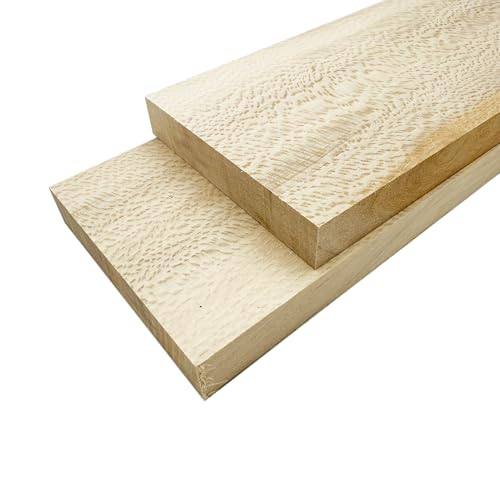


Understanding Quarter Sawn Wood Lumber Structure, Performance, and Shop Applications
Quarter sawn wood lumber represents lumber cut so that the annual growth rings intersect the broad face of the board at an angle between sixty and ninety degrees. This precise radial cutting orientation creates boards that expand primarily across their thickness rather than across their width as humidity fluctuates. By controlling the direction of seasonal expansion, woodworkers gain an exceptionally reliable substrate for high-tolerance joinery, drawer construction, and stable panels. The process also exposes internal tree anatomy that remains hidden in flat sawn boards.
The manufacturing process begins by dividing a log into four distinct quarters lengthwise along its center axis. Sawyers then mount each quadrant on the sawmill carriage and make repeated passes, indexing or rotating the cant to keep the blade cutting nearly perpendicular to the growth rings. This procedure demands significantly more saw blade handling, log repositioning, and sorting time than conventional flat sawing. Because it produces narrower boards and higher amounts of saw kerf waste, quarter sawn stock commands a noticeable premium among specialized hardwood suppliers.
Radial Grain Alignment and Dimensional Stability Mechanics
All solid wood undergoes natural dimensional changes when ambient relative humidity shifts throughout the seasons. In typical plainsawn or flat sawn boards, the growth rings lie tangential to the wide face, which causes the material to cup away from the heart of the log as it dries. Quarter sawn boards align the growth rings vertically across the end grain, forcing wood cell expansion and shrinkage to occur almost entirely across board thickness. Thickness changes are negligible in most furniture components, whereas width changes can cause sticking drawers, cracked tabletops, or split frame-and-panel assemblies.
Radial shrinkage rates in domestic hardwoods are roughly half the rate of tangential shrinkage. For species like white oak, hard maple, and sycamore, selecting vertically oriented grain dramatically reduces the internal stresses that cause internal case hardening or surface checking. This mechanical behavior makes quarter sawn stock the historical standard for architectural flooring, guitar soundboards, and structural window components exposed to outdoor weather variations. Cabinetmakers also rely on this stability when fitting inset cabinet doors that require consistent seasonal reveals around all perimeter edges.
When planning precise joinery with these boards, using reliable measuring and drilling equipment keeps alignment exact. Woodworkers who incorporate dowels or mechanical stops often reference our drill bit depth stop guide to maintain uniform boring depths without punching through thin hardwood faces. Consistent depth management complements the stability of quarter sawn stock by preserving balanced structural thickness across matching rail and stile joints.
Medullary Rays and Distinctive Visual Ray Fleck Figures
Beyond structural stability, quarter sawn lumber is renowned for its striking aesthetic qualities, particularly in ring-porous hardwoods like white oak and red oak. Trees develop ribbon-like clusters of horizontal cells called medullary rays, which transport sap and nutrients radially between the core and the bark. When a saw blade cuts directly parallel to these horizontal cellular bands, it slices open broad sheets of ray tissue. On the surface of the finished board, these exposed cells create shimmering patches commonly referred to as ray fleck, splash, or tiger oak figure.
American sycamore exhibits an even more pronounced cellular pattern when quarter sawn, showing dense lacewood-like mottling across the entire board surface. In species such as Barrington Hardwoods Quarter Sawn White Oak Lumber and quarter sawn sycamore boards, the ray figure forms bold contrast against straight growth rings. Early twentieth-century American Craftsman, Mission, and Arts and Crafts furniture styles made heavy use of this exact figuring to define prominent panel designs. The reflective surface of the exposed ray cells resists stain differently than porous earlywood vessels, resulting in warm highlights under oil-based finishes.
Not every hardwood displays dramatic ray fleck when cut radially. Diffuse-porous hardwoods like hard maple, walnut, and butternut showcase tight, parallel, pinstripe grain lines rather than expansive ray splashes. The uniform, parallel grain of quarter sawn maple or walnut creates a clean, quiet aesthetic that pairs well with modern minimalist furniture and precision turnings. Woodworkers select these species primarily for uniform structural movement rather than decorative flash.
Comparing Quarter Sawn, Rift Sawn, and Plain Sawn Milling Patterns
Understanding the distinctions among the three primary lumber cutting methods helps woodworkers choose the right stock for specific design requirements. Plain sawn or flat sawn lumber represents the most common commercial milling technique, produced by running a log through the sawmill with minimal turning. Flat sawn boards display cathedral grain arches on their faces with end grain ring angles running anywhere from zero to forty-five degrees. While plain sawing yields wider boards at lower production costs, it leaves material susceptible to severe cupping and uneven shrinkage.
Rift sawn lumber represents an intermediate orientation where annual growth rings meet the board face at angles between thirty and sixty degrees, typically settling around forty-five degrees. This angle creates straight, linear grain lines across all four surfaces of a square spindle without exposing wide ray flecks. Rift sawing generates substantial milling waste because sawyers must cut radials off the log quadrant like spokes on a wagon wheel. Turners and chairmakers frequently select rift sawn stock for table legs and chair spindles where matching four-sided linear grain is desired.
Quarter sawn lumber requires ring angles strictly between sixty and ninety degrees, maximizing ray exposure and vertical stability. Because a single quadrant cut on a sawmill produces boards with shifting ring orientations as the cut approaches the edges, genuine commercial quarter sawn stock must be graded and sorted board by board. Many lumber packs include a natural blend of true quarter sawn and near-rift material depending on the exact log radius where the saw teeth passed during breakdown.
Hardwood Species Variations in Quarter Sawn Packs
Hardwood suppliers offer quarter sawn material in both dedicated single-species boards and mixed multi-species project packs. White oak remains the undisputed benchmark for quarter sawing because its extensive ray structure produces prominent ribbons and high natural rot resistance. Boards such as Woodchucks WoodWhite Oak (Quarter Sawn) x 10 provide uniform, kiln-dried pieces suitable for cabinet door panels, small boxes, and decorative drawer fronts where stability and visual impact are essential.
Specialty variety packs introduce woodworkers to domestic hardwoods that respond uniquely to radial milling. Bundles like the Barrington Hardwoods Variety Pack combine sycamore, cherry, butternut, and walnut, allowing makers to contrast the dramatic fleck of sycamore against the smooth, pencil-straight grain of walnut and butternut. Similarly, the Barrington Hardwoods Domestic Exotic Variety Pack pairs grey elm with quarter sawn sycamore and walnut to showcase differences in cellular density, surface sheen, and workability across domestic species.
Sycamore deserves particular attention among quarter sawn domestic hardwoods due to its striking snakeskin or lacewood figure. Standalone products such as Barrington Hardwoods’ Quarter Sawn Sycamore Lumber and Barrington Hardwoods’ Quarter Sawn Sycamore Lumber provide boards with thirty-six-inch and twelve-inch working lengths respectively. When surfaced, quarter sawn sycamore yields a silky, reflective texture that accepts clear shellac and lacquer finishes with exceptional depth.
Machining, Planing, and Joinery Considerations in the Workshop
Working with quarter sawn boards requires deliberate machine setup because the interlocking grain around ray flecks can tear out easily under rotating cutterheads. When passing quarter sawn white oak or sycamore through a thickness planer or jointer, take light passes of no more than one-thirty-second of an inch. Helical or spiral cutterheads equipped with carbide inserts minimize grain lifting significantly better than conventional straight-knife planer heads. If using straight knives, ensure blades are freshly sharpened and feed the board in the direction of grain slope.
Ripping quarter sawn hardwoods on a table saw requires a sharp, dedicated rip blade with clean gullets to prevent friction burning. Because vertical growth rings exert balanced internal tension, quarter sawn lumber binds on saw blades far less frequently than flat sawn stock during deep rip cuts. Keeping blade height adjusted so that roughly half a tooth extends above the board surface promotes efficient chip clearing. For related guidance on clean cuts through dense synthetic materials, checking our PVC cutting saw blade article illustrates how tooth geometry influences cut quality across tough materials.
Hand tool enthusiasts find quarter sawn hardwoods a joy to chisel and plane along the linear grain paths. Hand planes set with a tight mouth opening and a high-angle frog allow woodworkers to smooth across dense ray flecks without causing surface hollows. When routing edge profiles or cutting mortise and tenon joints, support the exit edges with sacrificial backing blocks to prevent splintering where the vertical grain runs off the end of the stock.
Working with Thin Sawn Lumber for Inlay, Scrollwork, and Lutherie
While standard furniture parts typically utilize three-quarter-inch four-quarter surfaced stock, thin sawn lumber serves specialized small-scale crafts. Products like Hard Maple Thin Sawn Lumber 1/4″ x 4 1/2 (2 Pcs) offer one-quarter-inch thick sections ready for laser cutting, scroll sawing, musical instrument components, and box linings. At thin dimensions, plainsawn lumber often curls or cups within hours of being unwrapped due to atmospheric exposure. Quarter sawn and thin precision-sawn boards remain flat and stable on workbench surfaces.
Acoustic instrument builders rely almost exclusively on quarter sawn stock for guitar tops, violin soundboards, and structural bracing. Sound travels faster along straight, parallel wood fibers than across irregular grain loops, enhancing acoustic projection and sustaining resonant vibrations. The stiffness-to-weight ratio of quarter sawn spruce, maple, and cedar makes it strong enough to resist strings under tension while remaining thin enough to vibrate freely. Crafting jewelry box lids, clock cases, and decorative laminations benefits from these same stiffness characteristics.
Thin stock demands gentle clamping pressure during glue-ups to avoid inducing artificial bows across the panels. Using uniform caul boards lined with wax paper distributes clamp force evenly without denting the face of thin hardwood boards. PVA wood glues and liquid hide glues bond cleanly to quarter sawn surfaces because the exposed vertical cellular pores absorb adhesive deeply and evenly across both mating edges.
Finishing Techniques to Enhance Ray Fleck and Grain Contrast
Finishing quarter sawn lumber involves strategies designed to emphasize the contrast between the medullary rays and surrounding wood tissue. The dense cellular structure of ray flecks absorbs less liquid than porous earlywood vessels, causing pigment stains to slide off the flecks while darkening background wood. Applying a dark pigment stain to quarter sawn white oak highlights the shimmering golden rays against a deeper brown background, creating the classic antique Mission finish.
Dye stains behave differently than pigment stains on quarter sawn surfaces, penetrating both the ray cells and surrounding wood grain to create uniform coloration with enhanced chatoyancy. Many craftsmen apply an amber water-based dye first to establish base warmth, followed by a coat of boiled linseed oil to pop the ray figure. After allowing the oil to cure thoroughly, a shellac washcoat seals the wood fibers before applying durable topcoats such as polyurethane, nitrocellulose lacquer, or hardwax oil.
For lighter woods like sycamore or hard maple, clear waterborne topcoats prevent the yellowing that can obscure subtle ray mottling over time. A clear dewaxed shellac base coat followed by waterborne polyurethane keeps the background bright while preserving high surface sheen on polished flecks. Testing finishing schedules on small offcuts from project boards ensures the stain color and sheen complement the natural grain pattern before applying coats to assembled projects.
Evaluating Board Dimensions, Pack Counts, and Project Layout
Selecting quarter sawn stock online or at a lumberyard requires calculating accurate board footage while accounting for the narrower average widths typical of radial cuts. Standard packs like Barrington Hardwoods Variety Pack offer eight-piece selections measuring three-quarters of an inch thick by two inches wide by eighteen inches long. These compact dimensions work well for small craft items, contrasting cutting boards, tool handles, and decorative inlays, but larger furniture pieces require wider dimensional boards.
When wider components are needed for cabinet door panels or floating tabletops, edge-gluing narrower quarter sawn boards yields superior stability over single wide plainsawn planks. Joining multiple four-inch or six-inch quarter sawn boards produces a panel with almost zero tendency to warp over decades of indoor heating and cooling cycles. Matching grain slopes along adjacent glue joints creates an expansive, seamless surface where ray flecks scatter harmoniously across the finished face.
Woodworkers should order approximately fifteen to twenty percent extra material when working with quarter sawn hardwoods to account for natural defect trimming and figure matching. Inspecting end grain upon board arrival confirms the vertical ring angle before making initial crosscuts. Storing the unbundled lumber flat on stickers in the workshop for at least one week allows moisture levels to equalize with local indoor humidity, ensuring reliable joinery fit throughout construction.





Write Your Review
No reviews yet. Be the first to share your experience!