


Demolition projects, rough remodeling, and tough plumbing repairs frequently demand a cutting tool that powers through stubborn building materials without hesitation. Knowing what reciprocating saw used setups excel at helps tradespeople and homeowners tackle challenging cuts where circular saws or hand saws cannot safely fit. Pairing the right tool with suitable reciprocating saw blades for demolition ensures you rip through nail-embedded lumber, plastic drain lines, and metal piping with minimal fatigue. Understanding how stroke length, motor design, and tool form factor interact allows you to select the best configuration for your specific trade or DIY task.
From heavy remodeling tear-outs to overhead pruning, reciprocating saws serve as the ultimate problem solvers across job sites and home workshops. When tackling rough floor modifications or plumbing adjustments alongside saws suited for subfloor removal, a dependable reciprocating saw provides quick access between tight joists and wall studs. Modern options range from high-amperage corded demolition tools to ultra-compact cordless units designed for one-handed overhead work. Learning how to match the tool to the intended cut keeps your workspace productive and your cuts safe.

Pros
- Compact one-handed profile easily fits between wall studs and under sinks where standard saws cannot fit
- Tool-free QUIK-LOK blade clamp accepts both Hackzall and standard reciprocating saw blades
- Onboard LED light illuminates dark work surfaces without casting obstructive shadows
- Durable housing with rubberized overmold handles tough jobsite conditions and reduces vibration
Cons
- Sold as a bare tool, requiring separate purchase of an M18 battery and charger
- Shorter stroke length compared to full-sized reciprocating saws, making heavy-duty demolition slower
The Milwaukee 2625-20 M18 Hackzall is a specialized cordless reciprocating saw designed for agile, one-handed operation. Unlike bulky, two-handed demolition saws, this compact cutter is shaped specifically for precision plunge cuts, pruning, pipe trimming, and access in restricted spots. Operating on Milwaukee's established 18-volt platform, it bridges the gap between small multi-tools and full-size demolition saws, giving tradespeople a fast, portable alternative for everyday cutting tasks.
This tool is best suited for plumbers cutting PVC and copper pipe, electricians notching studs and trimming EMT conduit, HVAC technicians trimming ductwork, and general contractors doing remodeling work. DIY homeowners and garage hobbyists will also appreciate its approachable form factor for yard cleanup, pruning tree branches, and home repairs where dragging out an extension cord or holding a heavy reciprocating saw with both hands is impractical.
In terms of real-world cutting performance, the tool delivers solid cutting speed across a wide variety of materials. The QUIK-LOK blade clamp holds blades securely without requiring hex wrenches, accepting both standard Sawzall blades and shorter Hackzall-specific accessories. The built-in anti-vibration handle helps smooth out rough cuts through dense lumber or metal pipes, giving the user stable tool control while minimizing hand and wrist fatigue during overhead tasks.
Build quality matches the rugged expectations associated with Milwaukee jobsite tools. The housing features reinforced impact-resistant composite materials with textured rubber overmolding on high-contact grip zones. An integrated LED light positioned just below the blade holder keeps cutting lines clearly visible in dark floor bays, attics, and sink basins, which directly improves cutting accuracy and jobsite safety.
Regarding practical limitations, this model is engineered primarily for maneuverability rather than heavy structural demolition. Its stroke length and motor output are dialed for controlled cuts rather than aggressive tear-outs, so tearing through entire load-bearing walls or heavy steel beams remains the domain of a full-size two-handed reciprocating saw. Additionally, because it is sold as a bare tool, buyers must already own or separately purchase an M18 battery and compatible charger.
For contractors, maintenance technicians, and serious DIYers who already use the Milwaukee M18 battery ecosystem, the 2625-20 Hackzall represents an efficient, reliable addition to any mobile tool kit. Its compact balance, tool-free convenience, and dependable cutting power make it an indispensable asset for tight-clearance cutting jobs across residential, commercial, and workshop projects.
On active construction and remodeling sites, clearing pipes, conduit, and blocking often requires squeezing into mechanical chases, between joists, or behind existing drywall. The one-handed balance of this Hackzall allows you to brace yourself with one hand while safely making an accurate cut with the other.
The integrated LED light proves especially beneficial on jobsites without temporary lighting, illuminating cut marks cleanly. The tool-free clamp also allows quick blade flips upside down for flush cutting against baseplates, subfloors, and ceiling framing.
The Milwaukee 2625-20 runs on the standard M18 battery platform, accommodating both lightweight compact packs and extended-capacity XC batteries. A compact battery keeps overall tool weight down for overhead work, while an XC battery provides longer runtime for extended cutting sessions.
The QUIK-LOK clamp mechanism offers universal compatibility with standard 1/2-inch shank reciprocating saw blades, allowing users to run standard demolition blades, metal-cutting blades, or specialized pruning blades without proprietary hardware restrictions.

Pros
- Variable speed trigger (0-3500 SPM) gives you control for different materials
- Includes two batteries and four blades – ready to work right out of the box
- Tool-free blade change is fast and secure, saving time during repetitive cuts
- Lightweight enough (about 5.5 lbs) for overhead or one-handed use in tight spaces
Cons
- Battery capacity (2000mAh) may be limited for heavy continuous use; some users may want a third battery
- Maximum cut depth in wood (50mm) is adequate for most DIY tasks but may not suit heavy framing work
- Brand is less established than top-tier competitors, so long-term reliability is unproven
The FULLYEA Reciprocating Saw Cordless is a compact yet powerful cutting tool designed for a wide range of users – from DIY homeowners tackling weekend projects to mechanics, electricians, plumbers, and contractors who need a portable saw for daily work. This saw combines a high-speed pure copper motor capable of up to 3500 strokes per minute with a 28mm stroke length, giving it the ability to cut through wood (up to 50mm), metal (up to 20mm), plastic pipe (up to 80mm), and even tree branches. Its variable speed trigger provides on-demand control, making it suitable for plunge cuts or delicate trimming tasks in the workshop or on the job site.
Based on the product description and user expectations, this saw offers solid cutting performance for common materials encountered in home repairs, vehicle maintenance, garage projects, and construction demolition. The inclusion of two 2000mAh lithium-ion batteries allows for continuous work by swapping packs, and the battery power indicator helps avoid unexpected downtime. While the battery capacity is suitable for light to medium use, those performing heavy-duty all-day cutting may prefer larger-capacity batteries or additional spares.
Build quality focuses on practicality and user comfort. The tool features an ergonomic handle wrapped in a non-slip rubber that dampens vibration and reduces fatigue during prolonged use. The safety lock-off switch prevents accidental activation, a welcome feature for anyone carrying the saw around a busy workshop or tight attic space. The tool-free blade change mechanism uses an auto-locking all-metal collet, allowing you to insert or remove blades in seconds without wrenches – a real time-saver when switching between wood and metal cutting tasks.
Portability is a key advantage. Weighing roughly 5.5 pounds and measuring about 16 inches in length, this cordless reciprocating saw is easy to transport in a tool bag or backpack. It works well for tasks like trimming pipes behind sinks, cutting nails during remodeling, or making quick cuts in lumber for shelving. The included four blades cover basic needs, though users may want to purchase specialized blades for more demanding applications like thick metal or masonry.
Storage and maintenance are straightforward. The saw comes without a dedicated case, but the compact size fits neatly into most existing tool storage systems. Batteries charge independently, and the blades store conveniently in a pouch or box. Regular cleaning of the blade clamp and occasional lubrication of the mechanism will keep the saw running smoothly. There are no complex maintenance steps, making it accessible for both experienced tradespeople and DIY beginners.
In terms of realistic limitations, the FULLYEA saw is best suited for lighter to moderate work rather than daily heavy demolition. The 2000mAh battery is adequate for occasional sawing, but professionals might need to invest in extra batteries for extended use. Also, as a relatively new brand, long-term durability feedback is limited. However, given its price point and included accessories, this saw represents a strong value for homeowners, hobbyists, and professionals who need a reliable backup or a second saw for quick cuts around the garage or job site.

Pros
- Lightweight at 2.0 lbs reduces arm fatigue during overhead or prolonged cuts.
- Dual 4.0Ah batteries offer solid runtime and fast charging for all-day use.
- Brushless motor provides efficient power and longer motor life compared to brushed models.
- Tool-free blade change system saves time and frustration on the job.
- Built-in LED light improves visibility in low-light work environments.
Cons
- Limited user reviews available; real-world durability not yet widely confirmed.
- Brand may be less known among professionals, potentially affecting resale or warranty confidence.
- Storage case is included but may not be as rugged as premium tool bags for heavy job site use.
The SEESII cordless reciprocating saw is a versatile cutting tool designed to handle everything from pruning branches to slicing through metal pipes and PVC. It is best suited for DIY homeowners who tackle weekend projects, mechanics needing a compact saw for exhaust or brake work, contractors on remodeling jobs, and workshop users who require a portable saw for quick cuts.
In terms of performance, the 200W brushless motor delivers variable speeds from 0 to 3500 RPM, giving you control for different materials. The 15mm stroke length allows for efficient cutting, and the included 6 saw blades cover wood, metal, and demolition work. Users can expect solid cutting efficiency for general purpose tasks, though heavy-duty demolition may benefit from a more powerful corded model. The brushless design improves battery efficiency and motor longevity, which is a key advantage over brushed competitors.
Build quality appears decent for the price point. The saw body is lightweight (2.0 lbs) and features an ergonomic grip that allows comfortable one-handed operation – useful when cutting overhead or in tight spots. The tool-free blade change mechanism is quick and secure. The safety lock button adds peace of mind during transport. The included 4.0Ah batteries and fast charger provide ample power for most tasks, and the LED light is genuinely helpful in dimly lit areas like under sinks or in crawl spaces.
Storage and organization are handled by a hard plastic storage case that holds the saw, batteries, charger, blades, and included gloves/safety glasses. It fits well on a shelf or in a truck toolbox. Maintenance is minimal – keep the blade clamp clean and charge batteries as needed. The batteries use standard 20V MAX format (compatible with other SEESII tools, if any), but may not work with other brands.
One realistic limitation is the lack of long-term user feedback, as there are no reviews yet. The brand is not as established as DeWalt or Milwaukee, so professionals might hesitate. The saw is not designed for heavy continuous demolition; it's best for intermittent cutting tasks. Also, the plastic case, while functional, may not survive a drop on a concrete job site.
Overall, this SEESII saw offers strong value for DIYers, hobbyists, and light professional use. If you need an affordable cordless reciprocating saw for occasional projects, home repairs, or vehicle maintenance, this kit delivers reliable performance without breaking the bank. For heavy daily use, you may prefer a more rugged, higher-priced option.

Pros
- Brushless motor provides extended runtime and greater efficiency.
- Compact and lightweight design enhances maneuverability in tight spots.
- Pivoting head allows for flush cutting against surfaces.
- Keyless blade clamp makes blade changes fast and tool-free.
- Variable speed trigger gives user control over cutting speed.
Cons
- Tool only - requires purchase of DEWALT 20V MAX battery and charger separately.
- Premium price point compared to brushed models or other brands.
- No included carrying case for storage and transport.
The DEWALT DCS367B is a cordless reciprocating saw designed for professionals and serious DIY enthusiasts. As part of the 20V MAX XR line, it features a brushless motor that delivers up to 2.5 times more runtime than brushed models, making it a reliable choice for extended cutting tasks on construction sites or in home repair projects.
Weighing just 5 pounds and measuring only 14.5 inches in length, this saw is exceptionally compact and lightweight. This makes it ideal for maneuvering in tight spaces like between studs, under sinks, or inside wall cavities. The pivoting head adds versatility, allowing flush cuts against surfaces without obstruction.
The variable speed trigger offers precise control from 0 to 2,900 strokes per minute, while the 1-1/8-inch stroke length provides aggressive cutting action through wood, metal, and plastic. The keyless 4-position blade clamp enables quick, tool-free blade changes, enhancing productivity on the job. An integrated LED light illuminates dark workspaces, improving visibility in crawl spaces and attics.
One consideration is that this is a tool-only purchase. Users will need a DEWALT 20V MAX battery and charger, which are sold separately. Additionally, it does not come with a carrying case, though many users may already have other DEWALT tools and batteries. The saw is backed by a 3-year limited warranty, reflecting the brand's confidence in its durability.
For contractors, electricians, plumbers, and woodworkers who need a portable, powerful saw for tight spots, the DCS367B is a strong performer. Its combination of runtime, lightness, and compactness makes it a practical addition to any tool kit or workshop. While the initial investment may be higher than some alternatives, the long-term value and performance justify the cost for those who use it regularly.
The DEWALT DCS367B is constructed with a rugged housing designed to withstand job site conditions. The brushless motor is built for longevity and efficiency, with no brushes to replace. The keyless blade clamp is made of durable steel, ensuring secure blade retention. The pivoting head mechanism is robust and allows for easy adjustment without tools.
The compact design also includes a rubber overmold on the handle for a comfortable, non-slip hold even with gloves. The LED light is well-protected and positioned to cast minimal shadow on the work area. While not waterproof, the saw is built to resist dust and debris typical of construction and workshop environments.

Pros
- Versatile blade selection covers most common cutting needs in wood, metal, and demolition
- Universal shank fits almost all reciprocating saws, offering broad compatibility
- Blades are made from durable materials that hold up well to regular use
- Compact storage case helps keep blades organized and prevents loss
- Good value for a comprehensive set, suitable for both DIYers and professionals
Cons
- Some users may find the included blades not as aggressive as specialized single-purpose blades for heavy demolition
- Storage case could be more robust for frequent jobsite transport
- Limited information on specific blade materials and tooth configurations may leave some users unsure of best use cases
If you are looking for a versatile set of reciprocating saw blades that can handle a variety of cutting tasks around the home, workshop, or jobsite, this kit from B0CSYHKQJW is worth a closer look. Designed to fit most major reciprocating saw brands, these blades are intended for cutting wood, metal, and demolition materials, making them a practical addition to any tool collection.
This blade set is well-suited for DIY homeowners tackling weekend projects, mechanics cutting through exhaust pipes or brackets, contractors performing rough-in work, and woodworkers needing quick cuts in lumber. The assortment includes blades with different tooth configurations, allowing you to switch between materials without needing to buy separate packs. For general renovation, construction, or even plumbing repairs, this set provides a solid starting point.
In terms of real-world performance, the blades are designed to deliver efficient cuts with minimal effort. The precision-ground teeth help maintain a straight cutting line, which is especially helpful when working with metal or thick wood. While they may not be as aggressive as specialized blades for heavy demolition, they hold up well for most common cutting tasks and offer a good balance between speed and blade life. Users can expect reliable cutting performance for jobs like pruning branches, cutting PVC pipe, or trimming lumber.
Build quality appears to be a focus here, with blades constructed from durable materials that resist wear and corrosion. The universal shank ensures a secure fit in most reciprocating saws, reducing blade wobble and improving cutting accuracy. The included storage case is a nice touch, keeping the blades organized and protected when not in use. It fits easily into a toolbox or can be stored on a shelf, making it convenient for both workshop and jobsite use.
One realistic limitation to consider is that the set may not include specialized blades for very heavy-duty demolition or for cutting extremely hard metals. Users who frequently tackle intense demolition work might prefer to supplement this set with a few heavy-duty blades. Additionally, the storage case, while functional, may not withstand rough handling on active construction sites as well as a more rugged case would.
Overall, this reciprocating saw blade set offers a practical and cost-effective solution for anyone who needs a versatile cutting tool kit. It is a smart choice for DIYers, mechanics, contractors, and workshop users who want a reliable assortment of blades that can handle a wide range of materials. For the price, it provides good value and is likely to meet the needs of most general cutting applications.
Pros
- Tool-less blade change speeds up blade swaps on busy project days
- Counter balance system assists in managing cutting vibration
- Sturdy metal gear housing adds solid protection against rough handling
- Pivoting foot helps maintain contact with irregular or curved materials
Cons
- Corded design requires an extension cord and continuous access to an electrical outlet
- At 7.05 pounds, sustained overhead cutting may cause arm fatigue over long sessions
- Does not include an adjustable-depth shoe mechanism in the listed specifications
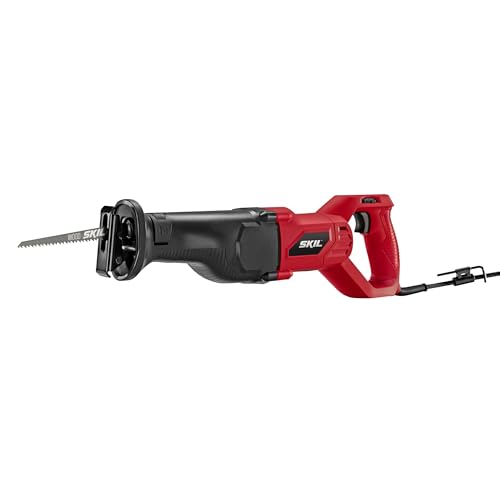
The Skil 9206-02 reciprocating saw is designed for DIY homeowners, remodelers, and property owners who need steady, uninterrupted cutting power for general demolition, framing adjustments, and rough maintenance cuts. Powered by a 7.5-amp corded electric motor, this saw eliminates the concern of drained batteries, making it a reliable option for all-day pruning, pipe trimming, and tearing down old wall assemblies.
In practical cutting scenarios, power management and control are essential. The variable-speed trigger provides immediate feedback, allowing the user to start cuts cleanly before ramping up speed through tough lumber, plastics, or metals when fitted with the appropriate blade. The pivoting foot assists by bracing securely against the workpiece, which helps stabilize the tool and prevents erratic bucking during aggressive rough cuts.
Durability and vibration dampening are central to the saw's construction. Skil built the 9206-02 with a heavy-duty metal gear housing, protecting the drive assembly from the knocks and drops common to demolition environments. Operating alongside the housing is an internal counter balance system engineered to mitigate excess vibration, helping you maintain a firmer grip and reducing physical fatigue during extended cutting sessions.
Everyday handling is straightforward thanks to the tool-less blade change system. Instead of tracking down hex keys mid-project, you can swap between wood-cutting and metal-cutting blades quickly. At roughly 18 inches in length and weighing 7.05 pounds, the tool remains reasonably maneuverable between wall studs, rafters, and tight crawl spaces, while retaining enough physical heft to let the saw's weight do the work.
As with any corded demolition tool, there are practical boundaries to keep in mind. You will need a suitable heavy-gauge extension cord to work across large yards or jobsites lacking nearby power outlets. Additionally, the tool does not feature an adjustable-depth shoe in its listed specifications, meaning blade tooth wear cannot be redistributed along the stroke length as easily as on some higher-end saws.
Overall, the Skil 9206-02 offers a solid balance of power, mechanical durability, and user comfort. For budget-conscious homeowners and weekend renovators tackling rough cuts and teardown projects, this corded reciprocating saw provides consistent utility without the ongoing investment of a proprietary cordless battery platform.
The 7.5-amp motor in the Skil 9206-02 provides consistent, line-powered performance that handles dense framing lumber, PVC, and metal conduit without motor stall under standard load. Because it draws power straight from an electrical outlet, cutting cadence remains steady from the first cut to the last.
Handling is improved by the integrated counter balance mechanism, which directly counteracts the reciprocating mass of the shaft. Combined with the pivoting shoe that stays planted against your cut line, the tool provides the stability needed for cleaner rough openings and reduced kickback tendencies during challenging demolition tasks.

Pros
- Lightweight and easy to maneuver, reducing fatigue during overhead or long cuts
- Tool-free blade change speeds up task switching
- Variable speed trigger offers good control for various materials
- Pivoting shoe improves cut stability
- Compatible with a wide range of BLACK+DECKER 20V tools
Cons
- Battery and charger are included but not the highest capacity; may need extra batteries for heavy use
- Not designed for heavy-duty professional demolition; better suited for light to medium tasks
- Some users may find the stroke length shorter than full-size corded models
The BLACK+DECKER 20V MAX Cordless Reciprocating Saw Kit (BDCR20C) is a versatile cutting tool designed for DIY homeowners, mechanics, contractors, electricians, plumbers, woodworkers, and garage or workshop users. It combines the convenience of cordless operation with essential features for everyday cutting tasks around the home, job site, or automotive garage.
Performance-wise, this saw includes a tool-free blade change system that lets you swap between wood, metal, or pruning blades in seconds, boosting workflow efficiency. The pivoting shoe helps maintain constant contact with the cutting surface, giving you better control and stability. The variable speed trigger allows you to adjust cutting speed based on the material, from slower starts for precise work to faster cuts for demolition. This makes it suitable for cutting lumber, drywall, PVC pipe, thin metal, and even tree branches.
Build quality reflects typical BLACK+DECKER standards with a durable plastic housing and rubberized grip for comfort. Weighing only 4.5 pounds, it reduces user fatigue during extended use—a huge plus for overhead cutting or tight spaces. The ergonomic handle offers a secure grip even with gloves, and the overall construction feels solid enough for regular use.
Storage and maintenance are straightforward. The kit comes with a carrying case that holds the saw, battery, charger, and blades neatly. The battery charges quickly and slots into the handle. Keeping the tool clean and the blade clamp free of debris requires minimal effort. The saw fits easily into a toolbox or onto a shelf in your workshop.
Limitations include the included battery capacity; it’s fine for small to medium jobs, but heavier users may want an extra battery to avoid downtime. It’s not built for constant heavy-duty professional demolition like a corded model, but for light to medium tasks it performs admirably. Some users may prefer a longer stroke for faster cuts, but this saw balances performance and portability well.
Overall, this kit is a practical choice for anyone needing a reliable, cordless reciprocating saw for occasional to moderate use. DIY enthusiasts, mechanics, electricians, and plumbers will appreciate its ease of use and portability. If you already own BLACK+DECKER 20V tools, this saw integrates seamlessly into your existing battery system.

Pros
- High-torque 12-amp motor handles tough cutting jobs without bogging down
- 4-position blade clamp enables flush cutting and angled cuts for better access
- Keyless blade changes are quick and easy, saving time on the job
- Variable speed trigger provides precise speed control for different materials
- Sturdy construction and proven DEWALT build quality for long-lasting use
Cons
- Corded design limits mobility compared to battery-powered models, making it less convenient for remote job sites
- At 7.96 pounds, it may feel heavy for extended one-handed use or overhead cutting
- No carrying case or storage bag included, so you'll need to buy or repurpose one for safe transport and organization
The DEWALT DWE305 is a corded reciprocating saw built for serious cutting work. With a 12-amp motor that spins up to 2,900 strokes per minute and a 1-1/8-inch stroke length, it delivers the power and speed needed to cut through lumber, nail-embedded wood, metal pipes, and even masonry when paired with the right blade. This is a tool aimed at contractors, woodworkers, mechanics, plumbers, electricians, and DIY homeowners who tackle heavy demolition, remodeling, or automotive projects on a regular basis.
In real-world use, the variable speed trigger is a standout feature. It lets you adjust the cutting speed from a slow start up to full throttle, so you can trim delicate materials without splintering or power through thick stock when needed. The 4-position blade clamp is another practical feature: you can rotate the blade to cut flush against a surface, which is especially handy when trimming pipes close to a wall or cutting studs in tight corners. The keyless, lever-action clamp makes swapping blades fast and easy, which saves time when switching between wood and metal cutting tasks.
Build quality is solid, as you'd expect from DEWALT. The motor housing is rugged, and the overall construction feels capable of handling the bumps and drops common on a job site. The grip is comfortable, though the saw weighs nearly eight pounds, so prolonged overhead work may cause fatigue. There's also no built-in LED light or dust blower, but these omissions are typical for a saw in this price range. The cord is a standard 8-foot length, which is adequate for most workshops but may require an extension cord on larger job sites.
Storage and maintenance are straightforward. Without a case, you'll need to store the saw in a toolbox or on a shelf. The keyless clamp reduces the need for tools during blade changes, and the saw's simple design means routine cleaning and occasional brush replacement are the only maintenance tasks. The corded nature means you're always tethered to an outlet, which can be limiting on remote job sites, but it also means you never have to worry about battery charge or runtime.
Overall, the DEWALT DWE305 is a capable and reliable reciprocating saw for users who prioritize power and consistency over portability. It's a strong choice for contractors remodeling homes, mechanics cutting exhaust pipes or brackets, woodworkers trimming timbers, and DIY enthusiasts taking on major home repairs. If you need a saw that can handle daily abuse and deliver clean cuts, this model is worth serious consideration.
The DEWALT DWE305 is built with a robust motor and a durable housing that can withstand the rigors of daily job site use. The keyless blade clamp is made from hardened steel, and the gear case is designed to resist impact. While not as lightweight as some cordless options, the saw feels solid and well-balanced. The cord is thick and strain-relieved at the base to prevent breakage. Overall, this saw should hold up well under heavy cutting loads and repeated drops, making it a dependable tool for contractors and tradespeople.
In a workshop or on a jobsite, the DWE305 excels at fast, aggressive cutting. The 12-amp motor provides ample torque for cutting through thick lumber, pallets, and even metal studs. The variable speed trigger lets you feather the speed for precise cuts, while the 4-position blade clamp allows flush cuts along floors, walls, or ceilings. The 1-1/8-inch stroke length helps move through material quickly, reducing fatigue on long cuts. This saw is ideal for demolition projects, framing, plumbing rough-ins, and electrical work where speed and power matter most.
The DWE305 features a comfortable over-mold grip that reduces vibration, though the saw's weight (7.96 pounds) can become tiring during extended one-handed use. The variable speed trigger requires minimal pressure to operate, and the keyless blade clamp makes swapping blades a quick, one-handed task. The 4-position blade clamp is easy to rotate, and the saw's balanced design helps with control. While it lacks a soft-start feature, the trigger response is smooth and predictable. For most users, the ergonomics are good, but those with smaller hands or less upper body strength may find it a bit heavy for prolonged overhead cuts.
Complete Guide: Understanding What Reciprocating Saws Are Used For
Reciprocating saws are primarily engineered for rough cutting, structural demolition, plumbing access, and aggressive material removal where speed and maneuverability take priority over finish quality. Unlike precision woodworking tools that produce glass-smooth edges, a reciprocating saw relies on a rapid push-and-pull stroke mechanism designed to slice through mixed assemblies of wood, metal, plastic, and masonry. Gaining clarity on what reciprocating saw used situations demand enables you to choose between heavy-duty teardown tools and compact trimming saws with complete confidence.
Demolition and Structural Remodeling Tear-Outs
Tearing out old construction assemblies represents the most frequent application for a full-sized reciprocating saw on modern jobsites. When remodeling kitchens, bathrooms, or basements, framing members often hide nails, screws, and structural brackets that would destroy standard circular saw blades. Reciprocating saws equipped with durable bi-metal or carbide demolition blades effortlessly chew through framing lumber and hidden fasteners simultaneously. The tool allows workers to sever wall studs flush against top plates and bottom sills without damaging adjacent structural framing.
Removing old door frames and window casings also highlights the unique strengths of a reciprocating saw. The exposed, flexible blade can slip directly behind the jamb to sever casing nails without forcing the user to pry trim off manually. This flush-cutting capability protects surrounding drywall and framing from unnecessary hammer damage during renovations. The aggressive stroke motion helps contractors quickly dismantle interior partitions, open up chase spaces, and clear damaged timber efficiently.
Plumbing Installations and Pipe Modifications
Plumbing rough-ins and retrofits routinely require cutting thick drain pipes, vent stacks, and water lines inside cramped wall cavities. A reciprocating saw fitted with the correct blade slices cleanly through modern plastic piping when cutting PVC pipe cleanly is necessary for glue joints and mechanical couplings. Plumbers rely on the tool to trim waste lines flush with concrete slabs or subflooring where rotational pipe cutters have zero room to swing.
Severing old cast-iron sewer stacks and rusted galvanized supply lines represents another classic task for this versatile cutting platform. Specialized thick-kerf blades coated with diamond grit or tungsten carbide slice through brittle cast iron without cracking the pipe further up the stack. Copper line removal during bathroom remodels also moves significantly faster when using a fine-tooth metal reciprocating blade. The slender profile of the saw allows tradespeople to reach through narrow access holes cut into drywall, minimizing structural destruction during routine plumbing repairs.
Metal Cutting and Mechanical Fabrication Tasks
Electricians, mechanical contractors, and automotive hobbyists frequently turn to reciprocating saws for rough metal cutting in the field. Cutting steel unistrut channels, threaded rod, electrical conduit, and structural metal studs requires a tool that controls heat buildup and resists blade bind. Matching the machine with blades designed to cut aluminum, steel tubing, and thin sheet metal produces clean cuts without throwing dangerous grinding sparks around flammable materials.
Automotive salvage and exhaust fabrication also benefit from the rapid cutting action of reciprocating saws. Slicing off rusted muffler brackets, seized catalytic converter flanges, or damaged tailpipes is standard practice in repair shops. The reciprocating stroke avoids the open flames associated with oxyacetylene cutting torches, significantly reducing fire risk near fuel lines and wiring harnesses. Variable speed triggers allow users to feather the cutting rate when biting into hardened structural steel components.
Tree Pruning and Outdoor Landscaping Maintenance
Homeowners and groundskeepers increasingly use lightweight cordless reciprocating saws as clean, quiet alternatives to gas-powered small chainsaws. Dedicated pruning blades feature deep gullets and aggressively ground teeth that slice through green wood, live tree branches, and root systems without gumming up. The compact length of modern battery-powered reciprocating saws makes them exceptionally practical when reaching into dense shrubs, thorny hedges, or tight branch crotches.
Excavating subterranean roots that threaten foundations, sidewalks, or irrigation lines is another task ideally suited to reciprocating saws. Running a chainsaw into soil quickly dulls the chain drive and risks dangerous kickback, whereas an inexpensive reciprocating pruning blade tolerates dirt exposure without permanent harm. The user can plunge the saw blade straight into damp trench dirt to sever thick roots cleanly. This durability makes the tool invaluable during fence building, deck post digging, and garden bed redesigns.
Emergency Services and Extrication Applications
Fire rescue personnel and municipal emergency crews depend heavily on reciprocating saws during vehicle extrication and structural collapse operations. When rescue teams arrive at traffic collisions, cutting through vehicle roof pillars, door hinges, and sheet metal allows safe passenger removal. Cordless heavy-duty saws eliminate bulky hydraulic hoses and hazardous fuel vapors from volatile rescue scenes. High-strength carbide blades slice through ultra-high-strength boron steel used in modern automotive frames.
Structural search and rescue teams also employ reciprocating saws to breach collapsed drywall, timber beams, and light steel framing. The ability to make fast plunge cuts directly into floors or walls creates immediate inspection portals for locating trapped occupants. Because the blade reciprocates linearly rather than spinning continuously, rescue workers maintain greater operational control in compromised architectural environments. This controlled cutting profile reduces vibration transfer into fragile, damaged framing.
Compact One-Handed Models Versus Full-Size Saws
Tool manufacturers produce reciprocating saws in two primary body styles: long two-handed demolition tools and short, one-handed compact variants. Compact models like the Milwaukee Hackzall or seesii cordless saw feature a swept-back handle configuration that places the motor behind the grip. This layout drops the total tool length down near fourteen inches, enabling comfortable overhead operation and one-handed cutting inside joist bays. Plumbers, HVAC installers, and electricians heavily favor these compact frames for daily service work.
Traditional two-handed reciprocating saws, such as long DEWALT or Skil models, feature a D-handle rear grip paired with a thick rubberized front barrel. These tools deliver significantly longer stroke lengths, usually measuring between one and one-eighth inches, compared to the shorter half-inch to five-eighths-inch strokes on compact units. The longer stroke sweeps more teeth through the cut on each cycle, dramatically increasing material removal rates during heavy structural demolition. Choosing between them depends entirely on whether your priority is tight-quarter maneuverability or sheer cutting velocity.
Corded Amperage Versus Cordless Battery Performance
Corded reciprocating saws driven by seven-amp to twelve-amp electric motors provide endless runtime for continuous, stationary cutting operations. When spending eight hours straight gutting a residential building or cutting scrap structural steel, a corded motor never experiences thermal battery throttling or voltage sag. Saws like the Skil 9206-02 or DEWALT DWE305 draw constant wall power, maintaining consistent stroke speeds under punishing loads. They also offer an economical initial purchase price because you avoid buying costly proprietary battery packs and chargers.
Cordless battery platforms running on eighteen-volt or twenty-volt lithium-ion packs offer unmatched freedom of movement on unpowered job sites, ladders, and scaffolding. Modern brushless motors maximize battery efficiency, delivering cutting speeds reaching up to 3,500 strokes per minute that rival corded demolition tools. Eliminating extension cords removes tripping hazards across cluttered construction debris and speeds up transitions between rooms. For general maintenance technicians and outdoor pruning, cordless mobility consistently outweighs the theoretical unlimited runtime of corded tools.
Stroke Speed, Stroke Length, and Cutting Mechanics
Understanding the interplay between stroke length and cutting speed helps users dial in optimal cutting dynamics across diverse building materials. Stroke length dictates the distance the blade travels forward and backward during one complete motor cycle. Shorter stroke lengths between fifteen millimeters and three-quarters of an inch provide precise, controlled cuts in dense metals and rigid pipes without bucking the tool. Longer stroke lengths exceeding one inch excel at clearing wood chips rapidly during aggressive timber demolition.
Stroke speed is measured in strokes per minute (SPM) and is managed through variable-speed trigger switches or electronic dial selectors. Fast stroke speeds between 2,800 and 3,500 SPM slice through soft lumber, drywall, and plastic drainage pipe with effortless efficiency. Conversely, cutting hardened steel rod or thick cast iron requires slowing the motor down to prevent excessive frictional heat that dulls blade teeth prematurely. Feathering the trigger gives the operator total control when starting critical plunge cuts on flat sheet surfaces.
Keyless Chucks and Multi-Position Blade Clamps
Modern reciprocating saws have completely phased out hex keys in favor of lever-actuated, tool-free blade clamping collars. Quick-release blade chucks allow tradespeople to swap dull blades or switch between wood and metal cutting accessories in seconds without searching for lost wrenches. Auto-locking metal collets grip universal tang saw blades securely, preventing accidental blade detachment during severe vibration cycles. This quick-change capability keeps projects moving smoothly when transitioning across varied material types.
Advanced saws incorporate multi-position blade clamps that allow the blade to be inserted in four distinct rotational orientations. By mounting the blade facing upward, downward, left, or right, operators can make cuts flush against adjacent surfaces without holding the tool at awkward, fatiguing angles. Cutting bottom wall plates flush against flooring becomes significantly easier when the blade is oriented sideways or upside down. This ergonomic versatility distinguishes professional-tier reciprocating saws from basic homeowner entry models.
Adjustable and Pivoting Shoes for Enhanced Stability
The shoe assembly located at the front of a reciprocating saw acts as a vital fulcrum that stabilizes the tool firmly against the workpiece. A pivoting shoe rocks back and forth automatically, maintaining solid contact against flat timber, rounded pipes, or irregular tree branches as the cutting angle changes. Pressing the shoe firmly into the material dampens aggressive tool bucking, protects the internal drive mechanism, and substantially reduces arm vibration. Operating a reciprocating saw without engaging the shoe invites severe kickback and frequently bends expensive blades.
Adjustable-depth shoe brackets offer an additional practical benefit by extending the usable lifespan of standard reciprocating saw blades. As the teeth directly adjacent to the shoe become dull from cutting nails or metal piping, extending the shoe forward shifts an unused section of blade teeth into the cutting zone. This simple mechanical adjustment lets operators extract maximum cutting mileage from high-end carbide blades before discarding them. A well-designed steel shoe also prevents the saw housing from impacting abrasive concrete walls during deep plunge cuts.
Essential Operational Safety and Safe Handling Rules
Operating a reciprocating saw safely demands strict adherence to workholding rules, personal protective equipment standards, and situational awareness. Because reciprocating saws generate significant lateral and axial vibration, always grip the tool securely with both hands whenever using two-handed demolition models. Wear impact-resistant safety glasses, heavy leather gloves, and hearing protection to guard against flying metal burrs, wood splinters, and continuous motor noise. Disconnect the power cord or remove the battery pack before swapping blades or clearing jammed debris from the chuck mechanism.
Before cutting blindly into walls, ceilings, or subfloors, verify the location of concealed electrical wiring, pressurized water pipes, and natural gas lines using appropriate detection devices. Never force the blade through a binding cut; instead, ease back on feed pressure and allow the tool stroke rate to clear accumulated kerf dust. Secure loose pipes and timber stock with heavy-duty clamps rather than holding workpieces by hand near a moving blade. By respecting the raw cutting power of modern reciprocating saws and matching the tool configuration to the job, you will complete tough demolition and remodeling projects safely and efficiently.





Write Your Review
No reviews yet. Be the first to share your experience!