


Intricate curved cuts in wood, thin plastic, and craft metals demand precision that handheld tools rarely deliver with clean edges. Knowing what scroll saw capabilities fit your workshop starts with identifying the exact joinery, fretwork, or decorative shaping your projects require. While aggressive tools like reciprocating saws tackle construction teardowns, specialized benchtop machines rely on reciprocating fine blades under measured tension to execute tight radius turns without blowing out delicate material. If you also work with other cutting tools, understanding broader setup options like our subfloor cutting guide highlights how specialized saws solve different workshop challenges.
Choosing between compact craft units, versatile 16-inch shop machines, and heavy-duty parallel-link saws requires balancing throat clearance, blade attachment methods, and stroke vibration. Pinned blades allow quick swaps on hobby cutouts, whereas plain-end blades slip through tiny pilot holes for fine interior frets. Matching motor stroke speed, table tilt angles, and reliable dust blowers to your chosen stock will ensure smooth operation and accurate lines. For those who frequently match blades across multiple tools, checking our aluminum cutting blade guide provides valuable context on tooth design and material hardness.

Pros
- Wide compatibility with popular scroll saw brands.
- Multiple TPI options in one pack for different materials and cuts.
- Durable SK5 steel resists wear and corrosion.
- Easy installation with pin-end design.
- Affordable price point for a 48-count pack.
Cons
- Pin-end blades may not fit pinless saws.
- Some users might prefer finer TPI for intricate cuts.
- Blades are thin and can break under heavy stress - not for thick stock.
The FOXBC 5-Inch Scroll Saw Blade Pin End Replacement is a practical 48-pack that covers the most common scroll saw sizes for hobbyists and woodworkers. Each set includes 12 blades in 10, 15, 18, and 24 TPI, giving you flexibility for cutting softwoods, hardwoods, plastic, and softer metals. The blades are made from SK5 Japanese carbon steel, which is known for its hardness and corrosion resistance, helping them stay sharper longer than standard steel blades.
This pack is designed for 15- and 16-inch scroll saws that use pin-end blades. It fits a wide range of popular models from Wen, Dremel, Craftsman, Delta, Ryobi, and many others. The pin-end design means you can swap blades quickly without any tools - just loosen the blade holder, slide in the new blade, and tighten. This is a real time-saver for projects that require frequent blade changes, like intricate scrollwork or cutting tight curves.
In terms of performance, the different TPI options let you match the blade to the material and cut type. The 10 TPI works well for fast rough cuts in thicker wood, while the 24 TPI is better for fine detail work in plywood or plastic. Users report that the blades cut smoothly with minimal vibration or chatter when used within their intended speed and thickness range. The SK5 steel holds an edge well, though like all scroll saw blades, they are thin and can snap if you force them through dense material or take too tight a radius.
Build quality is consistent across the pack - no bent or damaged blades out of the box based on user feedback. The black finish adds a layer of rust protection, but you should still wipe them clean after use if working with moisture-prone materials. Storage is easy since the blades come in a simple plastic case that keeps them organized by TPI. This pack is intended as a consumable supply, so don't expect a heavy-duty case, but it works fine for keeping blades sorted in your shop drawer or toolbox.
A realistic limitation is that these are pin-end blades only - they will not work on pinless scroll saws that require clamping the blade directly. Also, the thinner blades (especially the higher TPI) can break if pushed too hard, so take your time on complex cuts. For typical scroll saw work on materials up to 1/2 inch thick, they perform well and offer good value for the price.
Overall, the FOXBC 48-pack is a solid choice for woodworkers, DIY homeowners, and anyone who uses a scroll saw regularly. It provides a range of blades that cover most general-purpose cutting needs, and the compatibility with many popular saws makes it a convenient one-stop purchase. If you're looking for a cost-effective way to stock up on pin-end blades for your workshop or garage projects, this set is worth considering.
This blade pack is designed for scroll saws that accept 5-inch pin-end blades. It works with many 15- and 16-inch models from brands like Wen (3921, 3923), Dremel, TACKLIFE, Shop Fox, SKIL, Rikon, Sears Craftsman, Penn State, Delta, and Ryobi (SC165VS). Always check your saw's blade specification before ordering - if your saw uses plain-end or pinless blades, these will not fit. The pin-end design is a traditional style that offers quick changes without needing a blade clamp adapter.
The four TPI options (10, 15, 18, 24) cover a broad range of projects. Use the 10 TPI for cutting thicker wood or making rough outlines. The 15 TPI is a good all-around option for general scroll saw work. The 18 TPI works well for tighter curves in hardwood or plastic. The 24 TPI is ideal for fine detail cuts, thin plywood, or soft metals like copper and aluminum. For best results, match the blade speed and feed rate to the material - slower speeds and lighter pressure help prevent blade breakage.

Pros
- Versatile TPI assortment covers a wide range of cutting needs from fine detail to faster rough cuts.
- Sharp blades out of the box deliver clean cuts with minimal effort and reduced material waste.
- Good value for a 36-pack, offering enough blades for multiple projects without frequent reordering.
- Compatible with most standard scroll saws thanks to plain end design.
- Lightweight and easy to store in any workshop or garage setup.
Cons
- Plain end blades may not fit some saws that require pin-end blades; check compatibility before purchase.
- Limited to 5-inch length, which may not suit all scroll saw models or thicker materials.
- Some users may prefer a wider range of TPI options for specialized work, though the three included cover most common tasks.
If you spend time at a scroll saw, you know the frustration of blades that dull quickly or tear out your workpiece. The FOXBC 5 Inch Plain End Scroll Saw Blade Set aims to solve that with a 36-pack of precision-sharpened blades in three popular TPI configurations: 28, 12, and 10. This set is designed for woodworkers, DIY homeowners, and professional craftsmen who need clean, accurate cuts in wood, plastic, and non-ferrous metals. Whether you're crafting intricate fretwork, cutting custom shapes for a home project, or handling repair work in a workshop, these blades offer a solid balance of sharpness and durability.
In terms of real-world performance, the 28 TPI blades excel at fine, detailed cuts with minimal tear-out, making them ideal for thin veneers or delicate patterns. The 12 TPI blades are a versatile middle ground, suitable for general scroll saw work on plywood or hardwood up to about an inch thick. The 10 TPI blades cut faster and are better for thicker stock or non-ferrous metals like aluminum. Users report that these blades stay sharp through multiple projects, reducing downtime for blade changes and keeping productivity up. The precision-sharpened edges help maintain control, so you can follow complex lines without wandering.
Build quality is a strong point here. FOXBC uses materials that resist dulling and hold an edge well, which is critical for scroll saw work where blade life directly impacts project speed. The plain end design fits most standard scroll saws, including popular brands like Delta, DeWalt, and Hegner, though you'll want to verify compatibility with your specific model. The blades are uniform in size and thickness, which means consistent tension and less breakage during use. For a set in this price range, the overall construction feels reliable and professional-grade.
Storage and organization are straightforward with this pack. The 36 blades come in a simple but effective plastic case that keeps them sorted by TPI and protected from damage. It's compact enough to fit in most toolbox drawers or a dedicated scroll saw accessory bin. Setup is quick: just loosen the blade clamp, insert the plain end, and tighten. No special tools or adapters needed. Maintenance is minimal, but wiping blades clean after use and storing them dry will prolong their life, especially if you cut resinous woods or plastics.
One realistic limitation is that these are 5-inch plain end blades, which won't work with scroll saws that require pin-end blades. Also, while the three TPI options cover a lot of ground, some advanced users might wish for a wider selection, like an 18 TPI for intermediate work. However, for most DIYers and professionals, this assortment will handle the majority of projects. The 36-pack offers good value, giving you enough blades to keep working without constant reordering.
Overall, the FOXBC 5 Inch Plain End Scroll Saw Blade Set is a practical choice for woodworkers, hobbyists, and tradespeople who want reliable cutting performance without breaking the bank. It's especially well-suited for garage workshops, home DIY studios, and professional shops where scroll saw work is regular. If you need a versatile blade assortment that balances sharpness, durability, and affordability, this set is worth considering.
Pros
- Exceptional vibration control for cleaner, more precise cuts
- Tool-free blade changes save time and frustration
- Front-mounted controls are convenient and easy to reach
- Variable speed offers versatility for different materials
- Solid construction provides long-term reliability in a workshop setting
Cons
- Heavy weight (66 lbs) makes it less portable for job site use
- Higher price point compared to entry-level scroll saws
- Some users may find the dust blower less effective at higher speeds
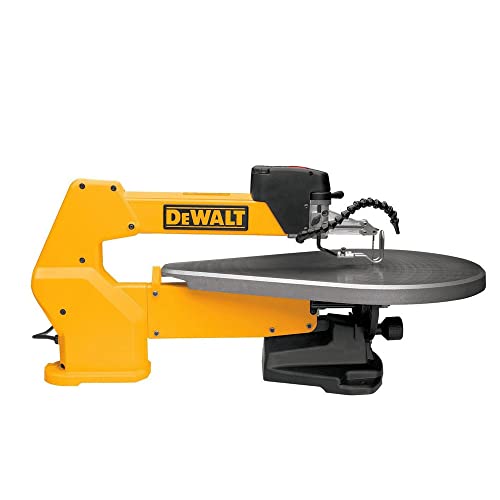
The DEWALT DW788 scroll saw is a 20-inch steel-blade machine designed for woodworkers, DIY enthusiasts, and professional craftspeople who need precise, intricate cuts. With a 1.3 amp motor and variable speed trigger, this saw can handle a range of materials from softwoods and hardwoods to plastics and thin metals. Its double parallel-link arm design is a standout feature, dramatically reducing vibration and noise for smoother, more accurate cuts.
This scroll saw is best suited for woodworkers working on detailed fretwork, inlay, or marquetry, as well as DIY homeowners tackling custom signs, toys, or decorative projects. Contractors and workshop users will appreciate the tool-free blade clamps that let you change blades in seconds, minimizing downtime. The front-mounted controls, including the on/off switch, variable speed dial, flexible dust blower, and blade tension lever, put everything within easy reach, so you can adjust settings without breaking your focus.
In terms of performance, the DW788 delivers excellent cutting efficiency and accuracy. The variable speed allows you to dial in the right speed for the material, reducing tear-out and ensuring clean edges. The saw's 2-inch depth of cut gives you plenty of capacity for most scrolling projects. Users report that the vibration reduction system makes a noticeable difference, especially during long cutting sessions, as it reduces fatigue and improves control.
Build quality is typical of DEWALT's professional-grade tools. The steel blade construction is durable, and the cast-iron base adds stability. The saw weighs about 66 pounds, which keeps it planted on your workbench but makes it less portable for job site use. The included dust blower helps keep your cut line clear, though some users find it less effective at higher speeds. Overall, the fit and finish are solid, and the saw is built to last.
Setup is straightforward: mount the saw to a sturdy stand or bench, install a blade, and adjust tension using the lever. Maintenance mainly involves keeping the blade clean and occasionally lubricating the arm pivots. Storage is simple since the saw stays in place; no folding or disassembly needed. However, the weight means you'll want a dedicated space for it.
Realistically, the DW788 is an investment. Its price is higher than entry-level models, but for serious woodworkers and professionals who demand precision and reliability, it's a worthwhile upgrade. The vibration control and tool-free blade changes alone can save hours over the life of the tool. If you're a casual DIYer on a tight budget, a lighter, less expensive scroll saw might suffice. But for anyone who values accuracy and productivity in the workshop, the DEWALT DW788 is a top-tier choice.
Pros
- Tool-free blade changes make swapping blades quick and easy
- Variable speed control gives flexibility for both thin and thick materials
- Beveling table allows for angled cuts without complicated setup
- Stable cast iron base reduces vibration during use
- Work light improves visibility on the cut line
Cons
- Blade selection may need upgrading for more demanding cuts
- Work light brightness might be insufficient in very low light conditions
- Dust collection could be more effective; additional shop vacuum recommended
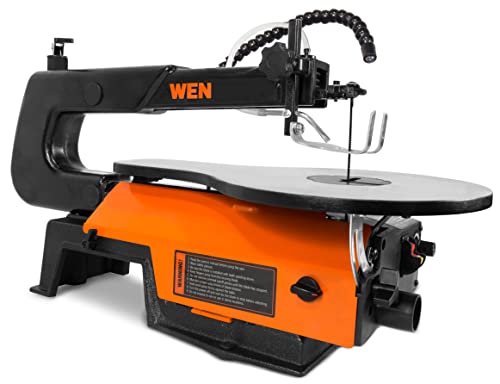
The WEN 3923 Variable Speed Scroll Saw is a 16-inch benchtop scroll saw designed for woodworking enthusiasts, DIY homeowners, and hobbyists who need precision cutting for intricate patterns, curves, and detailing. This saw combines a spacious work table with variable speed control and convenient blade change features to make scroll saw work more accessible and efficient.
This scroll saw is best suited for woodworkers, model makers, and anyone tackling detailed projects like fretwork, inlay, or toy making. It also works well for contractors and craftspeople who need a reliable saw for on-site or workshop use. The 16-inch throat depth allows cutting larger pieces up to 2 inches thick, which expands the range of potential projects from small ornaments to larger decorative panels.
Performance-wise, the variable speed motor lets you dial in from 550 to 1600 strokes per minute, giving you control over cutting speed based on material hardness and cut complexity. The 16-by-10-inch table bevels up to 45 degrees, enabling angled cuts for beveled edges or compound angles. The included air pump helps clear sawdust from the cut line, improving visibility and accuracy.
Build quality is solid with a cast iron base that adds weight and stability, reducing vibration and keeping the saw planted during operation. The flip-open side panel provides quick access for blade changes, and the thumb screw blade adapter allows tool-free swaps. A built-in work light illuminates the work area, and the dust port connects to a shop vacuum for cleaner operation. The foot lock clamp holds workpieces securely.
One realistic limitation is that the included blades may not suit all materials; many users prefer to purchase additional blades for finer or more aggressive cuts. The work light, while helpful, could be brighter for those working in dimly lit shops. The dust port is effective but may require a strong vacuum to capture fine dust completely. Setup is straightforward with clear instructions.
Overall, the WEN 3923 Variable Speed Scroll Saw offers excellent value for beginners and intermediate users looking for a capable scroll saw with user-friendly features. It provides the essential functions for accurate scroll work without breaking the bank. For woodworkers and DIYers who prioritize convenience and versatility, this saw is a practical addition to any workshop or garage.
Pros
- 90-degree blade turning capability bypasses the throat limitation for long rip cuts
- Sturdy cast iron base minimizes table vibration during detailed work
- Integrated dust blower and flexible work light enhance cutline visibility
- Variable speed control handles delicate fretwork as well as thicker hardwoods
Cons
- Pinless blade installation requires patience and fine-tuning during setup
- Dust collection port efficiency depends on connecting a powered shop vacuum
- Not intended for heavy-duty commercial production runs
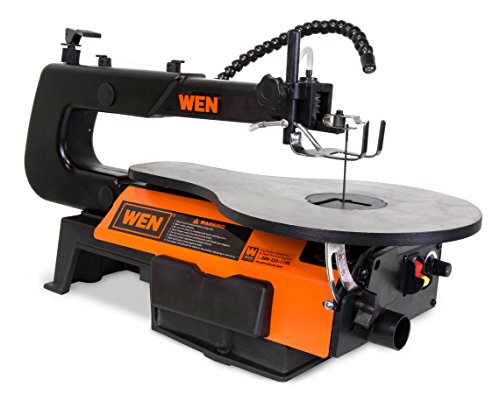
The WEN 3921 is a 16-inch variable speed scroll saw engineered specifically for intricate woodwork, hobby projects, craft cutting, and home workshop tasks. DIYers, craft hobbyists, and woodworkers looking to tackle intricate fretwork, custom puzzles, or detailed decorative cuts will find this benchtop machine practical. It bridges the gap between basic hand fretsaws and expensive professional stationary equipment, making precision scroll work accessible for home garages and dedicated woodworking shops.
Real-world cutting performance centers on the adjustable 400 to 1,600 strokes per minute variable speed dial, allowing operators to match cutting speed to wood density and blade type. The machine handles timber up to two inches thick, while the standard 16-inch throat accommodates most small to medium craft pieces. An exceptional design feature is the ability to accept blades rotated 90 degrees, granting virtually infinite rip capacity by preventing longer boards from colliding with the rear frame.
Build quality is anchored by a sturdy cast iron base, which provides substantial heft to reduce vibration during detailed operations. A 16-by-11-inch work table bevels smoothly up to 45 degrees to the left for angled cutting tasks. For precision and user comfort, WEN incorporates a flexible work light to spotlight fine markings and an adjustable air pump blower that sweeps sawdust off the cut path to maintain total visual control.
Setting up the machine requires bolting it securely to a workbench or dedicated stand for minimal vibration transfer. The unit includes a thumb screw blade adapter designed to ease blade changes, along with onboard storage to keep extra blades organized. While pinned blades slip into place quickly, securing pinless blades requires some manual dexterity and proper tension adjustment before diving into delicate interior fret cuts.
Like many entry-to-mid-range scroll saws, thick hardwoods will demand slower feed rates to prevent blade deflection or motor bogging, and dust collection through the port works best with an active shop vacuum. For home crafters, model makers, and DIY woodworkers seeking reliable cutting accuracy without breaking the workshop budget, the WEN 3921 offers an impressive balance of stability, control, and versatile blade positioning.
In a home workshop setting, fine speed adjustments make a noticeable difference when alternating between thin plywood, soft pine, and denser hardwoods like oak or walnut. The slower speeds allow steady control on complex scroll patterns, while the higher speeds clean up straight cuts rapidly.
The dual-direction blade mounting is especially helpful in cramped garages, allowing operators to cut continuous lengths of trim or paneling sideways without needing a massive bandsaw or large open clearance behind the machine.

Pros
- Tool-free blade changes save time and frustration during detailed projects
- Variable speed offers versatility for different wood thicknesses and cutting styles
- Tilting table up to 45 degrees enables bevel cuts without repositioning the workpiece
- Sturdy cast iron base minimizes vibration for improved accuracy
- Dust port and air pump help maintain a clean work area and clear line of sight
Cons
- At nearly 25 pounds, the saw is somewhat heavy for frequent portability between workspaces
- The included blades are basic; many users may prefer to upgrade to higher-quality blades for finer cuts
- No built-in work light, which may require additional task lighting in dim workshops
The WEN 3922 is a 16-inch variable speed scroll saw designed for woodworkers, DIY homeowners, and professionals who need precise curved cuts in wood up to 2 inches thick. With a 16-inch throat depth and a spacious 16-by-10-inch table that tilts up to 45 degrees, this saw handles everything from intricate fretwork to beveled edges on larger projects.
Performance-wise, the variable speed motor delivers 550 to 1600 strokes per minute, giving you control over cutting speed for different wood species and thicknesses. The cast iron base adds heft and stability, reducing vibration for smoother cuts and better accuracy. Users will appreciate the air pump that clears sawdust from the cutting line, improving visibility and cut quality.
Build quality is solid for the price point, with a durable cast iron base and a well-designed side panel that flips open for easy blade changes. The thumb screw blade adapter allows tool-free swaps, saving time when switching between blade types or replacing worn blades. The included dust port connects to a shop vac to keep your workspace cleaner.
Setup is straightforward, and the saw comes with three 5-inch blades to get started. Maintenance is minimal: keep the table clean, check blade tension, and occasionally lubricate moving parts. The saw's weight (about 25 pounds) means it's best kept on a dedicated stand or bench rather than moved frequently.
A realistic limitation is that the included blades are basic; many users may prefer aftermarket blades for finer or more aggressive cuts. Also, there's no built-in work light, so you may need additional task lighting in dimmer shops. The saw is not designed for heavy production work but excels in hobbyist and light professional use.
Overall, the WEN 3922 is a great value for anyone needing a reliable scroll saw for detailed woodworking, model making, or home improvement projects. Its ease of blade changes, variable speed, and tilting table make it a practical choice for both beginners and experienced users looking for precision without breaking the bank.
Pros
- Versatile 2-in-1 design: benchtop scroll saw and handheld coping saw in one
- Auto tensioning blade system simplifies blade changes and reduces setup time
- Variable speed range allows clean cuts in wood, plastic, and thin metals
- Dust port adapter is a nice touch for keeping the work area tidy
Cons
- Blue edge guide locking levers shown on packaging are not included (per product description)
- Not intended for heavy-duty professional or production use – best suited for light to medium DIY and craft work
- Limited cutting capacity (throat depth) compared to larger scroll saws
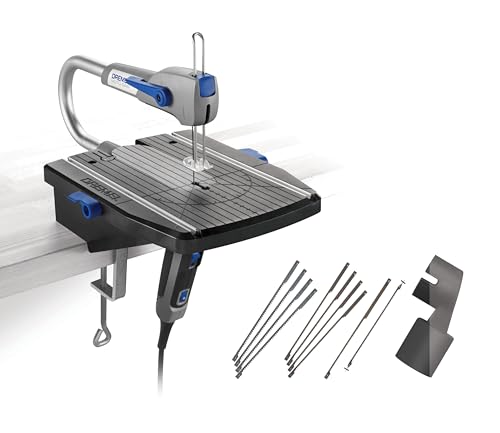
The Dremel MS20-01 Moto-Saw is a compact scroll saw kit designed for DIY homeowners, woodworkers, crafters, and hobbyists who need a versatile cutting solution. It functions both as a benchtop scroll saw for precision cuts and as a detachable handheld coping saw, giving you two tools in one compact package.
Performance-wise, the variable speed control lets you dial in the right speed for different materials, from soft woods to plastics and thin metals. The auto tensioning quick-change mechanism makes swapping blades fast and hassle-free, so you can keep working without unnecessary downtime. The included dust port adapter helps keep your line of sight clear and reduces cleanup after a project.
Build quality is typical of Dremel tools – solid plastic housing with metal components where it matters. The fast-clamp base feels secure when attached to a bench or table, and the tool weighs about 9 pounds, making it easy to move around your workshop or garage. The detachable coping saw mode adds flexibility, allowing you to bring the saw to larger workpieces rather than vice versa.
Setup is straightforward: clamp the base to a work surface, attach the saw head, and you are ready to cut. The quick-release blade mechanism doesn't require any tools, saving time during blade changes. Storage is simple thanks to the compact size, though the kit does not include a dedicated carrying case. Maintenance primarily involves keeping the blade tensioner clean and occasionally lubricating moving parts.
A realistic limitation is that the blue edge guide locking levers shown on the packaging are not included in the kit, as noted in the product description. Some users may find the cutting capacity (throat depth) limited compared to full-size scroll saws, so it is best suited for smaller, intricate work. It is not designed for heavy-duty professional use or thick stock.
Overall, the Dremel MS20-01 is a practical choice for DIY enthusiasts, woodworkers, and crafters who want a space-saving tool that can handle both benchtop precision and handheld convenience. While it may not replace a full-size scroll saw for production work, it offers good versatility for garage and workshop projects.
Pros
- Foot pedal frees up hands for safer and more precise cutting
- LED light and dust blower improve visibility and cut accuracy
- Variable speed suits different materials and project needs
- Tilting table supports bevel cuts up to 45 degrees
- Keyless blade change and onboard storage add convenience
Cons
- At 24.69 pounds, it may be less portable for some users
- Some users may prefer a larger work table for oversized pieces
- Limited to 1.2 amp motor may not handle heavy-duty industrial use
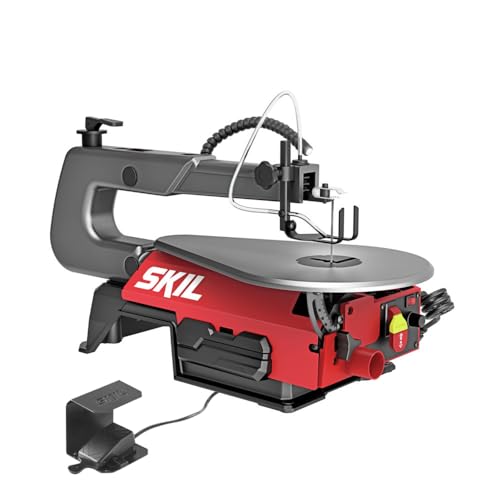
The SKIL SS9503-00 is a 16-inch variable speed scroll saw designed for woodworking projects that require intricate curves and detailed cuts. This tool is ideal for DIY homeowners, woodworkers, and hobbyists who enjoy crafting furniture, toys, or decorative pieces. It also suits professionals like contractors or cabinet makers who need a reliable saw for fine work.
Performance-wise, the scroll saw features an electronic variable speed control that lets you adjust the blade speed to match the material you're cutting, from soft woods to plastics. The integrated LED work light casts bright illumination on the cut line, reducing shadows and eye strain during detailed work. Additionally, the built-in dust removal system blows sawdust away from the cutting area, helping you maintain a clear view for accurate cuts.
Build quality appears solid for its price range, with a tilting work table that can be adjusted from 0 to 45 degrees for bevel cuts. The table measures 16 by 10 inches, providing a stable platform for most scroll saw projects. The saw uses a keyless blade change system, which simplifies swapping blades without needing extra tools. On-tool blade storage keeps spare blades within reach, reducing downtime during projects.
Ease of use is enhanced by the included foot pedal, which allows you to control the saw's operation while keeping both hands on the workpiece. This setup is especially helpful for intricate cuts where precise control is critical. The saw's weight of about 24.7 pounds makes it reasonably stable on a workbench, though it's not the most portable option for job sites.
A realistic limitation is that the 1.2 amp motor may not handle thick hardwoods or continuous heavy use as well as larger, more powerful models. For most hobbyist and light professional tasks, however, it performs admirably. The tilting table lock could be more robust for repeated angle changes, but it holds well once set.
Overall, the SKIL SS9503-00 scroll saw offers a good balance of features and value for woodworkers who need precision and convenience. It's a practical addition to any workshop or garage, especially for those who do detailed cutting projects. If you're looking for an entry-level to mid-range scroll saw with helpful extras like a foot pedal and LED light, this model is worth considering.
Understanding Scroll Saw Mechanics, Anatomy, and Project Selection
A scroll saw is a specialized benchtop or compact cutting machine designed to make detailed, curved, and interior profile cuts using a short, fine reciprocating blade. Unlike band saws that move a continuous steel loop in one direction, a scroll saw cycles a vertical blade up and down, making it capable of threading through pre-drilled starter holes. This mechanical action allows woodworkers, model makers, and craftspeople to carve enclosed decorative fretwork, puzzles, marquetry, and architectural miniatures without cutting through the outer perimeter of the workpiece.
The core structure of the tool centers on its throat capacity, defined by the distance between the blade and the rear frame column. A 16-inch throat depth accommodates lumber up to 32 inches wide when rotated during cutting, satisfying most home woodworking tasks. Larger 20-inch platforms expand that range significantly, preventing project workpieces from jamming against the rear arm during complex compound maneuvers. Evaluating the physical footprint and frame rigidity is the foundation of selecting an appropriate tool for your bench space.
Arm Mechanisms and Vibration Management
The internal drive mechanism dictates cutting accuracy, operational sound levels, and operator fatigue during extended cutting sessions. Traditional C-arm saws pivot a single solid frame piece, which can cause an aggressive arc motion that pulls delicate veneers. Parallel-arm systems divide the movement between two pivoting horizontal arms linked by tension rods, keeping blade motion closer to vertical. This design improves control when following tight paper templates across hardwood faces.
Double parallel-link setups, such as the architecture found on premium benchtop units like the DEWALT DW788, take vibration management a step further. By isolating the drive mechanism exclusively at the front tips of the upper and lower arms, these tools dramatically reduce mechanical chatter and unwanted table resonance. Less vibration ensures that your pencil lines remain sharp and legible under shop lighting, while also reducing the micro-bouncing that often snaps brittle, high-tooth-count blades. For heavy fabrication involving dense plastics, pairing steady tool platforms with accessories referenced in our PVC pipe cutting blade analysis highlights how vibration control preserves edge cleanliness.
Heavy cast iron bases supply the mass required to anchor reciprocating machinery to a sturdy workbench. Saws equipped with solid cast bases absorb internal motor harmonics, preventing the entire tool from wandering across the work table at peak speeds. When installing any scroll saw, securely bolting the frame to an immovable pedestal or heavy plywood benchtop prevents harmonics from transferring directly into your hands.
Pinned Blades Versus Plain-End Blade Clamping
Blade holding systems represent one of the most critical workflow differences across scroll saws. Pinned blades feature tiny cross-pins pressed through each tip, which slot into open metal stirrups on the upper and lower arm assemblies. This setup allows rapid blade mounting without hex keys or thumb screws, making pinned blades convenient for basic profile tracing, hobby craft models, and beginner projects. However, because the cross-pin requires a substantial opening, pinned blades cannot penetrate small pilot holes drilled for intricate fretwork.
Plain-end, or pinless, blades feature flat, unadorned ends that clamp securely into solid friction blocks using thumb screws or tensioning bolts. Because these blades lack crossbars, they slip through pilot holes drilled with micro bits as small as a number sixty wire gauge. Saws with tool-free blade clamps allow woodworkers to unclamp the upper blade holder, thread the blade through an interior cutout, reclamp, and retension in a few seconds. If a scroll saw is intended for pierced filigree, fretwork, or nested puzzles, reliable plain-end clamping is an essential requirement.
Several versatile machines, including models from the WEN series, include thumb screw adapters that accept both pinned and pinless blades. This hybrid compatibility allows operators to use budget-friendly bulk packs of pinned blades for thick perimeter trimming, while switching to fine plain-end blades for delicate interior piercings. Checking whether a machine includes secondary pinless blade blocks avoids unexpected delays when transitioning from rough cuts to refined joinery.
Variable Speed Control and Stroke Mechanics
Motor speed flexibility is critical when cutting varied material types without burning edges or melting synthetics. Electronic variable speed dials allow operators to regulate strokes per minute, commonly adjusting from around 400 or 550 SPM up to 1600 SPM. Dense hardwoods such as oak, maple, and walnut respond well to moderate to higher stroke speeds, maintaining steady forward feed without blade stalling. Conversely, thin veneers, acrylic sheets, and non-ferrous craft metals generate intense friction heat that requires much slower reciprocation.
Running a fine blade at excessive speeds across plastics can melt the kerf shut directly behind the cut, seizing the tool and distorting delicate templates. Lower speeds afford the user greater reaction time when executing acute corners, reversing cutting directions, or approaching tight interior intersections. Fine speed adjustments give the operator complete authority over cutting momentum, preventing stock from kicking upward against the hold-down foot.
Pedal-controlled variable speed represents another functional upgrade found on woodworking saws like the SKIL SS9503-00. Foot switch integration enables operators to stop and start blade reciprocation without releasing their hands from delicate, two-handed workpiece guidance. Maintaining continuous manual contact with thin stock prevents sudden flutter, minimizes chatter, and noticeably improves overall line accuracy.
Throat Capacity, Thickness Limits, and Table Beveling
Standard benchtop scroll saws provide a vertical clearance capacity of approximately two inches beneath the blade guide. This vertical depth allows users to cut standard dimensional lumber, stack multiple thin plywood blanks for batch work, or bevel thicker boards at moderate angles. While a machine can technically slice two-inch hardwood, doing so requires slow feed pressure, reduced stroke resistance, and coarse blades with lower tooth counts to prevent motor bogging.
Throat depth establishes the working envelope for turning wide panels. A 16-inch saw handles workpieces up to 16 inches from the blade face to the rear frame, which translates to a full 32-inch circle if rotated evenly. Certain machines, such as the WEN 3921, incorporate innovative blade mounting configurations that accept blades positioned either forward or rotated ninety degrees sideways. This sideways mounting unlocks infinite rip capacity along the length of narrow boards, effectively eliminating the rear arm clearance boundary for straight trim operations.
Table beveling adds three-dimensional capability, allowing users to cut draft angles, tapered puzzle pieces, and dimensional relief carvings. Most standard tables tilt to the left up to 45 degrees, locking in place with a manual bevel scale. Saws that support bidirectional table tilting, tilting both left and right, eliminate the need to flip the workpiece upside down when following directional wood grain or delicate surface patterns.
Dust Blowers, Work Lights, and Line Visibility
Precision fretwork requires an unobstructed view of detailed cutting lines, where a stray millimeter can ruin hours of delicate layout. Most modern scroll saws integrate a small internal diaphragm air pump that directs a continuous stream of air through an adjustable nozzle aimed directly at the blade contact point. This localized airflow sweeps fine wood dust off the pattern lines before it accumulates into vision-blocking mounds.
Integrated flexible work lights and overhead LED fixtures provide directional illumination that eliminates shadows cast by the upper arm assembly. Crisp lighting reveals fine pencil graphite, glued paper patterns, and subtle wood grain boundaries across the entire cut path. Saws featuring rigid, position-holding light stalks ensure that tool vibration does not displace the beam midway through a complex cut sequence.
Dust collection ports located beneath the cast iron work table capture heavier debris falling below the kerf line. Connecting a standard shop vacuum or extraction hose to the lower dust port helps reduce airborne particulates inside small home shops. Maintaining balanced suction below the table while utilizing the top blower creates a clean cutting zone that protects both operator respiratory health and template clarity.
Compact and Portable Scroll Saw Systems
Not every workshop has dedicated benchtop space for a heavy fifty-pound cast iron scroll saw. Compact, clamp-on craft systems like the Dremel MS20-01 Moto-Saw provide an accessible alternative for hobbyists, apartment craft spaces, and model builders. These lightweight tools feature fast-clamping bases that mount directly to the edge of standard desks, kitchen counters, or temporary work surfaces without requiring permanent mounting bolts.
The Dremel Moto-Saw incorporates an auto-tensioning quick-change mechanism that simplifies blade swaps for users who prefer minimal mechanical adjustments. In addition to stationary benchtop operation, the motorized cutting head detaches completely from the table base, functioning as an electric handheld coping saw. This handheld functionality enables craftspeople to take the blade directly to large, immobile workpieces, trim architectural moldings on site, or cut awkward craft shapes that cannot rest flat across a standard table.
While compact craft saws deliver exceptional portability, they exhibit specific operational tradeoffs when compared to stationary cast machines. Their lightweight construction, smaller stroke length, and shorter proprietary blades limit cutting capacity in dense hardwoods thicker than half an inch. Evaluating your primary materials ensures you do not force a compact craft unit into high-strain tasks designed for heavy-duty stationary tools.
Selecting Blade Teeth, Kerf, and Materials
Operating a scroll saw successfully depends as much on correct blade selection as it does on machine capabilities. Blade geometry varies by width, thickness, teeth per inch, and tooth configuration, directly affecting cut speed and kerf smoothness. Standard tooth blades cut exclusively on the downstroke, whereas skip-tooth designs feature wider gullets that clear chips efficiently when cutting fibrous softwoods or thick stock.
Reverse-tooth blades include a small cluster of upward-pointing teeth at the bottom of the blade strip. These inverted teeth cut on the upstroke as well, cleanly shearing bottom wood fibers and eliminating ragged tear-out on the underside of delicate veneer plywoods. High-carbon Japanese steel replacements, such as FOXBC pinned and plain-end blade sets, provide high hardness and edge retention when shaping dense materials. Matching high-TPI blades with thin stock and low-TPI blades with thicker lumber prevents premature blade buckling and heat discoloration.
Specialty blades expand the scroll saw beyond standard wood cutting into craft metals, bone, and composites. Spiral blades feature teeth twisted around a central wire core, allowing cutting in every horizontal direction without rotating the workpiece itself. While spiral blades leave a wider, slightly coarser kerf, they are invaluable for large fretwork panels that exceed throat clearance boundaries. Understanding how blade tooth geometry interacts with stock hardness guarantees that your scroll saw operates safely and produces clean, repeatable cuts across every project.


Write Your Review
No reviews yet. Be the first to share your experience!