


Working on a modern tree service crew involves far more than merely cutting limbs and feeding brush into a commercial wood chipper. Novice ground workers quickly discover that the path requires deep mechanical knowledge, disciplined chainsaw handling, and an understanding of dynamic wood tension under load. Learning how to become arborist demands physical stamina alongside a serious commitment to arboricultural science, tree biology, and aerial safety protocols. Many tree workers spend their early mornings staging rigging lines, fueling saws with proper two-stroke fuel mixtures, and organizing equipment trailers before touching a climbing saddle. Knowing how to maintain sharp cutter teeth and manage job site hazards forms the foundation of every successful career in professional tree care.
Ground crew members who study tree anatomy and equipment maintenance quickly separate themselves from casual laborers on the job site. Developing practical skills such as inspecting chain brakes, filing rakers to the proper depth, and storing cutting equipment properly builds the discipline needed for high-altitude work. Transitioning into aerial tree work requires a firm grasp of rigging physics, branch bark ridge inspection, and international industry safety standards. Approaching this trade with structured field study and reliable gear documentation allows aspiring sawyers to advance toward certified climbing roles with complete confidence.


Essential Steps and Technical Disciplines for Becoming a Professional Arborist
Understanding how to become arborist requires recognizing that professional tree care merges physical forestry work with precise biological science. Aspiring arborists do not simply strap on climbing gear and head into the canopy on their first day. The profession demands a progressive apprenticeship that starts firmly on the ground, where beginners master equipment operation, hazardous limb management, and safety protocols. Moving through this trade takes patience, dedication to physical fitness, and an unwavering respect for cutting equipment and overhead hazards.
Starting as a Ground Worker to Master Job Site Safety and Chipper Operations
Every professional tree care career begins on the ground crew, commonly known in the industry as a groundie. Ground operations teach novices how wood behaves when severed from a standing trunk and how to manage danger zones under active cutting areas. Ground workers handle brush staging, feed wood into heavy industrial chippers, and manage communication with aerial sawyers using standard hand signals or helmet intercoms. Adhering to ANSI Z133 safety standards during ground work prevents catastrophic accidents and establishes the situational awareness needed for advanced canopy operations.
Chipper safety stands as one of the most critical responsibilities for any new crew member. Operators must feed brush butt-end first, maintain safe standing positions to the side of the feed table, and never push material past the feed rollers with hands or feet. Learning to process limbs smoothly keeps the job site clear, preventing hazardous brush tangles around the base of the work tree. Maintaining clean drop zones protects property below while ensuring ground workers remain completely out of the strike path of falling wood.
Ground operations also introduce candidates to heavy rigging management and drop zone preparation. Experienced ground workers anticipate the climber’s next cut by staging the appropriate lowering lines, slings, and ground friction devices. Misjudging the swing radius of a falling branch can damage surrounding structures or endanger fellow crew members. Mastering these basic ground skills demonstrates the focus and reliability required before any crew leader permits an apprentice to leave the ground.
Mastering Chainsaw Maintenance and Ground-Level Cutting Mechanics
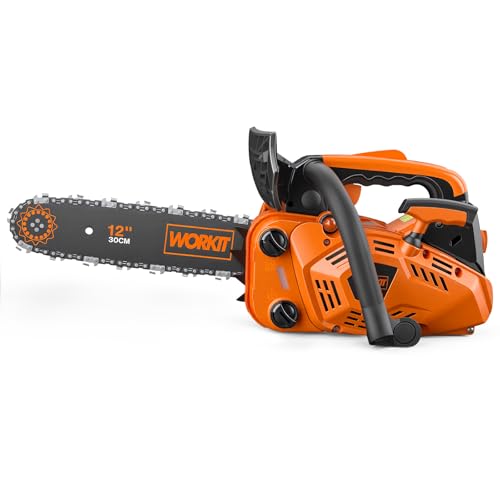
Ground crew members quickly become proficient with rear-handle ground chainsaws, typically ranging from 40cc to 60cc displacement. Safe operation begins with mandatory personal protective equipment, including cut-resistant chainsaw chaps, heavy-duty boots, eye protection, and a forestry helmet with hearing protection and a mesh face shield. Before making a single bucking or limbing cut, operators must verify that the inertia-activated chain brake functions correctly and that the chain catcher pin remains undamaged. Ground workers must always maintain a balanced two-handed stance with the left thumb firmly wrapped around the front handlebar.
Daily cutting system maintenance is an essential skill that directly impacts job site safety and cutting speed. Apprentices learn to perform the chain tension snap test, ensuring drive links remain seated in the guide bar groove without sagging along the lower rail. Properly filing saw chain cutter teeth using matched round files keeps the chain cutting clean chips rather than hazardous fine sawdust. In addition, learning how timber behaves during bucking cuts, including concepts found when selecting a saw for cant lumber and log processing, helps workers understand compression and tension forces before tackling overhead wood.
Fuel handling and lubrication routines must become second nature to anyone pursuing arboriculture. Two-stroke powerheads require precise fuel-to-oil mixtures, typically 50:1 ratios utilizing 89-plus octane ethanol-free gasoline and dedicated synthetic two-cycle oil. Running fresh fuel prevents carburetor jet gumming, while keeping the bar oil reservoir topped off protects guide bar rails from premature friction burn. Regularly cleaning the powerhead air filter and clearing wood chips from the clutch cover prevents engine overheating during continuous ground bucking sessions.
Climbing Fundamentals and Transitioning into the Canopy
The journey from ground support to aerial operations requires dedicated training in rope access and tree climbing techniques. Field references like The Canopy: From Groundie to Certified Arborist and Climber document this difficult transition, outlining how ground workers can earn trust and demonstrate climbing readiness. Beginners learn how to install throwlines, set high anchor points, and inspect branch unions from the ground before ever leaving the turf. Ascending a tree safely requires a deep appreciation for gear inspection, structural integrity, and personal energy conservation.
Modern arborists utilize both moving rope systems (MRS) and stationary rope systems (SRS) to maneuver within the canopy. Moving rope systems employ friction hitches or mechanical devices on a doubled rope, providing smooth positioning for limb walking and routine pruning. Stationary rope systems utilize a single anchored line with specialized mechanical ascenders, offering superior climbing efficiency when accessing towering crowns. Novice climbers spend countless hours practicing low-to-the-ground ascents and branch transfers to build core strength and spatial confidence.
Top-handle chainsaws represent a major milestone for ascending climbers, but they carry severe risks that demand extreme caution. Unlike rear-handle ground saws, top-handle saws feature a compact balance designed strictly for in-tree use by qualified aerial operators. One-handed operation is strictly prohibited by professional safety standards, as kickback forces can easily overwhelm a single wrist grip. Climbers must achieve a stable, secured work position with two separate tie-in points before initiating any cut with an aerial powerhead.
Rigging Fundamentals, Friction Brakes, and Knot Tying Mastery
Aerial tree removal relies heavily on controlled rigging systems to lower heavy timber safely into confined drop zones. Climbers and ground workers must understand dynamic loading, where the impact force of falling wood multiplies the weight applied to anchor branches and rigging lines. Tools like the Port-a-wrap friction brake allow ground crew members to hold hundreds of pounds of timber with minimal manual effort. Matching lowering line diameter and tensile strength to log weight prevents catastrophic rope breaks and shock-load failure.
Every aspiring arborist must develop muscle memory for tying critical arboricultural knots under pressure. Knots such as the running bowline, cow hitch with a half hitch, and timber hitch serve as dependable methods for securing heavy logs to lowering lines. Friction hitches like the prusik, distel, and swabisch hitch govern positioning and descent on climbing lines. A misplaced knot or poorly dressed hitch can unravel under load, leading to equipment drops or serious injuries in the canopy.
Coordinating cuts with the ground crew requires clear communication and a firm understanding of wood hinge mechanics. Climbers use directional notches, including open-face and conventional 45-degree notches, combined with a preserved hinge of holding wood to steer falling sections. The ground worker adjusts line tension to let the piece drop gently into the rigging system without jerking the climbing tree. This synchronized teamwork distinguishes true arborists from untrained tree cutters who rely on dangerous, uncontrolled drops.
Tree Biology, Decay Diagnosis, and Pruning Standards
A certified arborist is first and foremost a tree specialist dedicated to plant health and structural preservation. Understanding tree anatomy involves recognizing the cambium layer, sapwood, heartwood, and the protective bark that shields trees from fungal pathogens. Arborists study how trees react to damage through compartmentalization of decay in trees, widely known in the industry as the CODIT model. Making proper pruning cuts outside the branch bark ridge and branch collar allows the tree to form natural protective zones without spreading internal rot.
Professional tree care adheres strictly to ANSI A300 standards, which forbid destructive practices such as tree topping and lion-tailing. Topping removes the upper crown, causing vigorous, weakly attached watersprouts that become severe hazard limbs as they mature. Proper crown thinning, crown cleaning, and structural pruning focus on removing dead, diseased, crossing, or weakly attached branches. Recognizing codominant stems with included bark helps arborists recommend corrective crown cabling or brace rod installation before severe storms cause structural failure.
Plant healthcare also involves diagnosing common pest infestations, viral infections, and nutrient deficiencies in soil. Soil compaction around urban trees suffocates root systems, preventing oxygen exchange and water absorption. Arborists utilize pneumatic soil excavation tools to loosen compacted dirt and incorporate organic amendments without tearing delicate root flares. Preserving urban canopies requires equal parts diagnostic intellect and physical cutting capability, ensuring trees thrive safely near homes and public infrastructure.
Professional Certification Pathways and the ISA Credential
Achieving the International Society of Arboriculture (ISA) Certified Arborist credential represents the industry benchmark for professional credibility. Qualification requires a minimum of three years of documented full-time practical experience in arboriculture or a two-year degree in arboriculture combined with two years of field experience. Candidates with a four-year degree in forestry, horticulture, or environmental science need one year of verified field practice. Passing the comprehensive ISA exam validates competence across tree biology, soil science, safe work practices, risk assessment, and tree pruning.
Beyond the ISA Certified Arborist title, professionals often pursue advanced credentials to expand their career opportunities. The Tree Care Industry Association (TCIA) offers specialized certifications, including the Tree Care Safety Professional (CTSP) credential, which focuses on job site safety culture and hazard communication. Aerial operators frequently seek the ISA Certified Tree Worker Climber Specialist designation, which includes a rigorous physical climbing skills evaluation and an aerial rescue demonstration. Utility arborists obtain specialized electrical hazard training to safely clear branches around high-voltage power transmission lines.
Maintaining these professional credentials demands continuous education and disciplined field record-keeping. Certified arborists must earn continuing education units (CEUs) every three years through workshops, forestry conferences, and technical testing. Documenting climbing hours, equipment inspections, and aerial training in dedicated notebooks, such as hardcover field journals, helps candidates track their career development. Continuous learning ensures that practicing arborists stay informed regarding emerging diseases, invasive species, and advancing climbing hardware.
Cultivating Safety Culture, Physical Longevity, and Daily Gear Inspection
Arboriculture is statistically among the most hazardous professions, making safety culture and equipment inspection vital for career longevity. Every climbing line, rigging rope, carabiner, and harness must undergo visual and tactile inspection before each work shift. Ropes showing signs of core herniation, excessive abrasion, or chemical contamination from bar oil or gasoline must be retired immediately. Carabiners must feature triple-action auto-locking gates to prevent accidental roll-out while working among branch unions.
Physical conditioning and ergonomic working techniques protect arborists from repetitive strain and chronic fatigue over decades of field work. Climbing requires tremendous core stability, leg drive, and shoulder mobility, making stretching and strength training essential off the clock. Working smart in the tree means utilizing mechanical advantages, such as redirects and friction-reducing rope guides, to minimize muscular strain during long limb walks. Wearing hearing protection, safety glasses, and cut-resistant boots guards the body against the cumulative physical tolls of power tool operation.
Developing early enthusiasm and lifelong professional pride also strengthens the entire tree care community. Educational books, such as Ahmed’s Journey: A Kids’ Guide to Becoming an Arborist, help introduce younger generations to environmental stewardship and forestry careers. Combining formal study, structured climbing progression, and daily mechanical care transforms an entry-level ground worker into a respected, certified industry leader. Committing to technical precision, safety compliance, and continuous education ensures a rewarding, sustainable career among the trees.




Write Your Review
No reviews yet. Be the first to share your experience!