


Stripped teeth and crooked cut lines quickly ruin expensive metal stock when an ill-suited blade hits dense steel or thin tubing. Blade chatter and excessive tooth wear usually happen because the tooth pitch cannot clear chips fast enough or lacks the tough alloy needed to resist friction. Selecting the best all around metal bandsaw blade requires matching pitch flexibility with high-grade steel, allowing your saw to slice through mild steel, structural tubing, and non-ferrous bars without bogging down. Careful analysis of tooth geometry, M42 bi-metal construction, and variable tooth arrangements reveals which designs withstand heavy shop duty.
A dependable variable pitch blade reduces harmonic vibration, dampening the harsh chatter that often ruins delicate profiles. Whether cutting solid square bar on a horizontal saw or trimming conduit on a portable bandsaw, consistent blade tension and proper tooth contact ensure clean, square cuts every time. Clean cuts save valuable workshop time by cutting down on deburring, though keeping a detailing sander for clean edge finishing on your bench still helps clean up sharp burrs. Reviewing manufacturer alloy specs, weld quality, and user feedback helps narrow down blades that deliver lasting value without snapping under tension.

Pros
- Durable M42 bi-metal material handles frequent use without dulling quickly
- Variable tooth pitch reduces vibration and produces cleaner cuts on thin materials
- Compatible with many 93-inch bandsaw models, including popular 7x12 units
- Affordable replacement option for worn blades without sacrificing quality
- Good choice for cutting thin-walled tubing and profiles with minimal burr
Cons
- Not designed for cutting wood or non-ferrous metals efficiently; use a dedicated blade for those materials
- May require proper tension and speed adjustments on your saw for optimal cutting performance
- Limited to saws that accept 93-inch blades; verify compatibility before purchase
The Imachinist S933414 is a bi-metal band saw blade built for cutting soft ferrous metals, making it a practical addition to any garage, workshop, or job site. With a 93-inch length, 3/4-inch width, and a variable 10/14 TPI tooth pattern, this blade is designed to handle thin pipes, tubes, and profiles commonly encountered by mechanics, contractors, electricians, plumbers, and DIY homeowners. Whether you're working on automotive repairs, metal fabrication, or plumbing modifications, this blade offers a reliable cutting solution.
When it comes to real-world performance, the M42 bi-metal construction provides excellent wear resistance, helping the blade maintain its edge over repeated use. The variable tooth pitch (10/14 TPI) reduces vibration and chatter, resulting in smoother cuts with less effort. This is especially beneficial when cutting thin-walled materials that might otherwise snag or distort. Users can expect efficient cutting of mild steel, angle iron, and other soft ferrous metals, making it a solid choice for shop tasks that demand precision and productivity.
Build quality is a highlight here. The blade is made from high-speed steel teeth bonded to a flexible alloy steel back, giving it both cutting hardness and the ability to withstand tension without cracking. The 0.035-inch thickness strikes a good balance between rigidity and flexibility, allowing it to navigate around curves while staying straight on straight cuts. The silver finish adds a layer of corrosion resistance, which is helpful in humid basements or garages where moisture might be present.
Setup is straightforward on any bandsaw that accepts 93-inch blades - simply open the saw, thread the blade around the wheels, and tension it according to your saw's specifications. Maintenance is minimal: keep the blade clean and dry when not in use, and avoid forcing it through cuts to extend its lifespan. Storage is simple too; just hang it or keep it in a dry drawer to prevent accidental damage.
One realistic limitation is that this blade is specifically designed for soft ferrous metals and thin sections. It won't perform well on wood or non-ferrous metals like aluminum or brass, so you'll want a dedicated blade for those materials. Also, because it's a fixed 93-inch length, it only fits bandsaws that accept that size - be sure to check your saw's blade length requirement before ordering.
Overall, the Imachinist S933414 M42 bi-metal band saw blade is a dependable option for anyone needing a sharp, durable blade for cutting mild steel, pipe, and tubing. Its variable tooth design and robust construction make it a practical investment for mechanics, contractors, and workshop users who want consistent results without breaking the bank.

Pros
- Excellent wear resistance from cobalt alloy extends blade life
- Variable tooth pitch reduces chatter and improves cut quality
- Compatible with many 93-inch band saws for easy replacement
- Strong bi-metal backing minimizes breakage during tough cuts
- Good value for a single high-performance blade
Cons
- Only one blade included; may need additional blades for different TPI requirements
- Requires proper tension and speed settings for optimal performance on thick materials
- Not ideal for very thick or hardened steel at high cutting speeds
The FOXBC 93-inch band saw blade is a bi-metal M42 blade designed for metal cutting applications. It features a variable 10/14 TPI tooth pattern, which allows it to handle both thin and thick materials efficiently. The blade is built with 8% cobalt and 2% tungsten content, enhancing its durability and resistance to abrasive wear. According to the product description, the teeth are electron beam welded to a tough backing, providing a high flex life and longer blade life compared to conventional blades.
This blade is well-suited for a range of users, including DIY homeowners tackling garage projects, mechanics cutting angle iron or exhaust pipes, contractors working with aluminum or stainless steel, and woodworkers who occasionally need to cut metal. It also works for plumbing repairs involving copper or galvanized pipe. The variable TPI helps reduce vibration and chatter, leading to smoother cuts and better control.
In terms of performance, the M42 cobalt steel teeth hold a sharp edge for extended periods. The RC 66-68 tooth hardness indicates strong wear resistance, which means fewer blade changes and more productivity on the job. The bi-metal construction combines a hard cutting edge with a flexible backing, reducing the risk of blade breakage during demanding cuts. Users may appreciate the blade's ability to cut through mild steel, stainless steel, brass, bronze, and even some plastics and wood.
Build quality is a key strength here. The use of cobalt and tungsten in the tooth material adds significant abrasive resistance, which is especially useful when cutting tough materials like stainless steel. The electron beam welding process ensures a strong bond between the tooth edge and the backing. The blade measures 93 inches in length and 3/4 inch in width, fitting many common band saws that accept these dimensions. It comes as a single blade, so users should check compatibility before purchase.
Storage and maintenance are straightforward. Like any band saw blade, it should be kept dry and properly tensioned on the saw. Users should store it coiled or hung to avoid damage. One limitation is that only one blade is included, so if you need different TPI options for various materials, you may need to buy additional blades. Also, for very thick or hardened steel, slower cutting speeds are recommended to avoid overheating the teeth.
Overall, this FOXBC band saw blade offers a solid balance of durability, cutting performance, and versatility for metalworking tasks. It is a practical choice for anyone who needs a reliable blade for a 93-inch band saw, from hobbyists to professionals. While it may not be a multi-pack, the quality of the blade itself makes it a worthwhile investment for consistent, clean cuts in a variety of materials.
The FOXBC band saw blade is engineered for long life in demanding metal cutting applications. The M42 cobalt steel teeth are heat-treated to RC 66-68 hardness, providing excellent wear resistance. Additionally, the 8% cobalt and 2% tungsten content in the tooth material enhances abrasive resistance, allowing the blade to maintain its cutting edge longer than standard bi-metal blades. The electron beam welding process ensures a strong bond between the hard tooth tip and the flexible backing, reducing the risk of tooth stripping. According to the manufacturer, this blade can outlast conventional blades up to three times, making it a durable choice for frequent use in workshops and job sites.
Pros
- Tough M42 bi-metal construction offers superior heat and wear resistance over standard carbon blades
- Fixed 14 TPI pitch cuts thin-walled metal tubing smoothly without catching or breaking teeth
- Exact fit for standard 7x12 horizontal and vertical metal band saw models
- Consistent weld quality allows smooth tracking across guide bearings with low vibration
Cons
- Not intended for thick solid steel billets or heavy bar stock due to the fine tooth spacing
- Limited primarily to soft ferrous metals and non-ferrous alloys rather than hardened specialty steels
The Imachinist S9334014 is a specialized replacement band saw blade designed for horizontal and vertical metal-cutting machines. Measuring 93 inches in length, 3/4 inch in width, and 0.035 inches in thickness, this blade uses a fixed 14 TPI (teeth per inch) configuration. Built with an M42 bi-metal design, it fuses high-speed cobalt steel teeth to an alloy spring-steel backer, delivering the flexibility needed to handle continuous bending over band saw wheels alongside the heat resistance required for friction-heavy metal slicing.
This blade is well suited for metal fabricators, automotive mechanics, maintenance technicians, vocational instructors, and dedicated home garage hobbyists. Anyone regularly cutting angle iron, unistrut, conduit, exhaust pipe, or hollow square tubing will appreciate the fine tooth count. Because coarse blades often hook and shatter teeth when engaging thin materials, having a dedicated 14 TPI blade ensures at least three teeth remain in contact with thin-walled workpieces at all times, drastically reducing chatter and tooth stripping.
In practical shop use, cutting efficiency depends heavily on matching feed pressure with the material profile. The fine tooth geometry glides through soft ferrous metals like mild steel tubing, light steel channel, and sheet profiles without grabbing. Edge retention stands out compared to basic carbon steel blades, as the M42 cutting edge withstands frictional heat buildup during dry cutting or flood-coolant operations. Operators will notice clean edges that require only quick passes with a deburring tool before welding or fit-up.
Build quality centers on solid weld alignment and reliable tooth hardness. A clean, flat weld joint prevents rhythmic thumping against guide bearings, which helps prolong the life of both the blade and the saw guide rollers. To get the longest working life out of this blade, proper machine setup is essential: maintaining correct blade tension, dialing in moderate blade speeds, and avoiding excessive downfeed pressure will keep the teeth sharp and prevent gullet clogging.
A clear limitation of this blade is its tooth pitch. A fine 14 TPI setup is intentionally restricted from cutting thick solid rounds or heavy structural plate, as small gullets quickly pack with metal chips and generate excessive heat. For workshops, fab shops, and maintenance facilities focused on thin-wall stock, light structural framing, and general metal repairs, this Imachinist blade offers dependable cutting performance and solid overall value.
This band saw blade measures exactly 93 inches in overall loop length and 3/4 inch in width, making it a direct match for most standard 7x12 horizontal metal-cutting band saws. Common machinery from brands like Jet, Grizzly, Baileigh, Central Machinery, and similar workshop platforms using 93-inch band dimensions will easily accept this specification.
Users should check their equipment manual to ensure their machine supports a 3/4-inch blade width, as smaller hobby saws are sometimes limited to 1/2-inch bands. When properly matched to compatible machines, the 0.035-inch thickness provides the right balance between beam strength for straight, square cuts and enough lateral flexibility to track smoothly across saw wheels.

Pros
- Direct fit for industry-standard deep cut portabands including Milwaukee and DeWalt models
- Variable 14/18 pitch design significantly reduces blade chatter and tooth stripping
- Tough M42 bi-metal edge stands up well to heat buildup during continuous cutting
- Economical three-pack provides great value for active construction and garage projects
Cons
- Not compatible with compact or sub-compact portable bandsaws requiring shorter blade lengths
- Variable 14/18 tooth profile cuts slower through heavy, thick solid steel stock than low-TPI options
The FOXBC 44-7/8-Inch Portable Bandsaw Blades are replacement cutting accessories engineered for standard deep-cut portable band saws. Measuring 44-7/8 inches long, 1/2 inch wide, and 0.020 inches thick, these blades are designed as drop-in replacements for Milwaukee 48-39-0561 and DeWalt DW3986 blades. They fit a wide range of popular corded and cordless tools, including the DeWalt DWM120K and DCS374B, Milwaukee deep-cut units, Makita XBP02Z, Wen 94396, and Bosch models. Packaged as a 3-pack, they offer an accessible way to keep fresh cutting edges on hand for metal fabrication tasks.
These blades are well suited for electricians, commercial plumbers, mechanical contractors, and automotive hobbyists who frequently cut metal stock. Electricians slicing through EMT conduit and unistrut channels will appreciate the tooth pattern, while plumbers working with copper pipes, black iron, and threaded rod can make quick, clean cuts without excessive sparks. For general garage users and metal fabrication shops, having a reliable multi-pack prevents downtime when cutting structural tubing or angle iron.
Cutting performance centers around the 14/18 variable teeth-per-inch configuration. This wavy tooth profile excels at cutting mixed-thickness materials, dampening harmonic vibrations and reducing the chatter often experienced when cutting thin-walled pipe. The variable pitch also minimizes tooth stripping when snagging on jagged edges. Because portable band saws produce far less heat and debris than abrasive cut-off wheels, these blades allow tradespeople to make cooler, cleaner cuts with minimal burring, reducing secondary prep work.
In terms of build quality, FOXBC utilizes M42 bi-metal high-speed steel with a heat-resistant tooth edge joined to a flexible spring steel backing. This construction helps the blade withstand constant flexing over drive wheels while maintaining sharp cutting edges. The weld seam is ground smooth to promote steady tracking along the guide rollers, which prevents jumping and uneven wear during heavy pressure cuts.
Like any cutting accessory, these blades have operational boundaries. The 14/18 TPI setup is optimized for thin to medium-gauge metals; cutting thick, solid steel blocks or dense bar stock may feel slow compared to coarser 10/14 or 8/10 TPI blades. Proper installation tension and moderate feed pressure are necessary to ensure the teeth do not overheat or dull prematurely. Storing coiled spares flat in a tool chest or bag keeps them protected from accidental crimping before use.
For contractors, maintenance technicians, and DIY fabricators looking for dependable replacement blades at a reasonable price, this 3-pack is a sensible choice. It provides solid tracking, reliable tooth durability on conduit and structural shapes, and direct compatibility with major deep-cut portable band saws on the market.
These replacement blades measure 44-7/8 inches in length, 1/2 inch in width, and 0.020 inches in thickness, which is the standard size for full-size, deep-cut portable band saws. They are compatible with Milwaukee 48-39-0561, DeWalt DW3986, D28770, DCS374B, DCS376B, DWM120K, and DW328. They also fit Makita XBP02Z, Wen 94396, and Bosch GCB10-5 portable band saws.
These blades will not fit compact, sub-compact, or mid-size portabands that require 32-7/8-inch, 35-3/8-inch, or other non-standard blade sizes. Users should always check their tool manual or existing blade specifications before purchasing to confirm that their tool takes 44-7/8-inch blades.
Pros
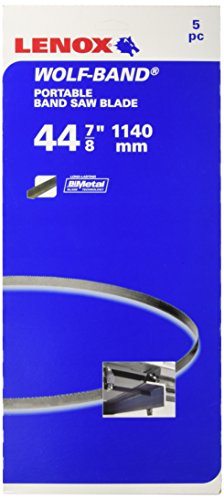
- Long blade life thanks to bi-metal construction and Tuff Tooth reinforcement
- Shatter-resistant design reduces risk of breakage during tough cuts or when hitting obstacles
- Consistent cut quality with 14 TPI for thin metals and tubing
- Good value with 5 blades per pack for frequent users
Cons
- 14 TPI may be too fine for thicker materials, resulting in slower cutting speeds
- No included storage case or organizer for the blades
- Price per blade may be higher than some generic alternatives
These LENOX portable band saw blades are a solid choice for anyone who regularly cuts metal in a workshop, garage, or on a construction site. Designed as a 5-pack of 44-7/8" x 1/2" x .020" blades with a 14 TPI tooth configuration, they are built for portable band saws and are suitable for cutting a range of materials, especially thin metals, tubing, and sheet stock.
Who will get the most out of these blades? Mechanics, contractors, electricians, plumbers, and woodworkers who need to cut metal occasionally will appreciate the durability and shatter resistance. DIY homeowners tackling garage projects or home repairs will also find them reliable. The bi-metal construction combines high-speed steel teeth with a flexible back, allowing the blade to bend without breaking while maintaining a sharp cutting edge. This is a practical advantage when cutting in tight spaces or around corners.
In terms of performance, the 14 TPI (teeth per inch) provides a smooth, relatively fast cut on thin materials like steel tubing, aluminum, or sheet metal. The Tuff Tooth design reinforces the tooth profile, reducing the chance of tooth breakage during aggressive cuts or when hitting unexpected hard spots. Users can expect consistent results without frequent blade changes, which boosts productivity on the job. The shatter-resistant feature also adds a layer of safety, as the blade is less likely to snap unexpectedly.
Build quality is where LENOX generally shines, and these blades are no exception. The high-speed steel teeth stay sharp longer than standard carbon steel, and the bi-metal back resists fatigue. The .020" thickness provides enough rigidity for precise cuts while still allowing some flexibility. However, there is no included storage case, so you will need to store them carefully to avoid damaging the teeth. A simple blade holder or a dedicated drawer works fine.
One realistic limitation is the tooth count. While 14 TPI is excellent for thin materials, it can be too fine for thicker stock, leading to slower cutting and potential clogging. If you frequently cut thick metal, you might want a lower TPI option. Also, the price per blade is a bit higher than generic brands, but the longevity and reliability often justify the cost for professionals who cannot afford downtime.
Overall, this 5-pack of LENOX blades is a practical investment for anyone who needs dependable metal cutting capability in a portable band saw. They are well-suited for automotive repairs, HVAC work, electrical conduit cutting, and general fabrication. For the DIYer or professional looking for a blade that balances durability, safety, and cut quality, these are a strong recommendation.
The LENOX bi-metal construction is the backbone of these blades' durability. High-speed steel teeth resist wear, while the flexible back prevents breakage during tough cuts. The Tuff Tooth design adds extra reinforcement at the tooth base, reducing the risk of tooth loss even when cutting through abrasive materials or hitting hard spots. This combination means longer blade life and fewer interruptions on the job.
Performance-wise, the 14 TPI configuration delivers clean, accurate cuts in thin metals, tubing, and sheet stock. The .020" thickness provides enough heft to maintain a straight line without excessive vibration. Users can expect consistent results across multiple cuts, making these blades a reliable choice for repetitive tasks like cutting conduit or rebar.
Frequently Asked Questions
What tooth pitch works best for an all around metal bandsaw blade?
A variable 10/14 teeth per inch profile offers the best versatility for general metal fabrication. This tooth combination maintains the necessary three-tooth minimum engagement on thin-wall tubing while providing adequate gullet space to clear chips on thicker bar stock. Blades with fixed high tooth counts tend to clog on solid materials, whereas coarse blades can snag and strip teeth on thin channel iron. Choosing a 10/14 TPI setup balances speed and cut quality across varied stock thicknesses.
Can an M42 bi-metal bandsaw blade cut stainless steel?
Yes, M42 bi-metal blades containing cobalt and tungsten are specifically engineered to cut tough alloys like stainless steel. The high-speed steel tooth tips reach hardness ratings around Rc 66 to 68, resisting the intense frictional heat and work-hardening tendencies of stainless grades. Operating your machine at lower feet per minute blade speeds prevents tooth dulling on tough metals. Fabricators prepping automotive panels or structural metal parts also rely on a da sander for bodywork to clean mating surfaces after cutting.
Why does a variable TPI blade reduce chatter during metal cutting?
Varying tooth spacing breaks up harmonic resonance that builds up when teeth strike metal at identical intervals. Uneven tooth pitch disrupts rhythmic vibrations, allowing the blade to track smoothly through hollow profiles and structural shapes. This vibration damping dramatically lowers shop noise, prevents premature tooth stripping, and leaves smoother cut faces on both tube and solid stock.
What is the difference between 93-inch and 44-7/8-inch bandsaw blades?
Length and width are the primary differences, matching distinct machine types. Standard 93-inch by 3/4-inch blades fit stationary 7×12 horizontal or vertical workshop bandsaws designed for heavier fabrication stock. In contrast, 44-7/8-inch by 1/2-inch blades are made for handheld portable bandsaws from brands like Milwaukee and DeWalt used on jobsites for cutting conduit and unistrut.
How many teeth should be in contact with the workpiece during a cut?
Between 3 and 24 teeth should contact the metal workpiece at all times during operation. Fewer than three teeth in contact will straddle the material edge, causing teeth to snag and shear off immediately. Exceeding 24 teeth in contact fills the gullets with metal shavings faster than they can discharge, generating excessive heat and causing the blade to wander off the cut line.
Do metal cutting bandsaw blades require liquid coolant during operation?
Flood coolant is highly recommended on stationary saws, but dry cutting is common on portable units. Running water-soluble coolant or cutting wax lowers tooth temperature, lubricates the cut channel, and flushes chips out of the kerf to extend blade life significantly. Portable band saws operate dry at reduced speeds, though using stick lubricant helps prevent chip welding when slicing through aluminum.





Write Your Review
No reviews yet. Be the first to share your experience!